
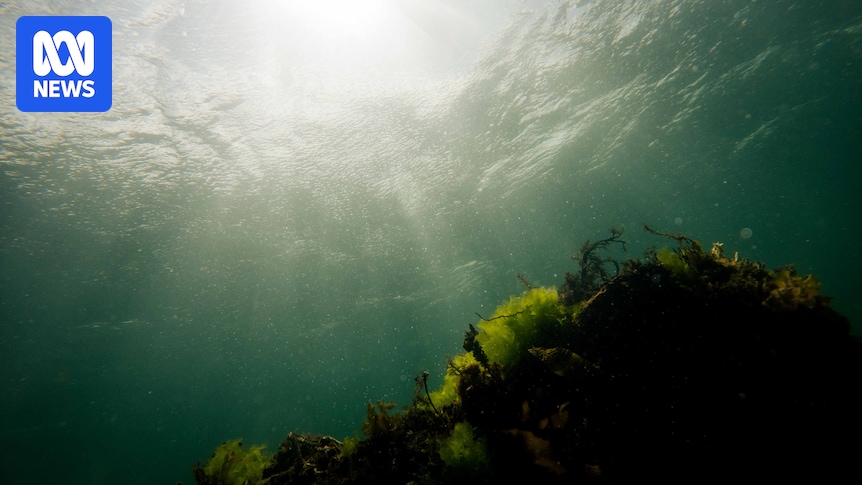
Phillip Ellis Wells was on his own 20 metres underwater, 7 kilometres off the Tasmanian east coast, when the sunlight streaming through the crystal-clear water went dark.
He was diving at Pulfers Reef, a rocky outcrop off Tasmania’s east coast that rises through the depths like an underwater mountain — better known for attracting fishermen than scuba divers.
“I got a bit of shade, all of a sudden there was a flicker,” Mr Ellis Wells said.
“I looked up and a mako shark … went over the top of me.”
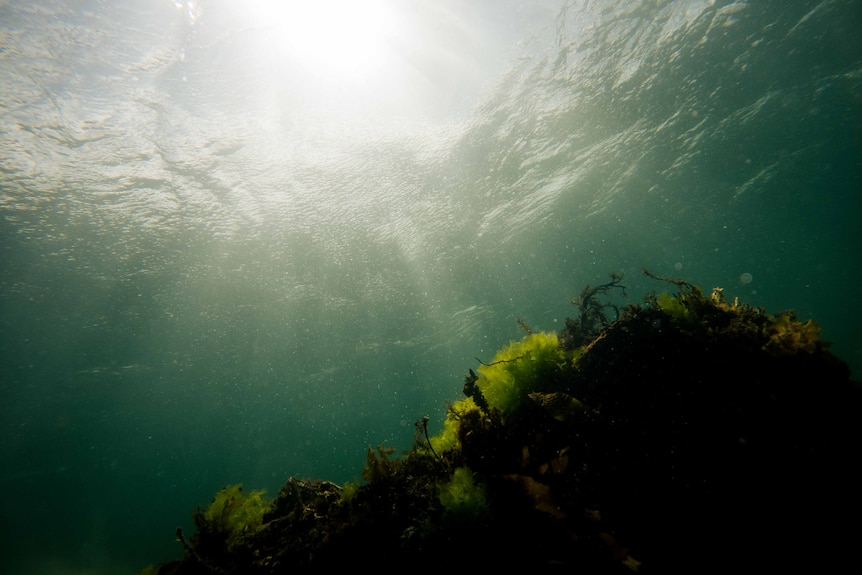
Phillip Ellis Wells says he loves finding new spots to dive. (Supplied: Phillip Ellis Wells)
The retired school principal had left White Sands Beach on a jet ski strapped with dive and safety gear, looking for an adventure.
“I guess I’m the person who loves finding new spots … I love looking at marine life,” he said.
But he had not expected marine life like this, a terrifying chance encounter 20 metres below the surface of the water.
Mr Ellis Wells conservatively estimates the shark was 3 metres long.
“It’s probably an underestimate. I don’t try to over exaggerate things,” Mr Ellis Wells said.
“It cruised over me and I thought, ‘Well, I’ll just sit down low on the bottom and watch it cruise over me … so just stop there for a tick.'”
Heart racing and unsure whether it was a mako or a white shark, Mr Ellis Wells knew he needed to make a plan.
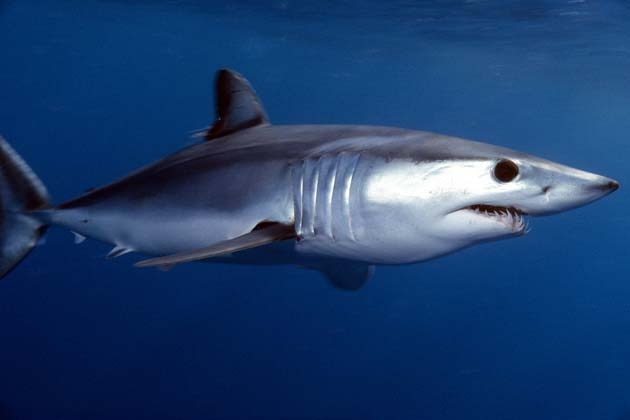
The mako species, pictured, is considered the fastest of all sharks. (Flickr: jidanchaomian)
The shark then swam a little bit further away.
“But I knew, I had a feeling that the shark knew I was there and was observing me,” he said.
Phillip Ellis Wells says he waited on the ocean floor to see what the shark would do. (ABC News: Ebony ten Broeke)
And then the shark came back, and it was not alone.
“As I was grasping this situation, another shark, equally the same size, cruised over the top of me,” Mr Ellis Wells said.
That’s two 3-metre mako sharks circling a lone diver.
Mr Ellis Wells hid behind a boulder and checked how much air he had left in this tank.
“They seemed to be a pair, they were going in the same direction, a little bit slower,” he said.
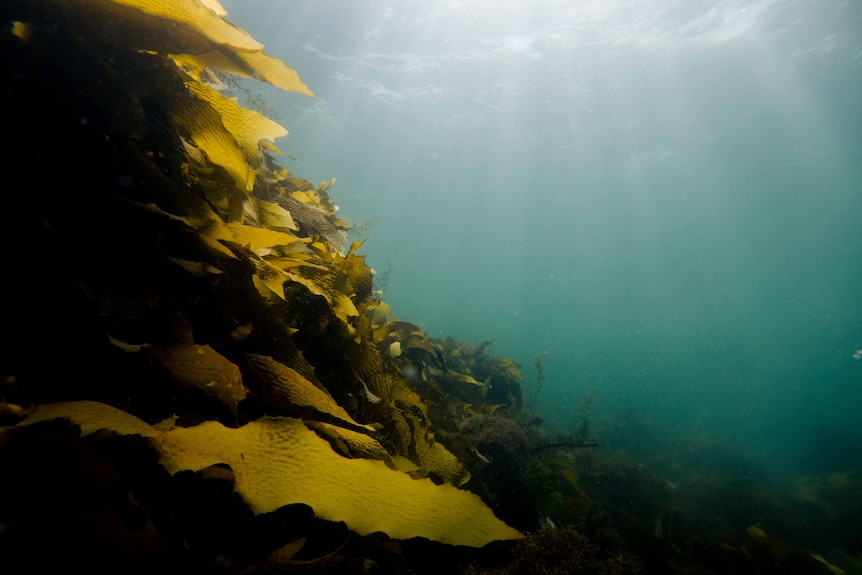
Phillip Ellis Wells says diving is something he loves. (Supplied: Phillip Ellis Wells)
Deciding whether to stay or go
It was not long before he made eye contact with one of them.
“I thought, ‘Well, this is more of a conflict situation than I’d hoped for,'” Mr Ellis Wells said.
“I observed them going into the distance in the blue, but I knew, I just had a feeling, they were going to circle and come back.”
The diver waited. He is not sure for how long, maybe five minutes.
“It felt in a way it went very slowly, in a way it went very quickly,” he said.
“The big decision was when to go.
“I thought, ‘Well, clearly they’re not going to go away, I can’t really wait it out, so I’m going to have to come up at some stage.'”
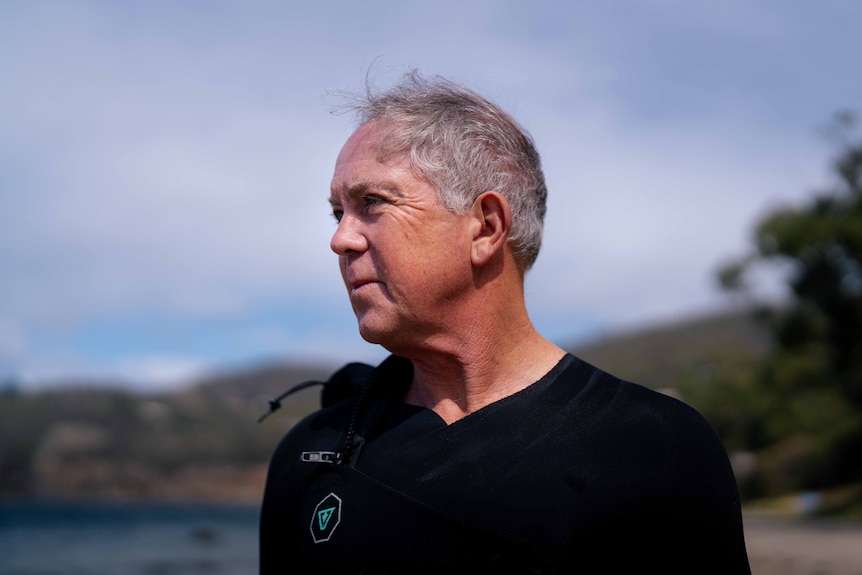
Phillip Ellis Wells says he tried to “remain very calm” during the encounter. (ABC News: Ebony ten Broeke)
Deep, fast breaths used up the air supply quickly and with just 100 bars left in his tank, Mr Ellis Wells knew it was time to go.
“So I started to come up and ascend quite slowly and again just breathing very deeply,” he said.
“Making sure I wasn’t panicking, because they pick up on [anything] like fish in stress, in distress.
“The human in distress is the same thing, so [I’m] trying to remain very calm.”
About halfway to the surface, the solo diver felt a presence, so he turned his head.
One of the sharks was following him, about 10 metres behind.
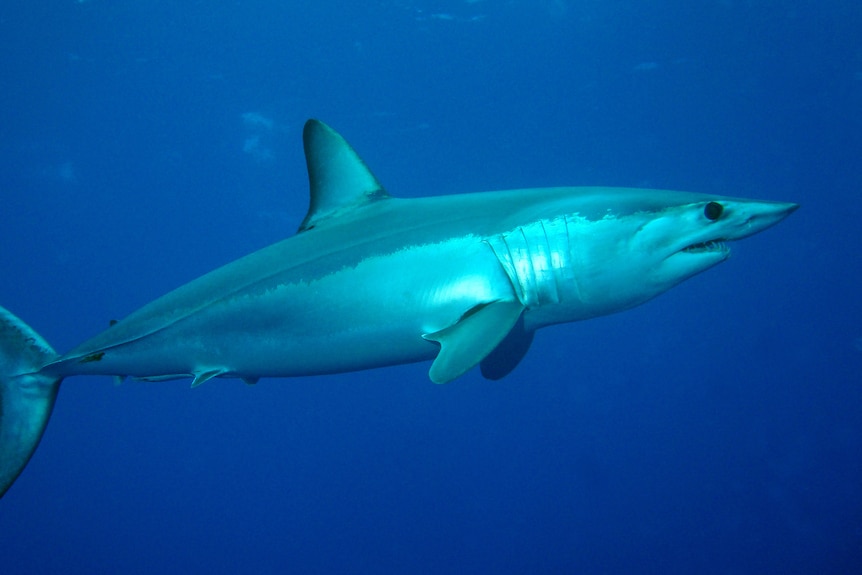
Mako sharks are of the same taxonomic grouping as great whites. (Wikimedia Commons: Patrick Doll)
“I had this clear image of the head of the shark,” he said.
“I thought, ‘Right, okay, this is getting a little bit more serious.'”
After a heart-stopping race to the surface, the shark turned back and descended into the deep blue.
But the drama was not over yet.
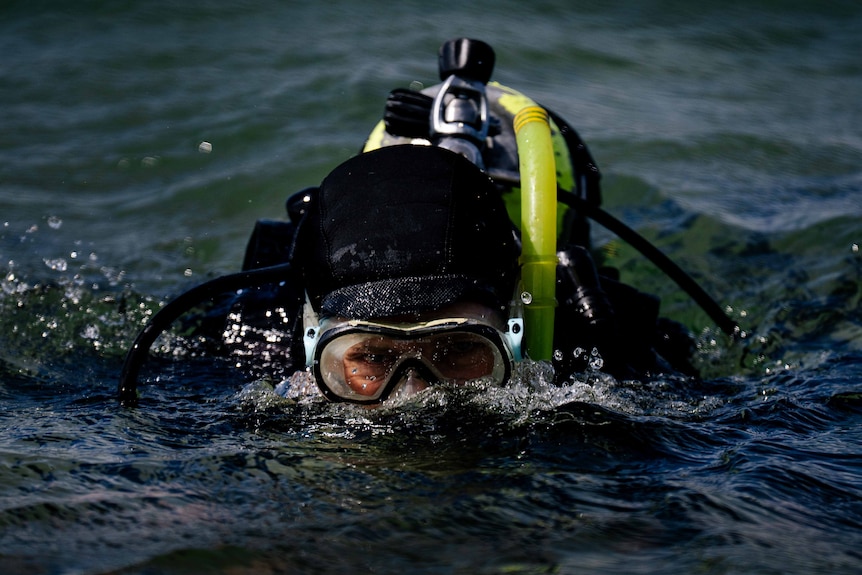
As Phillip Ellis Wells surfaced, the shark appeared to descend back into the depths. (ABC News: Ebony ten Broeke)
In the panic, Mr Ellis Wells had lost sight of his anchor line to the jet ski. He ended up surfacing 100 metres away.
“I have to say it’s probably the longest 100 metres I’ve swam for a while. The swim bit was probably where my heart was racing the most,” he said.
“You can’t really look down and swim all at the same time with all the dive gear and so on.”
Dropping the tank and scrambling onto his jet ski, Mr Ellis Wells caught his breath.
He said two images stuck out the most when he reflected on the experience.
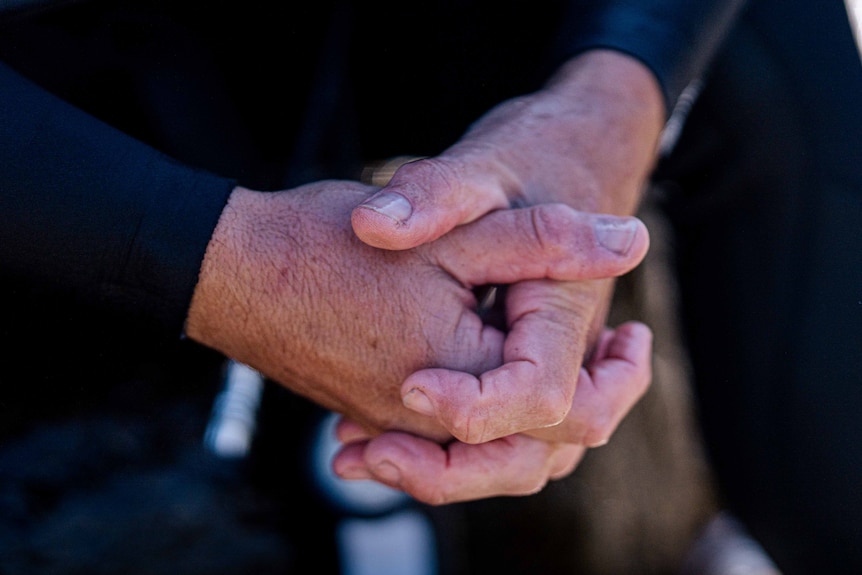
Phillip Ellis Wells vividly remembers the moment he noticed the shark following him. (ABC News: Ebony ten Broeke)
“One is when I looked up and first saw the first shark and the sun behind it, through the water,” Mr Ellis Wells said.
“And the other image is when I was halfway up, two-thirds up, looking back and seeing the shark’s head following me.”
He plans to dive again, but not at Pulfers Reef.
“While I don’t mind taking calculated risks … doing something I really love, I think there’s a point where you need to say that’s enough and I think it’s too risky,” he said.
As a former dive instructor, Mr Ellis Wells knows there will be questions about his decision to dive solo, and in such an unknown location.
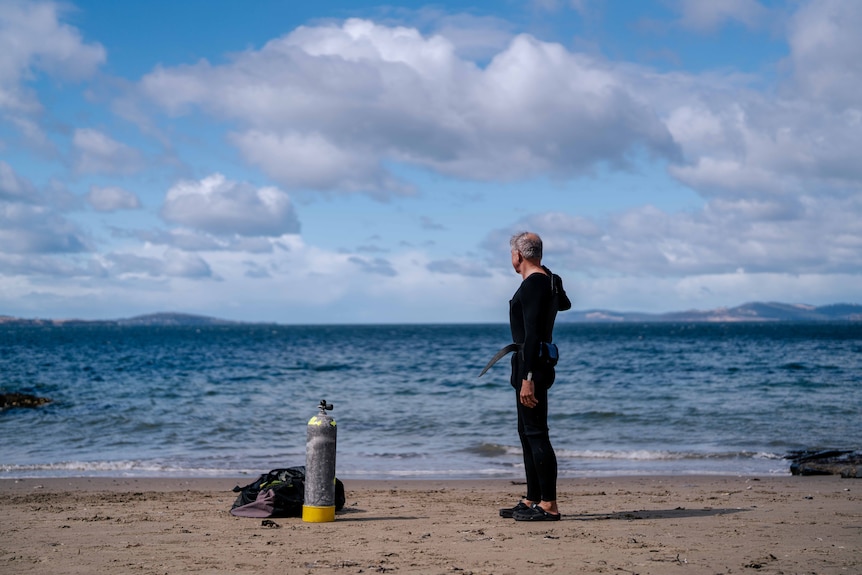
Phillip Ellis Wells says he plans to continue diving, just not at Pulfers Reef. (ABC News: Ebony ten Broeke)
He has taught divers that they should always have a buddy.
But he says, at his age, there is not always someone reliable to go with.
“There’s no doubt about [it], diving alone can come with some risk,” he said.
“But at my age, that’s what I’m prepared to take.”
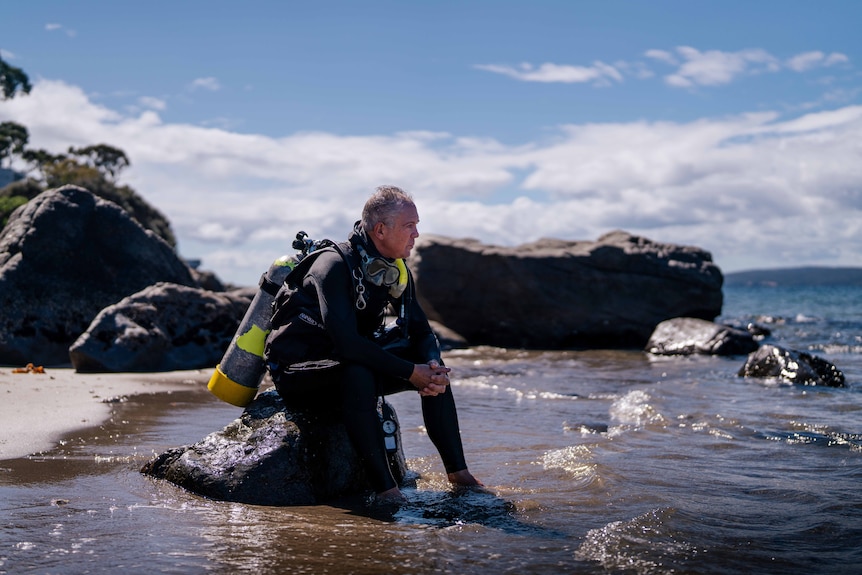
Reflecting on the encounter, Phillip Ellis Wells says mako sharks are “absolutely beautiful”. (ABC News: Ebony ten Broeke)
Dry land and time have given Mr Ellis Wells time to reflect on his lucky escape.
“They’re absolutely beautiful animals,” he said.
“I mean, the mako shark is one of the, or is the fastest shark. So when they strike, they’re very quick.”
Mr Ellis Wells said there was one positive thought that went through his head.
“I thought … ‘Well there are a lot of fish here, they’re hungry, there’s a lot more they can eat rather than me.'”