

Space-based data centres are seen as the next frontier. Technology titans from the United States and China are already moving to pioneer orbital platforms or satellite constellations that provide compute and storage for AI and other data-intensive workloads. The aim is to leverage the unique conditions of low Earth orbit to overcome terrestrial constraints. By drawing on continuous solar energy and the cold vacuum of space for passive radiative cooling, such systems reduce dependence on Earth-based power grids and lower energy and water requirements. They can support climate modelling, scientific simulations, and large-scale analytics.
The US has been moving swiftly in this direction. Initiatives like Google’s Project Suncatcher indicate the space-compute frontier is rapidly moving from concept to reality. Meanwhile, Lonestar Data has demonstrated off-planet storage and data exchange on lunar missions and plans cislunar storage satellites. Elon Musk’s SpaceX recently acquired xAI, motivated by doing AI computations in space, including building space-based data centres.
Yet Southeast Asia remains absent from this first wave of orbital computing initiatives. If the region is to participate meaningfully in this domain in the future, it must act now.
Southeast Asia has emerged as one of the world’s fastest growing hubs for data centres, thanks to growing global AI demands. Facilities across Singapore, Malaysia, Thailand, Indonesia and Vietnam have positioned the region as a critical node in the global AI ecosystem.
But the promise of space-based data centres can be real, even if technical constraints shape what can be achieved in the near term. Early generations of orbital data centres will not simply be “plug-and-play” extensions of terrestrial cloud infrastructure. They require bespoke designs suited to the space environment.
Southeast Asia’s question is not – or at least not yet – whether it should build orbital data centres independently, but how it can participate meaningfully in this emerging ecosystem.
One often-cited benefit is the natural cold of space, which can help with cooling energy-intensive computing systems. However, cooling in orbit is not straightforward. Unlike on Earth, heat cannot be dispersed through air, meaning excess heat must be actively transported and radiated away using large external structures. These systems add mass, cost, and design complexity – factors that matter for launch economics and long-term sustainability.
Space radiation presents another challenge. High-energy particles can disrupt or degrade electronic systems over time, increasing the need for shielding and resilient system architectures. Industry studies, including Thales Alenia Space’s ASCEND feasibility assessment, suggest that while space-based data centres are technically achievable, their climate and economic benefits depend heavily on cleaner launch systems and reliable in-orbit assembly and servicing. Without these supporting capabilities, orbital computing risks shifting emissions upstream rather than reducing them overall.
Data transmission between space and Earth is an additional bottleneck. Depending on orbit, communication delays of more than 100 milliseconds make it inefficient to send raw data back to the ground for processing. This reinforces the case for performing data analysis directly in orbit, especially for space-generated data such as Earth observation imagery and only transmitting refined or compressed outputs. While laser-based communication links between satellites can support high-speed data exchange in space, their effectiveness diminishes when sending data to Earth, particularly in cloud-prone and humid regions. For Southeast Asia and other tropical areas, frequent cloud cover and heavy rainfall can significantly disrupt both laser and high-frequency radio links.
These constraints suggest that early space-based data centres will play a complementary, rather than transformative, role. Their most immediate value lies in processing space-borne data closer to its source, reducing reliance on weather-sensitive downlinks while drawing on abundant solar energy in orbit. For policymakers, this underscores the importance of viewing orbital data centres not as replacements for terrestrial infrastructure, but as enablers in specific use cases.
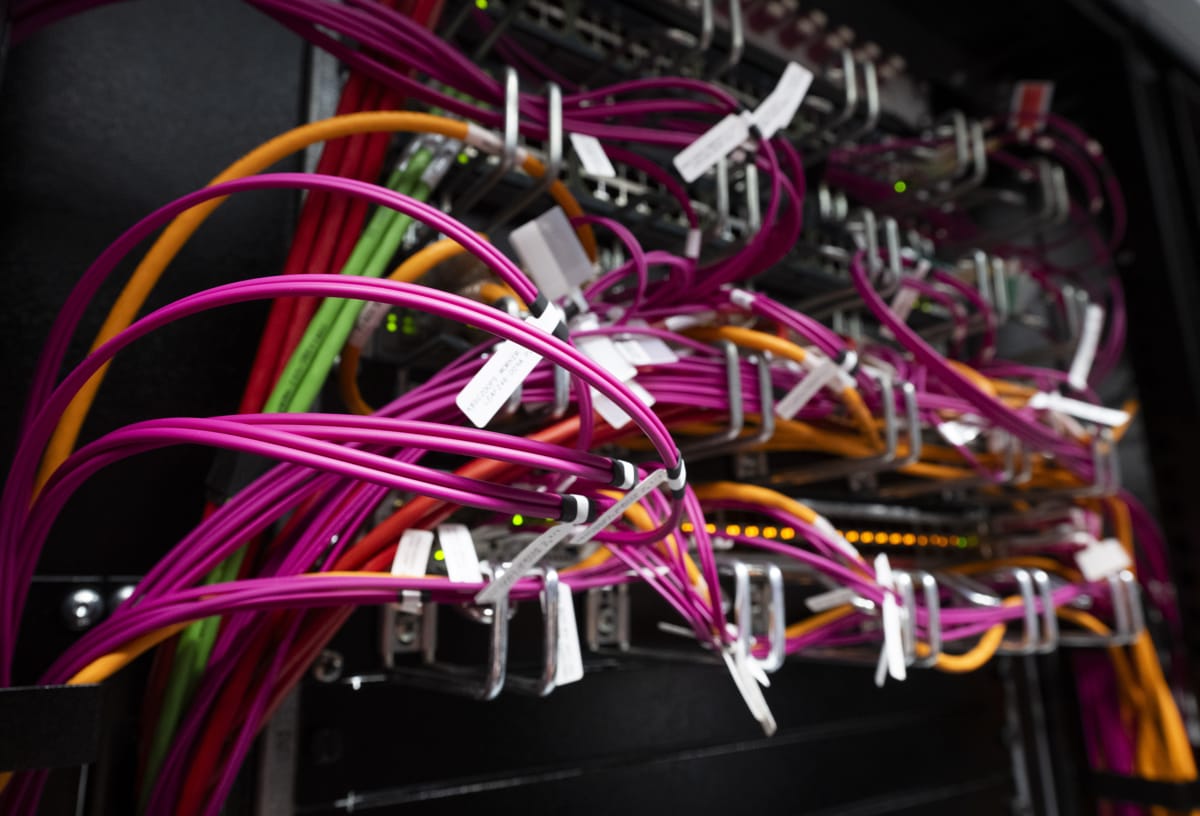
Cable in a server room at the European Space Agency (Boris Roessler via Getty Images)
Southeast Asia’s limited presence in orbital initiatives contrasts with its strength in terrestrial AI infrastructure. The Southeast Asian data centre market is poised for rapid expansion, with its value expected to reach USD 30.47 billion by 2030, growing at a compound annual rate of 14.24%.
Singapore anchors this ecosystem, operating at high utilisation across its gigawatt-scale capacity. This growth reflects both scale and technical sophistication in power management and high-density computing. After a halt on new data centres, Singapore launched the world’s first Sustainable Tropical Data Centre Testbed to trial high‑efficiency air‑ and liquid‑cooling and water‑saving systems tailored to hot‑humid climates, with targets to cut cooling energy up to 40%. It sets an example for the innovation and testing energy-efficient technologies that can potentially be upscaled for use in space environment.
Despite these strengths, Singapore and the rest of ASEAN remain largely absent from first-mover efforts in space-based data centres. Although member countries have built small satellite capabilities, space‑grade compute manufacturing, radiation‑hardened component supply, and in‑orbit servicing ecosystems remain emerging. Absence of launch sites and affordable launch technology widens the gap. This nudges potential orbital compute projects to source critical subsystems and on‑orbit operations abroad.
When monsoon clouds block satellite signals over Singapore, data can be sent to clear-sky stations elsewhere in ASEAN and quickly relayed back through regional cable networks, ensuring reliable connectivity.
Regional space activities also focus on small satellites and Earth observation, with no publicly announced Southeast Asian led orbital compute projects. Several gaps contribute to this absence. The space industrial base remains limited, with constraints in advanced infrastructure and talent even within the more technically enabled countries such as Singapore. Regulatory readiness also lags, as fragmented space and data governance frameworks rarely address orbital cloud services, cross-border satellite data flows, or space-specific cybersecurity concerns. Finally, while billions are spent on terrestrial AI infrastructure, investments in space-based ventures remains concentrated among major powers, particularly the United States and China, limiting early-stage participation in the region.
At this point, Southeast Asia’s question is not (or at least not yet) whether it should build orbital data centres independently, but how it can participate meaningfully in this emerging ecosystem. Singapore is well positioned to catalyse engagement by leveraging terrestrial AI strengths while addressing gaps in space capacity and governance. Workforce pipelines will require interdisciplinary training in machine learning, systems engineering, and space systems, supported by the National AI Strategy (which must be complemented by a national space strategy sooner rather than later). Lessons from the Jurong Island pilot data centre in Singapore suggest that near-term Earth orbit hybrid testbeds could help de-risk first generation orbital computing deployments. Singapore’s newly announced National Space Agency is a promising step toward engaging the broader space ecosystem in shaping national space legislation, with potential implications for space-based computing.
That said, Singapore cannot and must not act alone. It needs to solidify its role in the emerging space-AI ecosystem by collaborating with other ASEAN nations, leveraging shared capabilities in data collection, analysis, and innovation ecosystems to fill regional gaps, for example, in collecting equatorial satellite data, enhancing climate and sustainability outcomes, and building stronger multi-stakeholder partnerships across public, private, and academic sectors.
To address disruptions to optical satellite links caused by tropical cloud cover, Singapore can leverage its position as a submarine cable hub by working with regional partners to diversify ground station locations across ASEAN. For example, when monsoon clouds block satellite signals over Singapore, data can be sent to clear-sky stations elsewhere in ASEAN and quickly relayed back through regional cable networks, ensuring reliable connectivity.
Eventual regional participation should also focus on data governance and spectrum cooperation as much as hardware. ASEAN’s Data Management Framework and Model Contractual Clauses for Cross‑Border Data Flows provide templates for data ownership, processing, and transfer, that can be extended to orbital cloud and space-based data centre operations in the future.
Realising this vision of space-based data centre participation requires coordinated policy action at national, regional, and international levels. Southeast Asia must develop space approaches recognising orbital cloud infrastructure as strategic, integrating spectrum management and data sovereignty, with operational realities. Regional collaboration, coupled with international partnerships, can accelerate capability development, standardise frameworks, and create shared platforms for research, testing, and workforce training.
As global demand for AI grows and Earth-based resources become limited, the regions that can explore and use space effectively will lead the future of orbital computing infrastructure. For Southeast Asia, that is not yet in the near horizon. But, by linking terrestrial strengths with forward looking policies, regional collaboration, and international partnerships, Southeast Asia can begin building foundational space capabilities necessary to advance into the space-based computing era.