
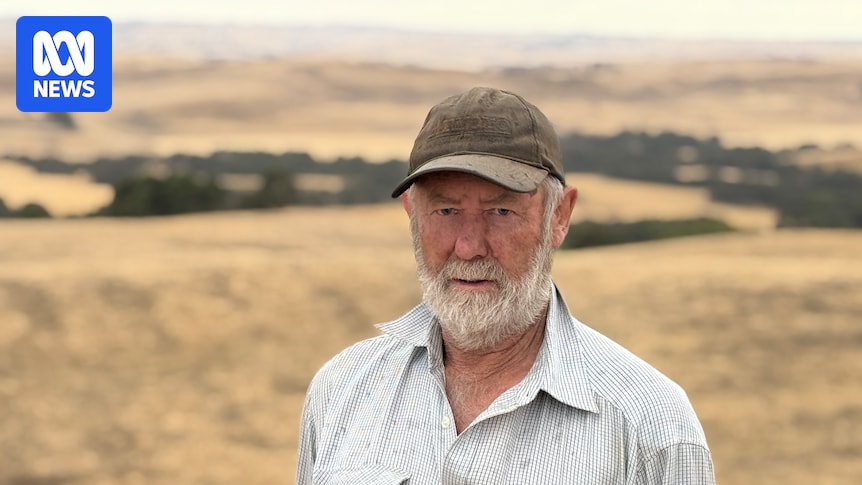
Victorian livestock producers are facing critical water shortages, forcing them to cart water, find agistment or sell stock.
It is a case of deja vu for many farmers, including those in south-west Victoria who are entering their third consecutive dry year.
And with a poor long-term rainfall outlook, many are concerned about when they will see light at the end of the tunnel.
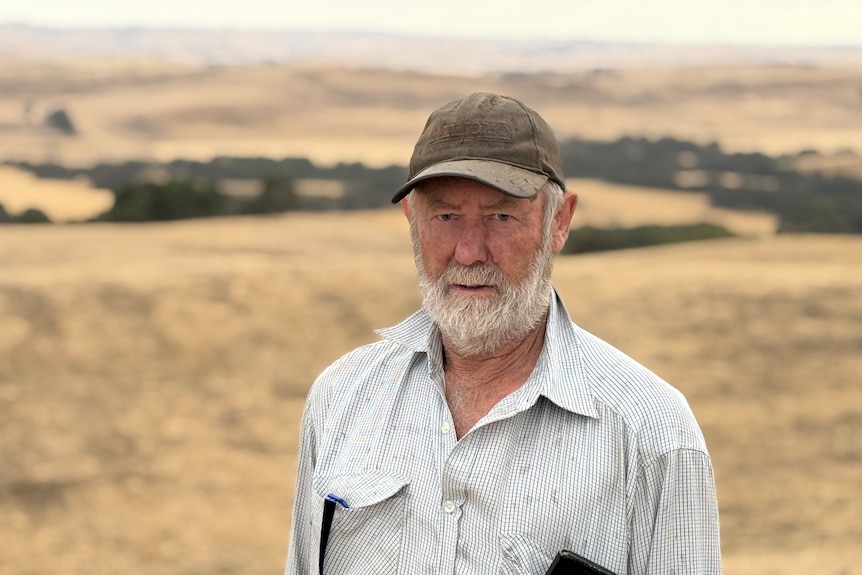
Bill Lambert’s hills are parched, with no rain falling to deliver the run-off he desperately needs. (ABC Rural: Angus Verley)
River and dams almost dry
Bill Lambert is a stud Hereford producer at Paschendale, south-west of Coleraine.
He had not recorded a single millimetre of rain for the year until 4 millimetres fell last week, but that is not enough.
Part of his farm fronts the Wannon River, usually a highly reliable water source.
But even it is down to a trickle, less than a metre wide and 10 centimetres deep.
“We’ve had this country for more than 50 years and the river only stopped running once, in the 1970s, and this is the lowest it’s been since then,” he said.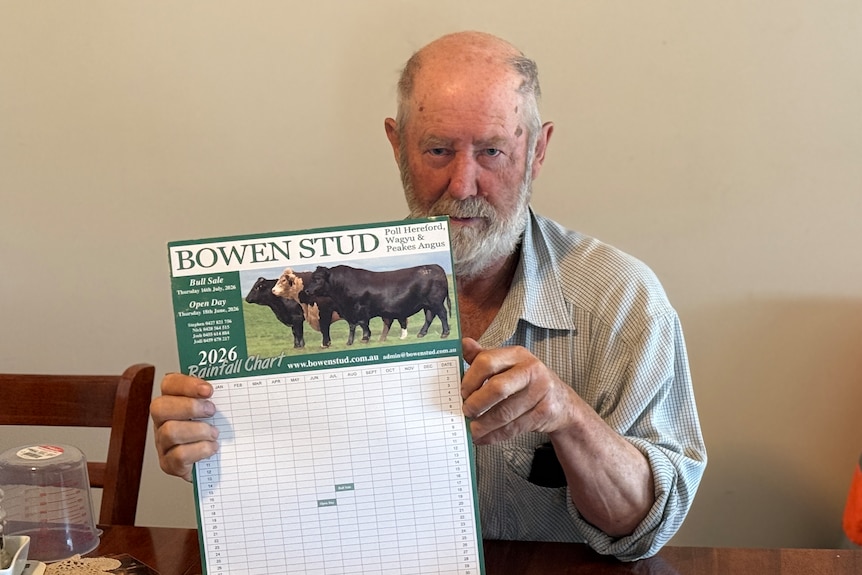
Bill Lambert’s first rain of the year was 4 millimetres recorded last week. (ABC Rural: Angus Verley)
“We’re going to be forced to look for agistment or sell stock. We just won’t be able to keep them here.”
Mr Lambert has already cut his cow numbers to 230, and expects to have to cull further as he watches his dam levels fall quickly.
“It’s starting to get desperate; there are a lot of people in a lot of trouble with water supplies,” he said.
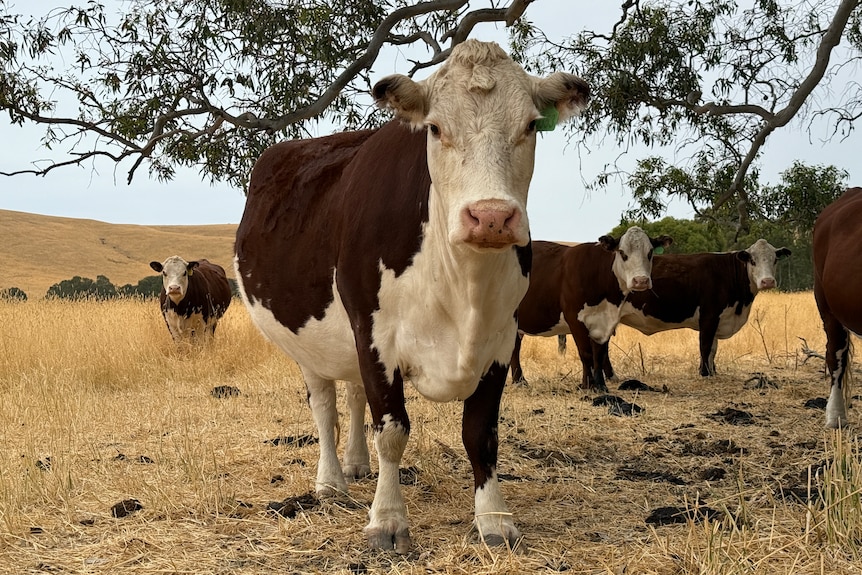
Bill Lambert’s Hereford cows are quickly running out of water. (ABC Rural: Angus Verley)
While some in the district have bought trucks and water tankers, Mr Lambert said he did not feel that was feasible for him.
“It’d be a full-time job, you’d get nothing else done, so I don’t see it as an option,” he said.
Water bacteria problems
Even for those who do have some water left in their dams, the quality might be too low for livestock.
South-west Victorian livestock vet Jane Gaussen said high levels of bacteria were being detected in some water sources.
“You’ve got stock walking into dams and defecating in them,” she said.
“Bacteria load management is a real challenge and the temperature is rising too, so we can run into issues with algal blooms and more proliferation of bacteria, because bacteria loves a warm environment.
“Animals will try to go for good quality water, but if they don’t have options, they obviously will drink poor quality water in order to survive.”
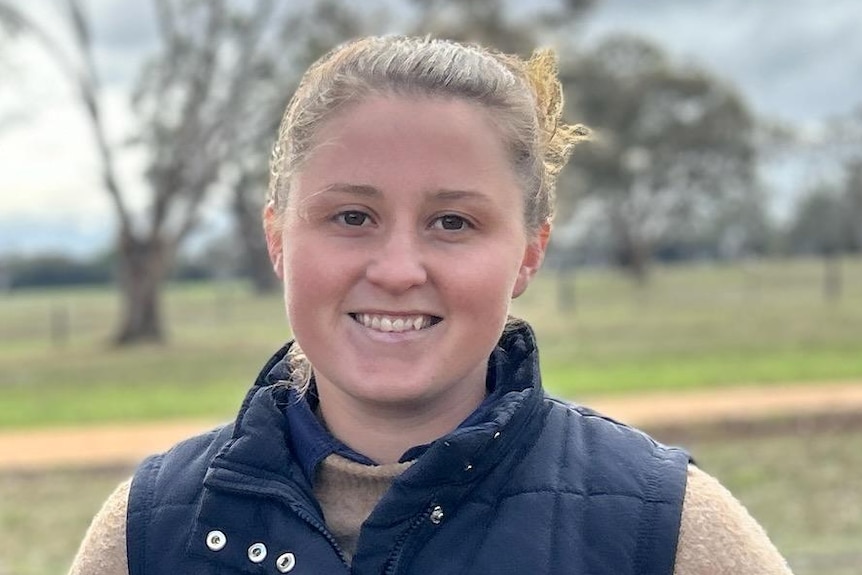
Jane Gaussen says low dams can create animal health issues. (ABC Rural: Angus Verley)
Dr Gaussen urged farmers to have water tested if they had any concerns.
“I really encourage doing testing, and sometimes if a water source isn’t suitable, we’ve got options in terms of treatment,” she said.
“Otherwise, we need to make decisions around whether we can use that particular dam at all.”
Dr Gaussen said one positive was that farmers were more prepared for the dry times this season.
“Remembering the issues we had last year, people are forward-planning a lot more this year,” she said.
Pipelines needed
As dams run dry, there are renewed calls for new infrastructure to bring piped water to areas traditionally reliant on rainfall.
Scott Young is president of the Victorian Farmers Federation livestock group and a farmer at Ballan, another area experiencing water shortages.
“We need more pipelines for water reliability,” he said.
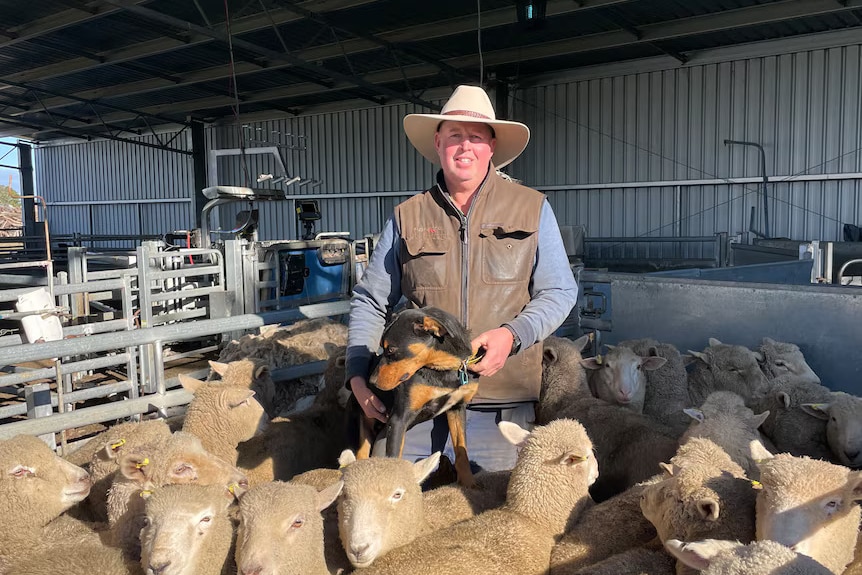
Scott Young says more investment is needed in pipelines to improve water security. (ABC Rural: Angus Verley)
Mr Young said while proposed pipelines would not help in the current dry times, farmers and politicians needed to plan for the future.
“We know there will be another drought around the corner,” he said.
Underground water is an alternative being explored by some farmers, including Mr Young, but he said that too threw up challenges.
“I’ve got my name down to have a bore dug, but you can’t do any infrastructure until you know where that bore will be and whether they’ll hit water at all,” he said.
Being positive in grim times
Despite the grim realities back at Paschendale, Mr Lambert is trying to stay positive.
“We are optimists, and we know it will rain,” he said.
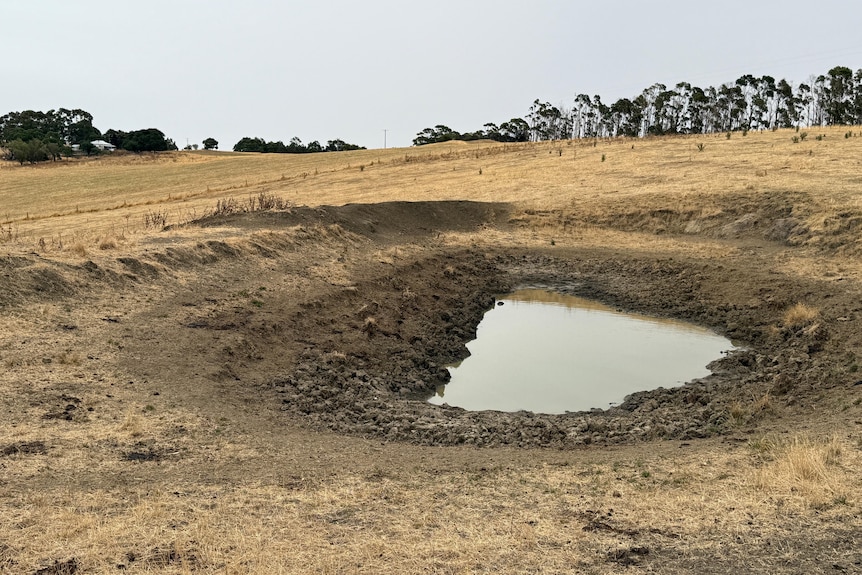
Bill Lambert still has some dams holding water, but they are running low. (ABC Rural: Angus Verley)
“We just need a bloody big thunderstorm to get us out of a bit of trouble.”
He reflected on the plight of those in natural disaster zones, and said he did not consider himself hard done by.
“When you think about the people in northern Queensland going through floods, and the people in Victoria who’ve been burnt out, they’re a lot worse off,” he said.
“It’s just Mother Nature in charge; we don’t have to go to the pokies, we gamble just getting out of bed in the morning.”