
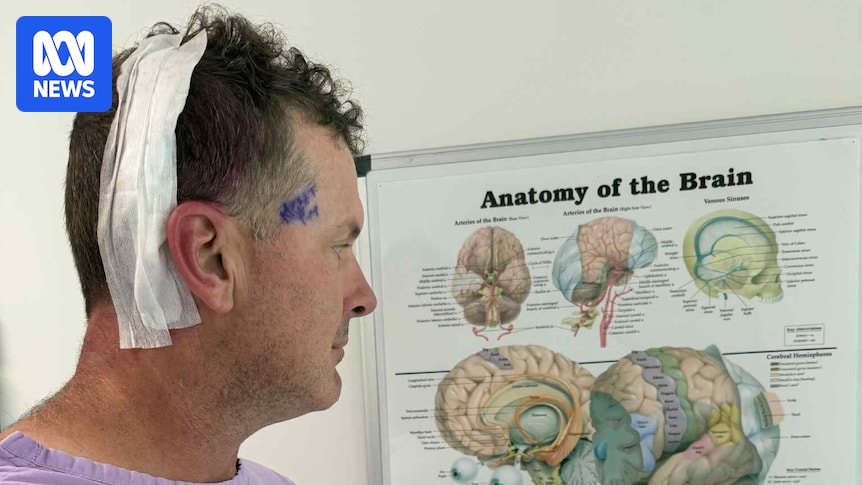
With two young children and a small business to run, Brad Collins figured his fatigue at the end of the day was simply from juggling work and family life.
But one night the 46-year-old electrician, from Queensland’s Sunshine Coast, had trouble seeing.
“I woke up in a shock, like someone was sitting next to me and sort of these weird visuals,” Mr Collins said.
“I went to Fran, my wife, and just said, ‘Babe, something’s not right here.'”
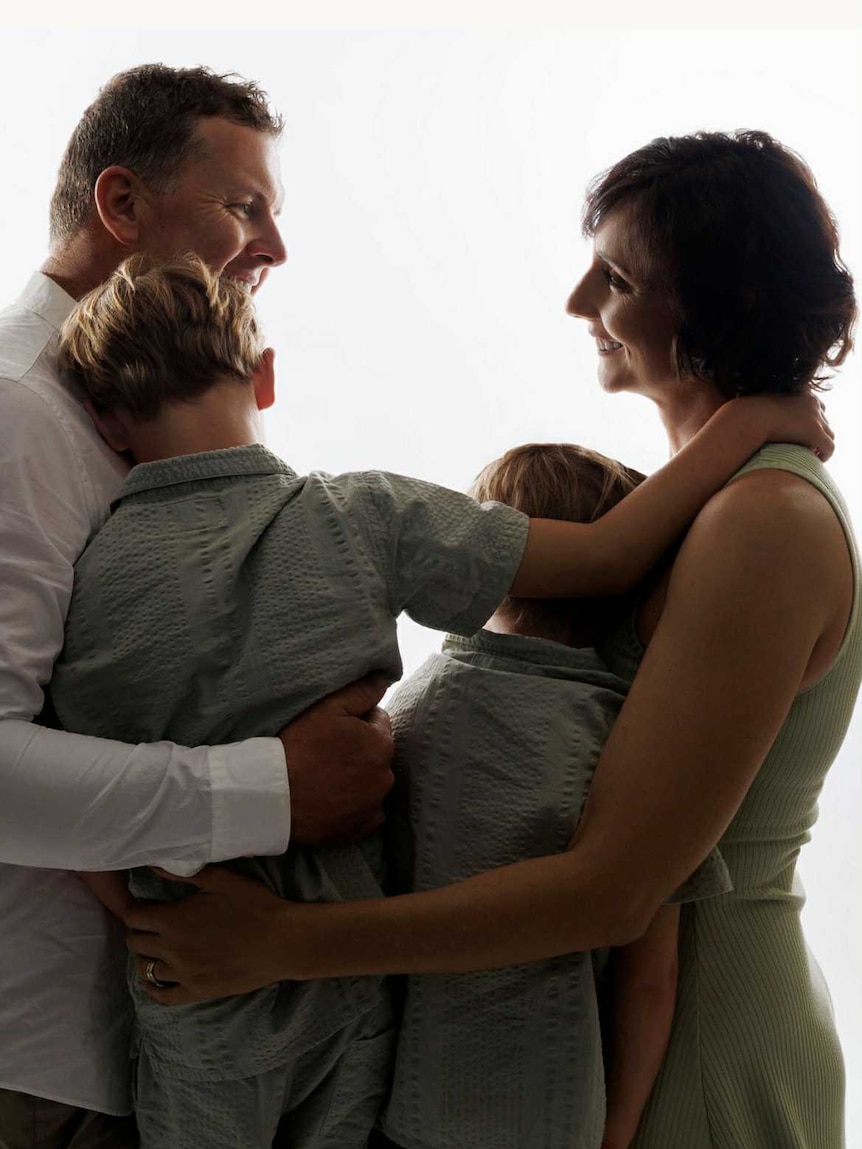
The family are now trying to juggle day to day life with hospital visits. (Supplied.)
His wife Frances Collins (nee Adcock), an Olympian who represented Australia in swimming at the 2004 Athens Games, called for an ambulance.
Doctors discovered Mr Collins was experiencing an aura, also known as a focal seizure.
“Five days later he was diagnosed with a brain tumour — it’s just shocking,” Ms Collins said.
“We’re a fit, healthy family that was looking forward to going on a camping trip that weekend and our life has completely changed literally overnight.”Family’s fight continues
Mr Collins has a grade two oligodendroglioma, which is a rare type of brain tumour.
“It’s heartbreaking, especially having little kids,” he said.
“You just straight away think of your family and how you’re going to support them.”
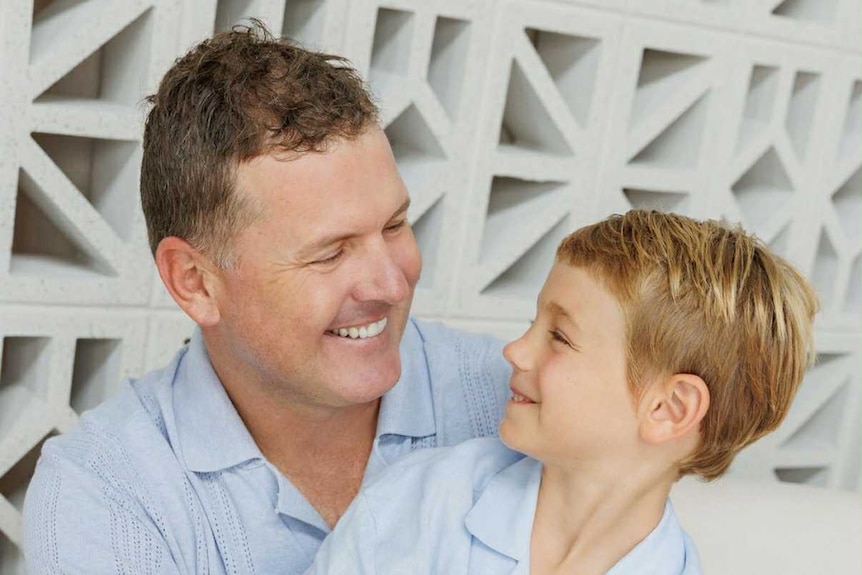
Brad Collins, pictured with his eldest son Max, 6. (Supplied.)
He found himself in the skilled hands of neurosurgeon Michael Colditz, who has since removed most of the tumour during an operation at the Royal Brisbane and Women’s Hospital.
“Doctor Colditz explained he couldn’t go taking all of it [the tumour] because I might have lost a part of my vision so they’ve asked me to come back in eight weeks where they’ll check to see if it’s growing,” Mr Collins said.
“If it’s still growing, then they’ll put a plan together, whether it’s chemotherapy or something else.”
The family was shocked to learn there was no neurosurgery unit at the Sunshine Coast University Hospital (SCUH).
Ms Collins said it was a struggle travelling to Brisbane while still working and taking their boys to school.
“We’re really hopeful that the next stage of the treatment can happen locally,” she said.
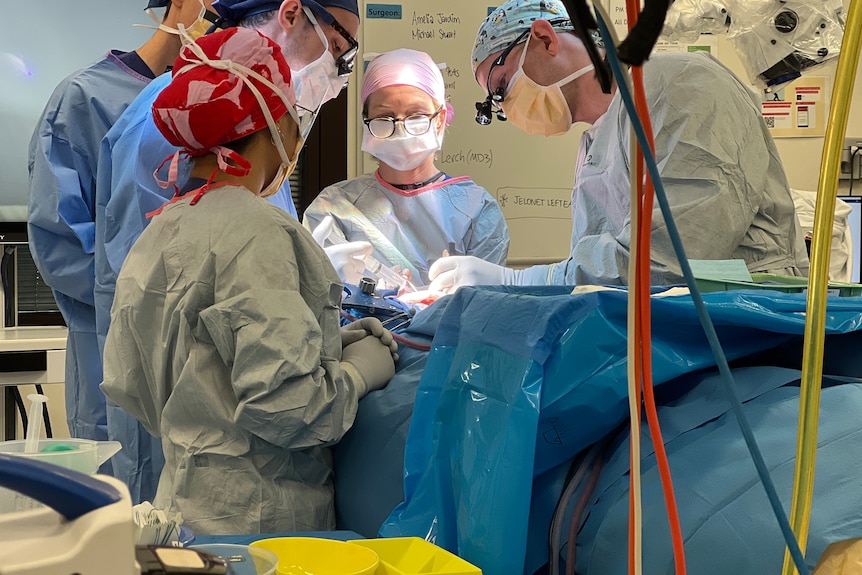
A team of doctors and neurosurgeons performing an operation at Queensland Children’s Hospital in 2024. (ABC News: Janelle Miles)
Neurosurgeons call for action
Stephen Byrne is one of only two neurosurgeons based on the Sunshine Coast, with both working through private hospitals.
Dr Byrne has been advocating for a dedicated unit since SCUH opened in 2017.
“One of the big selling points for a lot of specialists who came to the coast in the early 2000s and 2010s was working at SCUH,” Dr Byrne said.
“Now the population is growing, patients’ expectations are evolving and I think it’s becoming less and less acceptable where patients have to go to Brisbane to have this sort of treatment.”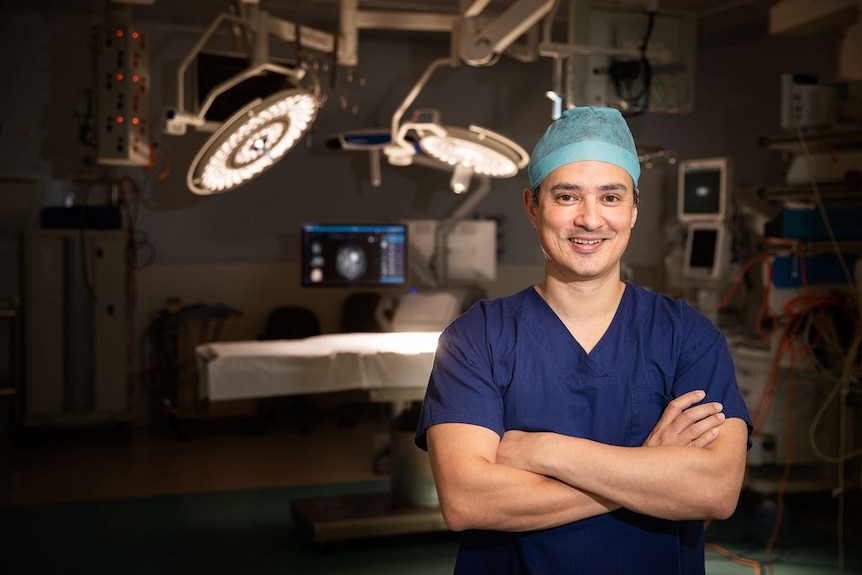
Stephen Byrne was the first neurosurgeon to begin operating on the Sunshine Coast. (Supplied: Sunshine Coast Neurosurgery)
Dr Byrne said brain cancer rates had risen along with life expectancy.
“I don’t think there’s any evidence to suggest that primary brain cancer is becoming more common but secondary brain cancers or metastatic brain cancers are becoming more common with patients simply living longer,” he said.
Brisbane-based surgeon Sarah Olson, chair of the Surgical Education and Training Board for Neurosurgery, said it was “critically important” to have services close to home.
“With this aging population we have, and a lot of them are up that way too [Sunshine Coast], it’s a big thing for them coming to the big city,” Dr Olson said.
“They’re just not getting the same care as people in the city … they don’t want to ask relatives to drive them and their health care is compromised.”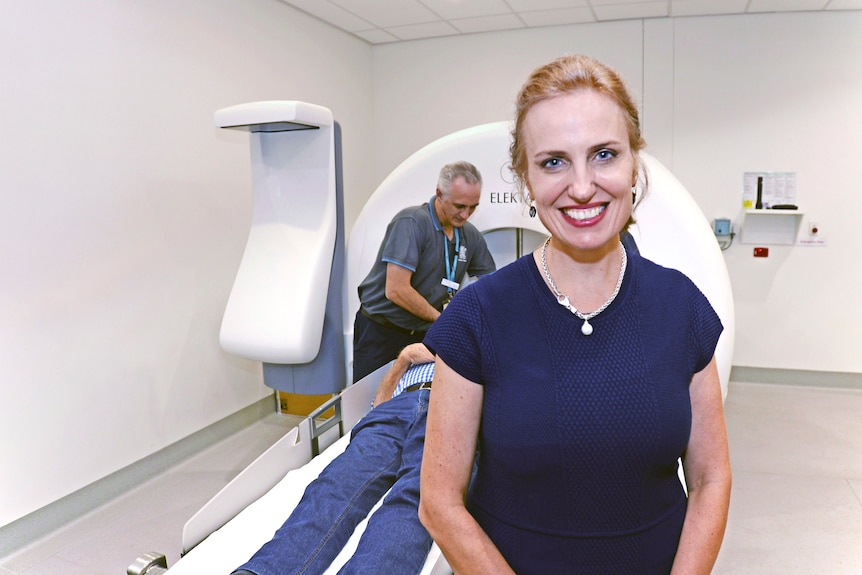
Sarah Olson says travelling to Brisbane takes a toll on patients, particularly the elderly.
‘Careful planning’ required
In a statement, Sunshine Coast Health chief executive Peter Gillies said planning was underway for new specialised services, including neurosurgery.
But he said a neurosurgery unit required a “highly skilled multidisciplinary team, specialised infrastructure and strong clinical governance”.
“Establishing this safely and sustainably takes careful planning and time,” Dr Gillies said.
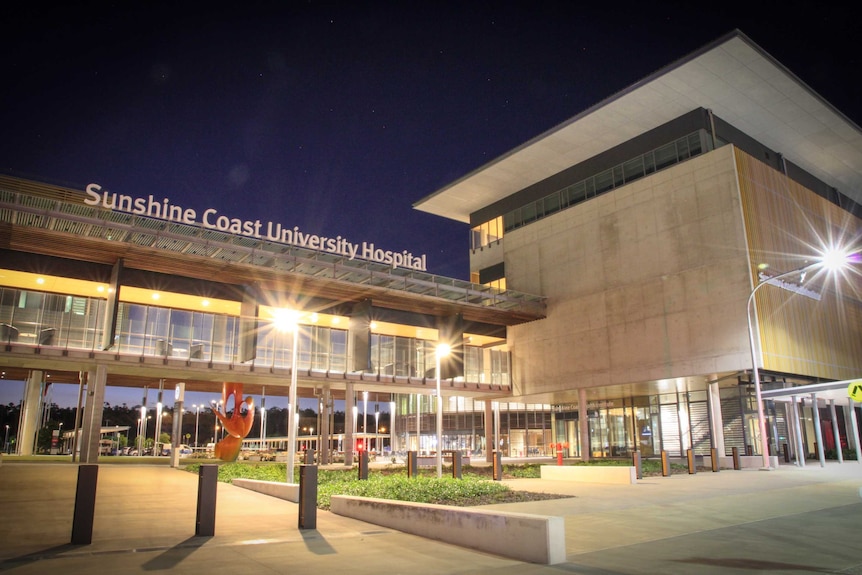
Specialists had hoped to see a dedicated neurosurgical unit at SCUH not long after it opened in 2017. (ABC News: Jonathan Hair)
A spokesperson for Queensland Health Minister Tim Nicholls did not address specific questions about establishing a new unit, but said the government had committed more than $10 million towards improving treatment access for people with neurological conditions.
The funding will be used to establish eight “Neuro Wellness Hubs” over five years across regional Queensland, including the Sunshine Coast, Gold Coast and Toowoomba.
The hubs have previously been described by Premier David Crisafulli as a “one-stop shop” for people to access support and services — but do not include a surgical unit.
Mr Collins is unable to work while he recovers from his surgery.
But he said his family had been heartened by the support they had received from the community.
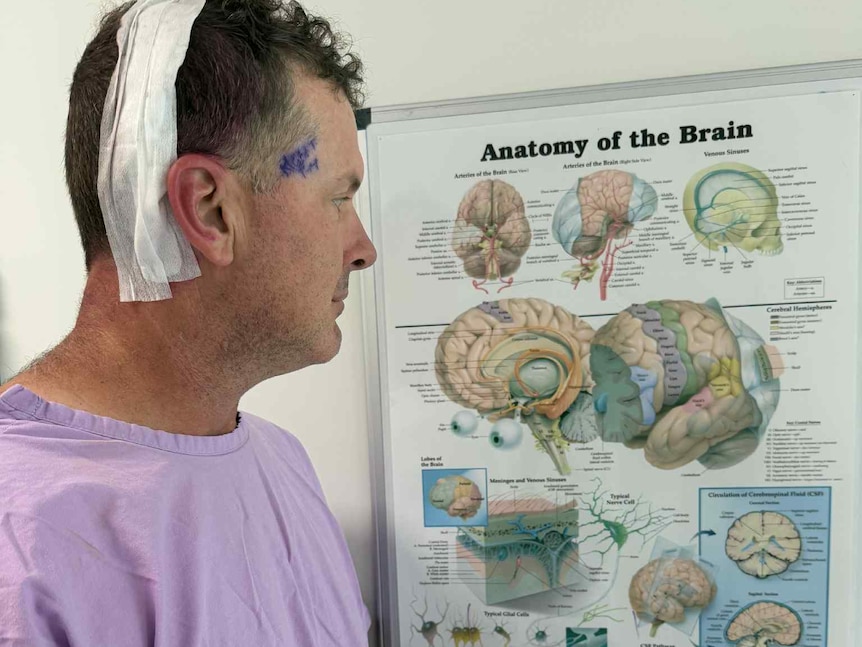
Brad Collins recently underwent brain surgery in Brisbane. (Supplied: Frances Adcock)
He said his experience should serve as a warning, to men especially, to get their health checked and ensure they have adequate income protection.
“I unticked that box on my super thinking that if I was to break a leg or something like that I could always get someone to do some work for me,” he said.
“I never thought it would be the case that I was going in for brain surgery.”