
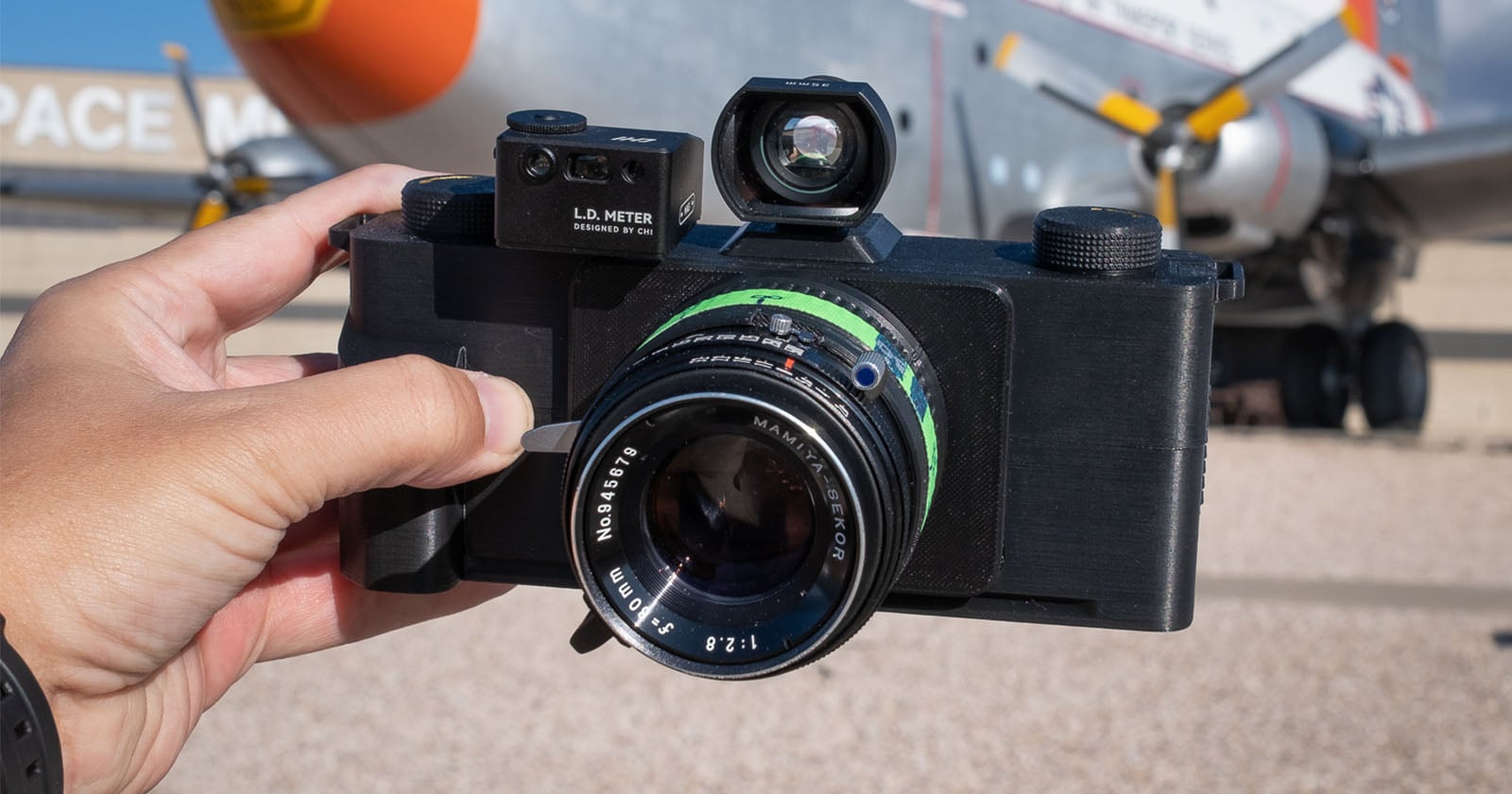
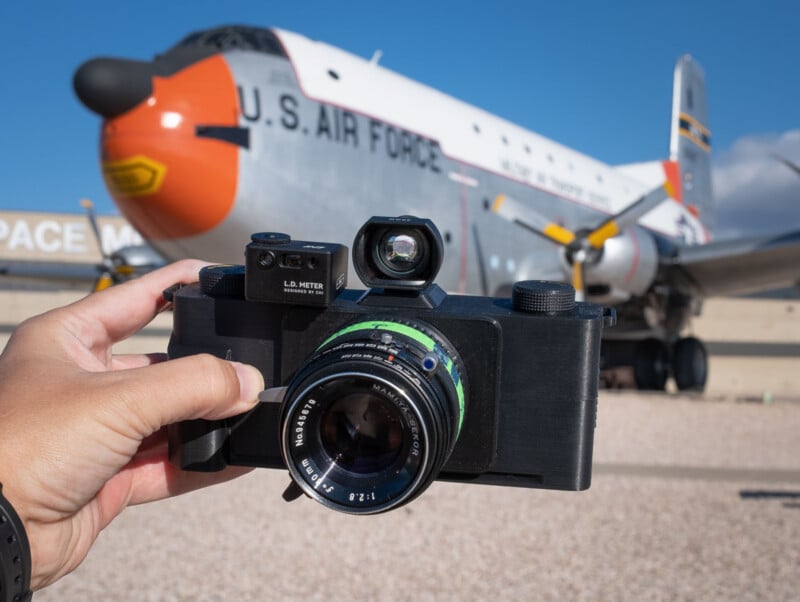
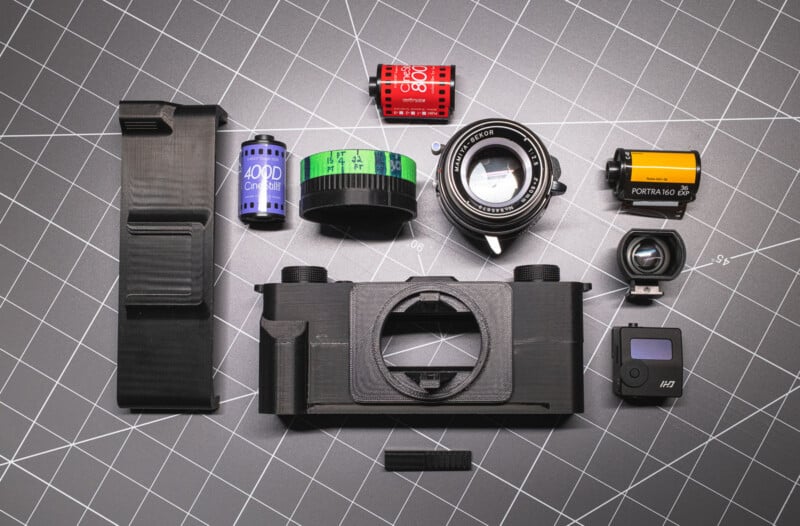
I love panoramic photography. There is just something special about a super-wide aspect ratio that flexes my creative muscles. I’m far from the only one. Photographer Jace LeRoy, who goes by analog_astronaut on social media, has also been bitten by the panorama bug. He recently showed off a camera he built, the Infidex 176, which uses 35mm film to capture 72 x 24 millimeter frames, and it’s awesome.
The Infidex 176 V: A 3D-Printed 35mm Panoramic Camera
The Infidex 176 V, a portmanteau of “infinity” and “double exposures,” is an open-source, 3D-printable panoramic film camera project designed by Russian photographer Denis Aminev, who runs the website Time to Waste.
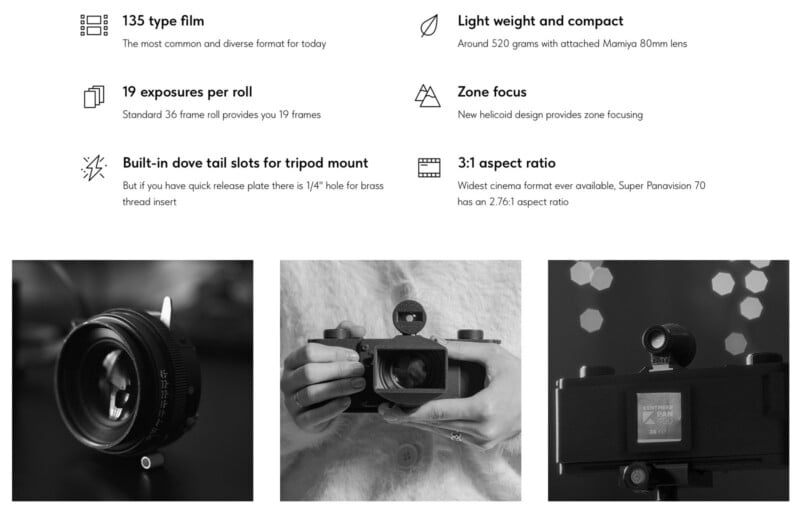
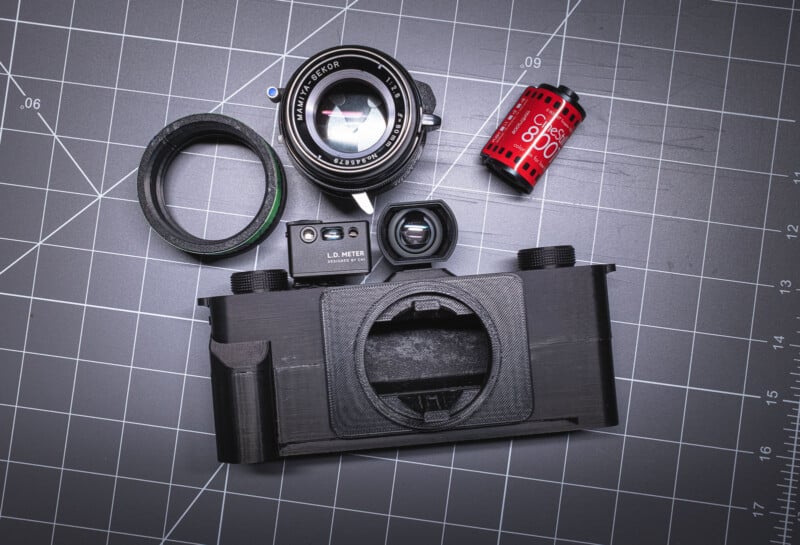
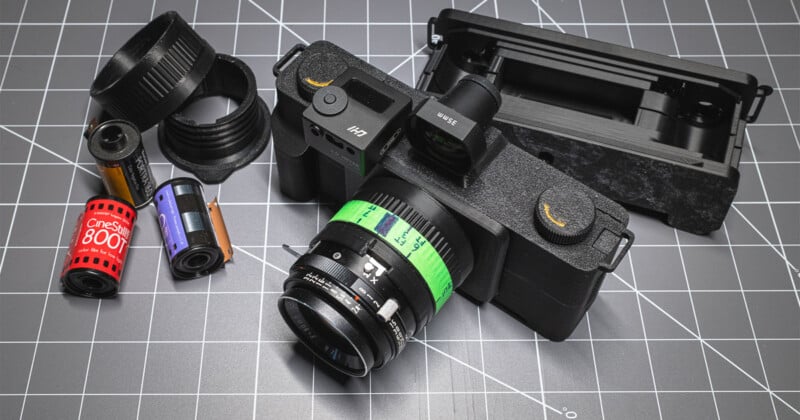
Looking first at high-level specifications, the camera takes 135 (35mm) film, and a standard 36-frame roll delivers 19 exposures. The 3D-printable camera is lightweight, uses zone focusing, has interchangeable lenses, built-in dovetail slots for a tripod mount, a carefully designed frame counter, winding shaft, film pressure plate, and more. The latest version, as the “V” in its name suggests, is Aminev’s fifth revision. He has made many improvements to the design over the years.
It’s a fantastic project that has built up a passionate cult following among photographers online, including LeRoy.
Aminev tells PetaPixel he was originally inspired to start the project because he loved the look of movies shot on film, including not only the overall aesthetic but the wider aspect ratio. He was a digital photographer at the time, but simply cropping his photos didn’t scratch the itch. An anamorphic lens and adapter he bought didn’t hit the spot, either.
“I saw Jason Kummerfeldt’s video about X-Oan, and a feeling was overcoming me, and I realized I had basically everything I needed, so I began studying the basics of film,” Aminev says.
He started in February 2024 with a successful pinhole camera, which Aminev says “blew my mind.”
“Apparently you can make images with such basic tools.”
 Credit: Jace LeRoy (analog_astronaut)
He then moved on to a full-blown film camera, building it using a repurposed lens from a Lomo Lubitel 166.
Coming to grips with 3D-printing technology was a significant challenge in the earliest days of the project, so he kept early prototypes very simple and worked to reverse engineer a Canon FP 35mm SLR, replacing parts piece by piece with 3D-printed ones.
“So from the prototype to a working camera, let’s call it the third model, it took about two to three months,” Aminev says. “The fourth model was ready in August 2024, and it took another half a year to achieve the fifth version.”
 Credit: Jace LeRoy (analog_astronaut)
The photographer says he “wasn’t in a hurry at all,” but that’s pretty swift work.
Each revision has maintained the trademark simplicity of Aminev’s earliest private prototypes, something he says he is very proud of.
“Other cameras from different creators are often too big or clumsy, or both at once. They are cool, don’t get me wrong, they were inspiring, and they work in the right hands absolutely find. Also, some of them are very beautiful looking,” Aminev says. But the Infidex 176 V, it’s simple.
“It’s just a light-tight box with some knobs,” the creator says.
 Credit: Jace LeRoy (analog_astronaut)
Originally, Aminev just really wanted to make a camera for himself that captured the cinematic, ultra-wide photos he desired. But once realized it worked and it was actually fairly easy to make, he started sharing it with others. He wanted to maintain a small, tight-knit community of photographers who are really passionate about the camera, so he has never offered pre-built models for sale. It’s a totally open-source camera project, so if others take his designs and make tweaks, that’s great. But Aminev doesn’t want to do it himself.
“I love panoramic photography and I want to share it with others,” Aminev says.
His love affair with photography has been long-standing. He picked up his first camera when he was just six, and his mother gave him an old point-and-shoot to play with.
“I made a few shots and it just stunned me,” Aminev says. “You can press the button and make this?! Holy moly! Then I asked for a digicam, a small one with a retractable lens. It was so much fun to use.”
Eventually, the budding photographer put down the camera to focus on music, but in 2020 he started using a camera again as part of his job at a community center, and all the reasons why Aminev fell in love with photography as a child came rushing back.
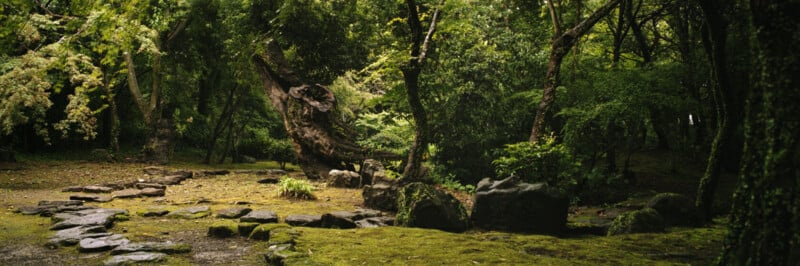 Kodak ColorPlus 200 | Credit: Denis Aminev
 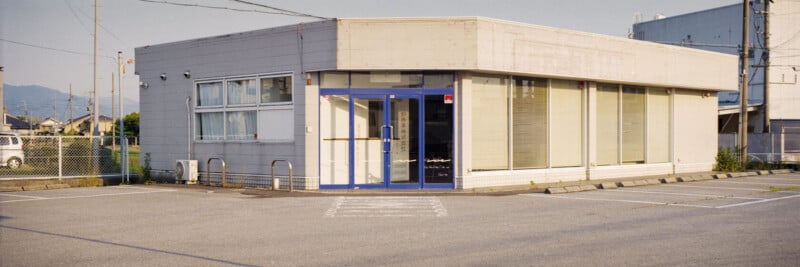 Kodak Gold 200 | Credit: Denis Aminev
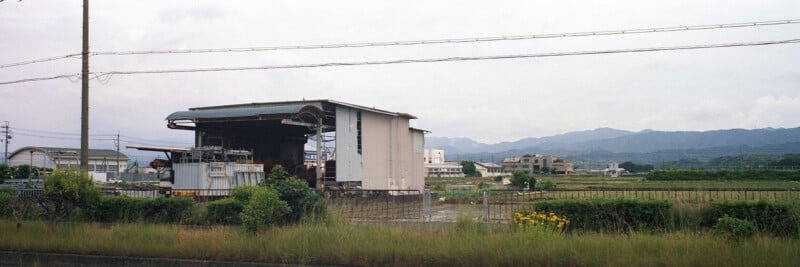 Kodak Vision2 500T | Credit: Denis Aminev
“I bought a Canon EOS M50 and spent a lot of my savings for lenses, then a Fujifilm X-T4 because I wanted to shoot some short films too. Somewhere at the end of 2022 I started to watch Jason [Kummerfeltd’s] videos about road trips and I switched to film and started to travel. And here we are.”
As for panoramic photography, like what Kummerfeldt showcased with the XPan, Aminev says it helps him see the world differently, and the format has recreated the feeling he first had as a child when he picked up a camera for the first time.
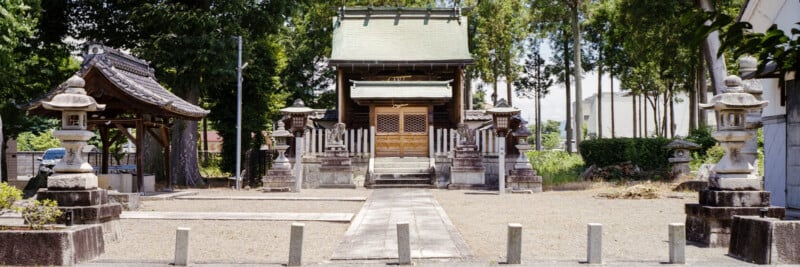 Kodak Gold 200 | Credit: Denis Aminev
 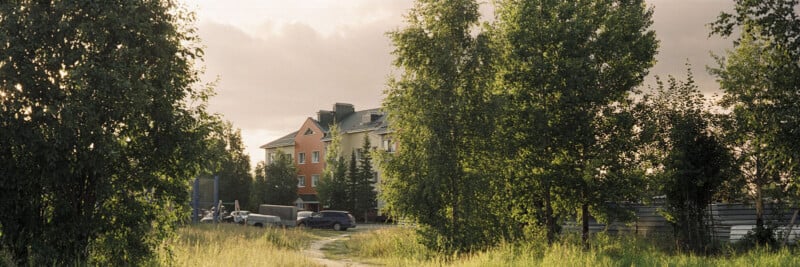 Kodak Vision2 500T | Credit: Denis Aminev
 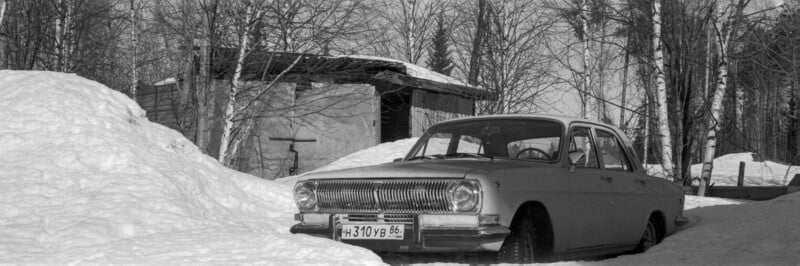 Kentmere 400 | Credit: Denis Aminev Enter Jace LeRoy (Analog Astronaut), a Fellow Lover of Panoramic Photography
Aminev’s goal to share his Infidex 176 project with passionate photographers has been realized, and one such photographer, Jace LeRoy, has been having a blast building and using the Infidex 176 V.
Like Aminev, his love of photography began at an early age. His parents bought him a Kodak Advantix 4100ix for his 12th birthday, and LeRoy says he immediately became obsessed.
“I have yet to be ‘cured’ of my affliction to this day,” the photographer jokes.
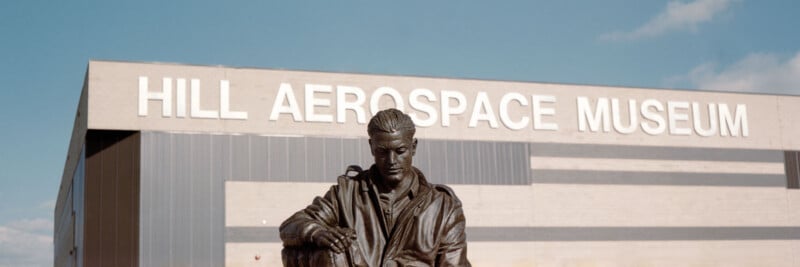 Kodak Portra 160 | Credit: Jace LeRoy (@analog_astronaut)
 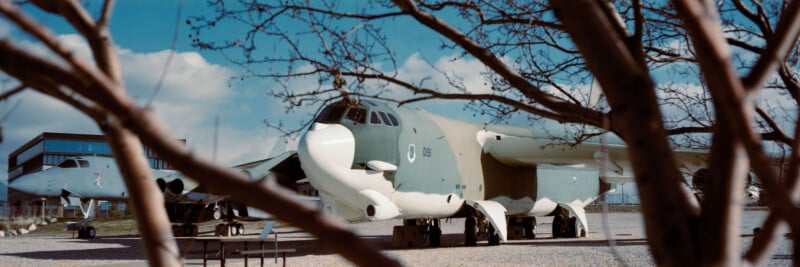 Kodak Portra 160 | Credit: Jace LeRoy (@analog_astronaut)
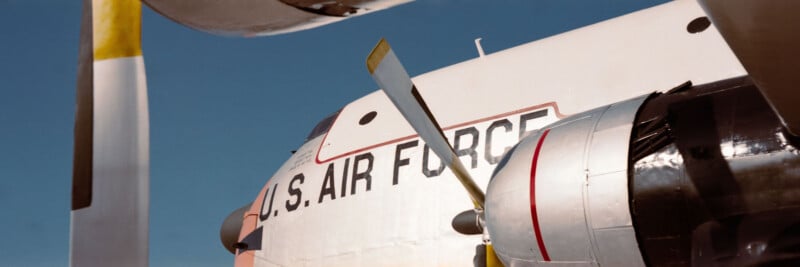 Kodak Portra 160 | Credit: Jace LeRoy (@analog_astronaut)
Like many other photographers, when the digital revolution arrived, LeRoy jumped ship. However, thankfully, as he says, film didn’t die completely and has experienced something of a resurgence in recent years.
“Once I graduated from Utah Valley University and jumped into the workforce I slowly became more jaded about my digital photography. I just felt more and more disconnected from it. It became a robotic process. On one hand it was putting food on the table but on the other it was starving me creatively,” LeRoy tells PetaPixel. “In 2019 I began to fall down the rabbit hole of wet plate photography. I taught myself how to make the chemicals, how to pour the plates, develop, and varnish. This new understanding of how the photographic process was born completely reignited my love for the art and lit the fuse to my analog obsession. Currently I’d estimate that 90% of my photography both personal and business wise is done using an analog process.”
Like Aminev, the XPan made an impression on LeRoy, too. A couple of years ago, LeRoy acquired one for himself, and as someone with a background in cinematography, the camera’s 1:2.7 aspect ratio was a “perfect fit.”
However, LeRoy knows that such a beautiful camera is outside the budget of many photographers.
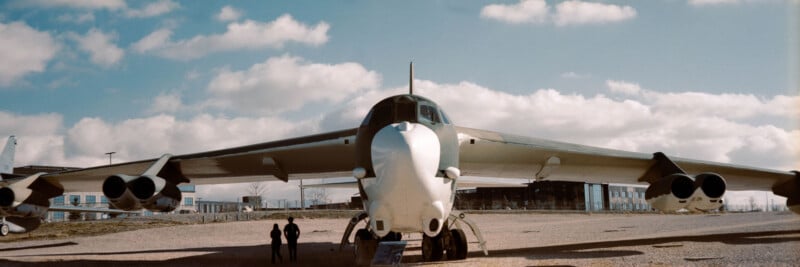 Kodak Portra 160 | Credit: Jace LeRoy (@analog_astronaut)
 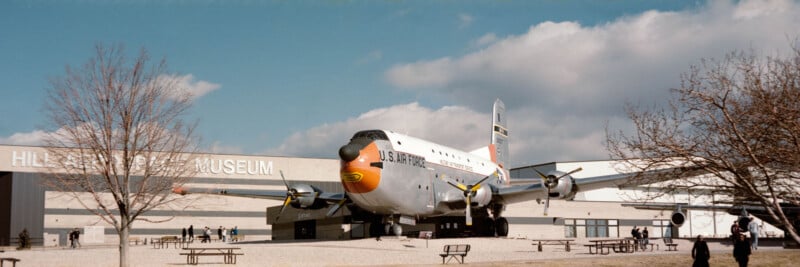 Kodak Portra 160 | Credit: Jace LeRoy (@analog_astronaut)
 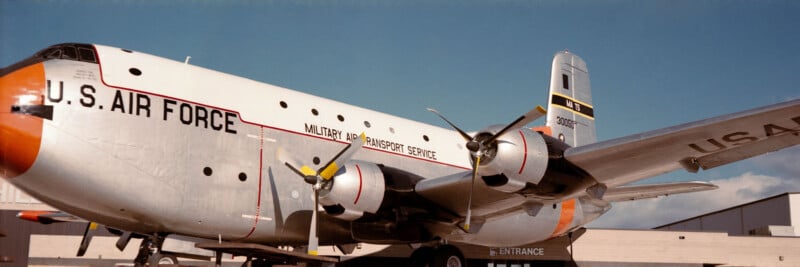 Kodak Portra 160 | Credit: Jace LeRoy (@analog_astronaut)
 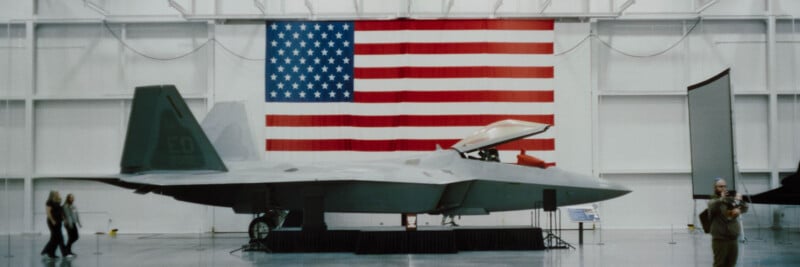 CineStill 800T | Credit: Jace LeRoy (@analog_astronaut)
 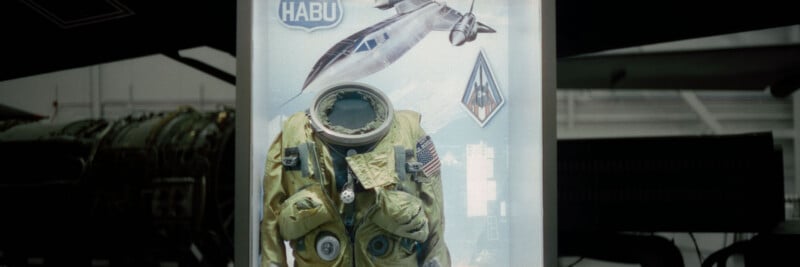 CineStill 800T | Credit: Jace LeRoy (@analog_astronaut)
 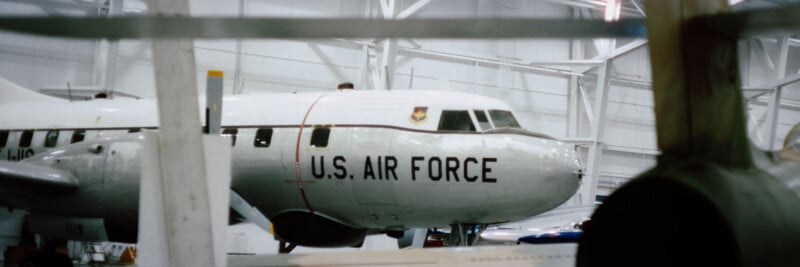 CineStill 800T | Credit: Jace LeRoy (@analog_astronaut)
“Every time I post images online from my XPan I get a flood of people asking what camera I used and then inevitably they return to my inbox frustrated when they see the listed prices on eBay. This happened frequently enough that I decided to venture online to see if anyone had designed a cheaper version of the XPan at some point in history,” the photographer says.
He found many different projects, but the Infidex 176 V caught his eye.
“The moment I stumbled onto this project I knew I needed to immediately build one. From there I picked up an 80mm f/2.8 from a Mamiya C330, printed out the parts, and followed the provided instructions to assemble the rig,” LeRoy says.
He was pleasantly surprised that he didn’t run into any roadblocks during the build.
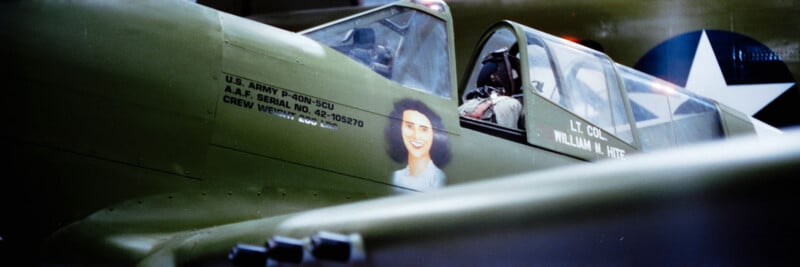 CineStill 800T | Credit: Jace LeRoy (@analog_astronaut)
 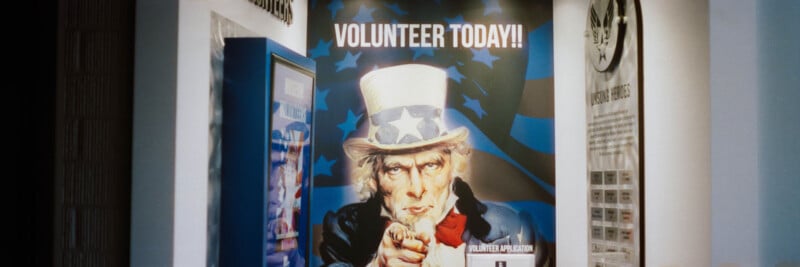 CineStill 800T | Credit: Jace LeRoy (@analog_astronaut)
 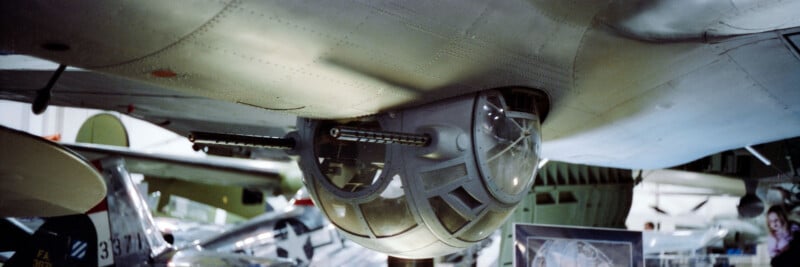 CineStill 800T | Credit: Jace LeRoy (@analog_astronaut)
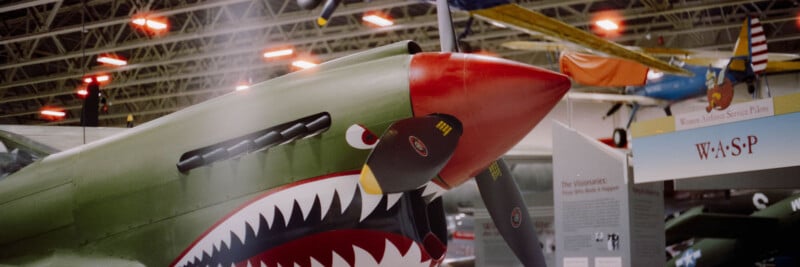 CineStill 800T | Credit: Jace LeRoy (@analog_astronaut)
 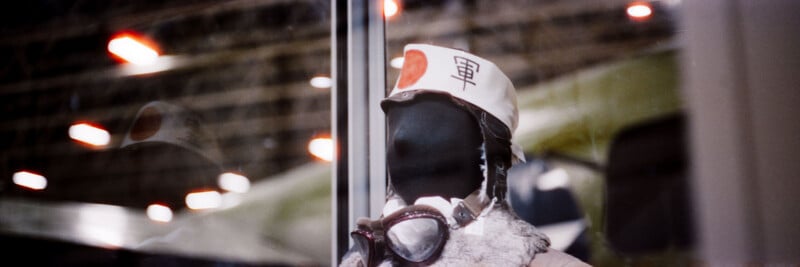 CineStill 800T | Credit: Jace LeRoy (@analog_astronaut)
“As anyone who’s into 3D printing knows, it’s rare that you don’t encounter problems with projects like these usually requiring reprints and a lot of trial and error. My two biggest concerns were light leaks and making the correct focal indexing on the focus ring. For light leaks I just made sure to use wood clamps when gluing the parts together to form a tight seal. The camera itself has built in light traps as well. In order to find the correct focus I decided to make a custom piece of ground glass made from a lab slide normally used for microscopes. Once I had that finished I simply taped the ground glass to the film plane and used a loupe to check all of my focal distances.”
While he was shooting his first test roll, LeRoy admits he remained skeptical.
“I kept thinking to myself, ‘There’s no way this is going to work.’”
But he shot the roll, and the results were excellent.
“It performed beautifully!” LeRoy says of the Infidex 176.
“Obviously a 3D printable camera held together by glue and faith aren’t here to replace a finely tuned machine like the XPan but it may be a glimpse for what we have waiting for us in the future. One day all the XPANS on the planet will break. Their electronics will fizzle out, mainboards will fry, and delicate parts will become ancient relics,” the passionate photographer says. “Perhaps 3D printed cameras will become a normal thing in the next 10 years allowing us to keep analog photography alive for the next century. Nobody can be sure, but what I do know is that I’m here to support and nerd out on anything and everything that has the potential to keep this art form from dying.”
Build the Infidex 176 V for Yourself
As Jace LeRoy discovered, the Infidex 176 V is a very well-designed, 3D-printable camera. It makes panoramic 35mm photography significantly more accessible, and anyone with access to a 3D printer can give it a try for themselves. All the necessary files, instructions, and a detailed assembly guide is available to download for free on Time to Waste. The name is certainly something of a misnomer, though, as building the Infidex 176 will be anything but a waste of time.
While Aminev doesn’t sell pre-built Infidex 176 cameras, any photographers who run into issues building it for themselves are invited to contact him for help.
Image credits: Denis Aminev (Time to Waste) and Jace LeRoy (analog_astronaut).