
 Long gone are the days when Guinness’s only sporting association was with rugby.
Since 2024, the Diageo-owned stout has been building foundations in football, kicking off its Premier League partnership at the start of 2024/25 football season before signing deals with Arsenal, Newcastle and Aston Villa for their men’s and women’s teams last summer.
It’s so far paying off for the brand, which had risen to become the number one beer in the football viewing occasion in the on-trade in Great Britain, according to Alcovision data from March 2025.
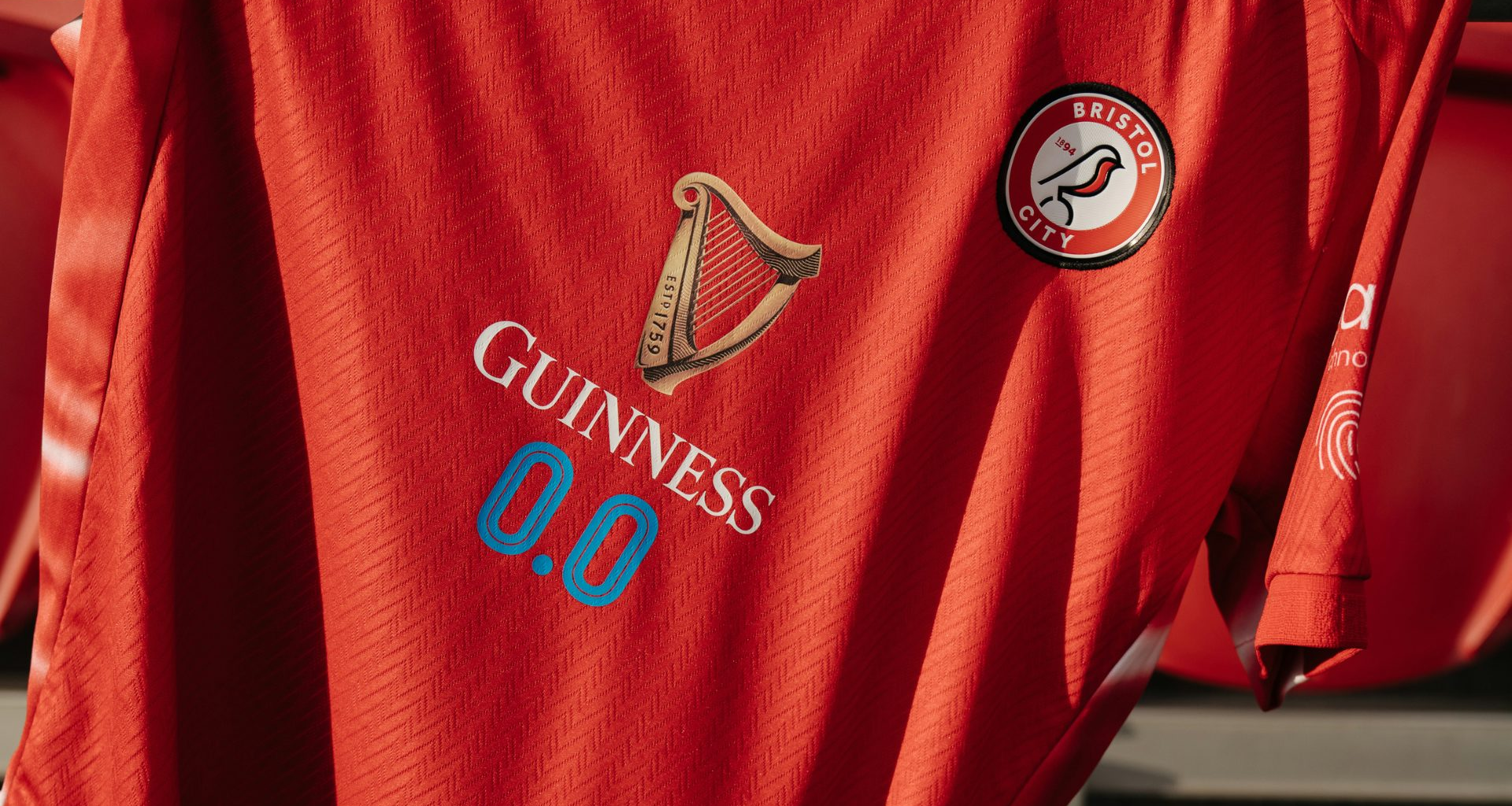
But if consumers were asked where Guinness would show up next in football, they may not have guessed it would be as the front of shirt sponsor for Bristol City Women, a club playing in the second division of women’s football, WSL2.
It’s the first time in three decades that Guinness is on the front of a UK football shirt.
However, the opportunity to partner with Bristol City presented “really interesting, different ways into culture,” for the brand, Jamie Brooks, sports partnerships lead at Guinness, tells Marketing Week.
Extending further in football
The deal was turned around in just a few months, making it, from Brooks’ perspective, “the fastest turnaround in getting a partnership contractually done” and highlighting the “excitement and interest” from Diageo.
The brand has seen an increase in football partnership propositions since signing its deal with the Premier League in 2024, so why go for Bristol City? “Sometimes the energy feels right. The ambition and the shared ambition for the partnership felt right,” he says.
Guinness has entered football “in a very confident way,” he says, but the brand is cautious of only appearing at the highest echelons of the sport.
“One thing we were very conscious of is that when we look at the world of rugby and how established Guinness is within rugby, we don’t just operate at the top level,” explains Brooks. “Yes, we’ve got the title sponsorship for the Six Nations, but we also operate all the way through several tiers of rugby.”
It’s “really important” for the brand to do the same in football, he says, and the Bristol City partnership presents an opportunity to extend into women’s football “in a really meaningful way”.
“The headline is obviously the front of shirt,” says Brooks, particularly as there’s increased interest in appearing on players’ chests at the moment with upcoming legislation around what brands can appear there.
While he admits it’s a “really interesting” deal that will allow Guinness to “test out” a channel it hasn’t used in decades, the real pull was “the other elements of the partnership that were on the table”.
“Guinness doesn’t have a problem with visibility and awareness,” he says. “We’re having a really incredible run at the moment in that sense. But what we’re really striving to do and looking to use sports as a platform to do, is drive meaningful connections with fans.”
There are the tangible metrics that we’re all measuring, but I think it’s that intangible magic that we’re still getting our heads around.
Jamie Brooks, Guinness
Plus, the South West is an important commercial region for the brand. To help on this front Guinness is also donating partnership assets to local trade, “particularly female-owned local trade” among other activations.
“It’s great to see Guinness on a front of shirt. We’re really excited by that. But that’s just one element of the overall partnership proposition that got us excited,” Brooks explains.
Mercury13, an independent multi-club ownership group investing in women’s football, took a majority stake in Bristol City last September, allowing it to spearhead investment, infrastructure and commercial opportunities.
The group’s chief revenue officer, Lindsey Eckhouse, says the Guinness partnership highlights “there’s really a lot of value in investing in women’s sport outside of eyeballs”, beyond the number of people watching each match.
Men’s football deals typically focus on audience and reach. Selling deals in women’s sport is “really different”.
“That’s the big opportunity, what’s the role a brand like Guinness can truly, authentically play? When it comes to culture, rituals, engaging the local community and beyond that,” she says.
For Guinness, the brand’s “strongest” work is when it’s “telling an untold story,” says Brooks. This is where the “magic of football” comes in, he says, pointing to its ‘Liberty Fields’ campaign from 2019 as an example, which told the story of Japan’s first female rugby team.
Measuring investment in women’s football
Brands investing in both women’s and men’s sport often measure the ROI differently, given the different stages of advancement.
For Guinness, the brand is “still designing what that model looks like” for measuring success.
“We’re very lucky that we are able to measure a direct ROI on site through all of the sport work we do,” says Brooks.
In rugby, you’d be hard pressed to go to a game without drinking a pint of Guinness or Guinness 0.0, he says. “Our ambition is to look to replicate some of that success within football, and become part of the ritual.”
There’s the tangible data points the brand can measure with its investment in women’s football. But there’s also “intangible” success measures that are harder to track, he says.
It could be a metric the brand hasn’t landed on yet, or something it could “subjectively feel” it’s achieving, laddering up to “being a credible part of culture within women’s football”.
“There are the tangible metrics that we’re all measuring, but I think it’s that intangible magic that we’re still getting our heads around. What does success really look like for us on a deeper level?”
Eckhouse adds that in women’s football, measurement is “being developed across the board”.
It still gets compared to the men’s game, despite being a “completely different product, consumed very differently by fans,” she argues. “So being in stadium isn’t necessarily the right measure of fandom in the women’s game.”
What makes this partnership exciting, she adds, is that there’s “a lot of innovation” the two parties can do to bring it “to life, together”.
Guinness wants to be “building by design,” adds Brooks, rather than taking a “copy and paste” approach from the men’s game.
Regarding the future of Guinness’s sport sponsorship activity, and whether the brand will start showing up on the front of more football shirts, Brooks say it’s focus is on how it can knock the partnerships it already has “out of the park”.
“The easiest thing to do in this job is just to say yes to everything. I think it’s much harder to actually focus on properly activating and leveraging the assets and the partnerships [we have],” he adds.