
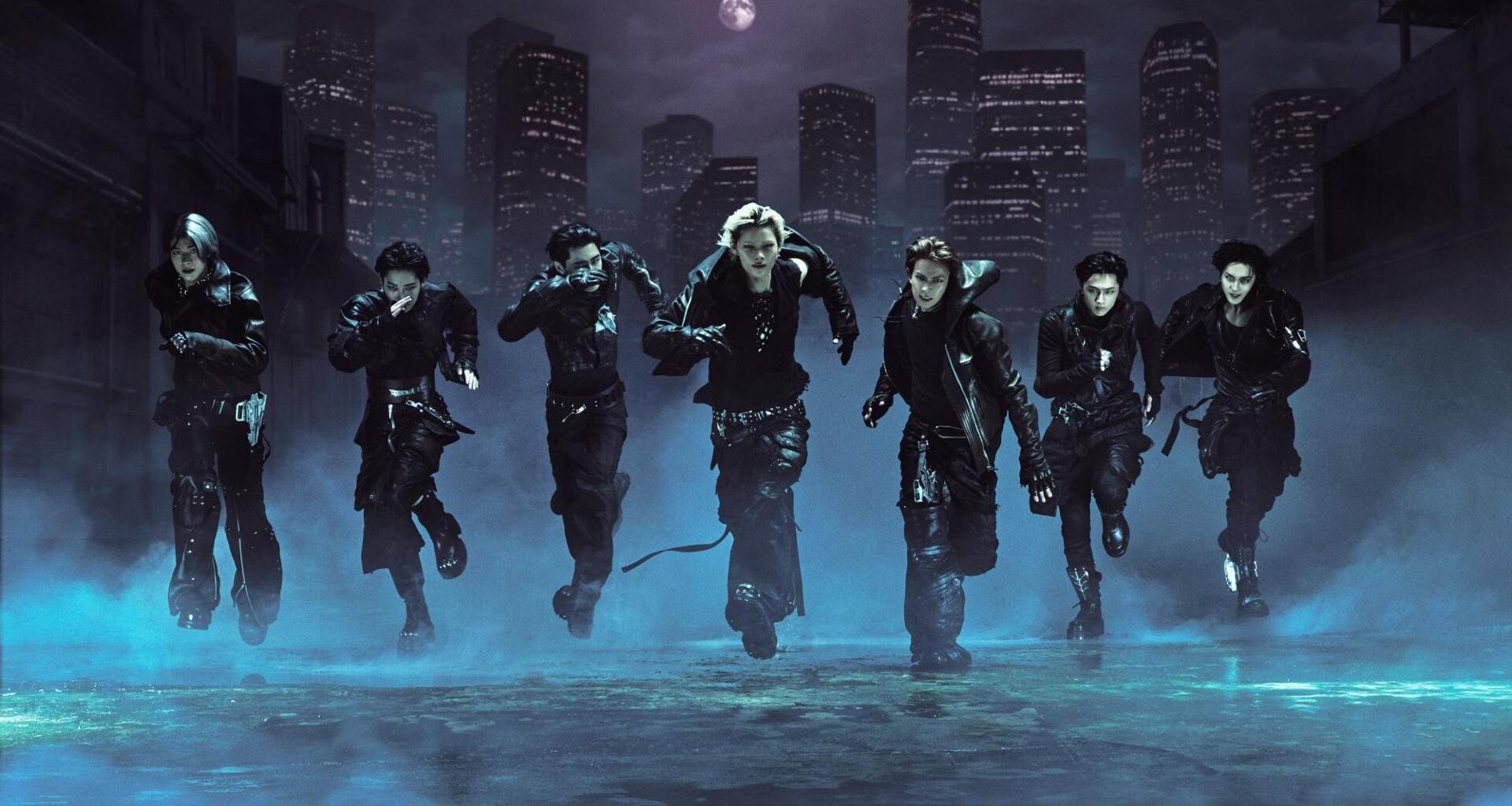
K-pop boy band ENHYPEN / Courtesy of Belift Lab
In K-pop, idols can be superheroes, werewolves, vampires and pirates, all inside elaborate fictional worlds rich with their own lore.
These self-made universes showcased the genre’s imagination, framing each comeback within a larger narrative that stretched across music videos, lyrics and visuals. Albums started feeling less like isolated releases and more like chapters in a continuing story, with cryptic teaser films and hidden clues turning world-building into one of K-pop’s most playful creative endeavors.
Over time, however, that lore grew into something bigger than just storytelling.
What began as a fun narrative layer expanded into a production framework linking music with webtoons, games and wider branding strategies. As labels positioned idol groups as long-term intellectual properties (IPs), world-building became more systematic — even as a new wave of artists began stepping away from overt storylines to keep the focus on the music itself, reflecting K-pop’s ongoing evolution as a comprehensive art form.
Birth of lore
The roots of fictional universes in K-pop trace back to early third-generation acts that began experimenting with continuous storytelling instead of isolated comeback concepts.
Among the most influential was SM Entertainment’s EXO, whose debut-era mythology introduced the then-12-member boy band as extraterrestrial beings with superpowers connected through a shared “Tree of Life” narrative — one of the first large-scale attempts to anchor a group inside a fictional world.
The universe unfolded through an unusually long predebut rollout of cinematic teasers, each framing a member’s abilities within a larger cosmic mythology. That narrative took clearer shape with early releases like “MAMA” (2012), whose dramatic spoken prologue laid out the group’s origin story, and later teaser films for “Call Me Baby” (2015), which reignited the superpower arc across a global setting.
Although EXO gradually moved away from overtly supernatural storytelling, it primed K-pop fans for the idea that a group’s identity could stretch across multiple eras and become a cohesive narrative language. EXO’s experimentation helped show that lore could function not just as fantasy, but as long-term branding — a strategy that that would influence many more K-pop acts to come.
Evolution
That logic reached a turning point with K-pop juggernaut BTS, whose universe transformed lore from a conceptual backdrop into a cross-media storytelling system.
Instead of leaning on fantasy mythology, the group rooted its narrative in emotion, weaving themes of youth, loss and choice through their “Most Beautiful Moment in Life” series, which begun in 2015, and later albums such as “WINGS” (2016) and the “Love Yourself” trilogy (2017-18).
BTS also became one of the first K-pop acts to push its fictional world beyond music, expanding into serialized formats like the webtoon “SAVE ME” and later projects such as “7FATES: CHAKHO.” The move reframed lore from promotional storytelling into expandable IP, establishing a blueprint that later acts would turn into a repeatable production model.
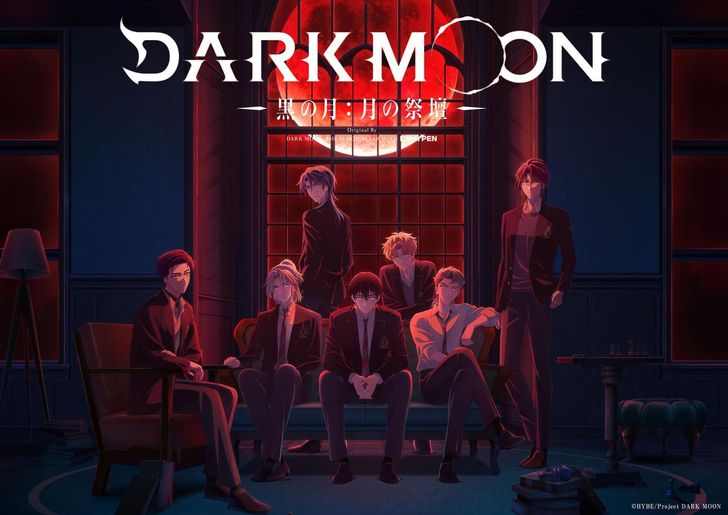
The official poster for boy band ENHYPEN’s Japanese anime series, “Dark Moon: The Blood Altar” / Courtesy of Belift Lab
By the early 2020s, that approach had grown more systematized.
Another HYBE Labels group, ENHYPEN, aligned releases like “BORDER : CARNIVAL” (2021) and “DIMENSION : DILEMMA” (2021) with the vampire-themed webtoon and anime series, “Dark Moon: The Blood Altar,” folding narrative arcs directly into album cycles.
Its Japanese labelmate &TEAM adopted a parallel framework built around wolf symbolism and seasonal transformation tied to “First Howling : WE” (2023), showing how shared narratives could be adapted for different markets.
Meanwhile, SM Entertainment charted a different path with girl group aespa, embedding digital avatars known as “æ,” the virtual figure known as “nævis” and the fictional space “KWANGYA” into the group’s identity, from debut single “Black Mamba” (2020) through albums like “Savage” (2021) and “Girls” (2022). Where other earlier fictional universes leaned on character-driven fantasy, aespa’s concept arrived with the industry’s growing fascination with artificial intelligence and early metaverse discourse.
The technological framing also reshaped how lore functioned in practice — terms like KWANGYA and nævis moved beyond storylines into SM’s promotional language and fan communication under the broader SM Culture Universe framework, signaling how world-building had begun to merge with a label’s branding.
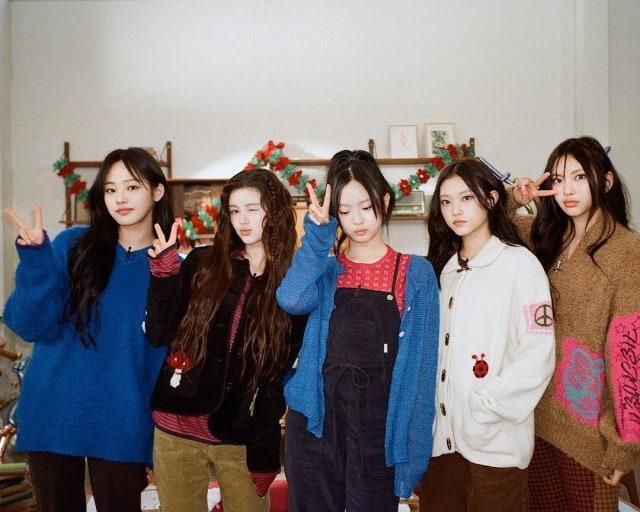
Then-five-member K-pop girl group NewJeans / Captured from X
Return to basics
Despite the creativity, not every experiment landed smoothly.
JYP Entertainment girl group NMIXX approached lore from yet another angle, blending narrative with sonic experimentation through a fictional realm called “MIXXTOPIA” and what they called “mixxpop,” a production style built on sudden genre shifts and contrasting song structures within a single track.
The group’s early releases like “O.O” and “DICE” reflected that philosophy, pairing a dimension-hopping storyline with abrupt changes in tempo and mood. While some listeners praised the ambition, others felt that both the unfamiliar terminology and challenging musical structure created barriers to entry for casual audiences.
As experiments like these divided listeners, the prominence of lore as a defining trend began to soften.
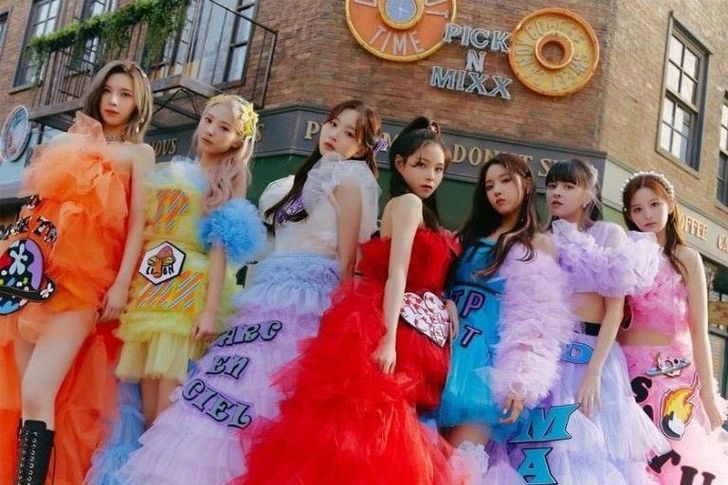
Then-seven-member K-pop girl group NMIXX / Courtesy of JYP Entertainment
The shift became most visible with the debut of girl group NewJeans in August 2022.
The girl group’s rise with easy listening pop — largely free of world-building and rooted instead in themes of youth, playfulness and nostalgia — signaled a broader recalibration within the industry. As K-pop moved into a postpandemic era and audiences gradually returned to offline interaction, labels increasingly leaned toward hook-driven tracks designed for dance challenges and everyday conversation rather than expansive fictional narratives.
In the current landscape, lore itself has not disappeared. Instead, its role has changed.
What once functioned as mythology has evolved into a more flexible production tool — something companies could scale up or tone down depending on audience response.
As listening habits continue shifting toward immediacy and platform-driven consumption, the question facing K-pop is no longer whether lore belongs in the genre, but how prominently it needs to be foregrounded within an ever-changing industry landscape.