
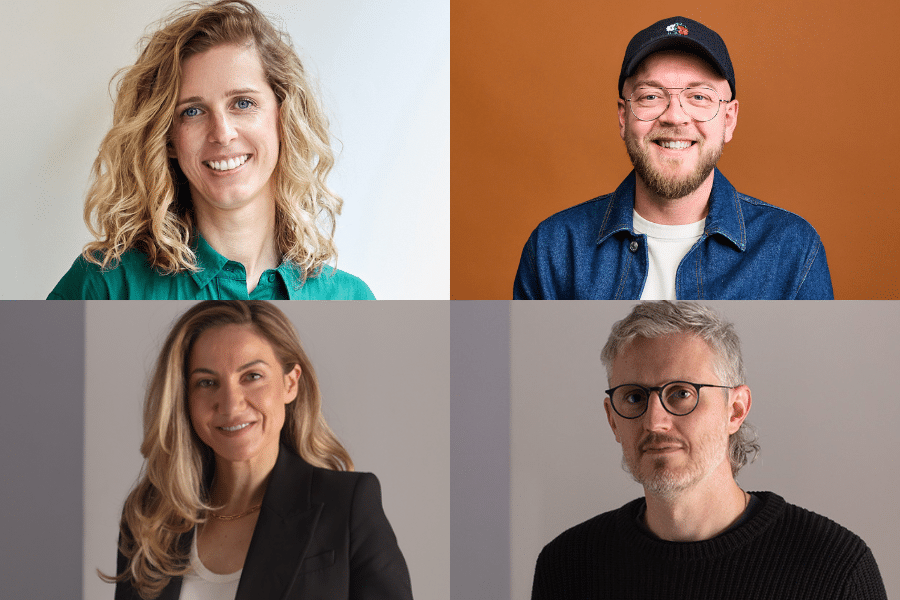
As AI quickly reshapes the creative industries, design agencies are grappling with a paradox: never before has it been so easy to make things, yet never has it been harder to make something that truly stands out. B&T spoke with Weave, Accompany and Houston Group to learn how they’re responding.
Across conversations with the three design agencies, one message came through loud and clear: while AI is transforming workflows, the future of brand differentiation will be led by human taste, craft and deeper brand thinking.
Amongst many clients, the agencies all noticed an intensified desire for work with a human touch. Clients are seeking work that rejects automated aesthetics and are embracing tactics like crafted visuals, empathetic language, humour, imperfection and timeless storytelling.
The prevailing view is that projecting this essential humanity builds trust in an increasingly synthetic world, particularly when the product or service is highly technological or service-led.
“Creative sentiment is mixed. Amongst many there is an intense optimism, as many practitioners and businesses realise that brand and design fuelled by empathy, creativity and bespoke craft drives competitive advantage and is best delivered by human expertise,” Accompany’s executive creative director Linda Jukic said.
“However, concern co-exists over the rapid commoditisation of design, driven by market pressures where many businesses now accept ‘good enough’. This dichotomy is demanding a sharper, non-negotiable focus on delivering undeniable, strategic value”.
What ‘the human touch’ looks like in collaboration with AI
For most agencies, AI has already become part of the daily toolkit. Mostly, it’s being used on the peripheries of the creative process, not at its core.
At Weave, AI is helping accelerate ideation and production.
“We’ve found it most useful at the top and tail of the process,” Weave’s co-founder Marijana Simunovic said.
“It’s incredibly powerful for research, summarising complex briefs and creating early mock-ups, and then again in post-production — but humans still do the middle bit”.
That balance has delivered tangible gains. Weave cites examples such as using AI to transform unusable photography — like empty wine glasses from a shoot — into finished, campaign-ready imagery.
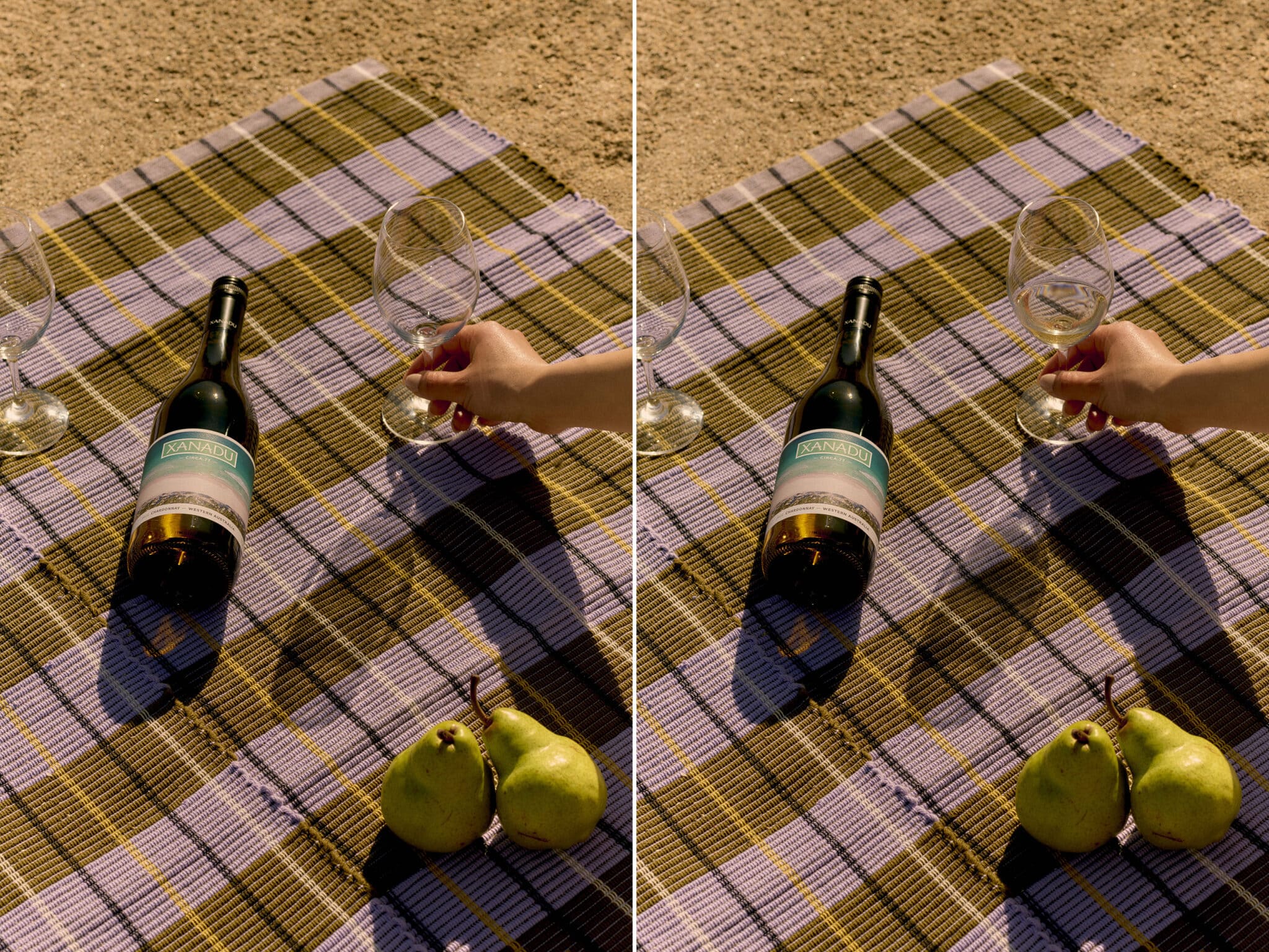 Xanadu – empty wine glass (before, left) and AI-enhanced wine glass (after, right).
“A shot that would traditionally never see the light of day suddenly becomes usable with the click of a button,” Weave executive creative director Dan Cookson said.
Accompany, too, has integrated AI into daily processes for things like summarising meetings, research, refining copy and image editing.
“That efficiency frees us up to focus on where we deliver true value: deep strategic thinking, imaginative ideas and high-level craftsmanship,” Accompany’s Jukic said.
“AI weaves efficiency and opportunity; design brings depth and meaning. When used in a rudimentary way, AI will only draw from what has come before. Designers have the advantage of shaping something unique and enduring,” Houston Group ECD Alex Creamer said.
The return of the (visibly) human touch
“We’re getting used to seeing a lot of generic sameness in the world. I think there’s going to be more value placed on things that are handmade, tactile and a little bit imperfect,” Weave’s Simunovic said.
That belief is embedded in Weave’s practice, where illustration, collage and physical making are core capabilities. One example is the rebrand of Pizzini Wines’ premium cellar-door range, where historic family photographs were hand-stitched by a creative director to form the label artwork.
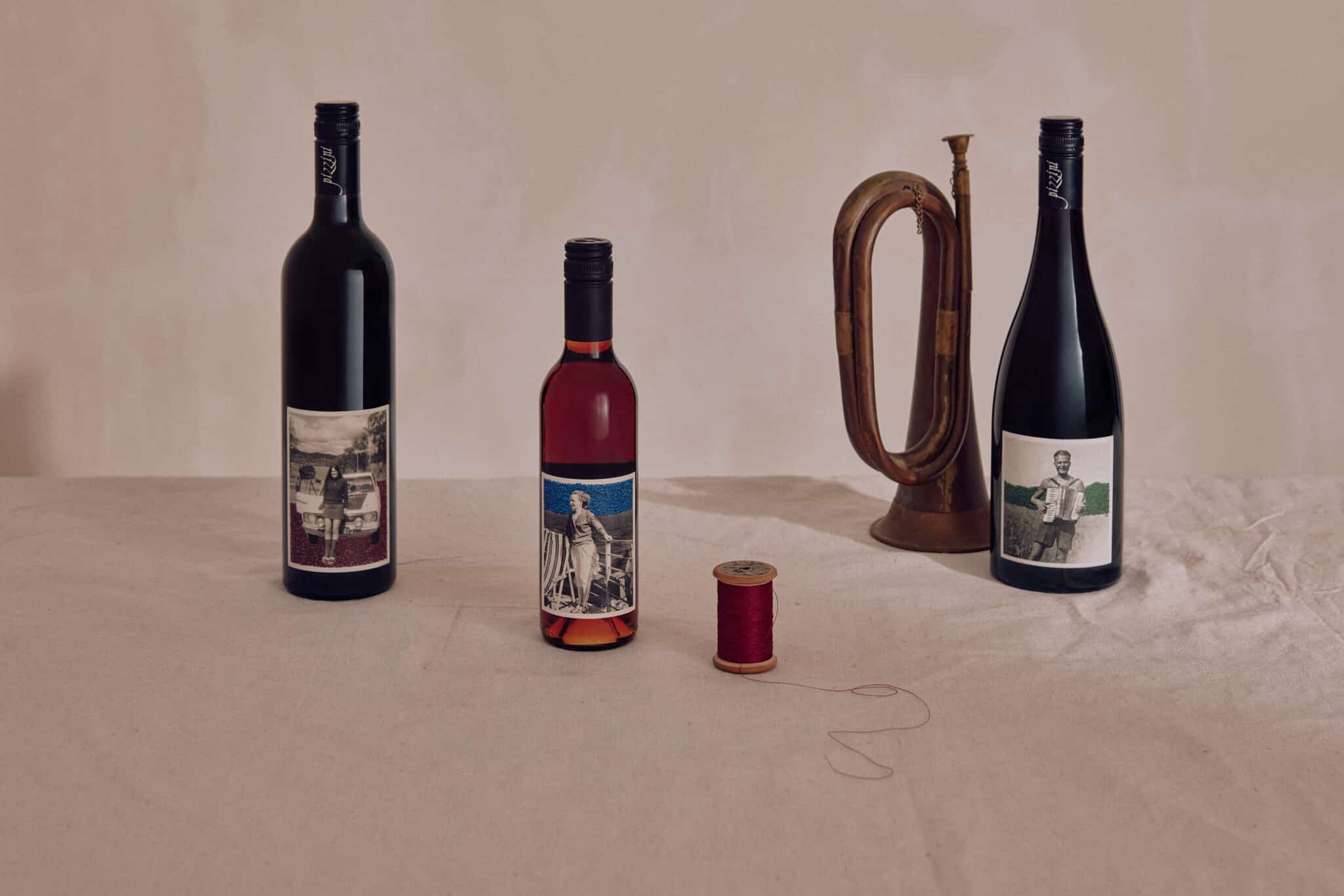 Pizzini Wines rebrand.
“People still comment on those labels to this day,” Weave’s Simunovic said.
The desire for a visibly human-made aesthetic is connected to a distinction between timeliness and timelessness.
“You can see the shift across the industry: some brands want to be timely and others timeless. The former have leaned more into AI, helping support the fast-paced nature of some sectors. While others are deliberately moving away from it towards a focus on craft, like Telstra’s more tactile, handmade approach,” Creamer said.
“It’s also worth looking at AI as just one tool in a wider arsenal. Newer platforms like TouchDesigner, and other node-based, real-time tools are changing how brands get built altogether, opening up ways to create real-time assets that feel far more alive than traditional design software has allowed.
From purpose to ‘brand worlds’
Beyond aesthetics, agencies are also seeing a shift in how brands are being conceived altogether.
Weave describes this evolution as a move toward brand world thinking — a broader, more immersive approach to brand building.
“Five years ago, brand projects were about purpose and flexible systems,” Weave’s Cookson said.
“Now clients are asking for richer worlds — with depth, texture and storytelling — that can live across culture, experiences, packaging, retail and events”.
Simunovic likens it to cinematic world-building. “Think Marvel rather than a standalone film. A brand world gives you flexibility, but also clarity about who you are and how you show up”.
Accompany’s “head and heart” philosophy aligns closely. “We move beyond products and services, focusing on the impact, story and value a brand brings. That’s how you create emotionally resonant brand worlds that audiences actively choose,” Accompany’s Jukic said.
Houston Group is seeing similar needs from clients who are emerging from years of constrained investment. “They want engaging identity systems, but anchored in deep problem solving, not just aesthetics,” Houston Group’s Creamer said.
A tougher market and a sharper focus
While there’s optimism around the value of design, there’s no denying the pressure creatives are feeling.
“The job market is tough. Junior and graduate opportunities have evaporated, and studio closures have gone largely unspoken,” Houston Group’s Creamer said.
Still, he sees cause for hope: “Clients are becoming more cost-conscious and are looking for nimble, creatively led teams. Historically, great work often emerges from hard times”.
“There’s optimism around the power of bespoke, human-led design — but also concern about commoditisation and ‘good enough’ thinking,” Accompany’s Jukic said.
“That demands a non-negotiable focus on delivering undeniable strategic value”.
For Weave, that value lies in taste and storytelling — qualities AI can’t replicate. “Taste is an intangible thing. Anyone can prompt AI, but without taste and curation, you end up with generic first results,” Cookson said.
In an era of democratised tools and in-house teams, the role of design agencies is evolving, but far from disappearing.
“A vision is just a vision until it’s made tangible. Design agencies act as strategic catalysts, translating abstract ideas into distinctive expressions that can live confidently in the world,” Accompany‘s Jukic said.
“Brand agencies are wired to put the work in at the beginning. Strategically backed, well-crafted design travels further and lasts longer than quick fixes,” Houtson Group’s Creamer said.
Great work also relies on great partnership. “Our best work happens when clients step into the arena with us. When there’s trust, collaboration and a shared belief in the value of craft — that’s where brands are truly set up for success,” Weave’s Simunovic said.
In a world increasingly shaped by algorithms, the design agencies that will thrive are those doubling down on what machines can’t replicate: human insight, taste, and the ability to tell stories worth caring about.
Join more than 30,000 advertising industry experts
Get all the latest advertising and media news direct to your inbox from B&T.
Subscribe