
[Photo: Getty Images]
High-level discussions between LIV Golf and Australian golf’s key decision-makers have reopened an uncomfortable but increasingly unavoidable conversation: how Australia’s flagship tournaments can remain globally relevant in an era of ballooning prize pools, congested schedules and intensifying competition for elite players.
As first reported by News Corp in the past few days, LIV Golf chief executive Scott O’Neil reportedly met with Golf Australia CEO James Sutherland and Australian Open tournament director Antonia Beggs in the lead-up to LIV Golf Adelaide last week. The talks form part of LIV’s broader strategy to explore partnerships with national federations worldwide, with the stated aim of injecting significant funding into traditional national championships and elevating their commercial and broadcast profiles.
O’Neil has made little secret of LIV’s ambition to play a role in “restoring” the standing of historic opens that have, in recent years, slipped down the global pecking order.
“We believe there’s an opportunity to partner with some federations – the ones who want to partner – and we believe we have an opportunity to take some prize pools up and bring some additional sponsors into the mix to help defray some of that cost and elevate the television product,” O’Neil said.
For Australian golf, the timing of these discussions is significant – and arguably overdue.
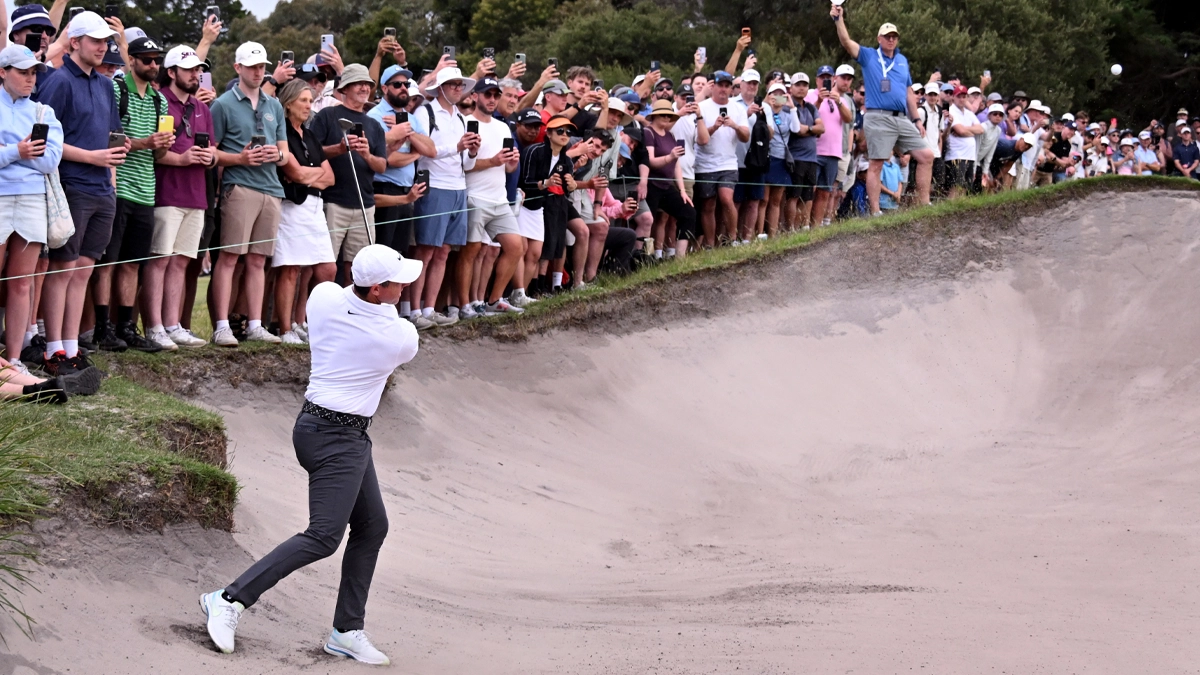
Despite a resurgence in public interest around the men’s Australian Open in December, driven in large part by Rory McIlroy’s headline appearance and crowds of more than 100,000 across the week at Royal Melbourne, the tournament continues to fight an uphill battle on the world stage. With a prize purse of just $2 million, the Australian Open remains financially uncompetitive against comparable national opens elsewhere, and critically, against rival events scheduled in the same late-year window.
Most notably, the Australian Open now runs directly up against South Africa’s Nedbank Golf Challenge, which boasts a prizemoney pool of approximately $A9 million. For globally mobile elite professionals making rational scheduling decisions, the disparity is stark. The Nedbank Challenge offers more than four times the financial incentive for players, while also delivering world ranking points and Ryder Cup qualification value through established tour structures.
In practical terms, this has left the Australian Open structurally disadvantaged. Even with strong local support, premium venues and improved commercial packaging, Australia’s national championship is being asked to compete in a marketplace where financial gravity increasingly dictates field strength.
That context helps explain why LIV’s overtures, controversial as a select few may be within traditional governance circles, warrant serious consideration rather than reflexive dismissal.
The commercial reality confronting Golf Australia is that the Australian Open, if it is to reclaim consistent global relevance rather than periodic spikes of interest, requires a step-change in funding. Incremental growth in prize money is unlikely to move the needle meaningfully when competing events are operating in an entirely different financial bracket.
The events of the past week in Adelaide have only sharpened that reality.
LIV Golf Adelaide, now in its fourth year, drew a record 115,000 spectators across the tournament – the largest attendance for a golf event in Australian history. Beyond the raw crowd numbers, the event continues to demonstrate a rare capacity to break out of golf’s traditional audience silo, attracting younger fans, first-time attendees and mainstream sporting attention in a way few golf tournaments in the country have achieved. Regardless of who plays the Australian Open, LIV Adelaide is the bucket list event in Australian golf.
From a commercial and audience-engagement standpoint, LIV Adelaide has emerged as one of the most compelling case studies in Australian sport, demonstrating what is possible when global star power, meaningful private investment and modern, experience-led event design converge. It is also a clear example of the impact that can be achieved when a state government aligns behind a long-term vision.
The South Australian Government’s investment in the North Adelaide golf precinct positions LIV Golf with a permanent local base and, potentially, a blueprint for similar ‘home venues’ in other international markets as the league continues to expand. In practical terms, North Adelaide is set to become the de facto home ground of Ripper GC, while also operating for the other 51 weeks of the year as a leading public golf facility for South Australians. The model offers a rare dual outcome: anchoring a global sporting product in a local community, while simultaneously delivering meaningful grassroots participation and long-term benefits for everyday golfers.
This opportunity presents Golf Australia with a strategic inflection point. The question is no longer whether LIV can move the needle in Australia, as that has been answered emphatically at the turnstiles in Adelaide, but whether the national governing body can afford to ignore a potential source of capital capable of materially changing the trajectory of the Australian Open.
Importantly, O’Neil has framed LIV’s approach as collaborative rather than competitive with national federations.
“How can we actually make them matter more again? And can we be of help in that? That’s why I’m so interested,” he told News Ltd. “They’re so aligned with what we’re about.”
Any formal partnership would, of course, require careful navigation of Golf Australia’s existing relationships with the DP World Tour, the PGA Tour of Australasia and broader international stakeholders. LIV players continue to sit in a complex regulatory space, with ongoing appeals around DP World Tour sanctions and unresolved structural tensions between golf’s major tours. Surely these will fade soon into the rear vision mirror and so they should.
Yet the commercial fundamentals are difficult to ignore. Australia’s national championship is currently operating in a global environment where prestige alone no longer guarantees relevance. Field strength, broadcast reach and sponsor appetite are now closely correlated with prizemoney and commercial scale.
From a strategic standpoint, it would be prudent – arguably necessary – for Golf Australia to at least engage in extensive, transparent discussions around what a LIV-backed funding model could look like, how it might be structured to protect governance independence, and whether it could co-exist with existing tour relationships. Exploring such options does not preordain acceptance; but failing to explore them risks leaving the Australian Open continually underpowered in an increasingly unforgiving global marketplace.
From where I sit, Golf Australia needs to engage constructively with LIV, because the reality is the PGA Tour has largely overlooked Australia for far too long. Yes, we have hosted Presidents Cups, but those events have come at significant cost to local stakeholders (we pay to host such events). Australia continues to produce world-class players, yet remains peripheral on the global schedule. It’s easy to write this from behind a desk rather than sitting in the hot seat James Sutherland occupies, but in that context it would be strategically negligent not to explore dialogue with an organisation that is actively investing in Australia, attracting record crowds, and signalling a long-term commitment to the local game.
The fact that these conversations are now taking place at CEO level underscores how rapidly professional golf’s power dynamics continue to shift, and if the past week in Adelaide is anything to go by, the Australian golf public are on board.
The question is not whether change is coming, it is whether the custodians of the national championship and the wider game are prepared to actively shape that change, or continue competing at a financial disadvantage against a world that has already moved on.