
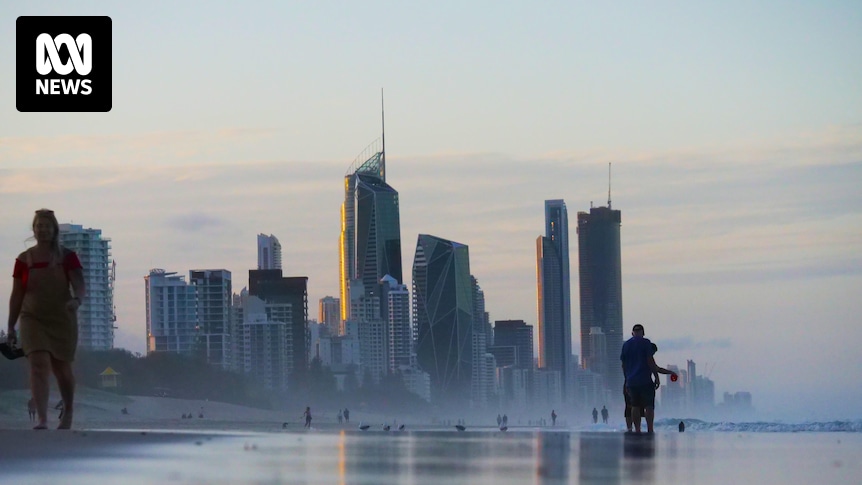
The Gold Coast will need 185,000 new homes in the next two decades, according to the council, with high-rise developments along the coast set to spread further inland.
The City of Gold Coast has unveiled a 20-year vision for managing its surging population — expected to reach 1 million residents by 2046 — called the Local Growth Management Strategy (LGMS).
The proposal would see more medium to high-density housing built along the city’s “inland spine” in suburbs such as Robina, Helensvale and Coomera, which are more accustomed to single-storey detached houses.
“We can’t stop growth,” Acting Mayor Mark Hammel said.
“There is no ability to put a gate on the highway and stop people from coming here.
“I’m not scared of 1 million people — we have got the room and the capacity to take more people.”
Cr Hammel said the strategy should open a “robust, transparent conversation” about the Gold Coast’s future, with the council set to vote on its adoption next month.
“It’s a 20-year horizon; it’s not suggesting that you’re going to see density occurring in those areas tomorrow,” he said.
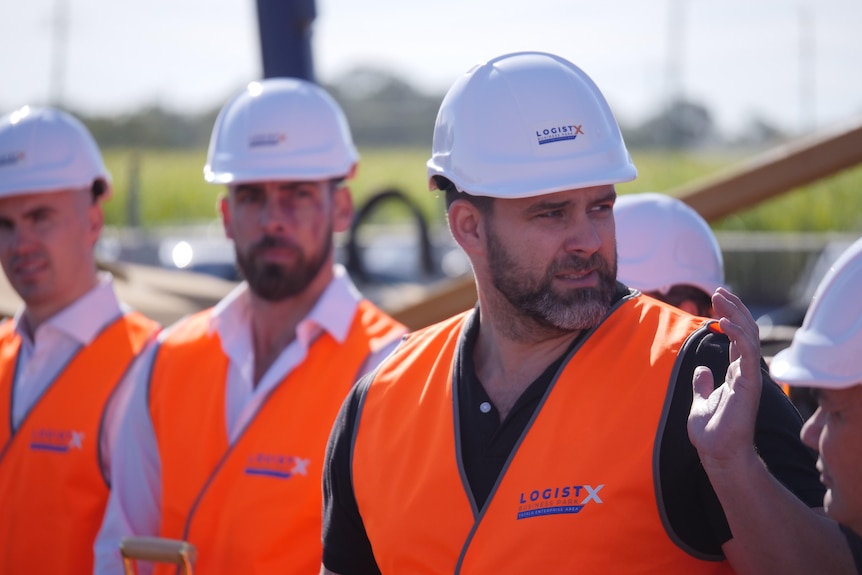
Mark Hammel says the Gold Coast “can’t stop growth”. (ABC Gold Coast: Dominic Cansdale)
Higher density further inland
The Gold Coast features a long strip of high-rises built right next to its iconic beaches.
That skyline has spread up and down the coast, with plans even lodged for the tallest residential tower in the southern hemisphere.
But this spread of high-rises has created some opposition in coastal communities such as Palm Beach, which has seen a spate of towers in recent years, spurning concerns about overdevelopment.
“There are people who would say, ‘We don’t want anything to change in our area’ — that’s not an option,” Cr Hammel said.
“We want our kids and grandkids to be able to afford to live in the city.”
The strategy would inform the city’s new planning scheme, set to be finalised this year, which regulates how the council can approve or reject development applications.
Cr Hammel said the coastal strip would remain the most sought-after location for new developments but that inland areas with access to public transport, shops, parks and schools should absorb more of the city’s growing population.
Town centres at Coomera, Helensvale and Robina have been tipped for high-rises.
“[It is] supply in the right areas where it’s a bit more affordable but it’s well located,” Cr Hammel said.
The strategy would also favour the construction of medium-rise apartments, townhouses and terraces over houses in most suburbs.
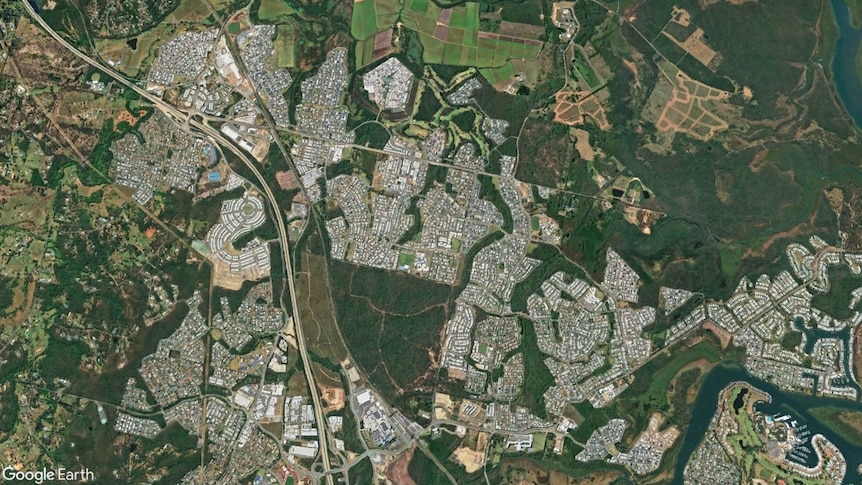
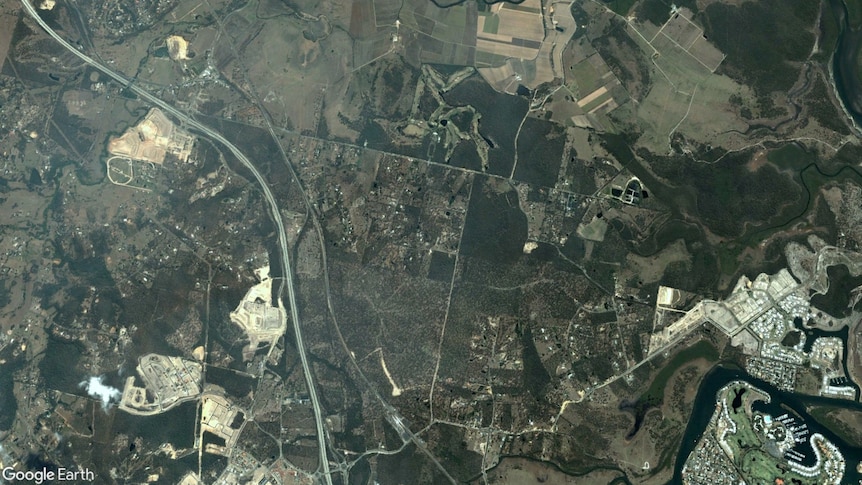 Pimpama, Gold Coast, in 2004. / Pimpama, Gold Coast, in 2025.
The Community Alliance Association, an advocacy group for sustainable growth, described the strategy as “sensible”.
“Medium height might be more appropriate, so buildings up to six storeys,” president John Hicks said.
“But some centres where there’s the infrastructure — large supermarkets, transport, schools — it may be possible to have taller towers.”
However, Mr Hicks said he remained concerned that population growth was “outpacing” infrastructure.
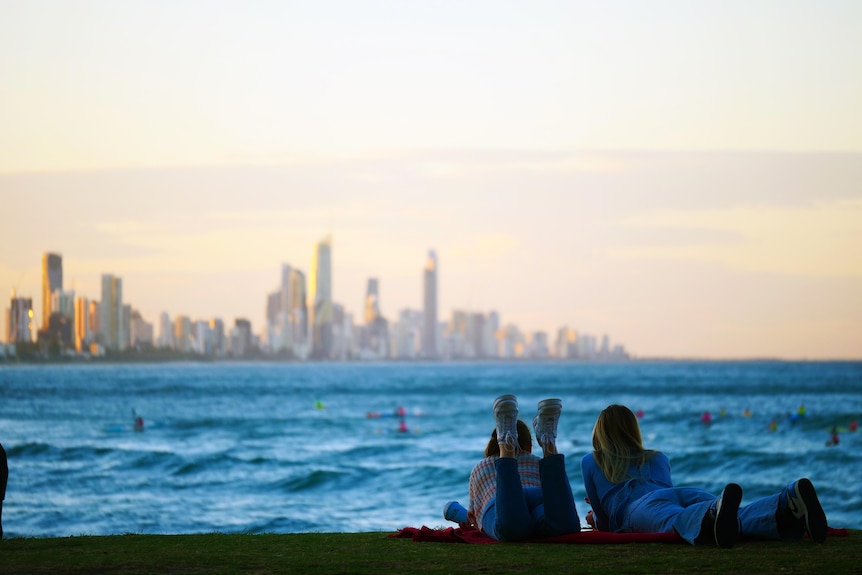
The Gold Coast’s beaches and laidback lifestyle have attracted increased interstate migration. (ABC Gold Coast: Dominic Cansdale)
“We see that firstly in our road network and then there’s a big lag in provision of public transport,” he said.
Mr Hicks said developers had been “focused on high-rise towers along the coastal strip” because that was where they got a “more profitable yield”.
“In other locations, medium-rise or the missing middle-type developments, they’re much harder for developers to deliver,” he said.
Public transport and construction gaps
The state government cancelled plans to extend the city’s light rail network south from Burleigh Heads to Coolangatta last year.
It cited local community opposition and cost blowouts for the decision but is yet to outline what public transport will replace the light rail.
Moreover, the council’s strategy specifies the need for new east-west rapid bus networks connecting Nerang and Robina to the coastal strip.
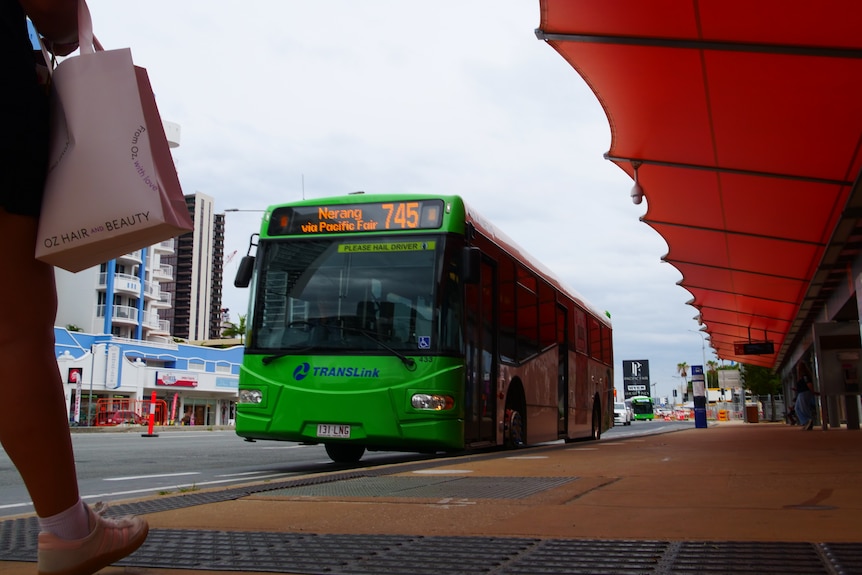
A bus at the Broadbeach South Station, a major public transport hub on the Gold Coast. (ABC Gold Coast: Dominic Cansdale)
Cr Hammel said that would require state government funding into “the hundreds of millions of dollars”.
He said “early details” on the state’s plans for the city’s public transport network were discussed at the end of last year.
“They have made very, very strong commitments to public transport on the Gold Coast,” Cr Hammel said.
The state government has been contacted for comment.
There’s also a gap between the housing needed and what can actually be built.
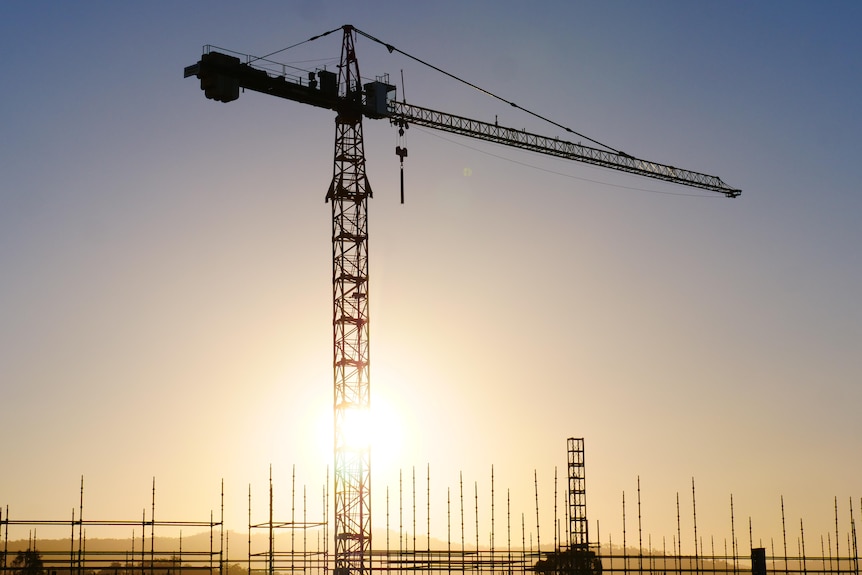
More than 9,000 new dwellings would need to be built per year to meet the 2046 target. (ABC Gold Coast: Dominic Cansdale)
To meet council’s 2046 target, 9,250 new dwellings a year would need to be built on the Gold Coast.
But only about 4,000 dwellings were approved for construction between 2024 and 2025, according to ABS data.
Cr Hammel said there was “no point changing the colours on maps” to show where new housing should be built if it was not economically viable for developers.
“We will focus on working with the development sector to make sure any changes we make in our planning actually achieve dwelling supply,” he said.