
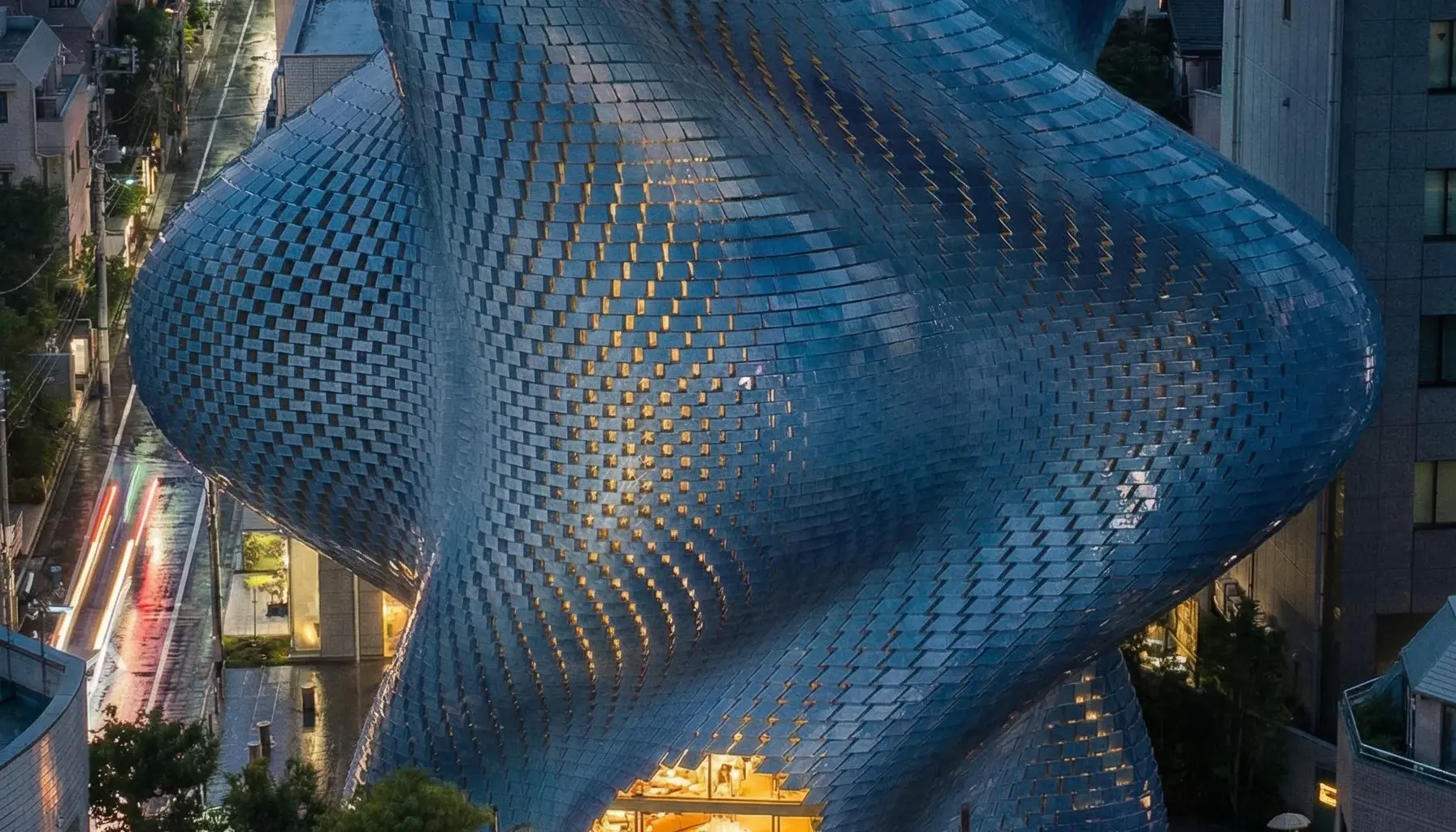
Bendo Bricks is a design exploration by Kedar Undale that looks at what happens when parametric architecture and artificial intelligence are allowed to shape space together. Instead of treating AI as a shortcut or a replacement for design thinking, the project positions it as a collaborator, one that works within boundaries set by geometry, material logic, and architectural intent.
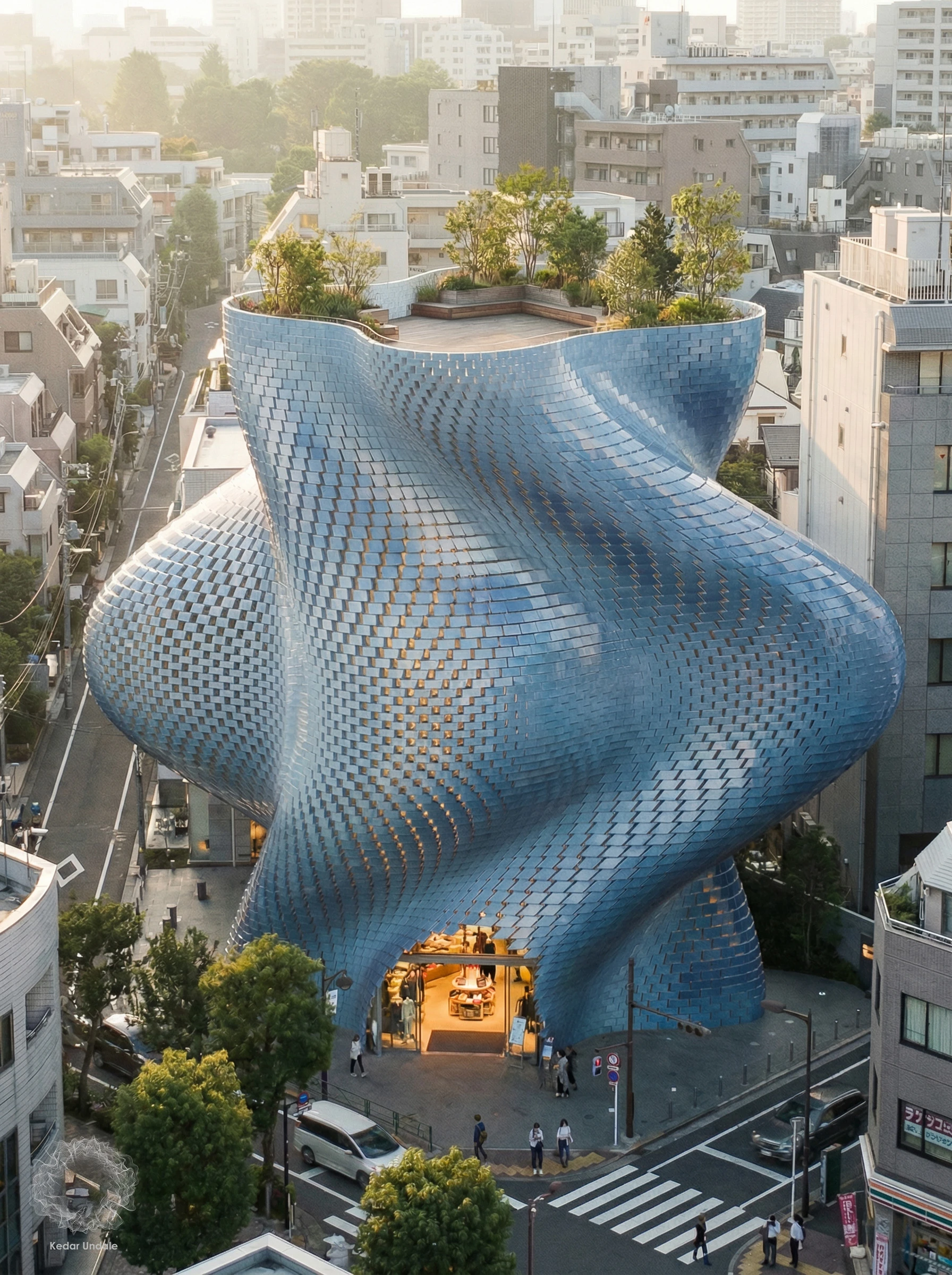
For designers working with complex geometries, visualizing intricate parametric forms through traditional rendering pipelines can be slow and resource-intensive. Generative tools offer speed, but they often misinterpret bespoke parametric work because such forms fall outside common training data. The results tend to be visually inconsistent or geometrically inaccurate.
Undale’s approach is to find a middle ground. Instead of expecting generative tools to replace design thinking, he uses them as collaborators. This idea forms the foundation of his “AI and Parametric Negotiation” workshops, where he explores how designers can construct precise systems and then allow controlled variation to emerge through probability.

The latest edition of the workshop, AI & Parametric Negotiation, is currently offered through PAACADEMY. It expands on these ideas with updated workflows, including image editing pipelines and single-image refinement processes similar to those explored in Bendo Bricks. More details about the program, structure, and enrollment can be found here: AI & Parametric Negotiation 2.0 by Kedar Udale
A key shift in this workflow came in 2025 with the rise of advanced image editing models. While these tools are often used for simple transformations such as converting day scenes to night or altering seasons, newer models like Qwen Image Edit and Gemini 3 Pro Image have become capable of generating detailed design refinements from a prompt and a base image.
The Bendo Bricks project was developed in two stages.
Stage 1: Building the Parametric System
The first stage focused entirely on form development.
Using Grasshopper 3D within Rhino3D, Undale generated a single doubly curved surface. This surface was then populated with bricks through a parametric system. To introduce complexity and performance logic, selected bricks were strategically dispersed based on façade curvature.
This dispersion created a jali-like pattern, allowing controlled light penetration into the interior space. Fixed glass panels were inserted within these openings, balancing porosity and enclosure.
To communicate the design logic clearly, a single animation sequence was exported from Grasshopper, illustrating how the geometry evolved from surface to structured façade.
Stage 2: Introducing Probabilistic Interpretation
The second stage introduced generative image editing into the workflow.
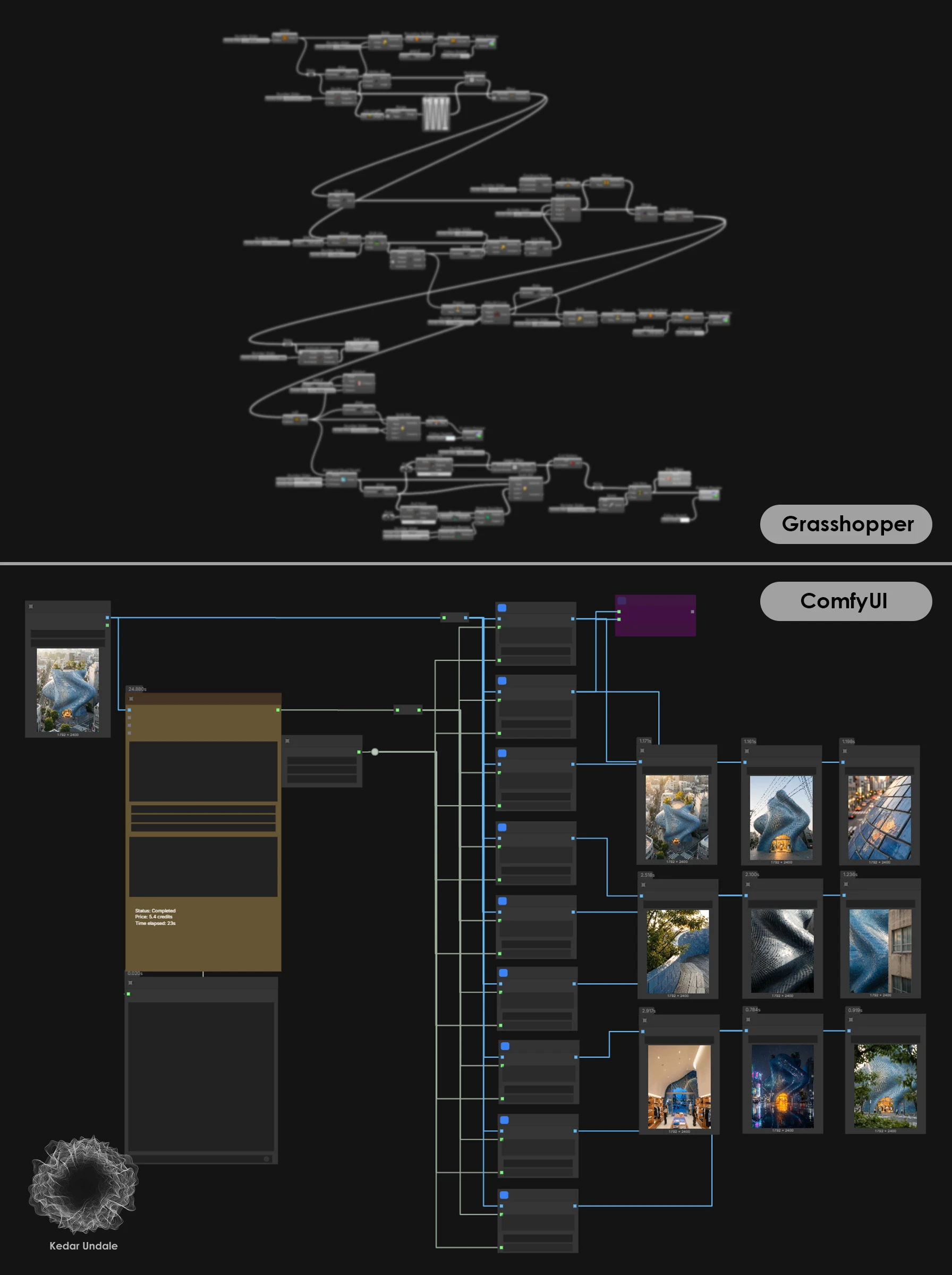
The primary challenge was establishing an accurate base render. This was achieved using ComfyUI, where a node-based setup incorporated tools such as ControlNet and IPAdapter. These components helped retain the exact geometry of the parametric model while enabling stylistic interpretation.
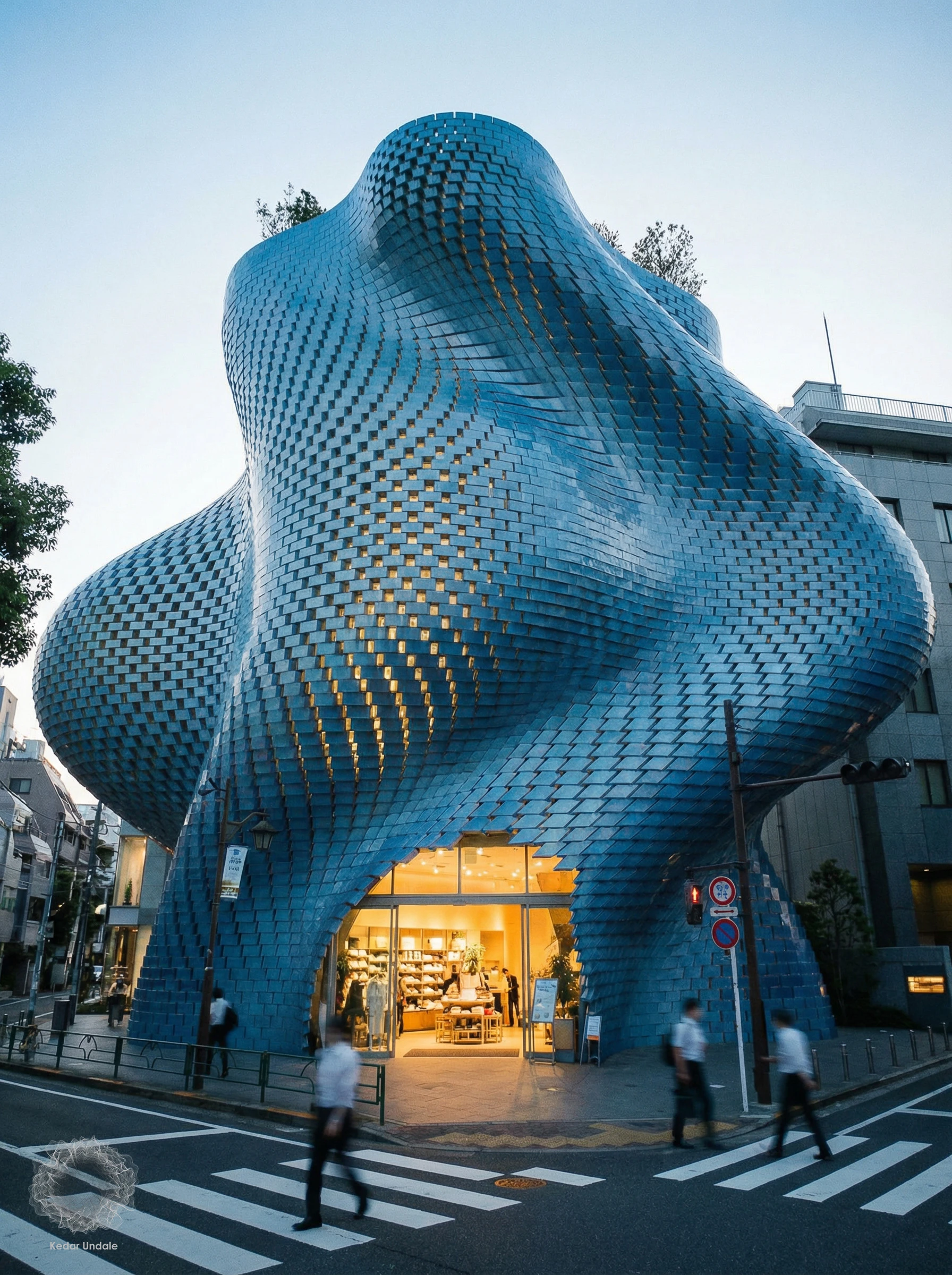
After several iterations, a stable base image was produced. From there, image editing workflows were applied. The process centered on a single-image pipeline in ComfyUI, where the uploaded render was analyzed and enhanced while remaining closely aligned with the original geometry. Even so, no generative system produces perfect results in a single pass. The brick façade, with its layered curvature and repetition, proved particularly challenging.
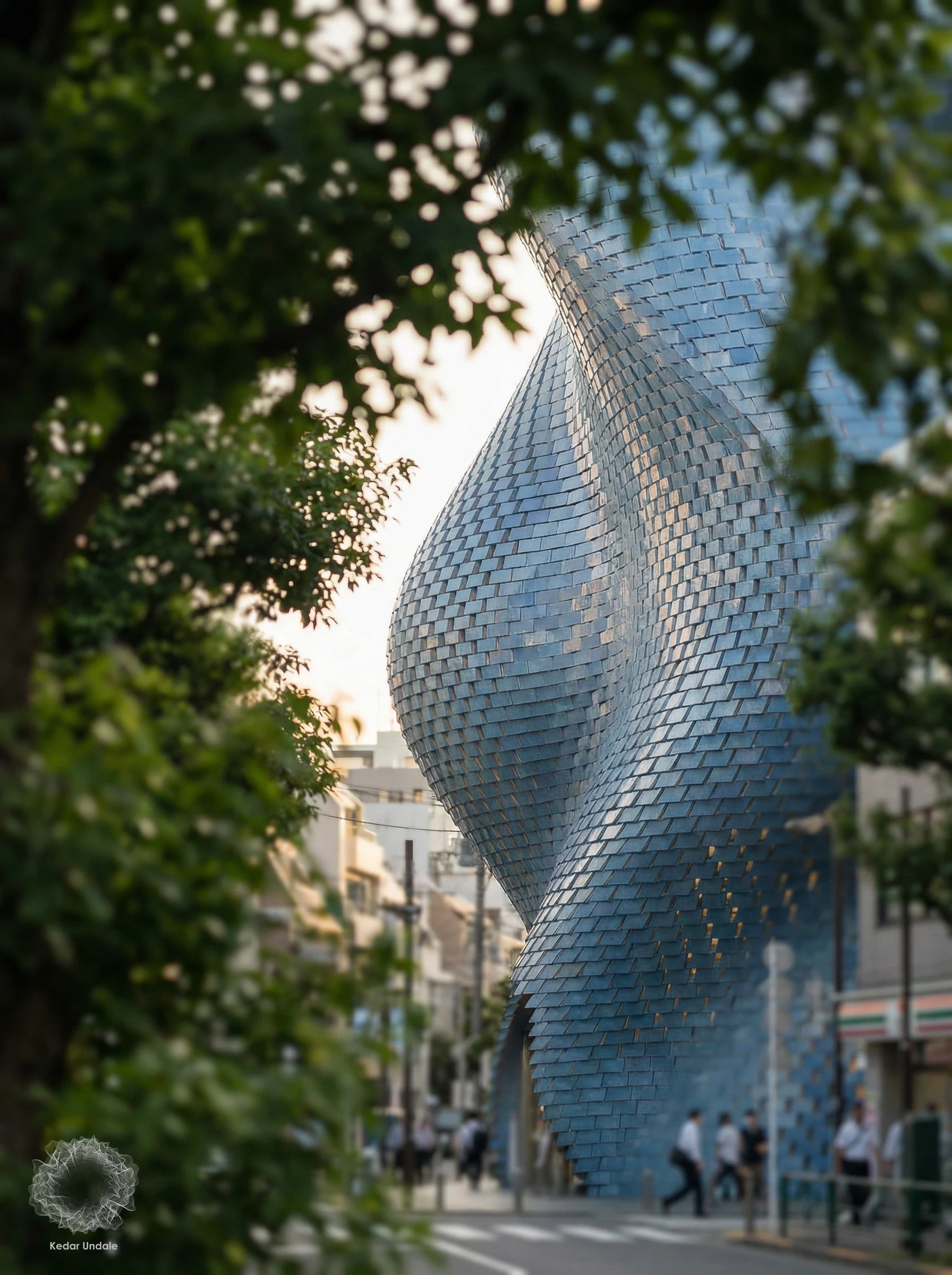
One of the core insights of Bendo Bricks lies in identifying the threshold between computational precision and visual interpretation.
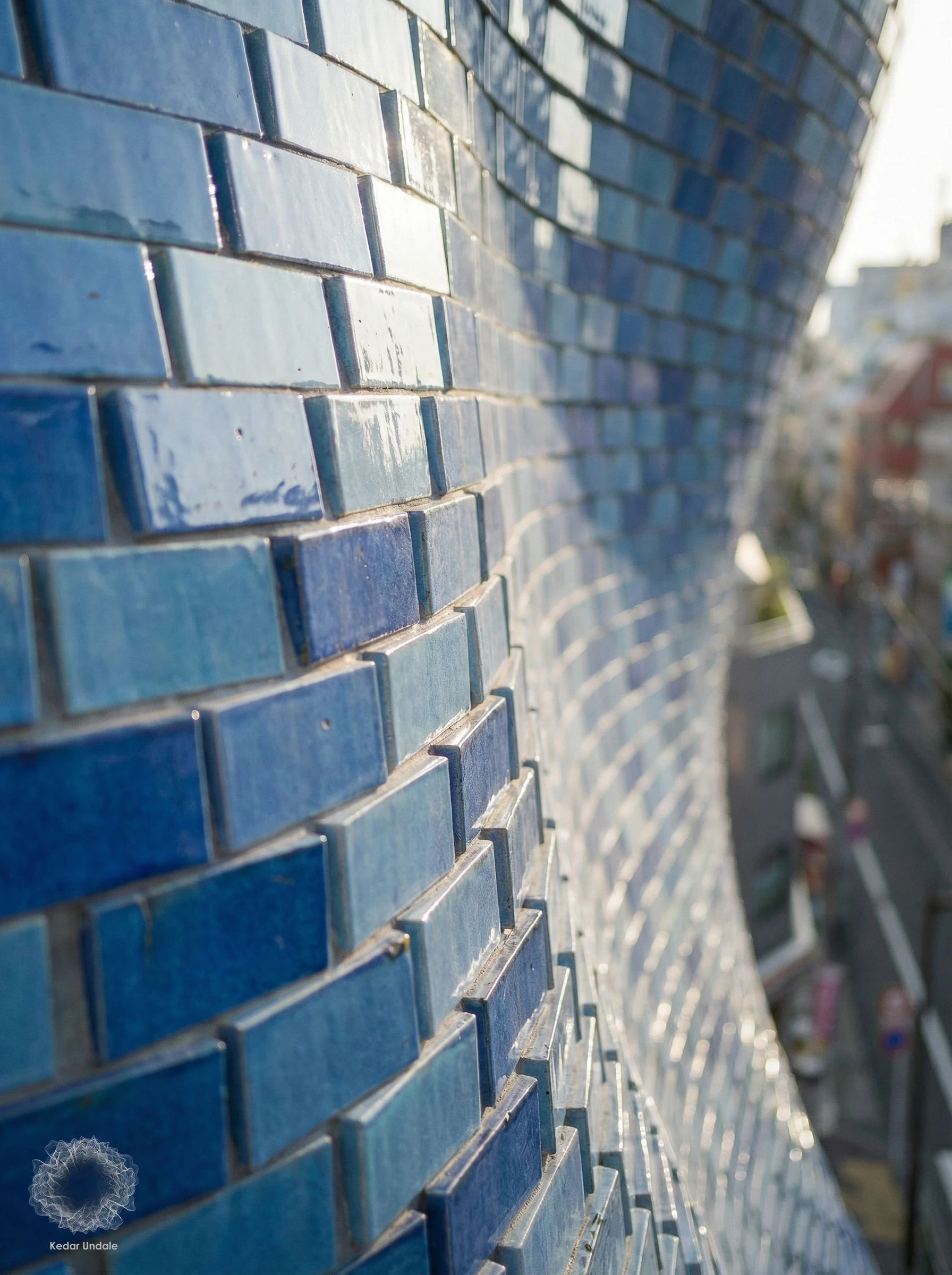
As Undale observes, generative tools still struggle with minute detailing and dense surface patterns. When brick units are modeled too large, the system interprets them easily, but the outcome feels architecturally unrealistic. When they are too small, the tool fails to resolve them accurately.
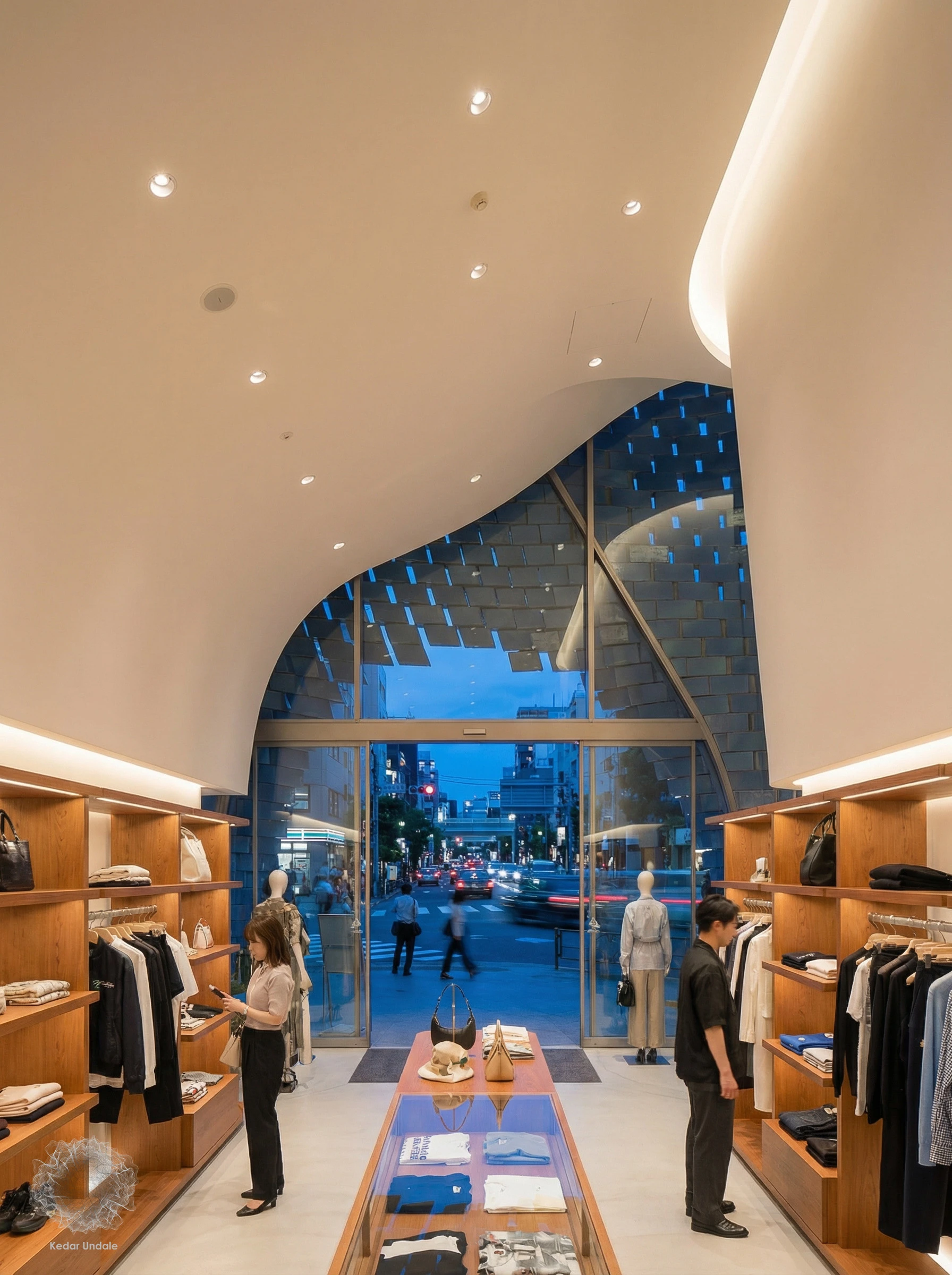
The success of the workflow depends on finding the balance point where geometry remains believable, details remain legible, and the resulting image aligns with architectural logic. That balance defines the real potential of this approach. Bendo Bricks project explores generative AI image editing through a single-image workflow in ComfyUI, where an uploaded image is analyzed by AI to produce a design set that remains extremely close to the original input
About Kedar Undale
Kedar Undale is an architect and parametric designer at Kedar Undale Design Studio, where he specializes in consulting, education, and computational art. He holds a master’s degree from IAAC, Barcelona.
He currently works as a ComfyUI Specialist for the California-based company Madespace. Previously, he served as a Computational Designer at the Toronto-based firm Partisans.

Over the past eight years, Undale has conducted international workshops on Parametric Thinking at institutions including DigitalFUTURES, InterAccess Canada, PowrPlnt New York, and CEPT India.
With the emergence of generative design tools, he has developed custom workflows and led training sessions at organizations and faculty development programs such as FUTURLY, PAACADEMY, UID Gujarat, and KLS GIT Belagavi.
His artistic work, featured in Homegrown Magazine India, uses computational systems to visualize intangible forces such as sound, wind, and gravity.
Project Details
Project: Bendo Bricks
Project Designer: Kedar Undale
Project Tools: Rhino3D, Grasshopper3D, ComfyUI, Gemini 3 Pro Image (Nano Banana Pro), Adobe Premiere Pro
Credit: Kedar Undale