
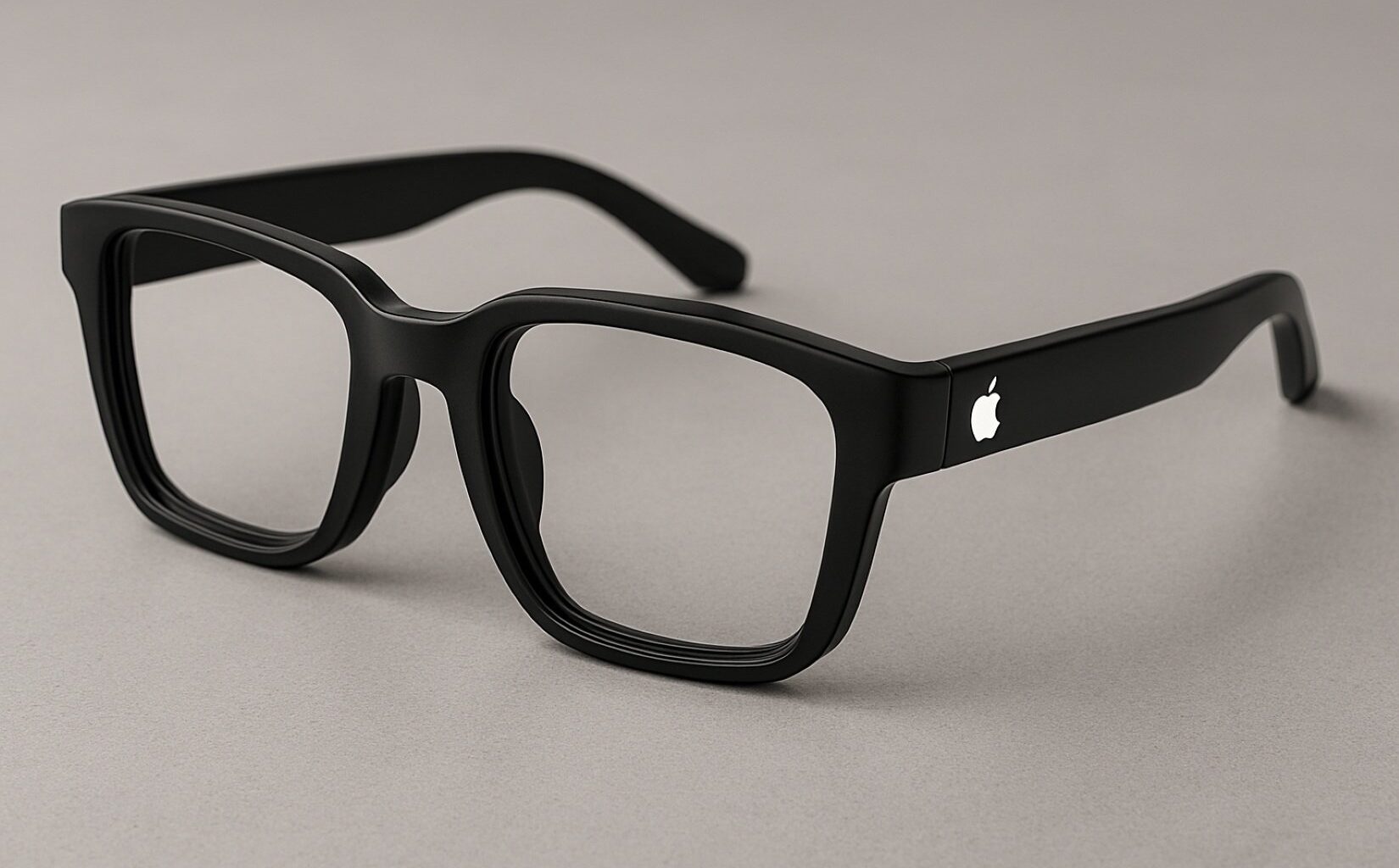
We already know that Apple has de-prioritized its Vision Pro headsets to accelerate the launch of AI-enabled and AR-based smart glasses. And now, a new report from Omdia has shed some much-needed light on the evolving competition dynamics in this new arena, which is fast becoming crowded as OEMs jostle for market share.
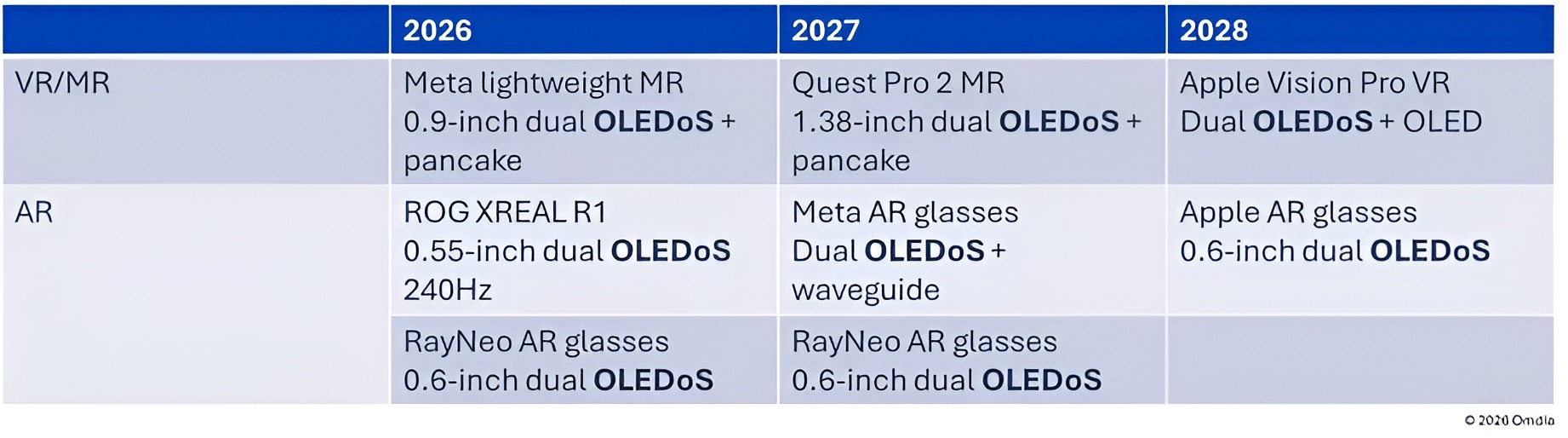 Source: Omdia
While ROG and RayNeo plan to launch their OLEDoS (OLED on Silicon) AR smart glasses this year, Meta plans to bring its first proper AR smart glasses to the market in 2027, replete with dual OLEDoS and a waveguide system that projects an image directly into the user’s eye via micro-projectors and semi-transparent mirrors, leading to sharper images outdoors.
For the benefit of those who might not be aware, OLEDoS, also called Micro-OLED display tech, mounts Organic Light-Emitting Diodes (OLED) directly onto a single-crystal silicon wafer substrate. Unlike traditional OLED screens used in smartphones or TVs that are built on a glass or plastic base, OLEDoS leverages semiconductor manufacturing processes to achieve extreme miniaturization and performance, leading to ultra-high pixel density and an improved power consumption profile, especially as the circuitry is integrated directly into the silicon backplane using CMOS technology.
Coming back, Omdia expects Apple to launch its own AR smart glasses – replete with 0.6-inch dual OLEDoS displays – only in 2028, months after Meta would have presumably launched its own competitive offerings.
Meanwhile, Apple is reportedly gunning for a 2026 release of its new AI-enabled smart glasses, replete with integrated cameras, microphones, and speakers, enabling the wearer to interact via an improved version of its bespoke AI assistant, Siri.
Apple’s new AI smart glasses will support key features, including hands-free notifications, real-time AI assistance, and AI-powered translations. Nonetheless, these glasses are not expected to support an in-built AR display.
Of course, Meta’s now-iconic Ray-Ban smart glasses already offer up to eight hours of mixed use, 2 hours of continuous ‘live AI’ support, ultra HD 3K video recording ability, and an optimized noise cancellation system, called conversation focus.
Meta also showcased its all-new Ray-Ban Display smart glasses last year, which feature an in-built display that is large enough to read text, watch a small video, view directions, and see live translations. At 42 pixels per degree (ppd), the display offers higher resolution than any of Meta’s other consumer VR headsets.
With a custom light engine and waveguide that delivers brightness of up to 5,000 nits, Meta claims the glasses work well both indoors and outdoors. The Ray-Ban Display glasses can be purchased for $799, along with the Meta Neural Band, which features a control interface for these smart glasses. This interface enables users to navigate apps using hand gestures by leveraging electromyography (EMG) to detect signals sent between the brain and the hand.
News Source: ETNews
Follow Wccftech on Google to get more of our news coverage in your feeds.