
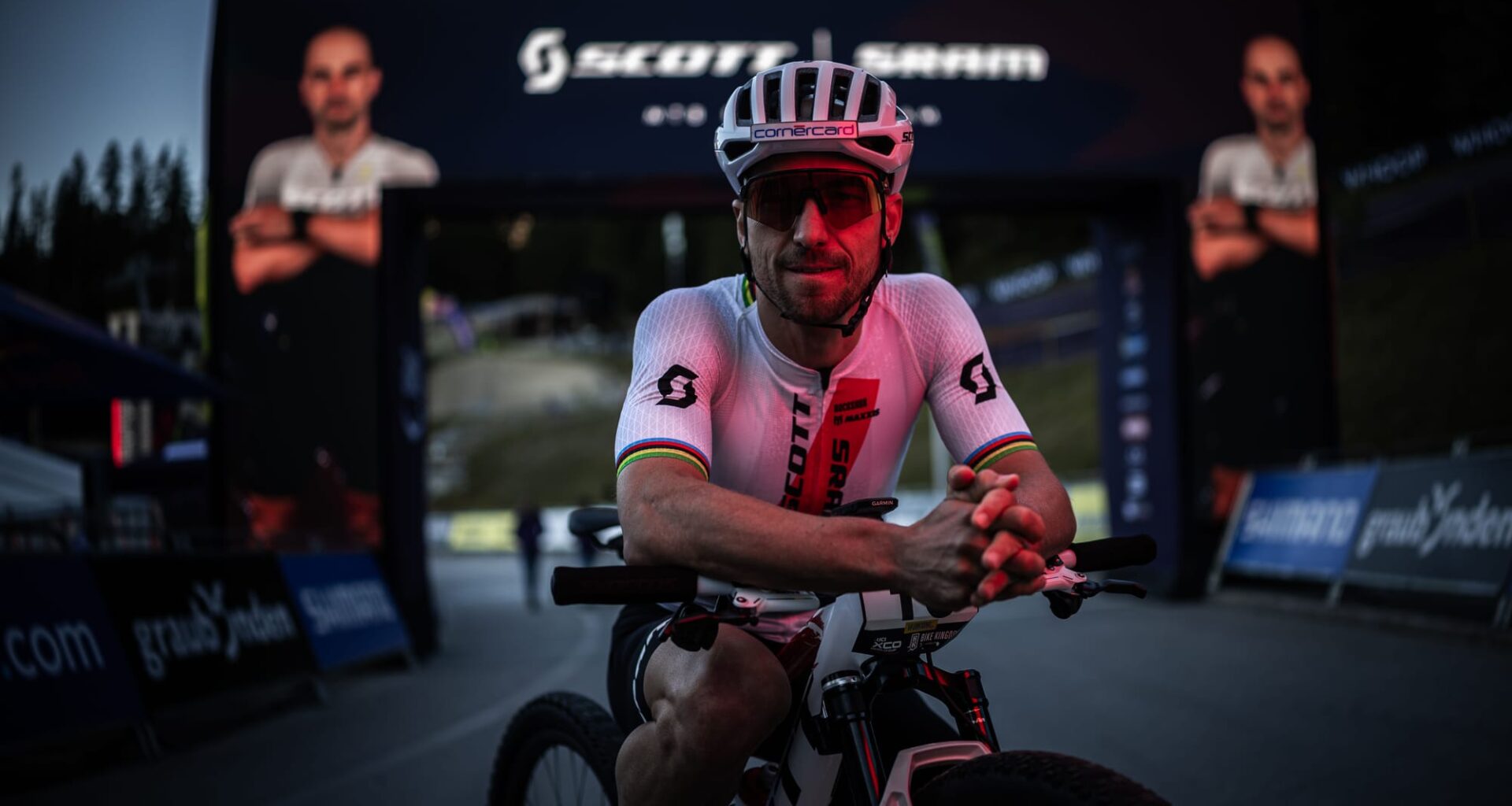
In an exclusive interview, Nino Schurter reflects on a career that defined an era, the evolution of XC racing, and what’s in his future beyond the World Cup.

Scott, Scott-SRAM
Eras are often named after their figureheads. By that measure, cross-country mountain biking is closing the chapter on one of its defining ages. Call it the Ninonian: the one shaped by Nino Schurter.
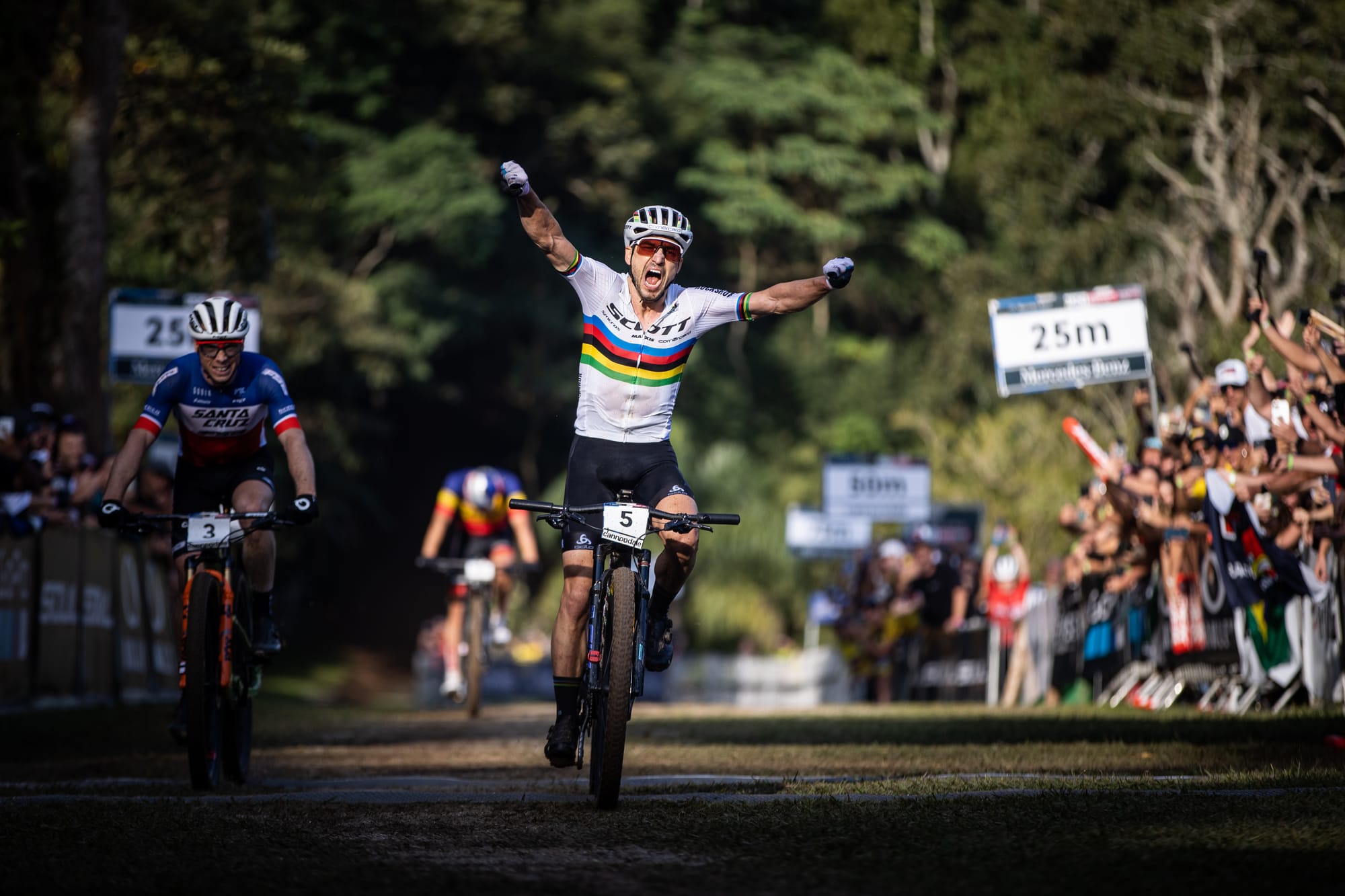
Since rising to the top of the sport in the early 2010s, Schurter was the dominant force in World Cup cross-country racing for more than a decade. Throughout that time, he fended off wave after wave of challengers. Even riders at the calibre of Mathieu van der Poel, Tom Pidcock, Mathias Flückiger, and Julien Absalon were unable to unseat him for long. As the sport evolved around him, courses grew harder and more technical, improving bike technology helped riders go faster, and racing became more explosive. Schurter adapted to those changes – and helped drive them – all while he kept winning.
As the curtain falls on a career unmatched in cross-country racing, Schurter steps away from the World Cup stage with a record that sits alongside the true greats of sport: 36 World Cup victories, nine overall World Cup titles, and 10 World Championship wins. Add to that a full set of Olympic medals – bronze, silver, and gold – three Cape Epic titles, and a perfect World Cup season, and it becomes clear that Schurter’s claim to the throne isn’t up for debate.
Opinion: Nino Schurter isn’t just retiring, he’s leaving a blueprint
From hardtails to dropper posts, Absalon to Pidcock, Schurter defined – and then re-defined – what it meant to be an XCO racer.
With the tide turning and retirement settling into view, I travelled to Switzerland to sit down with Schurter to reflect on a career that defined an era and to understand what might come next.
An era defined by success and longevity
Beyond his win sheet, Schurter’s career stands out for its sheer longevity. Seventeen years at the very top of cross-country racing is a tenure no one else has managed to match. And while his time as an elite racer has now come to an end, his love for the sport remains undimmed. That genuine enjoyment, rather than obligation or routine, sits at the heart of why he stayed at the top for so long.
“The passion for the sport kept me interested. It’s something I always love to do,” he said. Even as riding became increasingly professionalised, he never lost sight of the simple pleasure that first drew him to the bike. But passion alone wasn’t enough. As his career evolved, he came to see the environment around him as equally important. “I always had good people around to help me achieve my goals,” he acknowledged.
 While the athletes and staff around him changed, it was the people in the team that kept Nino Schurter in the same team for his entire career.
While many professional cyclists bounce between teams, living a largely nomadic existence, Schurter bucked the trend. He spent his entire elite career with Scott-SRAM. When he joined, the team was built around Thomas Frischknecht, who would later become Schurter’s long-term team manager. “From the beginning, I had the perfect setup, and I had good people making sure it always goes forward,” he explained.
That mix of passion and stability turned out to be a rare competitive advantage. But the final element Schurter credits for his longevity is delivered with refreshing honesty. “I was lucky to find the sport I also have a talent for,” he said plainly. Rather than leaning on familiar clichés about hard work alone, he readily acknowledges the role of natural ability, an acceptance that feels rare in elite sport.
This post is for paying subscribers only
Subscribe now
Already have an account? Sign in
Did we do a good job with this story?
👍Yep
👎Nope