
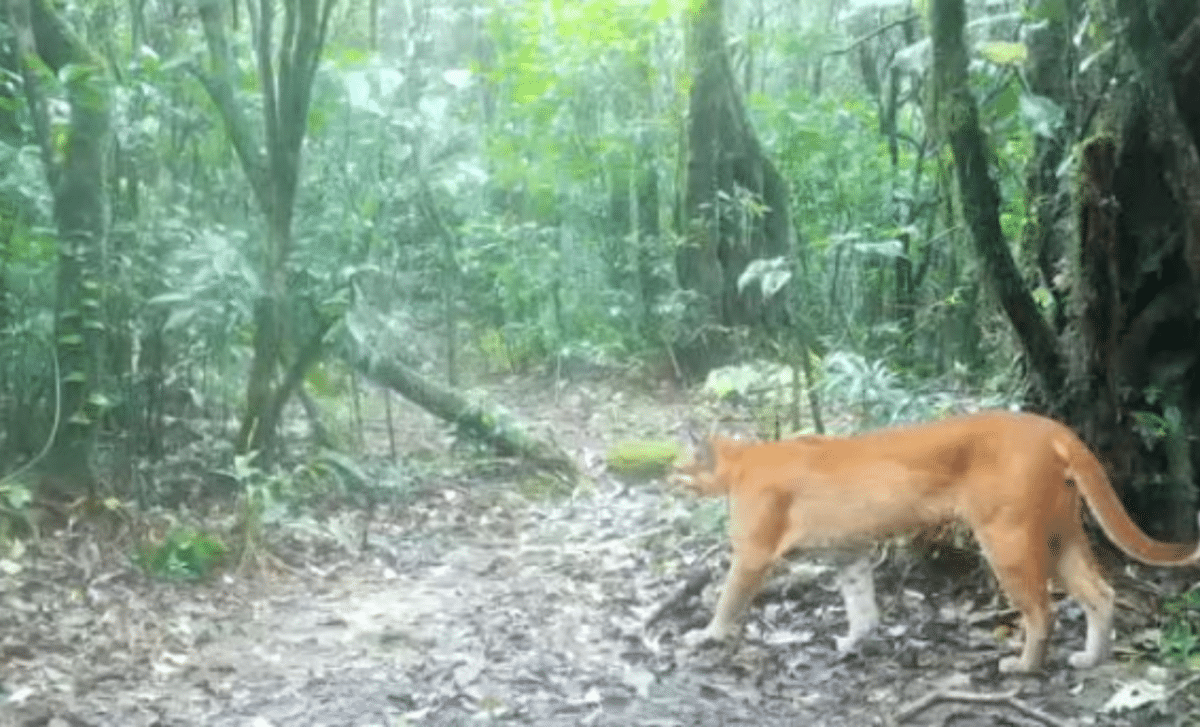
In a world where mythology and reality often collide, few sightings are as breathtaking as that of the Asian golden cat, also known as the “fire tiger.” Recently, this elusive species, which rarely allows human eyes to catch a glimpse of its graceful movements, was captured on a trail camera in the dense forests of southern Thailand.
The Magical Sighting of the Asian Golden Cat
The Asian golden cat, scientifically known as Catopuma temminckii, is a medium-sized wild cat native to Southeast Asia. Known for its elusive nature, the species is incredibly difficult to observe in the wild. The sighting of the cat captured on a trail camera in Thailand is a testament to the secretive nature of this predator. The footage, which lasted a mere ten seconds, shows the cat walking across a sunlit trail in Khao Luang National Park on June 20, 2025. The cat, with its distinctive golden-tan coat, paused at the edge of the forest before disappearing back into the dense foliage, leaving only a brief but stunning memory of its existence.
Such rare sightings are crucial for understanding the behavior and distribution of the Asian golden cat, a species that lives in isolation and moves through its habitat like a shadow. This footage also provides vital data for wildlife researchers and conservationists, who rarely get the opportunity to observe these cats in their natural environment. According to park officials, the encounter highlights the importance of camera trap technology in wildlife conservation and monitoring efforts.
The Cultural Significance of the Asian Golden Cat
In addition to its biological importance, the Asian golden cat also holds a special place in Thai cultural heritage. In certain regions of Thailand, the cat is referred to as “Seua fai,” or “fire tiger,” due to its striking golden coat that can appear to glow under the right lighting. This mystical connection adds another layer of significance to the species, linking it to local legends and traditions that have been passed down through generations.
According to one regional myth, the burning of an Asian golden cat’s fur drives tigers away, which further cements the species’ place in the folklore of local communities. This cultural connection underscores the deep ties between wildlife and human societies, a relationship that can play an important role in conservation efforts. When local communities have a strong cultural connection to a species, they are often more willing to support conservation initiatives aimed at protecting these animals.
Threats Facing the Asian Golden Cat
Despite the importance of the Asian golden cat in both biological and cultural terms, the species is classified as “vulnerable” by the International Union for Conservation of Nature (IUCN). This designation reflects the growing threats facing the cat, particularly from habitat loss and hunting. Deforestation, driven by logging and agricultural expansion, has fragmented the cat’s forest habitat, making it increasingly difficult for these solitary predators to find the space they need to survive.
Illegal hunting also poses a significant threat to the species, with some individuals being killed for the wildlife trade or in retaliation for attacks on livestock. The combination of habitat destruction and hunting pressure has led to a steady decline in the population of Asian golden cats, which are now considered to be at high risk of extinction if conservation efforts are not strengthened.
However, the sighting of the cat in Khao Luang National Park provides a glimmer of hope. Protected areas like Khao Luang serve as crucial refuges for wildlife, providing the necessary environment for the Asian golden cat to thrive. Ongoing monitoring through trail cameras and other conservation efforts will be essential in ensuring the long-term survival of this elusive species.