
The handheld gaming PC space is no longer experimental territory. It’s competitive, expensive, and increasingly defined by refinement rather than raw specs. Into that landscape steps the MSI Claw A8, MSI’s most confident attempt yet at carving out a place among premium portable PCs. After several weeks with the neon green model — a colour that refuses to be ignored — it’s clear this is the most mature Claw MSI has built. It’s also clear that while the hardware has evolved, some of the platform’s deeper issues remain stubbornly unresolved.
In Australia, the Claw A8 configured with AMD’s Ryzen Z2 Extreme, 24GB of LPDDR5X RAM and a 1TB SSD lands at roughly A$1,749 depending on retailer. That places it directly against heavyweights like the ROG Xbox Ally X, and well above entry-level Steam Deck models. At this price, you’re not simply paying for portability; you’re paying for polish, cohesion, and a sense that every part of the experience has been carefully considered. The Claw A8 delivers some of that — but not all.
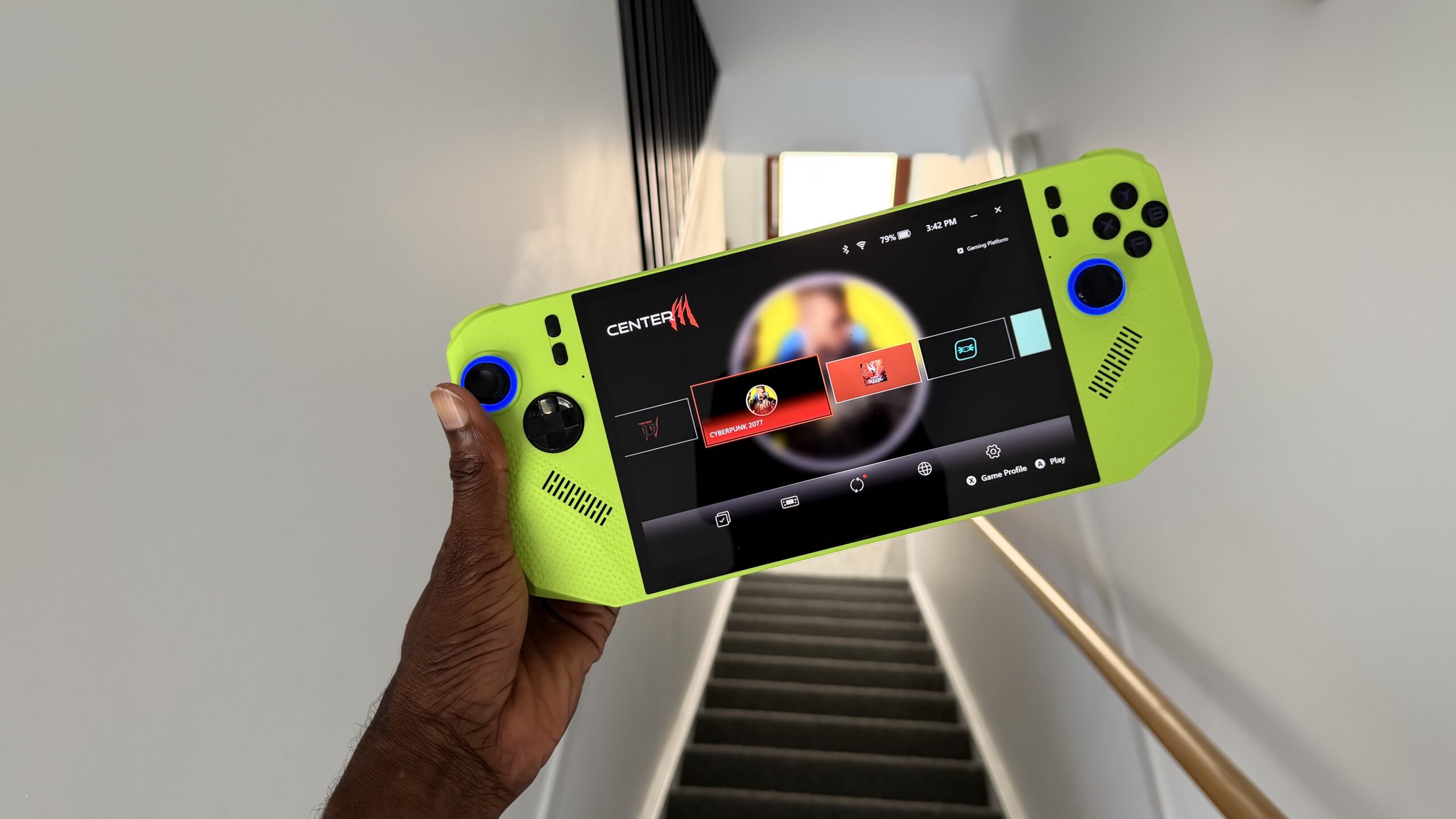
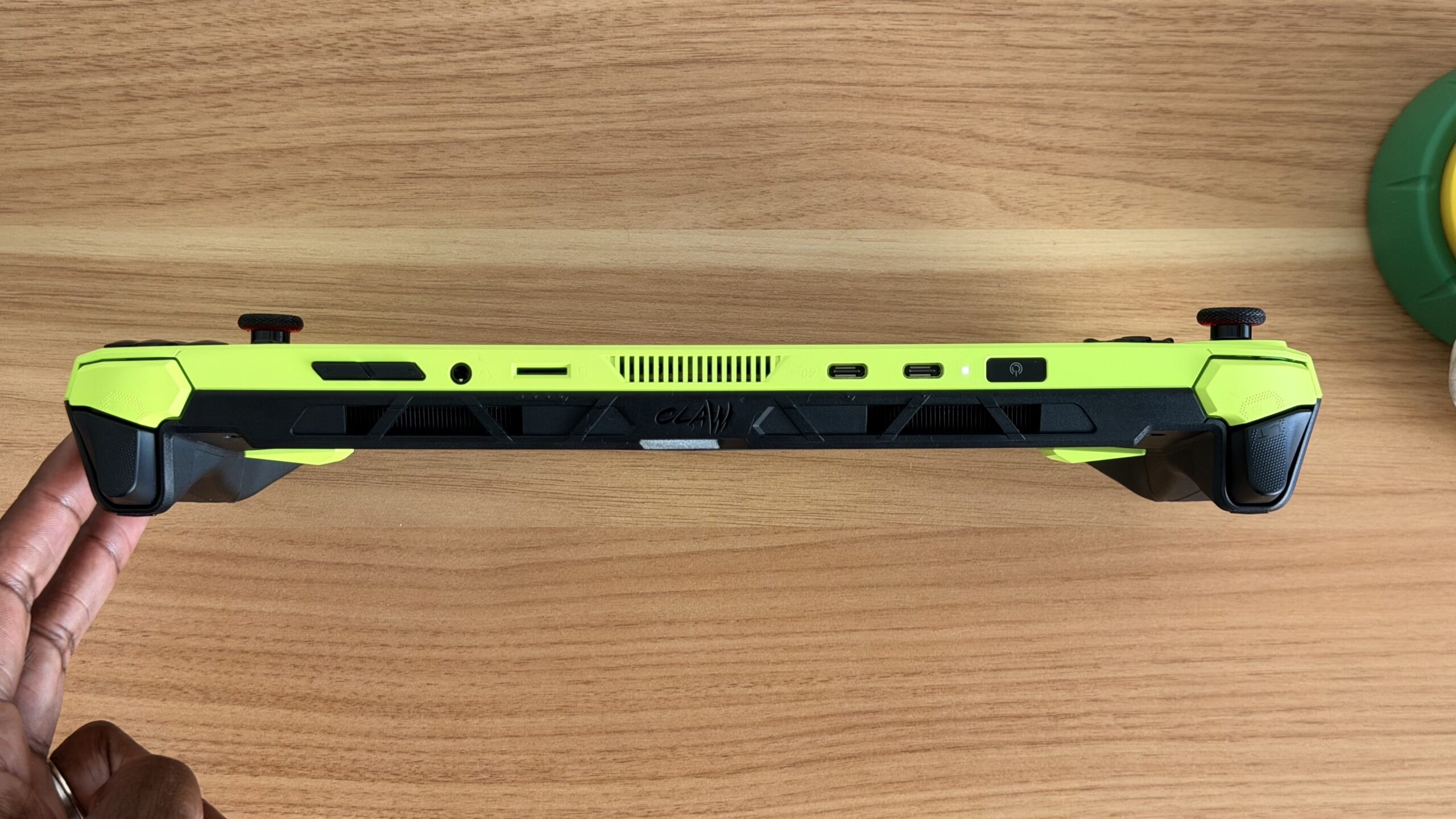
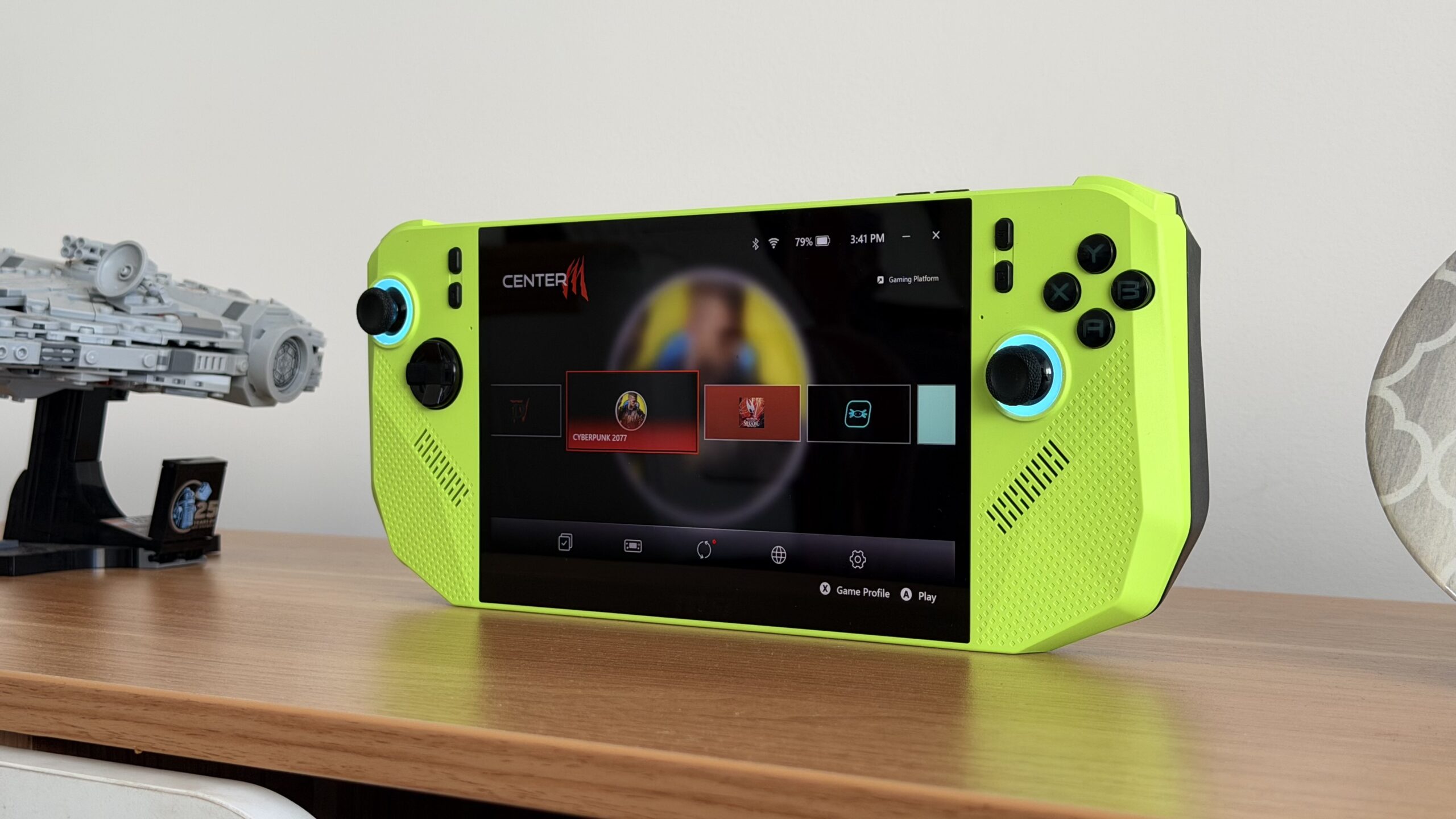
The neon green chassis makes a statement before you even power it on. It’s loud, unapologetic, and somehow more Xbox in personality than the ROG Xbox Ally X itself. The sharper, more angular design language replaces the softer, rounder aesthetic of the Intel powered MSI Claw 8 AI+, giving the A8 a more assertive and industrial feel. In hand, that angularity actually improves grip. The chunkier, more structured handles fill your palms with firmer support, making longer sessions noticeably more comfortable than on the earlier model. It feels sturdier and more planted, even if Asus still edges ahead slightly in long-session ergonomics.
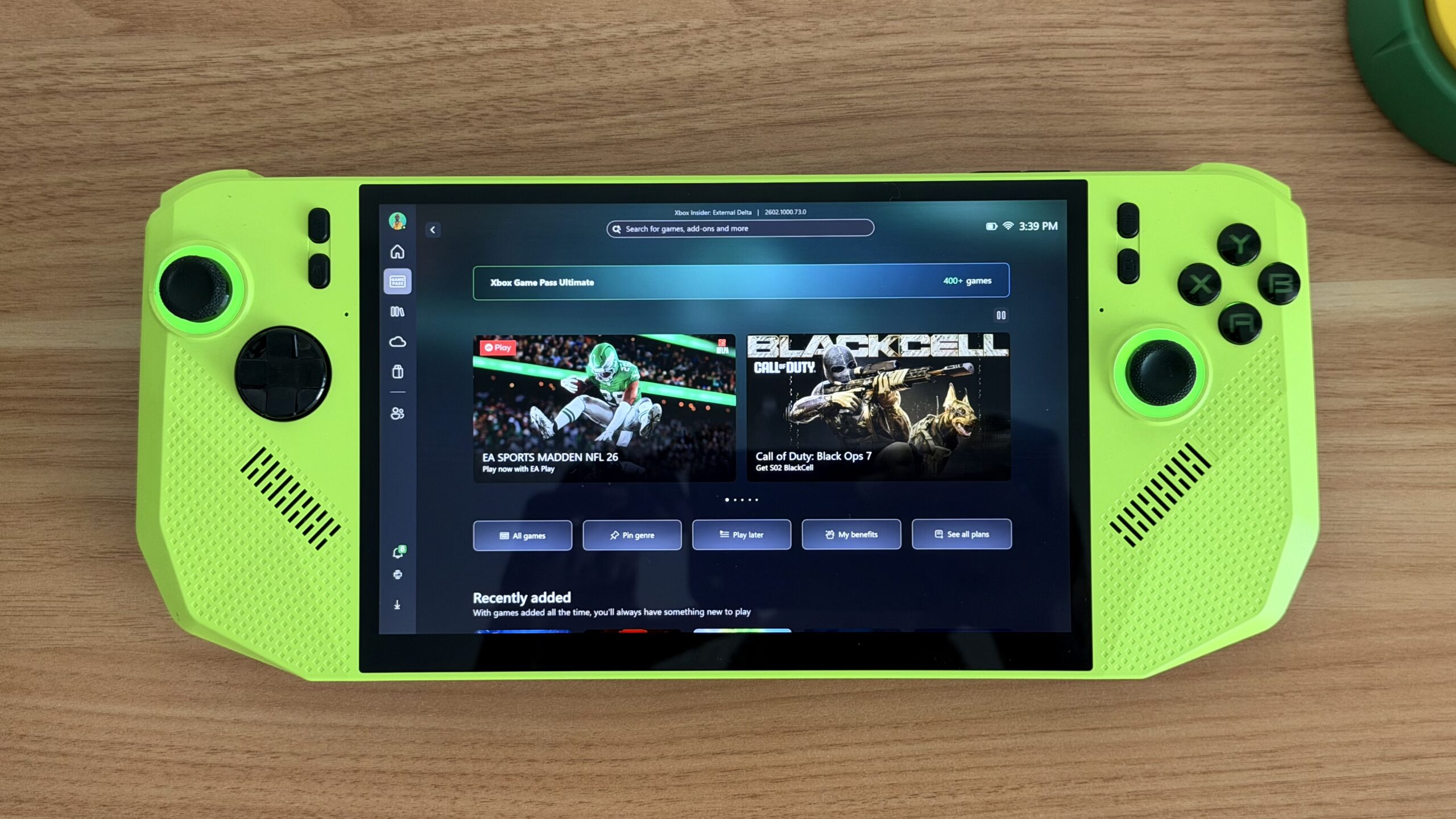
The 8-inch 120Hz IPS display is crisp, fluid and bright enough for everyday use, with VRR smoothing out frame rate fluctuations nicely. Games look sharp and motion feels responsive, but at this price I couldn’t help wishing for OLED. Darker scenes lack that deep, inky contrast that would truly elevate cinematic titles, and while this panel is objectively good, it doesn’t feel exceptional in a premium bracket that increasingly expects more.
Performance is where the Claw A8 redeems itself. AMD’s Ryzen Z2 Extreme paired with 24GB of RAM provides enough overhead for modern AAA titles at sensible settings, and MSI’s AI Engine genuinely improves the day-to-day experience. Instead of constantly adjusting TDP sliders or second-guessing performance modes, the system dynamically balances power and thermals in the background. It feels intelligent and largely invisible, allowing you to focus on playing rather than tuning. It’s one of the strongest aspects of the device and a reminder that MSI understands the friction points of Windows handhelds — even if it hasn’t solved all of them.
Battery life lands exactly where you’d expect for this class of hardware. In my testing, I consistently achieved between two and three hours depending on workload. Lighter titles like Mio pushed closer to three hours, particularly when the AI Engine managed power conservatively. Demanding games such as Resident Evil Village, however, rarely stretched beyond two hours before I was hunting for a charger. That’s typical for high-performance handheld PCs, but it reinforces that this is a device best suited to shorter bursts of AAA gaming unless you’re plugged in. Thermals are well managed throughout; even under sustained load, the chassis remains comfortable to hold, and fan noise stays within reasonable limits.
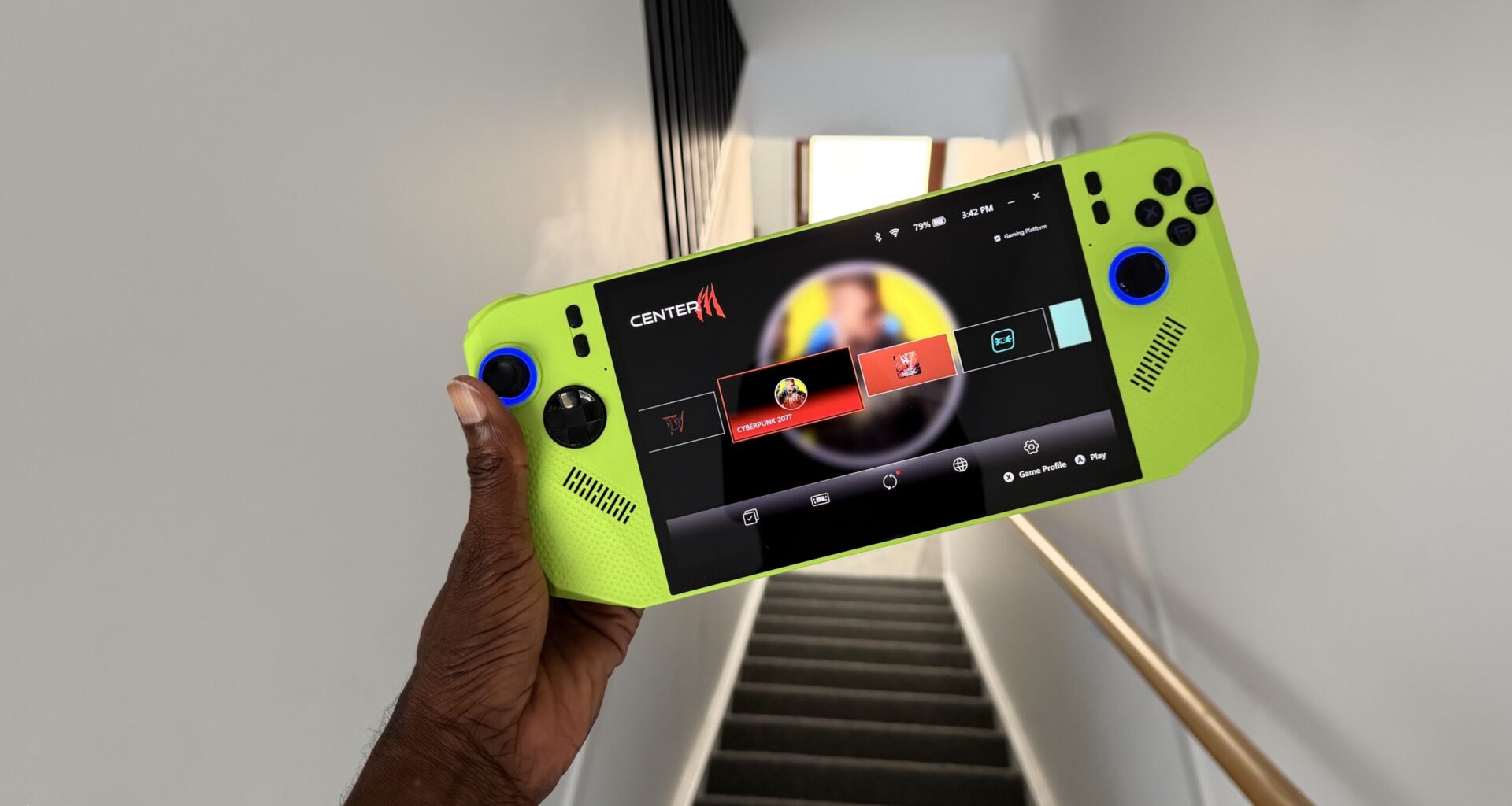
The real friction point remains software. On paper, MSI’s layered approach sounds sensible: MSI Center M for system controls, Xbox’s full-screen interface for console-style navigation, and Windows underneath it all. In practice, these layers don’t cooperate as cleanly as they should. There were frequent moments where I’d press a dedicated button expecting MSI Center to appear, only for the Xbox interface to pop up instead. At times, you can literally see the two apps fighting for focus, with brief flickers and interface glitches that break immersion and make the whole experience feel less cohesive than it should.
It also feels redundant to have two separate places to launch games. MSI Center attempts to function as a launcher, but it lacks the polish and fluidity of the Xbox full-screen experience. The Xbox interface, for all its limitations, is simply better designed as a game library hub. The duplication creates confusion rather than convenience. By contrast, Asus’ Armoury Crate implementation on the Ally X integrates far more cleanly with its Xbox layer, delivering a noticeably smoother user experience overall. It feels unified in a way the Claw A8 does not.
This is why devices offering SteamOS options, such as the Lenovo Legion Go S, are increasingly compelling. SteamOS is purpose-built for handheld use, eliminating much of the interface juggling and focus conflicts that plague Windows-based systems. MSI’s hardware is strong enough to compete at the top of this category, but without a similarly cohesive software environment, the Claw A8 never quite feels fully realised.
Ultimately, the MSI Claw A8 is a powerful and characterful handheld that shows meaningful growth from MSI’s earlier attempts. The more angular, chunkier grip design genuinely improves long-session comfort, the AI Engine smartly reduces performance micromanagement, and the internal hardware is capable of handling demanding modern games. Yet the lack of an OLED display, the ongoing Windows friction, and the ambitious A$1,749 price tag prevent it from feeling like the definitive premium option.
It’s a good device, sometimes a very good one, and undeniably bold in personality. But at this level, good isn’t quite enough — and cohesion matters more than ever.
MSI Australia kindly loaned the Claw A8 to PowerUp for the purpose of writing this review.
LIKE
That green!
MSI AI engine
Excellent gaming performance
Decent battery life
DISLIKE
Software experience is messy
No OLED display
Still quite pricey