
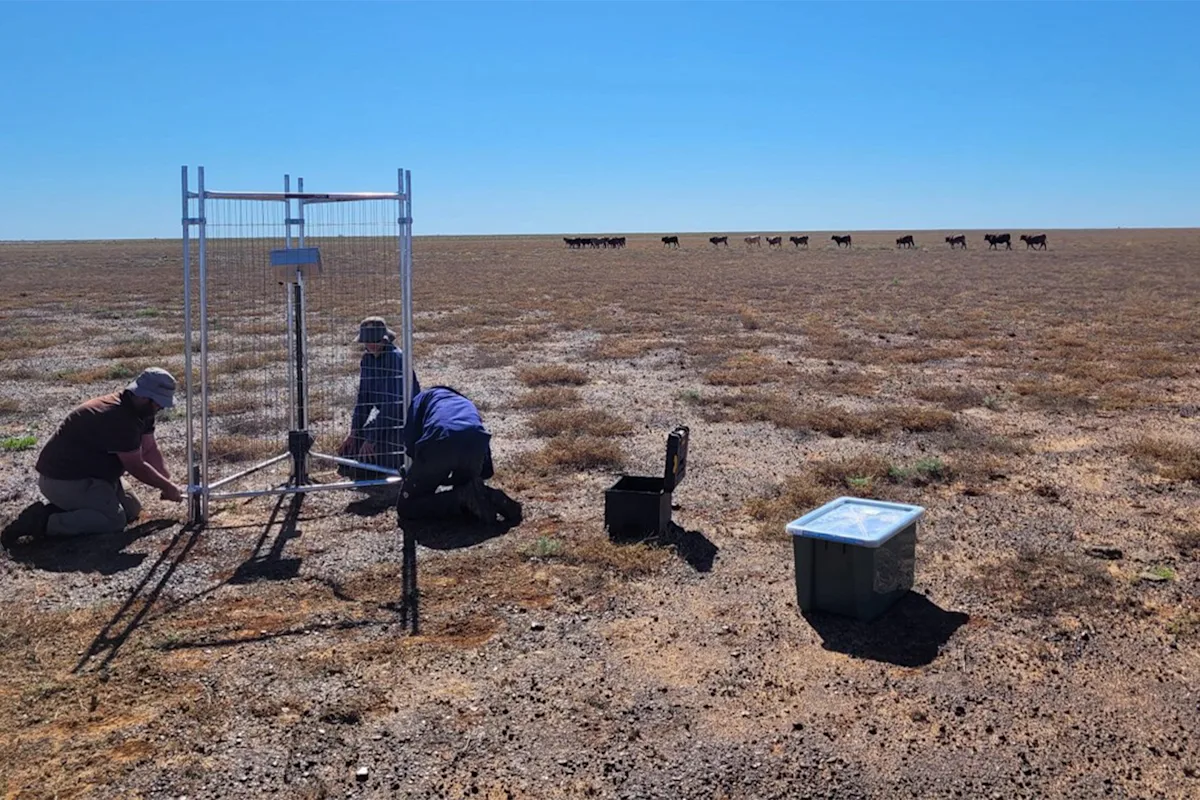
Surveillance devices set up around a 6,370-hectare cattle station in remote western Queensland have recorded the sounds of one of Australia’s rarest birds. Between 250 and 1,000 plains wanderers are thought to survive in the wild, and zoos have been working to repopulate them to prevent their extinction.
The discovery of a group inhabiting a new range has sparked hope that the birds could exist in more places than previously thought.
Tessa Manning, an ecologist with Australian Wildlife Conservancy (AWC), was charged with listening to thousands of recordings taken on the property that were suspected of capturing the bird’s deep, repetitive call.
“Of the 60 recording sites, we ended up hearing plains wanderers on 31, then 16 of those sites had a substantial number of calls,” she told Yahoo News.
Recorders were installed between one and seven kilometres apart, and so the result indicates the birds were inhabiting a significant territory.
The project was part of a collaboration between AWC, a non-profit that manages wildlife on private lands, and the North Australian Pastoral Company, which has 14 stations across Queensland and the Northern Territory comprising a total of six million hectares.
48 hours of working through giant spreadsheet of recordings
In total, 30,000 recordings were made between June and August 2024. That number was refined down to 3,000 using software developed by the Queensland University of Technology, which can distinguish suspected plains wanderer sounds from other species.
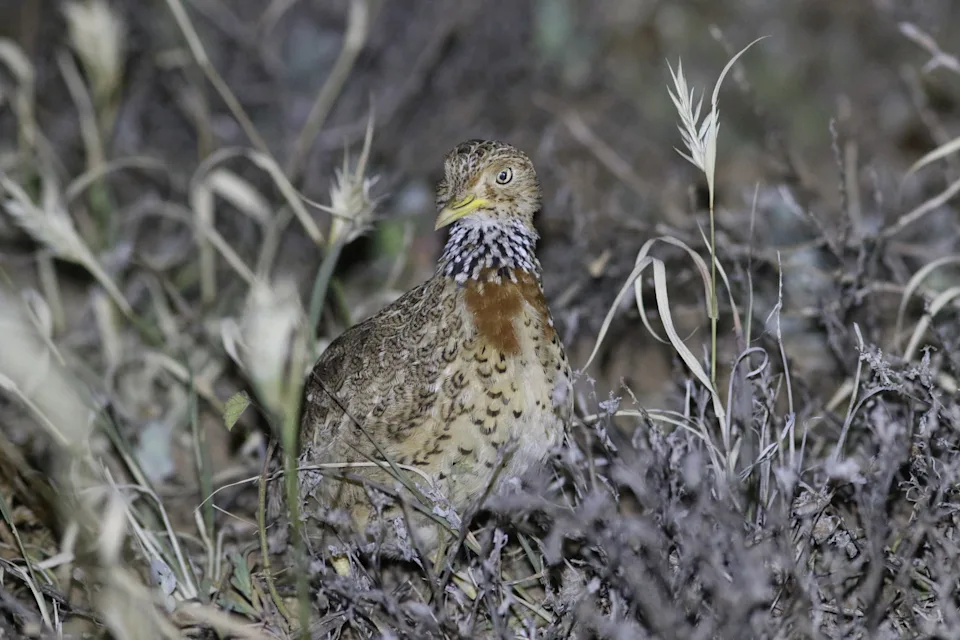
Plains wanderers can be remarkably hard to see in their native habitat. This individual was spotted by ecologists at the North Australian Pastoral Company station. Source: Jamie Hackeson
It’s a technique that’s being increasingly used by ecologists who are trying to reduce the time it takes to listen to hours of recordings. But Manning still had a mammoth job trying to detect the presence of the birds.
“At home, I had a giant spreadsheet with each record listed on it. I’d press play, wait and listen, and then respond with yes or no,” Manning said, estimating it took her 48 hours to listen to the sound samples.
“Sometimes I’d hear dingoes instead, because they have a low call that can be similar to plains wanderers. Other times it was magpies or frogs.
“After getting over the initial excitement of hearing the plains wanderers, it was interesting to hear the other environmental sounds.”
Reasons plains wanderer numbers plummeted
The closest recording of plains wanderers to the discovery site was 16km east in 2014, and a separate sighting was noted 33km away in 1988.
Although they were once widespread across eastern Australia, numbers significantly declined following the introduction of invasive foxes and cats, habitat destruction, and changed fire regimes.
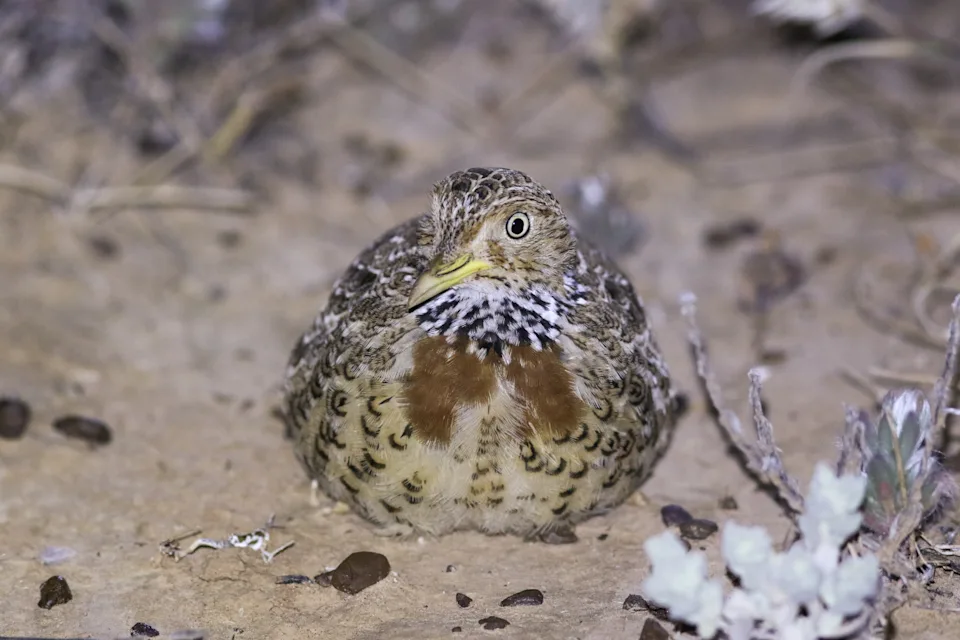
Ecologists working for the Australian Wildlife Conservancy sighted this plains wanderer in Queensland. Source: Jamie Hackeson
The species is listed as critically endangered, the most dire threatened category before extinction.
Plains wanderers stand at about 15cm tall and inhabit grasslands, making them difficult to see in the wild.
“They are a species that potentially occupies a lot of grassland habitat, but we just don’t know,” Manning said.
“They’re really hard to detect because they’re so small and they camouflage very easily.”
Remarkably, as AWC staff set up the recorders, they observed plains wanderers in the wild and were able to photograph them.
Their nighttime images show the quail-like ground-dwelling species peering back at the strange human visitors.
AWC now hopes to determine whether the birds are continually occupying the area, or whether they were there for just a short time, and what sort of environments they can survive in.
“It’s good to know that plains wanderers and cattle can occupy the same areas,” Manning said.
Do you have a story tip? Email: newsroomau@yahoonews.com.
You can also follow us on Facebook, Instagram, TikTok, Twitter and YouTube.