
(Credits: Far Out / Finnish Heritage Agency / Olavi Kaskisuo / Lehtikuva / William Morris Agency)
Tue 17 February 2026 4:00, UK
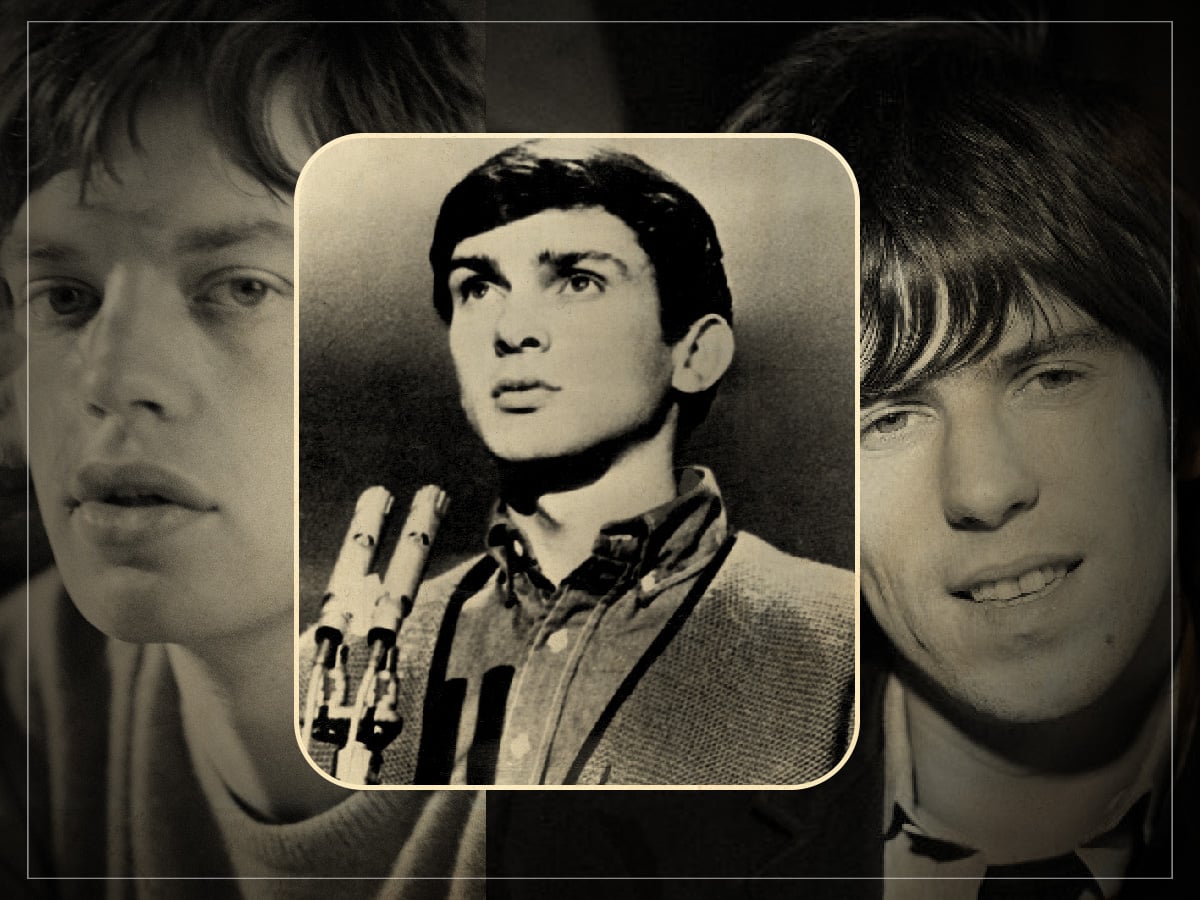
It is difficult to envision a time in which the leathery features of Keith Richards and Mick Jagger weren’t among the core pillars of rock and roll royalty; when The Rolling Stones were little more than a collection of teenage blues devotees burning off their excess energy. To this day, the band have Gene Pitney to thank for transforming those adolescent rockers into musical icons.
On first glance, the clean-cut shirt-and-tie combo of the Connecticut vocalist might seem worlds apart from the hedonistic, drug-fuelled rock rebellion of The Rolling Stones, but the two were actually more connected than you might think. During the early days of the Brian Jones-led outfit, the group’s setlists were concerned exclusively with covers of American blues and R&B songs, but the tides of the music industry were quickly shifting towards those who could write their own, original material.
In the footsteps of the Lennon-McCartney partnership, then, Stones manager Andrew Loog Oldham determined that Jagger and Richards should start composing their own tracks, too – even throwing them in a locked room together until they came out with some material, or so the legend goes. This was the decision that would eventually strike upon some of the most iconic rock songs to ever grace the airwaves, but the success wasn’t instant.
Nobody writes ‘(I Can’t Get No) Satisfaction’ on their very first attempt, after all. Instead, the uncharacteristically emotional ‘As Tears Go By’ was the first song to be forged by the Jagger-Richards partnership, but that song was initially given to Jagger’s girlfriend, Marianne Faithfull, who made it into a top-ten hit in 1964.
Despite being the first official Jagger-Richards collaboration, though, that Marianne Faithfull classic was not the first of their songs to break into the UK singles chart. Instead, that accolade went to ‘That Girl Belongs To Yesterday’, another song which the pair never really intended to be recorded by The Rolling Stones.
 (Credits: Far Out / Album Cover)
You only need to listen to the 1964 track in passing to recognise that it would not have particularly suited the rock sensibilities of The Rolling Stones at that time, and that is because it was never meant to. Originally, the pair wrote the song for Decca’s George Bean, under the Motown-esque title ‘My Only Girl’, but it was George Pitney who rearranged the song and recorded it as ‘That Girl Belongs To Yesterday’.
With that fateful recording, Pitney would achieve one of his earliest UK success stories, as well as giving the Jagger-Richards songwriting partnership its very first top-ten hit. Peaking at number seven in April 1964 – ironically, a few spots below The Rolling Stones’ Buddy Holly cover ‘Not Fade Away’ – it was the first to establish the pair as a songwriting force to be reckoned with.
Inevitably, that early composition would not be regarded among Jagger and Richards’ best, as time went on. In fact, within 12 months of Pitney’s hit, the Rolling Stones would have their first original number-one with ‘The Last Time’, credited to the Jagger-Richards partnership (despite, admittedly, owing itself almost entirely to a traditional gospel song).
For Pitney, that 1964 track might have been just another hit record to add to his illustrious collection of chart accolades, but with that fateful single, he effectively opened the floodgates for one of the greatest songwriting partnerships in the history of rock and roll. Without him, perhaps the airwaves would never have known the revolutionary sound of the band’s later material.
Whether it was the youthful rock rebellion of ‘Satisfaction’ or the countercultural politics of ‘Street Fighting Man’, all roads lead back to the unlikely starting point of Gene Pitney.