
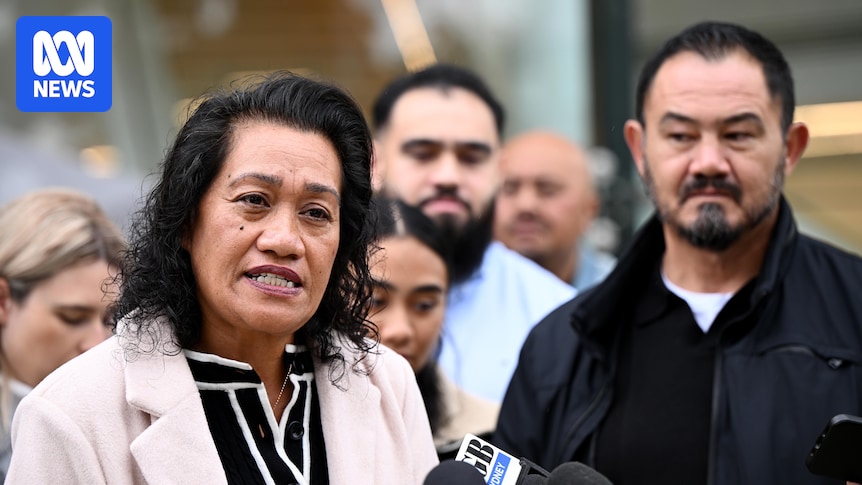
The mother of Manly player Keith Titmuss, who died of exertional heat stroke following a 2020 Sea Eagles training session, has broken her silence on her family’s multi-million-dollar lawsuit against the NRL club.
Keith’s mother, Lafo Titmuss, said they were now “seeking justice” after her 20-year-old son was subjected to a “more likely than not inappropriate training session” during Manly’s pre-season on November 23, 2020.
“Yes, we have lodged a claim, and we are seeking justice,” Ms Titmuss told the ABC.
“We miss Keithy’s voice, his smile. I miss Keithy teasing his brother and sister, and then when I look at my grandbabies, I look at them thinking they’ve been ripped off not knowing their uncle.
“Last week was Keithy’s birthday. The whole family took the day off … and I think we survived that day by just being together, going out for lunch, and then spending time at the cemetery.”
The Titmuss family — Lafo, Keith’s father, Paul, and brother Jesse — have launched the lawsuit against Manly in the New South Wales Supreme Court with a directions hearing due to be held in early March.
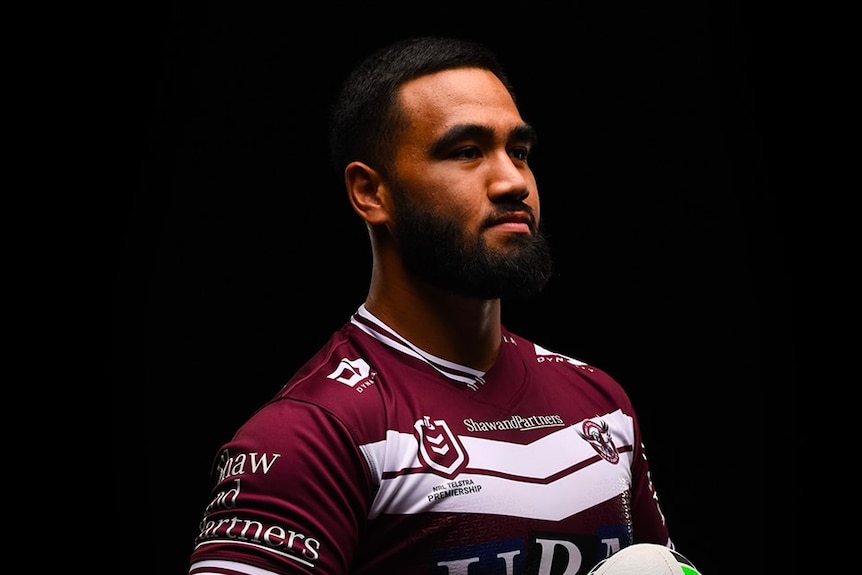
Keith Titmuss died after a training session in November 2020. (Manly Warringah Sea Eagles)
Titmuss died from extreme heat exertion after a two-and-a-half-hour session that pushed his core body temperature to 41.9 degrees Celsius.
A 2024 coronial hearing into Titmuss’s death revealed graphic details of the seizure he suffered in Manly’s Narrabeen training shed and how his fellow teammate and best friend Josh Schuster held his hand as he convulsed.
Ambulance officers took the Manly rookie’s temperature three times because they could not believe it was nearly 42C.
Titmuss was taken to Royal North Shore Hospital, where he suffered a cardiac arrest.
Do you know more?Contact Jessica Halloran at Halloran.Jessica@abc.net.auIf you require more secure communication, please choose an option on the confidential tips page.
The Titmuss family’s legal claim follows former Manly prop Lloyd Perrett’s legal proceedings against the club for an alleged “outlandish training regime” that he alleges ended his promising NRL career.
Perrett claims a 2017 summer training session left him unconscious.
The former Manly player was hospitalised after he was allegedly deprived of water and fluids.
However, the then-club doctor, Luke Inman, treated the player for heat stroke.
It was also revealed in the 2024 coronial inquiry that Dr Inman, who was not club doctor when Titmuss collapsed, sought to raise awareness about the risks of extreme heat stress.
In early 2018, Dr Inman sent a warning to senior Sea Eagles coaching and training staff.
Dr Inman wanted reassurance that a portable Kestrel weather device, which measured temperature and humidity, was to be used at every session.
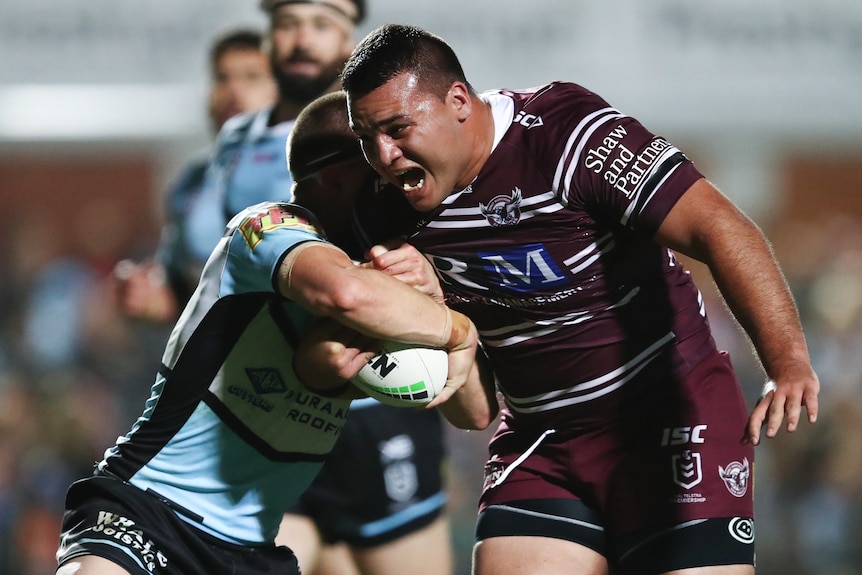
Lloyd Perrett launched legal action against the club last year. (AAP: Brendon Thorne, file photo)
“You are leaving yourself and the club open to litigation if a player suffers heat stroke, or at worst, dies,” wrote Dr Inman in an email to then-Manly coach Des Hasler and his high-performance staff.
Dr Inman was concerned the weather device was not being deployed.
“Please, it does not take long to set up,” Dr Inman implored.
Two years later, Titmuss died.
The deadly illness affecting young, healthy Australians
“It should never have happened in the first place, after Lloyd Perrett went down,” Lafo Titmuss told the ABC.
“We believe Keithy would be alive, like I think that kills us the most, it hurts us the most knowing that our son’s death was absolutely preventable.”
Ms Titmuss told the ABC she had recently been having daydreams of her son as a child, in which she assured him she would protect his “name”.
“I have been picturing Keith as a 10-year-old, running up to him and hugging him and just saying to him, ‘We want the truth to come out’ and, ‘Mum and Dad are there to protect his good name,'” she said.
A post-mortem examination also revealed that Titmuss had the brain disease chronic traumatic encephalopathy when he died aged 20.
He remains the youngest Australian sportsperson to be diagnosed with the fatal condition related to repeated head impacts.
Titmuss played both rugby league and rugby union as a junior.
The Titmuss family said they wanted their son’s legacy to be that his sport was made safer, and they hoped to establish a foundation in his honour.
Ms Titmuss also believed the NRL could do more to protect players’ brain health.
“Part of Keithy’s legacy is that we want the sport to be safer, when it comes to heat exertion and also brain health,” she said.