
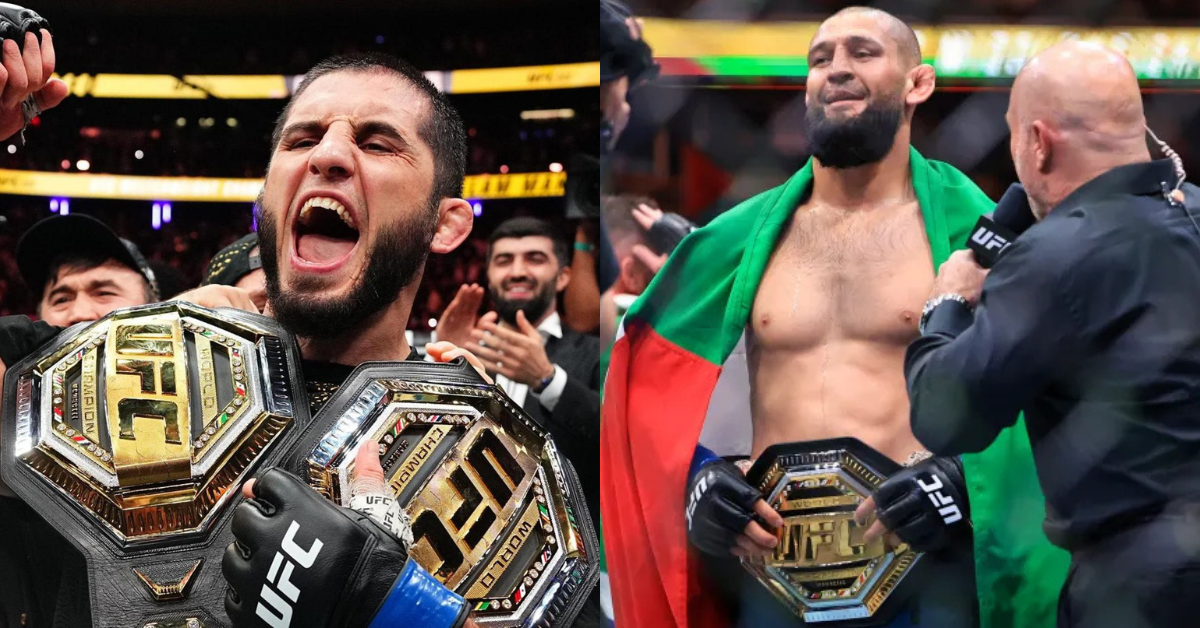
Khamzat Chimaev’s coach has laid out why a fight with Islam Makhachev is about more than rankings, weight classes, or marketing. In comments tied to MMA Today, Chimaev’s longtime trainer, Murad Nurmagomedov Nascimento, framed the matchup as unlikely because of the level of respect between the two fighters.
Khamzat Chimaev vs. Islam Makhachev
Nascimento explained that Chimaev and Makhachev know each other and respect one another. He noted that this separation alone makes a unification or superfight more complicated than a simple booking. He also pointed to religion and culture, saying he lives in a Muslim‑majority environment and understands how public confrontations can be interpreted inside their communities.
“They respect each other, they know each other, but they don’t train together. It also involves religion, which is very important in their culture. I don’t think it would actually happen. It would be easier for Khamzat to move up than to go down.”
On the same point, Nascimento said he does not think a Chimaev–Makhachev fight “would actually happen,” especially at this stage, and that it would be easier for Chimaev to move up in weight than to drop down to meet Makhachev at welterweight or lightweight. Those comments line up with what Makhachev’s manager, Ali Abdelaziz, has also suggested: that the matchup “makes no sense” and “will never happen,” in part because of the symbolism it would carry.
Khamzat Chimaev’s coach says respect and culture make a fight with Islam Makhachev complicated
“They respect each other, they know each other, but they don’t train together. It also involves religion, which is very important in their culture. I don’t think it would actually… pic.twitter.com/A7zOWR4XKY
— Red Corner MMA (@RedCorner_MMA) February 17, 2026
Makhachev is from Dagestan; Chimaev is from Chechnya, and the two republics share a history that is often described as tense and politically sensitive. Because of that background, a high‑profile fight between them can be seen as more than a sporting contest.
That perception is one reason Makhachev has handled the topic carefully. Asked directly about facing Chimaev, he has said he does not want to “open the door to any kind of conflict between our people,” alluding to the risk of turning a cage matchup into a wider social issue. He has also referred to Chimaev as a brother in the Muslim community, which reinforces the idea that their relationship is framed by shared faith as much as by elite‑level rivalry.
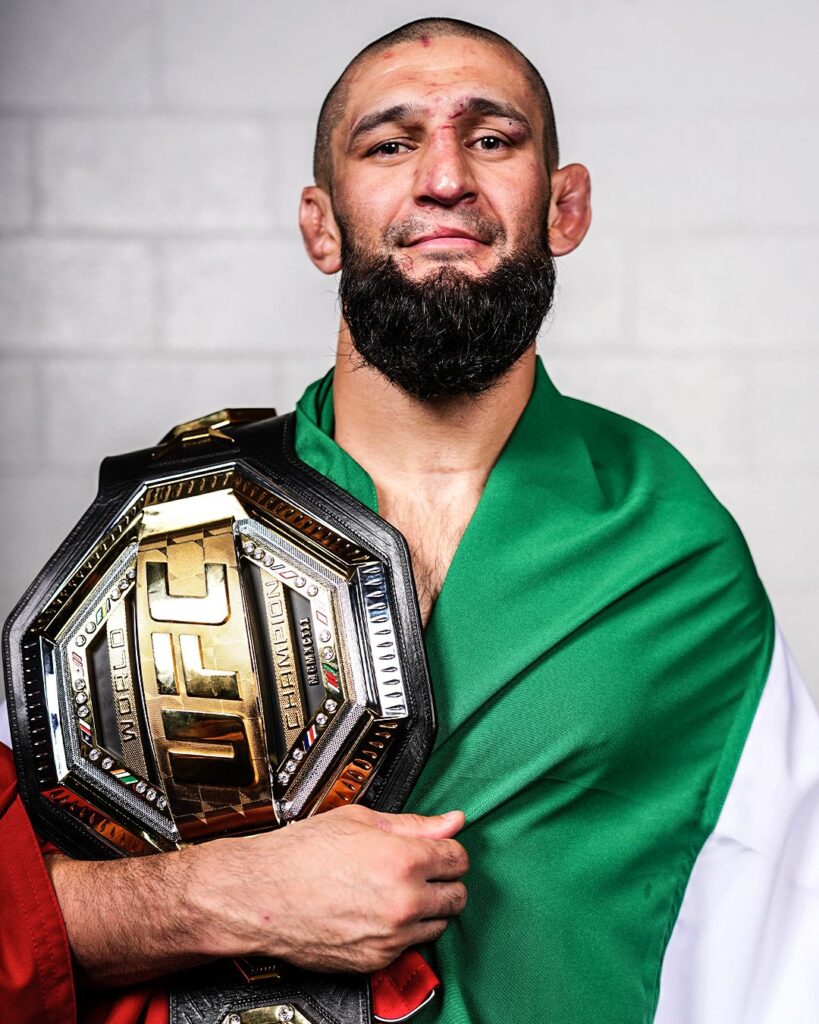
On the practical side, UFC‑level discussions about where the two would meet keep running into body‑type questions. Chimaev has already moved up to middleweight, where he captured the 185‑pound title with a dominant win over Dricus du Plessis at UFC 319. His size and strength at that level have led coaches and analysts to suggest that asking him to cut back to 170 would be a worse fit than letting him stay at 185 or even climb higher.
Makhachev, meanwhile, has already shifted to welterweight and is building his next path there, instead of targeting a single symbolic superfight. Between the cultural layer, the coaching and management skepticism, and the body mismatch, it simply seems unrealistic.
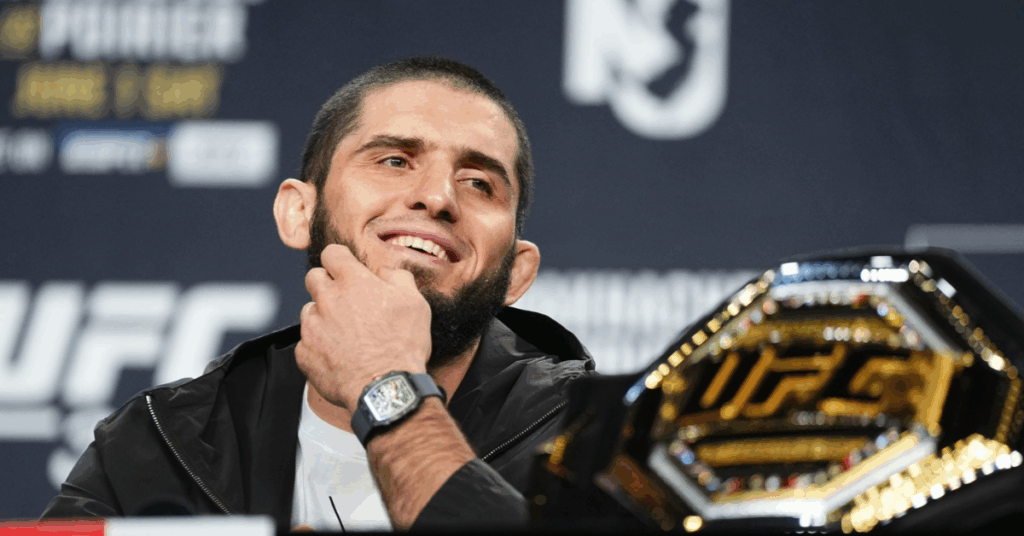 Islam Makhachev wants to fight on June 14. [Image via @MAKHACHEVMMA
on X]