
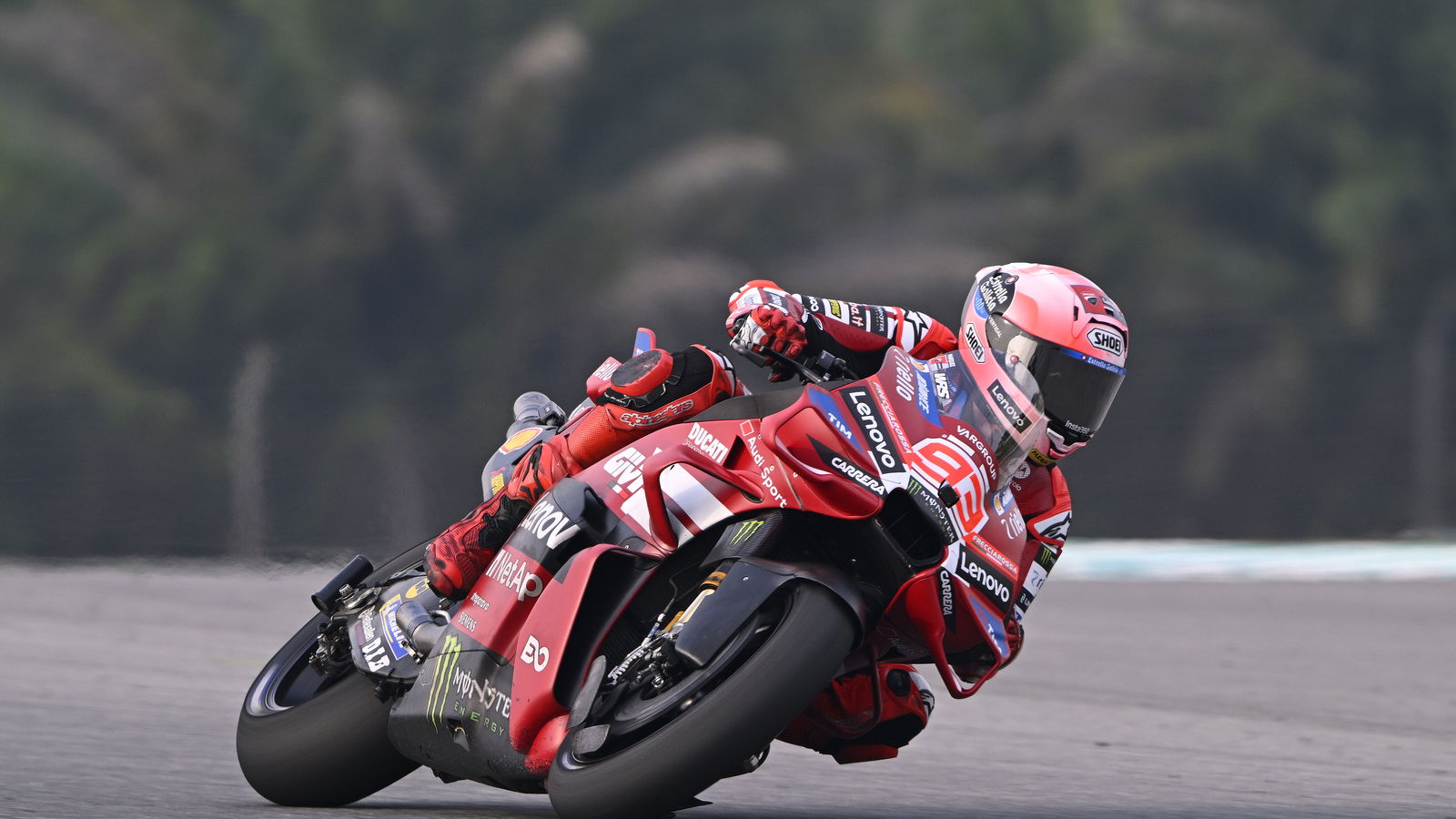
Transitional years in MotoGP are always the most interesting. Running parallel to what is going on in the world championship is all of the testing of brand-new machinery, and the potential for radical new concepts to emerge.
The current 1000cc era of MotoGP will come to an end when the chequered flag falls on the Valencia Grand Prix in mid-November. It will be the longest lifespan of a rulset in the premier class since the full switch to two-stroke 500s in the 1970s, which lasted until the dawn on the four-stroke era of MotoGP at the end of 2001.
Of course, the current regulations cycle has not stayed stagnant since the 1000cc engines were introduced in 2012. In that period, MotoGP shifted to control electronics, replaced Bridgestone tyres with Michelin, saw rampant aerodynamic development and the emergence of ride height devices.
As such, the competitive landscape has changed significantly from the first years of the 1000cc format. Domination changed hands from Honda across the 2010s to Ducati, as the open-minded nature of the European manufacturers proved pivotal.
As the 2026 season dawns, there is hope that Ducati can be challenged for the world title. Aprilia emerged with a strong package, winning four grands prix and moving to second in the constructors’ standings.
Article continues below ADVERTISEMENT
Article continues below ADVERTISEMENT
Ducati dominated the campaign, still, with 17 total grand prix wins and a clean sweep of titles, with Marc Marquez taking 11 of those wins on his way to a seventh premier class crown.
His absence from the final four rounds through injury did expose just how much of a difference he had been making on the GP25, as team-mate Pecco Bagnaia continued to endure inconsistent form.
But the early indications after the Sepang pre-season test earlier this month are that Ducati has made a step with its GP26, while Aprilia still looks to be leading the charge against its Italian rival coming into the start of the campaign.
History favours continued Ducati dominance in 2026
In the 21st Century, MotoGP has undergone three major regulations overhauls: 500cc to MotoGP four-strokes in 2002, 990cc to 800cc in 2007, and 800cc to 1000cc in 2012.
By the end of the two-stroke 500cc era in 2001, those machines were as developed as they were ever going to be. In theory, that should have led to a more balanced campaign. In reality, Honda – who’d won the 500cc title between 1994 and 1999 – smashed its opposition.
Article continues below ADVERTISEMENT
Article continues below ADVERTISEMENT
Of the 16 rounds, Honda won 12 of them, with Yamaha taking three and Suzuki one. Honda ended the year 72 points clear of Yamaha in the constructors’ standings, while Valentino Rossi beat Max Biaggi to his first premier class title by 106 points.
When the four-stroke MotoGP formula came into being in 2002, Honda continued to dominate with its sublime RC211V. Rossi waltzed to back-to-back championships in 2002 and 2003. That run was likely to continue had Honda not upset him to the point of walking away to Yamaha, with whom he won the 2004 and 2005 championships.
By this point of the MotoGP era, bike speeds were getting to dangerous levels, and the championship was poised for a switch to slower, ostensibly safer, 800cc engines for the 2007 season.
The 2006 season was the closest title battle of the 21st Century’s transitional years. Nicky Hayden for Honda and Rossi, on the Yamaha, battled to the wire for the championship. Hayden ultimately won out in a dramatic conclusion to the year, with Rossi’s reign ended by just five points when he fell out of contention at the Valencia finale.
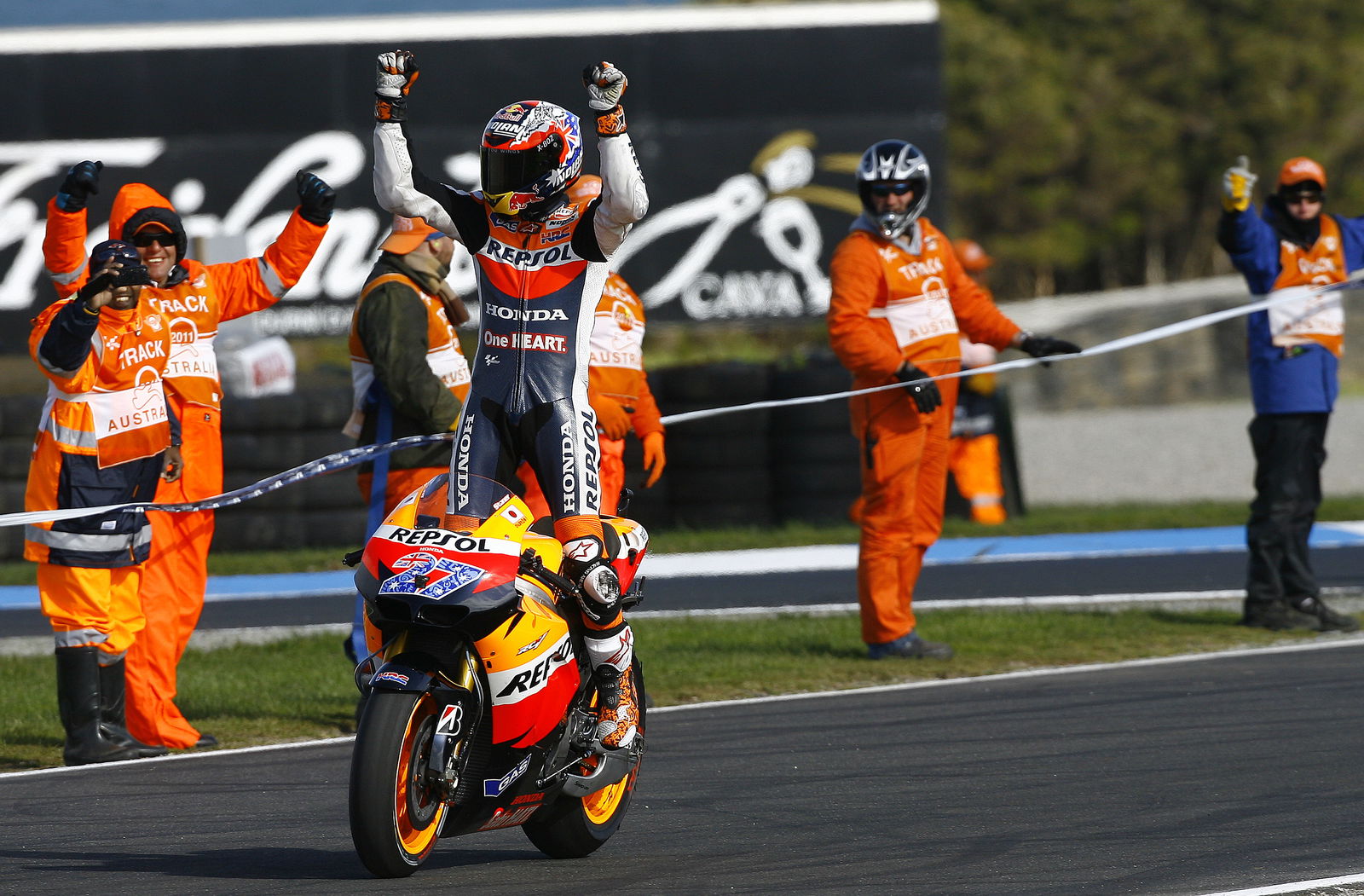
Casey Stoner, Honda HRC, 2012 Australian MotoGP
© Gold and Goose
Article continues below ADVERTISEMENT
Article continues below ADVERTISEMENT
But the constructors’ standing shows a different picture. Honda amassed 360 points, while Yamaha only 289. Honda had four riders (Hayden, Dani Pedrosa, Toni Elias, Marco Melandri) contribute to its haul of wins, while only Rossi won for Yamaha.
By the end of the 800cc rules cycle in 2011, the landscape was still largely dominated by Yamaha and Honda. Ducati scored the first championship win of the 800cc era in 2007 with Casey Stoner, before Yamaha won the title between 2008 and 2010.
Honda didn’t get off on the right foot when the 800cc era began, but was poised to finally win a title in that rule cycle when it signed Stoner from Ducati for 2011. The Australian duly dominated on the RC212V, claiming 10 grand prix victories to beat Jorge Lorenzo and Yamaha in the standings by 90 points.
Honda enjoyed three further victories with Pedrosa, while Yamaha managed just four between Lorenzo and Ben Spies. Honda had a near-perfect record in 2011, winning 13 of the 17 rounds run and finishing runner-up in all of the rest. It ended the campaign 80 points clear of Yamaha in the constructors’.
Intriguingly, Honda once again didn’t get the following rules cycle right straight off the bat. The first version of the RC213V failed to live up to the dominance of the final RC212V, with Yamaha ultimately winning in 2012 with Lorenzo.
Article continues below ADVERTISEMENT
Article continues below ADVERTISEMENT
Generational talents have contributed to success in transition years
One thing that stands out from the 2001, 2006 and 2011 seasons as a rules cycle comes to an end is how important generational talent has been to the success of a manufacturer in most of those years.
Rossi was always destined for the kind of season he produced in 2001, marking the start of a dominant period for the Italian. In 2011, the stars aligned to bring Stoner into the Honda fold, with one of the century’s most naturally talented riders proving why.
That element seems to be equally important in the first year of new regulations. Rossi dominated for Honda in 2002 in the first year of the 990cc four-stroke bikes; Stoner cleaned up on the Ducati in 2007 in the debut season of the 800s; and Lorenzo came off best of all on the Yamaha at the dawn of the 1000cc rules.
Despite turning 33 in February and entering his 14th season in MotoGP off the back of a complicated shoulder injury late last year, Marquez remains the benchmark. On a difficult bike in 2025, Marquez dominated. At this stage of the winter, the GP26 appears to be a genuine step forward.
While that will undoubtedly help his stablemates have a more consistent campaign, and perhaps even push him harder, it’s hard to see that allowing Marquez to be overhauled.
Article continues below ADVERTISEMENT
Article continues below ADVERTISEMENT
Though not a change of bike, the switch to spe electronics and Michelin tyres in 2016 did nothing to stop Marquez and Honda from dominating in the ensuing years up to 2019. Next year, Pirelli will take over from Michelin, which is predicted to cause the biggest shake-up to the grid rather than the 850cc bikes.
Therefore, history appears to be on Ducati and Marquez’s side even further…
Subscribe to our MotoGP Newsletter