
Unlock the Editor’s Digest for free
Roula Khalaf, Editor of the FT, selects her favourite stories in this weekly newsletter.
Japan’s largest toilet maker is an “undervalued and overlooked” AI play, according to a UK-based activist investor.
Palliser Capital sent a letter to the board of Toto last week exhorting it to make more of its advanced ceramics segment, saying it holds a crucial position in the semiconductor supply chain. The segment generates 40 per cent of Toto’s operating profit.
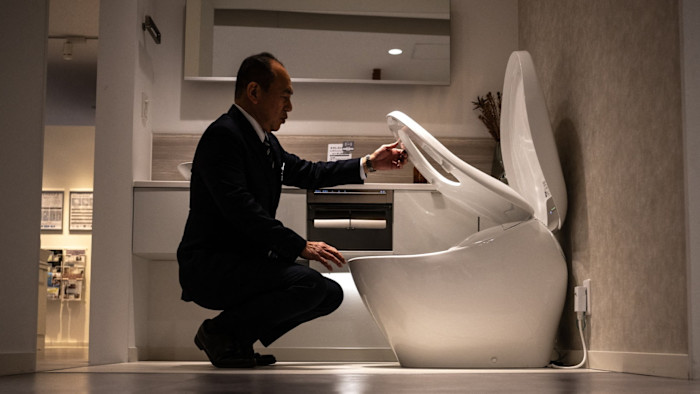
Ubiquitous in Japan and now famous across the world, Toto is best known for its heated toilet seats and “Washlet” bidet features. But the manufacturer “has quietly evolved from a traditional domestic sanitary ware champion into a rising powerhouse in advanced ceramics for semiconductor manufacturing”, Palliser said.
It described Toto as “the most undervalued and overlooked AI memory beneficiary” because the company also makes so-called electrostatic chucks, which are used to manufacture Nand memory chips.
Prices for memory chips have soared over the past few months because of massive demand from AI-focused companies.
Toto’s chuck technology uses ceramics designed to remain stable at very low temperatures, helping hold silicon wafers firmly during chip production. That makes it relevant to cryogenic etching, which is expected to grow as memory chips become more layered and complex.
The company has been making electrostatic chucks since the 1980s using what it has learnt about ceramics during toilet manufacturing, but only in the past few years have they started to become big business.
Palliser believes that Toto has a five-year competitive “moat” before other companies can catch up. It argues that the advanced ceramics business could deliver 30 per cent or more revenue growth in the next two years “driven by Nand upgrade cycle and stable replacement demand”.
However, Palliser also said Toto was failing to properly explain the importance of the business to shareholders and the market and that too little of the company’s planned investment was flowing to the highly profitable segment.
Founded by a former senior figure at Elliott Management, Palliser has been playing an increasingly prominent role in shareholder activism in Japan, which has exploded in recent years.
Palliser bought into Toto roughly six months ago and has a top 20 shareholding, according to people familiar with its position.
The fund’s other stakes include holdings in property company Tokyo Tatemono, Keisei Electric Railway, which runs trains in Tokyo, and Japan Post Holdings.
Palliser suggested Toto’s shares could rise by more than 55 per cent if it expanded its advanced ceramics business, sold cross-shareholdings and used its ¥76bn ($496mn) in net cash more efficiently.
Toto’s shares have already risen by more than 60 per cent over the past year, including by more than 5 per cent on Tuesday after news of Palliser’s stake was first reported by Bloomberg.
Palliser and Toto declined to comment.
Analysts have previously homed in on Toto’s advanced ceramics business. Goldman Sachs upgraded the stock to “buy” last month, highlighting an expectation for continued high growth because of expanding global investment in AI data centres.
Toto is not the first ostensibly non-tech company in Japan that has become part of the AI boom. Ajinomoto, better known for soup stocks, uses resin derived from its expertise in umami flavourings to make insulation material between chips and motherboards.