
Astro Boy, first serialised in 1952, remains one of Japan’s national treasures and the defining work of the “father of manga”, Osamu Tezuka. When the renowned manga artist Naoki Urasawa revealed in 2003 that he would reimagine Astro Boy in a new series, expectations were astronomical. Astonishingly, Pluto: Urasawa x Tezuka did not just honour its source material; it radically expanded it and became an immediate critical and commercial sensation. While the 2023 anime adaptation doesn’t quite surpass the manga’s cultural impact, it still manages to faithfully capture the philosophical and emotional adeptness of its source material.
Over eight hour-long episodes, Pluto does not follow Atom, the spiky-haired protagonist of Astro Boy; instead, it centres on Gesicht, a German detective and one of the world’s most advanced robots. Gesicht must track down the mysterious assassin targeting Earth’s most powerful robots and the scientists behind an international investigation that led to a devastating war. The murder sites are linked by two consistent elements: horn-shaped objects referencing Pluto, the Roman god of death, and the absence of human biology as evidence. But how could robots be suspects when they are programmed to never harm humans?
At the heart of the murder mystery lies the 39th central Asian war, a battle waged by the fictional United States of Thracia on the kingdom of Persia that takes place four years before the series begins. Unmistakably evoking the atrocities of the US invasion of Iraq, Pluto unfolds as a profound meditation on war and its lingering residue: grief, memory and hatred that perpetuates itself.
Released in late October 2023, Pluto also arrived alongside the onset of Israel’s calamitous campaign in Gaza, giving its antimilitarist message renewed urgency. “There aren’t any terrorists here,” a Persian civilian laments to Gesicht in a flashback. “The only ones here were children! You dropped a bomb on my sleeping child!”
Pluto’s futuristic world differs sharply from our present reality.
Adapted from The Greatest Robot on Earth, a chapter of the original Astro Boy, Pluto reshapes a beloved children’s story into a provocative political drama. The series sees Urasawa return to the moral complexities that have long defined his celebrated oeuvre. At the same time, Pluto honours Tezuka’s anti-imperialist beliefs by echoing The Angel of Vietnam, Astro Boy’s bleakest chapter, which Tezuka wrote in 1967 to protest against the US’s intrusion into Vietnam.
Likewise, in Pluto, Atom is a beacon of hope for a world without senseless war. Created by a genius scientist to replace his dead son, Atom is eternally bound to the image of a child. Unlike Gesicht, who has an elusive tragic past, Atom is untouched by hatred. But as advanced robots like Atom become increasingly more humanistic, they must forever grapple with sorrow and despair, unable to forget as humans do.
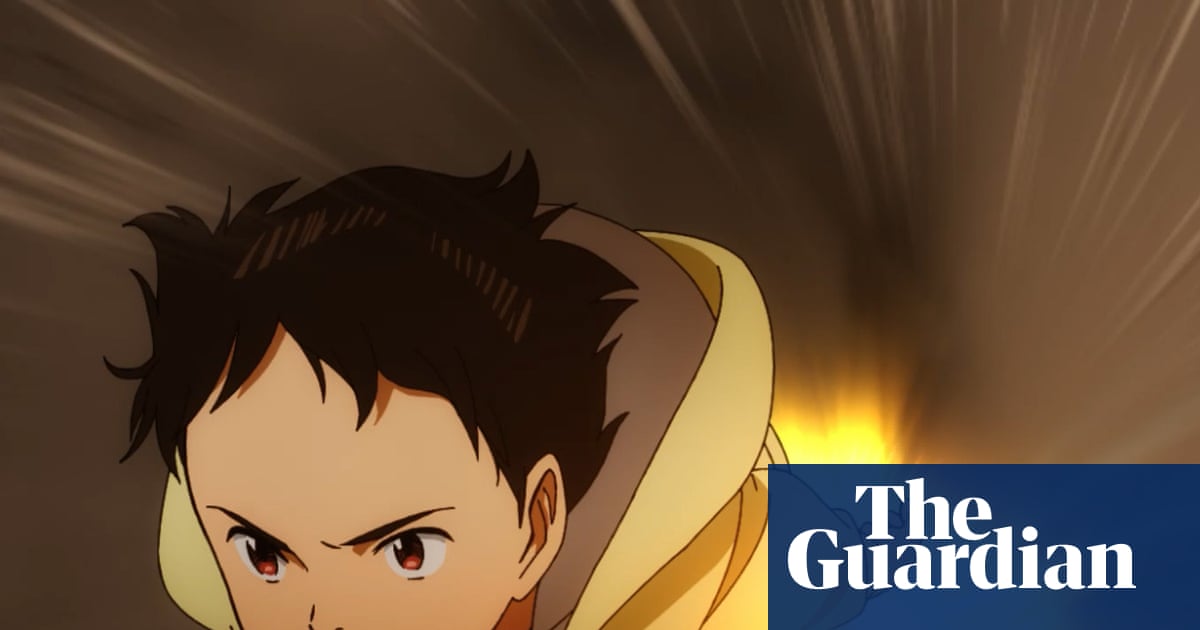
Gesicht is tasked with tracking down a mysterious assailant in Pluto. Photograph: Netflix
The series’ sophisticated contemplations about the cyclical nature of hatred is enhanced by expressive animation and nuanced performances by Japanese and English voice casts. A highlight is composer Yugo Kanno’s affecting soundtrack, oscillating between low electronic pulses and soft piano melodies to contrast the throbbing pain of grief and anger with the fragility of innocence. Using electronic and classical instruments in tandem, Kanno’s music elicits both the sci-fi setting of Pluto and the timelessness of Astro Boy, a story dating back to the 50s.
Although set in the 21st century, Pluto’s futuristic world differs sharply from our present reality – even as AI technologies have grown increasingly integrated into modern warfare. Much like the United States of Thracia, the US continues to engineer wars around the globe. From Vietnam to Iraq and now Palestine, Venezuela and Greenland, the US traces the same bloody arc, echoing Pluto’s grim message: humanity is doomed to repeat the vicious cycle of hate.
Pluto is streaming on Netflix in Australia, the UK and the US. For more recommendations of what to stream in Australia, click here