
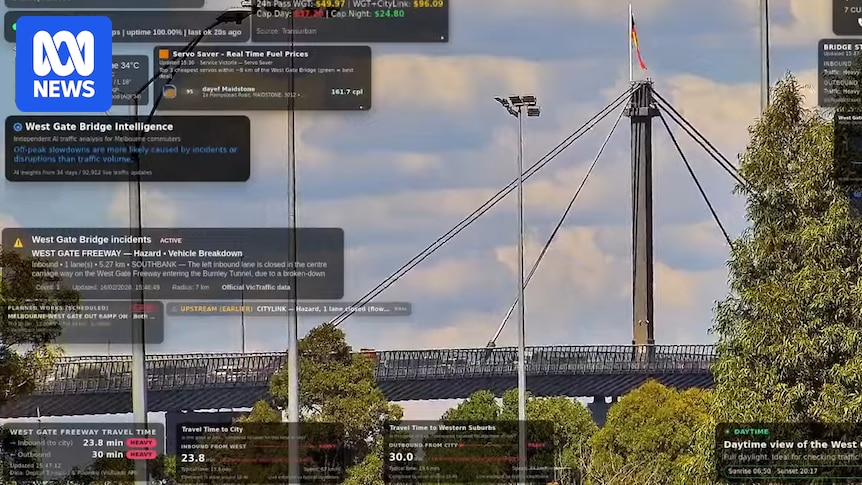
From the driveway of his family home in Melbourne’s inner west, Clarke Towson has a unique view of one of the city’s most iconic pieces of infrastructure: the West Gate Bridge.
So, he set up a camera and hooked it up to a livestream.
Once zoomed in, viewers can see both inbound and outbound traffic crossing the bridge in real time, answering the big questions for the city’s commuters.
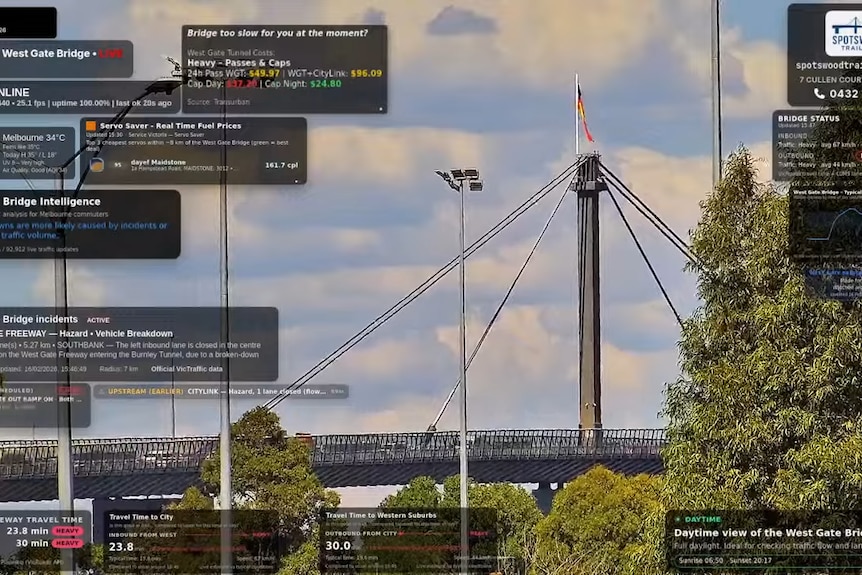
Mr Towson says the Youtube livestream has gotten nearly 20,000 views since it began. (Supplied: Spotswood Trailers)
“It’s always been the same issue — how bad is the West Gate?” Mr Towson said.
“Is it bad now? Should I cross now? Should I reroute?”
There are other ways for motorists to check Melbourne’s traffic before their commute — the VicTraffic website publishes live information about crashes, roadworks and travel times, and toll road operators host some live traffic cameras.
But Mr Towson’s is the only live traffic camera monitoring the West Gate Bridge that is available to the public.
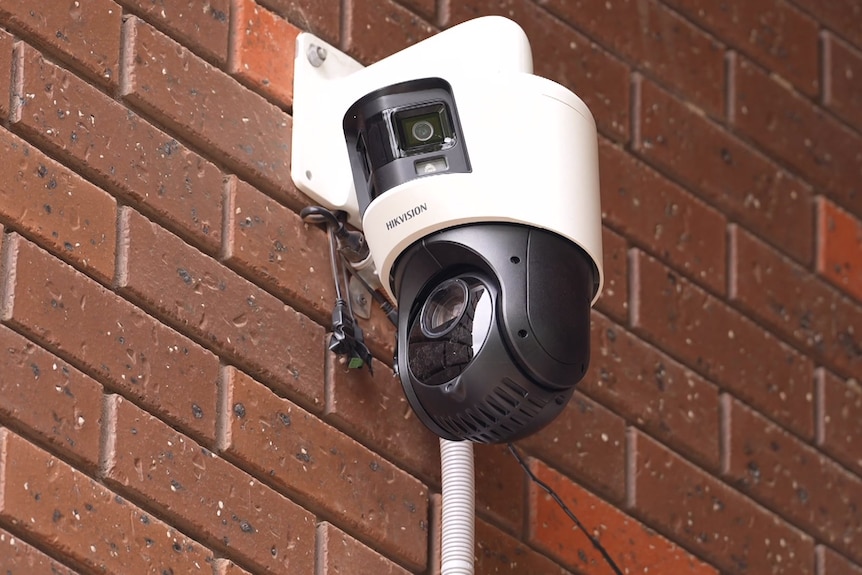
The West Gate Bridge footage is captured by a camera at Mr Towson’s home. (ABC News: Kyle Harley)
He told the ABC he set up the camera and 24/7 livestream because he loves Melbourne.
“I thought to myself, I’ve got this question, other people have got exactly the same question, let’s solve this for everyone, let’s build something for all of Melbourne,” he said.
“Let’s put something out there so everyone can see in real time how good or bad the traffic is over the West Gate Bridge,” he said.
Since the camera went live in January, the YouTube channel has had nearly 20,000 views.

Mr Towson says he built the livestream to help Melbourne commuters. (ABC News: Kyle Harley)
Mr Towson told the ABC he thinks people want to see the livestream because the bridge is such a critical asset.
“It’s a bottleneck when there’s a breakdown or an incident,” he said.
“And if I can help, even if it’s just for a couple of people to see and for them to avoid the bridge and have a great day, then I’m happy about that.”
How many vehicles cross the bridge every day?
Mr Towson, a computer scientist, has overlaid the vision from his camera with other information for commuters — travel time, any crashes, even petrol prices and weather.
He has big ideas for future additions, including recording the sound of rain in his backyard that transmits to the livestream in real time during wet and stormy weather, and another idea that involves running paid ads.
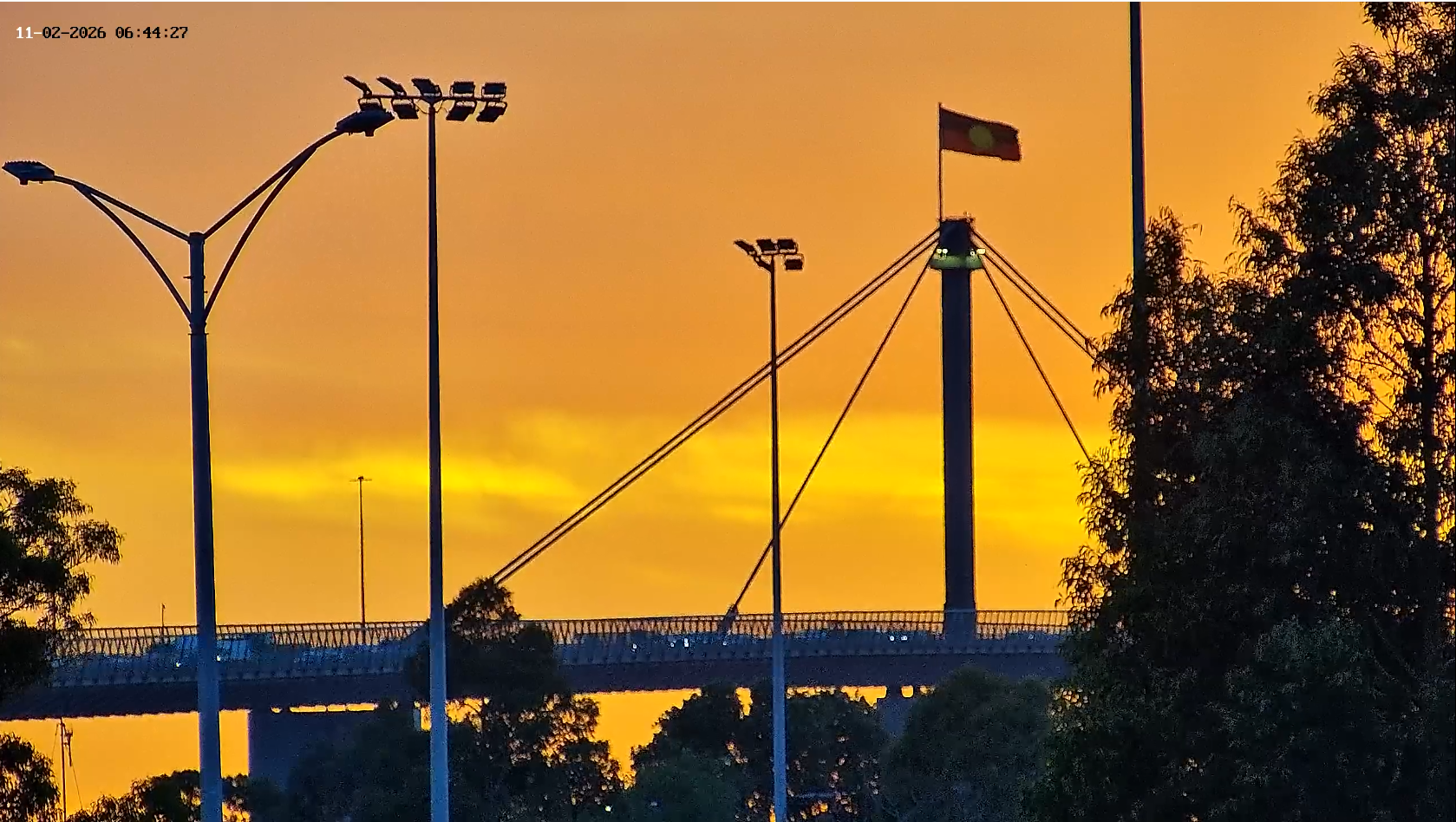
A sunrise captured by the the West Gate Bridge livestream camera. (Supplied: Clarke Towson)
But a more difficult task is finding out exactly how many vehicles cross the bridge every day, and when.
The state government said more than 200,000 vehicles a day cross the West Gate Bridge.
But it does not publish live data on vehicle counts on Melbourne’s freeways, which would allow the comparison of the use of the bridge over time and with other roads across the city.
Mr Towson tried using artificial intelligence (AI) to count the number of vehicles passing through his view, but because the camera is about 1.2 kilometres from the bridge, he said it is only about 70 per cent accurate.
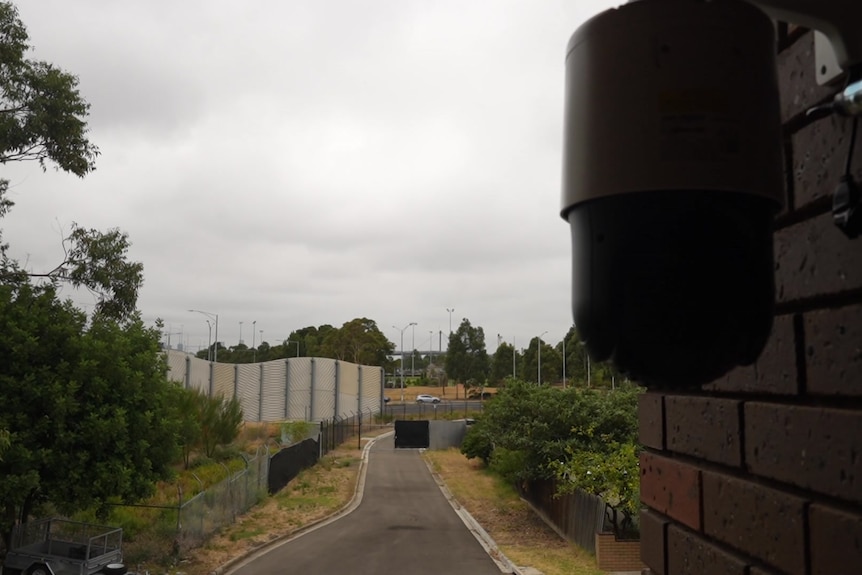
Mr Towson’s camera is about 1.2 kilometres away from the West Gate Bridge. (ABC News: Kyle Harley)
He is hoping to find other people with a view of the bridge to set up more cameras.
“While this is the first piece of citizen infrastructure in Melbourne focused on the West Gate Bridge, I’m sure there’ll be others, because there are other smart people out there,” he said.
In the meantime, an analysis of travel times gives a good sense of how busy the bridge is throughout the day.
“I’ve got about 70,000 trips logged so far in the system, which the AI is learning from in real time,” he said.
What do travel times tell us?
Mr Towson has collected inbound and outbound travel time data from the Department of Transport along the West Gate Freeway, between Kororoit Creek Road in Melbourne’s west, to Kings Way in the city’s centre.
The ABC has analysed the first two weeks of this data, the period since school went back this year.
While it is not a large amount of data, it gives some insight into how traffic along the freeway fluctuates throughout the day.
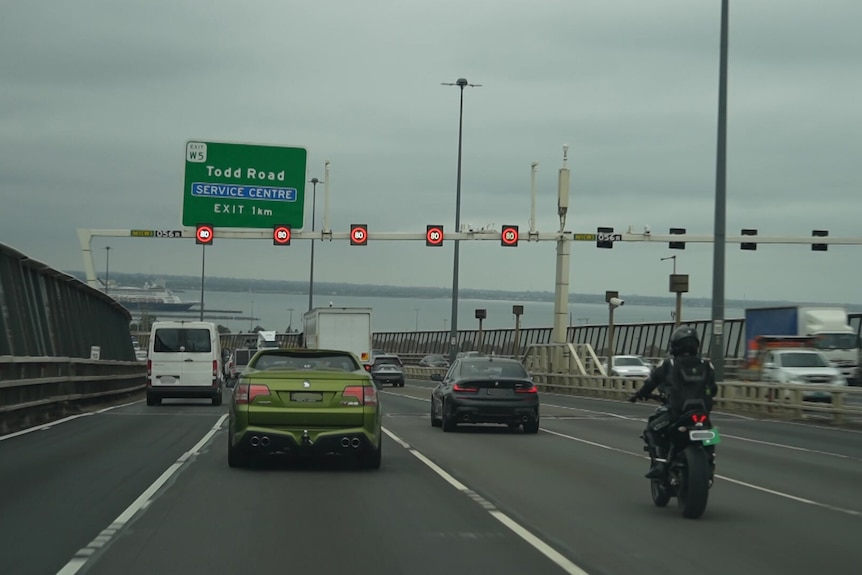
Traffic on the West Gate Bridge changes throughout the day. (ABC News: Kyle Harley)
A smooth run takes about 12 minutes.
In peak hours, it took — on average — 27 minutes to get to the city in the morning (7-9am), and 29 minutes driving outbound at the end of the day on a weekday (4-6pm).
But these averages hide a lot of variability.
For example, in the morning peak hour, trips can be as long as 45 minutes, and as short as 20 minutes
The longest trip recorded was 75 minutes, which was just before 9am on a Tuesday.
Mr Towson said he had noticed this variability in travel times too, where heavy traffic could be caused by a crash along the freeway or planned maintenance works on the bridge — both of which are alerted to on his livestream.
What about the West Gate Tunnel?
Victoria’s $10.2 billion West Gate Tunnel project opened at the start of the summer period, with the government saying the project will “slash” congestion, reduce travel times and get trucks off local roads.
So, has it?
A government website reported more than a million vehicles have used the toll road since it opened in December, and 20 per cent of them have been trucks.
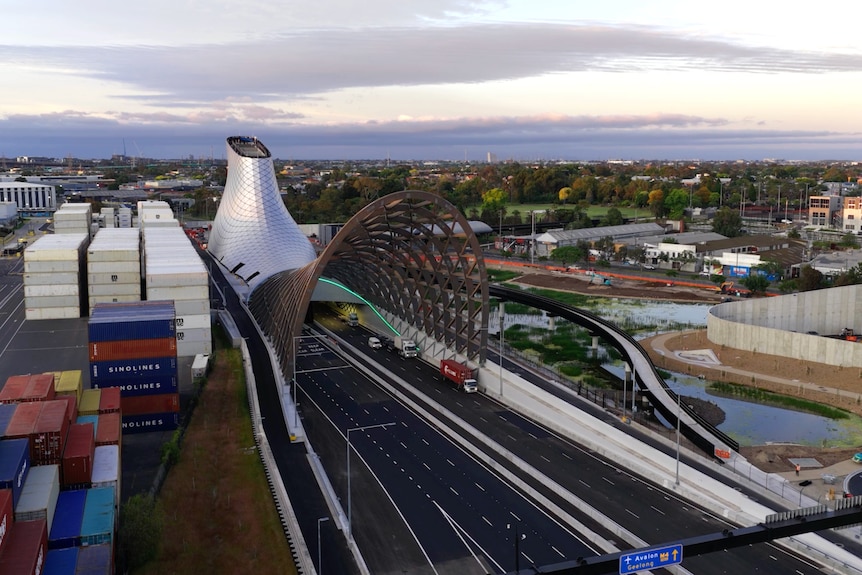
The West Gate Tunnel opened late last year. (Supplied: Victorian Infrastructure Delivery Authority)
But it has faced criticism on social media after some commuters reported little to no traffic in the tunnel, with some people saying they were the only vehicle in the tunnel.
As for the West Gate Bridge, the government said that before the West Gate Tunnel opened, about 196,000 vehicles used the bridge every day.
After the tunnel opened, between January 19-25, 2026, average daily volumes were 170,000 vehicles a day.
“The Christmas and New Year period experiences lower traffic volumes across the road network and as with any major new piece of infrastructure, it will take time for drivers to become familiar with where the tunnel takes them, how to use it and incorporate it into their regular journeys,” a spokesperson for the Department of Transport and Planning said.
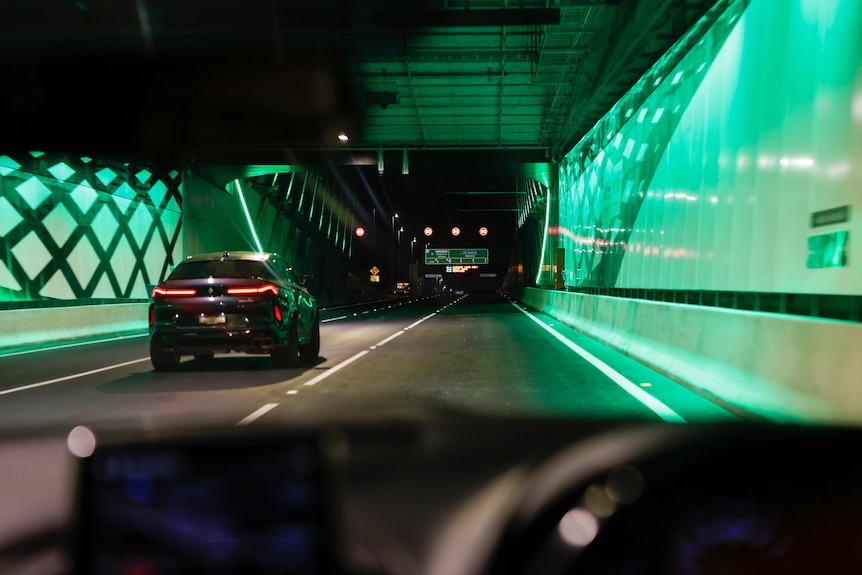
The Victorian government says more than 1 million vehicles have used the West Gate Tunnel since its opening. (Supplied: Victorian Infrastructure Delivery Authority)
Clarke Towson agreed it would take a while for the new tunnel to impact travel times on the bridge, but said the truck curfews on local streets in the inner west, which began when the tunnel opened, had been a game-changer.
“I take my hat off to them when it comes to just how quiet it is here compared to before,” he said.
“It has made a big difference to the community in terms of livability and the walkability of streets.”