
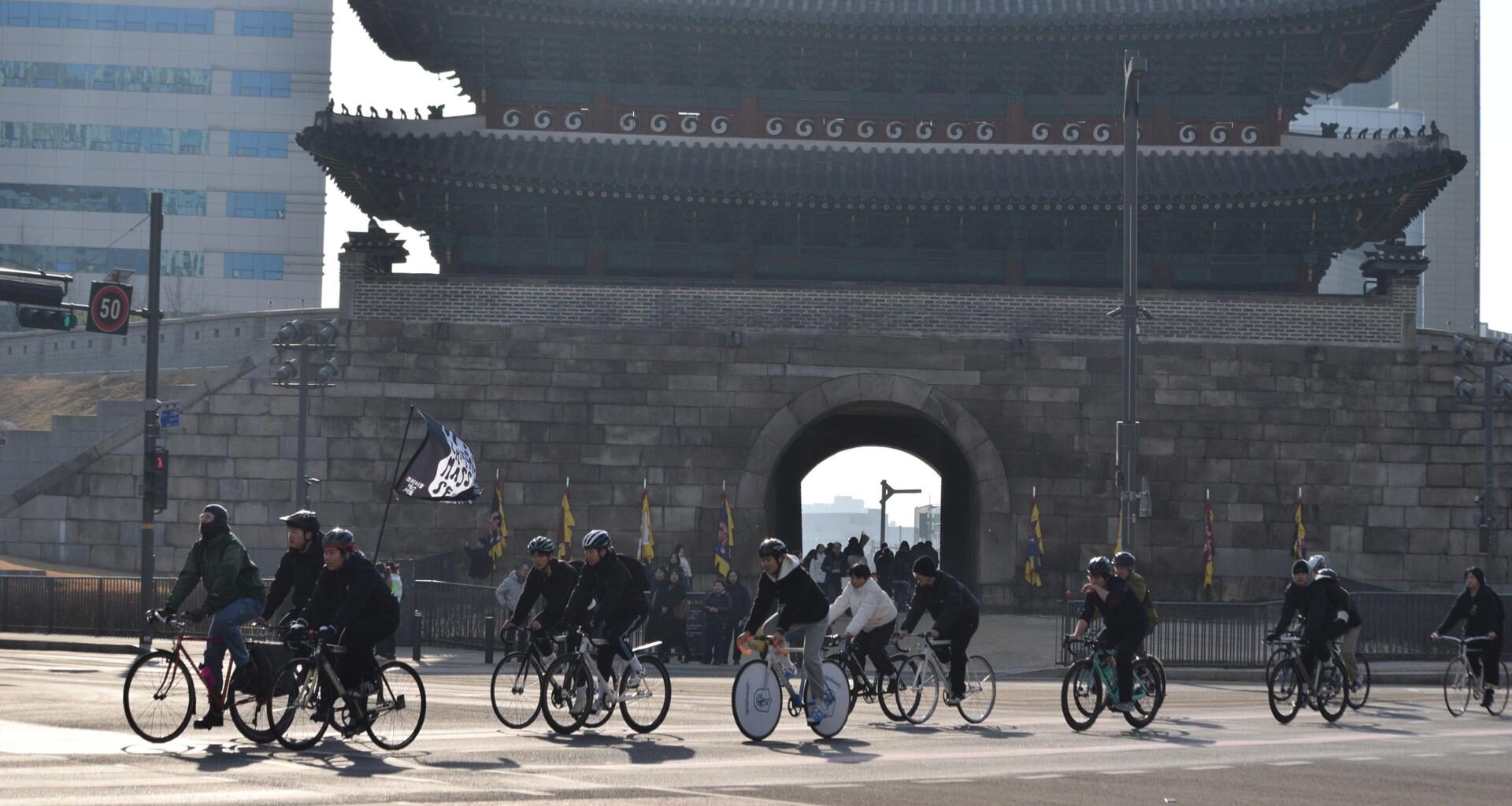
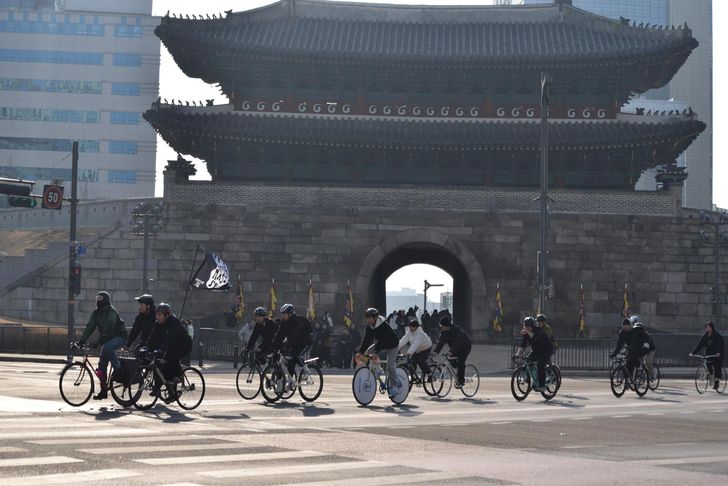
Cyclists ride past Namdaemun Gate during a Critical Mass ride in Seoul, Jan. 17. Courtesy of Bereket Alemayehu
A group of Korean and foreign cycle enthusiasts gathered at Sinyongsan Garo Park in central Seoul on a cold but sunny Jan. 17 afternoon. Even though it was the middle of winter, about 30 showed up for the 14th Critical Mass in Seoul to ride through the city’s busy central core.
Critical Mass is a monthly bicycle ride held in hundreds of cities worldwide to promote cycling, protest car-centric infrastructure and advocate for safer, more sustainable urban mobility.
Previously, Seoul had Critical Mass gatherings going back to about 2001, but there had been nothing since the COVID-19 pandemic until 2024, when Kim Eui-ho and fellow cyclists discussed bringing it back. They began organizing monthly rides, inviting anyone willing to pedal through the city together. Today, they say they are the only active Critical Mass group in Seoul.
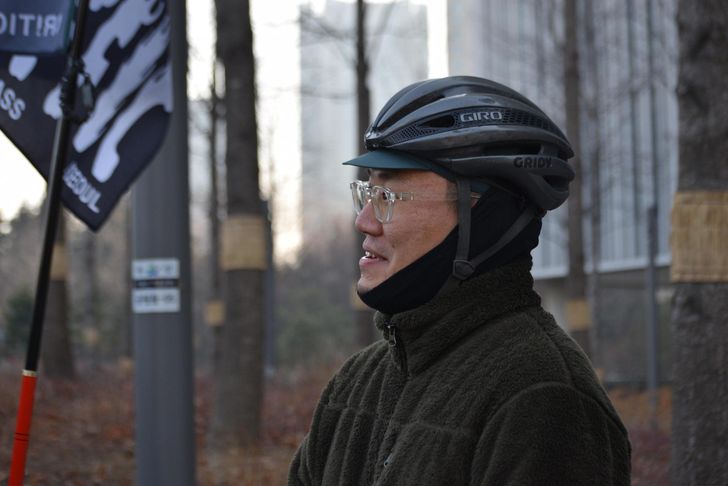
Kim Eui-jo participates in a Critical Mass ride in Seoul, Jan. 17. Courtesy of Bereket Alemayehu
Kim is the co-founder of Gridy, a bicycle messenger service. He explained to The Korea Times that the goal is the same as any other Critical Mass in the world.
“However, one point that may differ from other cities is that Seoul has an extremely low population of people who ride bicycles for daily purposes,” he said. “Our current objective is to bring out such people, share the joy of cycling as a community and help those who are not used to city riding by providing a safe and pleasant atmosphere of riding bicycles together.”
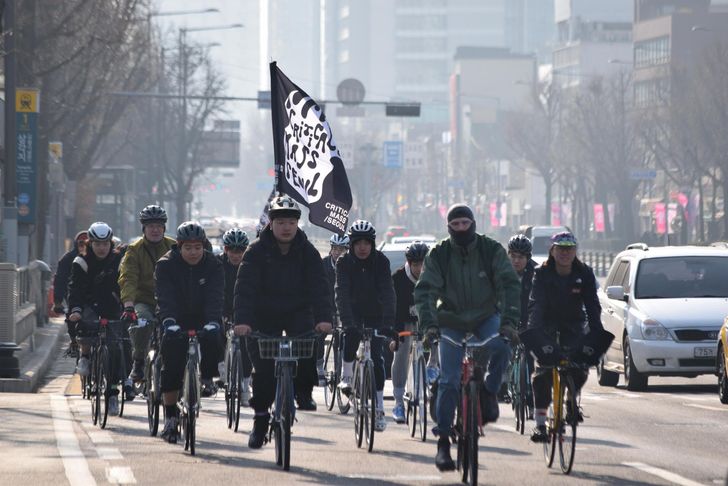
Cyclists pass Samgakji Station during a Critical Mass ride in Seoul, Jan. 17. Courtesy of Bereket Alemayehu
For many residents, cycling in Seoul feels risky. The city’s roads are dense with buses, taxis and impatient drivers. Bike lanes, where they exist, are often fragmented or obstructed. Kim admitted that Seoul’s streets are far from bike-friendly.
“However, we are still surprised that there have not been as many ‘incidents with drivers’ as we expected,” he said. “Riding as a large group definitely shows our presence to drivers and pedestrians. Because we ride very slowly, we experience more safety than when riding solo through the city streets. ‘Safety in numbers’ is a real thing.”
How attractive are the group rides anyway? Kim says that the most participants they have had at one time were over 80 riders, and the least was over 20. Currently, the average is about 30-40 participants, and over the years the majority are younger people in their 20s and 30s. He added that though the numbers may not be as high as other global cities, they are slowly building a strong community, and there are always new people joining every month.
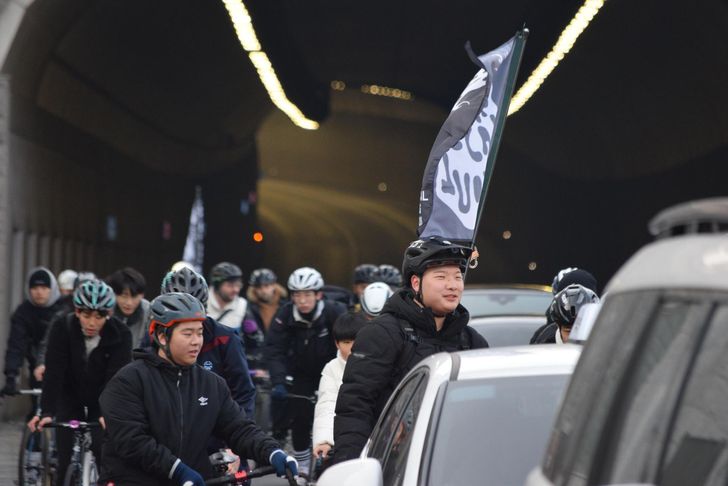
Cyclists pass through an underpass during a Critical Mass ride in Seoul, Jan. 17. Courtesy of Bereket Alemayehu
Among the riders that month was Joshua Jones, an English teacher from the United Kingdom who has lived in Korea since 2019. A few years ago, he joined an “alley cat,” a bicycle scavenger hunt organized by a courier company, where he first met Kim and others in Seoul’s cycling scene. He said that as a foreigner, meeting people with similar interests outside of work can sometimes be difficult, so it’s important to him to create a community in a different area.
“When I first heard about the idea of Critical Mass Seoul, I was really excited to join and be a part of it,” he said. “Having more bike-friendly cities, fewer car users and pollution, and creating a sense of community through riding bikes is something I really care about. I’ve been on a handful of the rides now, and I try to join as long as I can make the time for it.”
Jones acknowledges the occasional friction with four-wheelers, taxis cutting them off and bus drivers taking up lanes, but says the rides are mostly incident-free. The visibility of the group ride, in itself, becomes a message. “When we’re riding together in large groups, it’s easy for cars to see us,” he said. “But in daily riding, cars can be inconsiderate and cause danger, and even harm to cyclists.”
He hopes to have a more bike-friendly city in many ways: to help the city government see that it is important to build an infrastructure that considers cyclists, and to make drivers and other road users more aware of cyclists.
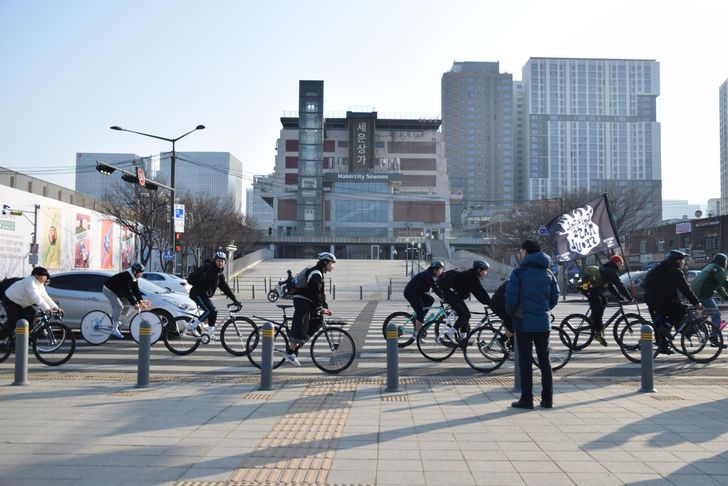
Cyclists ride past Sewoon Arcade during a Critical Mass ride in Seoul, Jan. 17. To the left is the fence surrounding the controversial Sewoon District 4 development zone. Courtesy of Bereket Alemayehu
For Kang Da-yeon, a climate and energy campaigner in her 20s who has lived in Korea most of her life, the movement connects cycling with broader environmental and social concerns. For her, Critical Mass is about visibility and possibility. She describes her experience riding through Seoul’s main roads as both liberating and revealing.
“On the car roads, it’s usually easy to see beautiful scenery,” she said. “And also, easy to ride — it’s not usual to ride a bicycle safely and enjoyably in Seoul. I hope people can feel the freedom while riding a bike, and feel what they haven’t experienced before.”
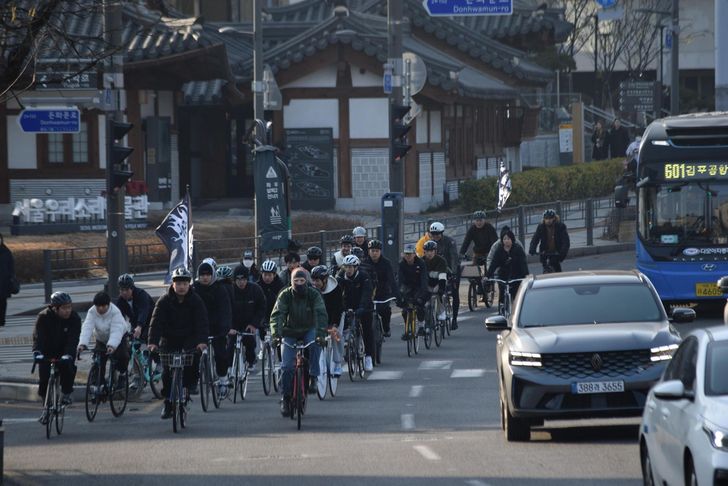
Cyclists ride past the Seoul Museum of Korean Folk Music during a Critical Mass ride in Seoul, Jan. 17. Courtesy of Bereket Alemayehu
While passing through Myeong-dong, the group encountered congested buses and visibly frustrated taxi drivers. Some drivers were angry at them just because they were riding in a mass; that frustration, she suggests, is part of change.
“Letting people know that we can ride a bicycle as cars do, together it’s safer, and the more people come, the more changes can happen,” she said.
The group meets on the third Saturday of ever month. Every participant needs to bring their own bicycle and helmet. Even people who are not familiar with riding on the road can join. Visit @criticalmassseoul on Instagram.
Bereket Alemayehu is an Ethiopian photo artist, social activist and writer based in Seoul. He’s also the co-founder of Hanokers, a refugee-led social initiative, and a freelance contributor for Pressenza Press Agency.