
Since 1998, Foodfolk Australia has been providing family-owned and operated airline catering as Perth Inflight Catering. However, over the last 28 years, the company has expanded, both geographically, with its operations now stretching from a headquarters in Perth to a newly opened facility in Melbourne, and in terms of its offering, growing to serve other markets. So, in 2022, it became Foodfolk Australia.
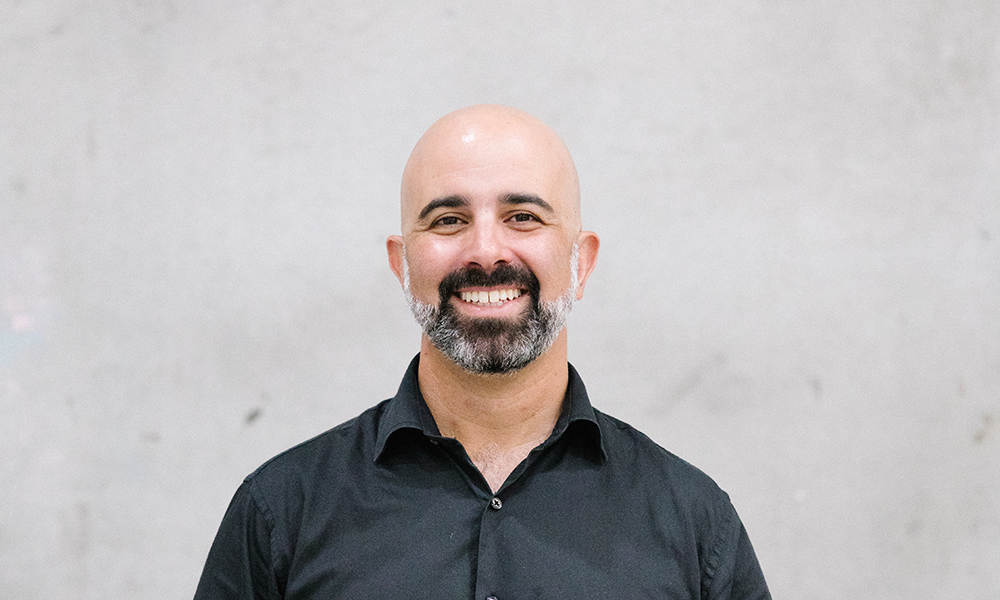
“We had been based in Perth since our inception, but it was always a dream of ours to expand to other major cities around Australia and cater for other sectors,” says Salim Hazife, Managing Director of Foodfolk Australia. “So, the name Perth Inflight Catering was limiting us as a business. We wanted to find a name that really reflected how people see us. We are focused on our people and our food, and Foodfolk represents that.”
That focus is not just defining the company’s identity, but setting it apart from the competition in the sector.
“We are the opposite of the big caterers in the industry,” says Hazife. “Multinationals dominate the market, but while they offer global coverage, we offer a personalised service that focuses on individual customers’ needs in the location where they operate, with a solution that meets their requirements.”
It has been a successful approach, and with success comes growth, and growth can bring its own challenges, as Hazife explains.
“In the last few years, we have completely outgrown our facility,” Hazife tells us. “We saw massive growth of nearly 400% throughout Covid, so we had to find a new home in a short amount of time.”
Rising to the Hour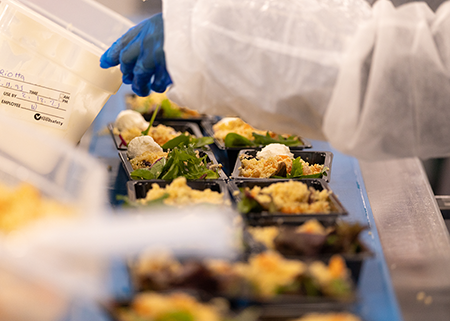
It might be surprising to hear that any catering company – let alone one primarily focused on airline catering – would see such high growth during the height of the Covid pandemic.
“When the Covid pandemic started, we weren’t sure what was happening, but by March it was evident that international travel was shutting down and we would be greatly affected by that,” Hazife recalls. “So, we made a decision to fight for the business we had spent over 20 years building, not just lay over and wait for government subsidies.”
The question Hazife set out to address was “Who else needs to eat?” While this was happening, the West Australian Government was establishing its hotel quarantine program, and everyone in those hotels would need food. Meanwhile, the military was looking for contractors to provide the boxed meals it serves in various areas.
“One Saturday, we got a call from the hotel quarantine providers, saying they had 1,500 guests coming in on Sunday,” Hazife tells us. “We were contracted to supply three meals a day. That meant going from zero to catering 4,500 meals a day really fast.”
Foodfolk called everyone back and told them to invite their friends. The company brought in everyone it could, and within a few days, it had established a process and had its volumes under control.
“Then on Thursday, Virgin Australia called to tell us they had an issue with their existing caterer and asked if we could provide a solution for the next day,” Hazife says.
Sure enough, Foodfolk had 3,000 meals ready for them a day later.
As the growth continued, so did the need for more space and capacity. Foodfolk found a new location at Perth Airport, collaborating with architects and builders to create a facility that could meet its needs. It opened just three weeks before we speak with Hazife.
“We had been operating in the same facility since 2000. Our people were used to processes and working with a limited amount of space,” Hazife recalls. “Coming into this building, we had to think about our processes from the ground up, examining how our production flows happen and finding new solutions. We managed that with no customer impact, no delays and no mis-loadings. We turned off the oven at the old building one day and turned on the new one the next day.”
Of course, moving into new sectors has meant adapting Foodfolk’s offering, although perhaps not as much as you might think.
“That old adage of food tasting different in the air is starting to go away as planes have lower cabin pressures and higher humidity,” says Hazife. “That is a lot less of an issue today than it was 20 years ago. We have got a great team of development chefs, creating recipes that work both on the ground and in the air.”
 A Family Recipe
To create the levels of service, as well as the levels of growth, that Foodfolk Australia has, it needs to ensure a reliable pipeline of new talent into the company. This is particularly challenging given how competitive the labour market is.
“We compete heavily against mining companies that pay more than other industries for remote work,” Hazife tells us. “That makes it a challenge to find and retain good staff. We rely on our family values and our family way of doing business. That is evident throughout our hiring process and the way we engage with our staff.”
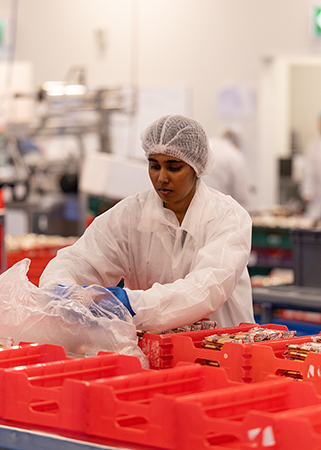
Foodfolk Australia maintains a heavy focus on making its staff feel like part of the family and part of the company’s success.
“Everybody from the person washing the dishes to the people driving the trucks feels like what they are doing is playing an important role in our success, and we share that success with them,” says Hazife. “That is one of the things that makes us different from the multinationals and corporations. We started with four people. Now we are just shy of 300 staff.”
What Foodfolk Australia has achieved is attracting the attention of airlines, government institutes and large venues who like what it does. They can see the value in partnering with a family business.
“We are not trying to fit a customer into what we do,” Hazife says. “We fit ourselves into what the customer wants and needs.”
The company has now expanded into Melbourne, the biggest move for the business in its 26 year history, into a facility that has tripled its capacity. This foundation for growth makes big promises for the company’s future.
“Our Perth facility is capable of producing 36,000 meals a day. Our business is growing inside and outside the aviation industry, and we are moving into other cities as we grow,” Hazife tells us. “We don’t want to be the biggest on the market. What we are looking for is a key group of customers who believe in quality over cost, believe in what we do, and believe you can deliver amazing food quality matched with amazing service.”