
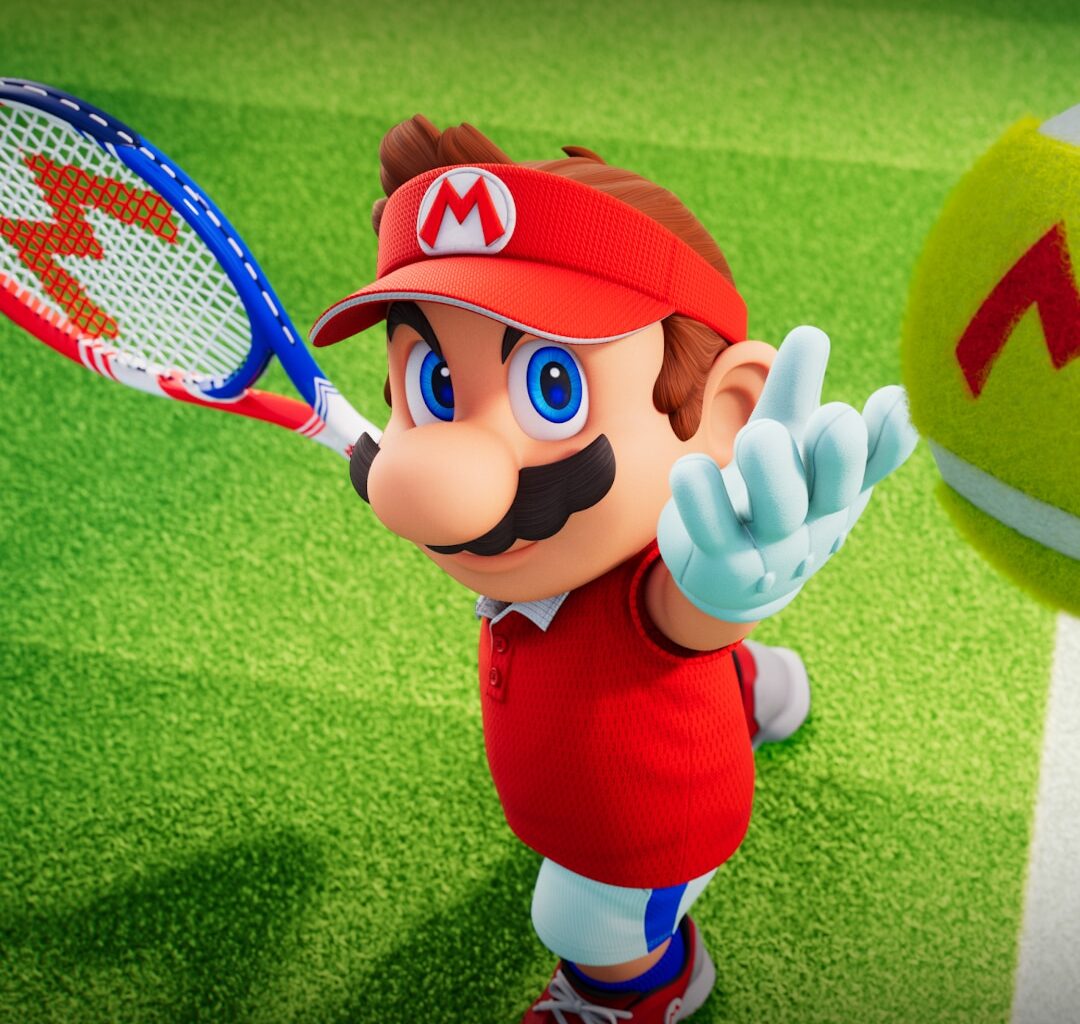
Mario Tennis Fever puts the nostalgia debate to bed and succeeds on its own terms as an excellent tennis game for Nintendo Switch 2.
Reviewing Mario sports games can be exhausting. Not because they’re bad. Plenty of them, like Mario Golf: Super Rush, are genuinely good. Even the weaker entries usually manage, at the very least, to be fun with friends. The tiring part is that eternal question of whether the latest game recaptures the magic of those beloved Mario sports RPGs from the Game Boy Advance.
It’s a question that’s lingered for two decades, despite the answer being clear for years. Nintendo doesn’t seem especially interested in going back to that formula. When it wants a Mario RPG, it has series like Paper Mario and the revived Mario & Luigi to lean on. When it comes to Mario sports, Nintendo’s direction to developers like Camelot is clearly geared towards snappy modes, strong multiplayer hooks, and variety in how you play, rather than a big, story-led single-player campaign. And even when a modern entry flirts with solo structure, again like Mario Golf: Super Rush, it’s tellingly labelled as an “Adventure”.
Which brings us to the first Mario sports title on Nintendo Switch 2.
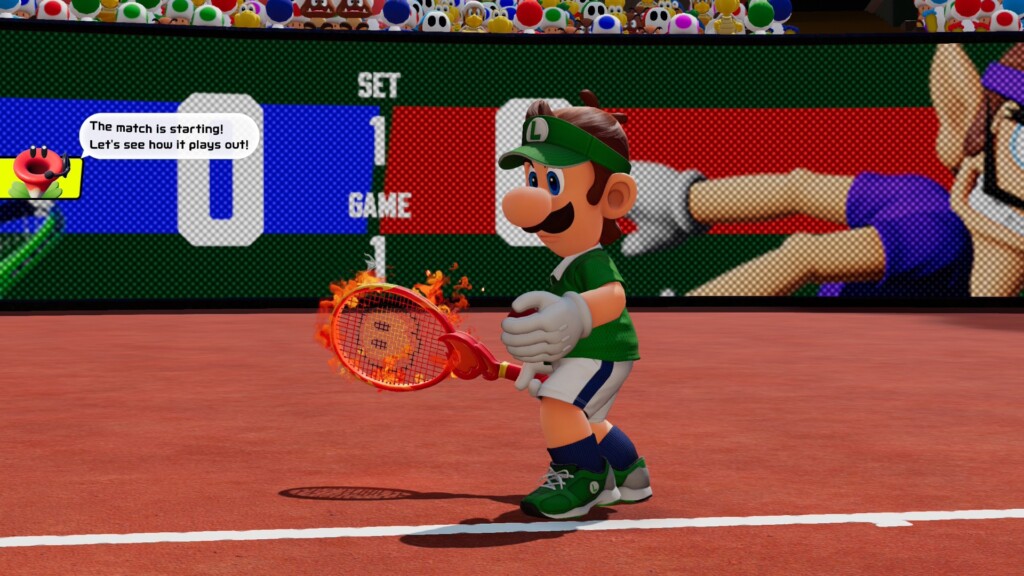
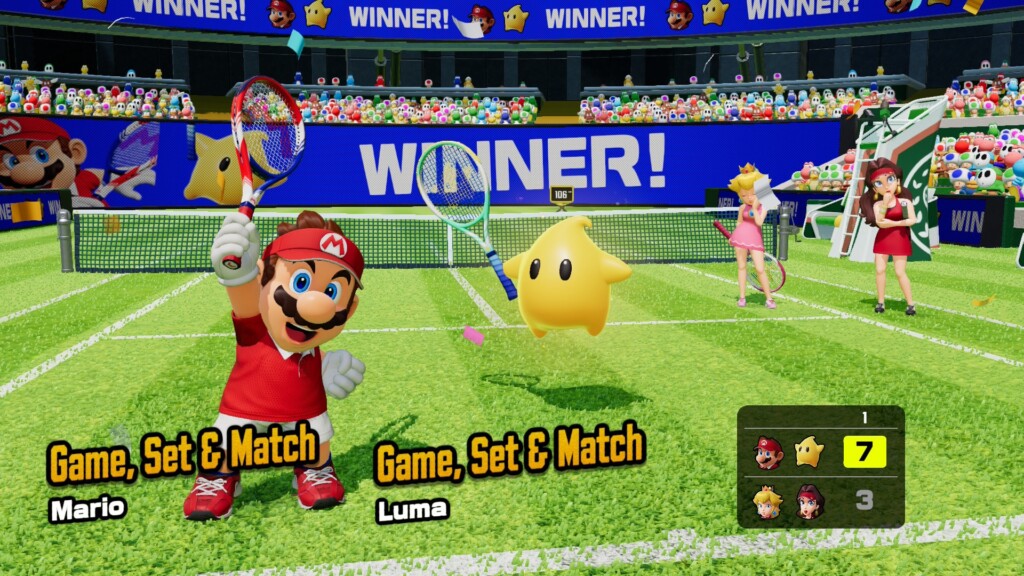
Mario Tennis Fever continues the pattern with an Adventure mode that is ultimately little more than a guided onboarding tour. The story sees Mario and friends revert to baby form and enroll at the Mushroom Tennis Academy, where a string of lessons and training mini-games work as a perfectly serviceable tutorial for the game’s systems. The threadbare adventure that follows is playful, even funny in places, but it’s clearly not the main attraction, nor is it designed to be. There is a level meter ticking upward as you progress, but this is no RPG. It does, however, save a wonderful moment for the end, with a delightfully unexpected final boss.
The game’s real focus is tournaments and multiplayer, with the new Fever Racket system acting as the foundation for variety and replayability. On that front, Mario Tennis Fever is a success.
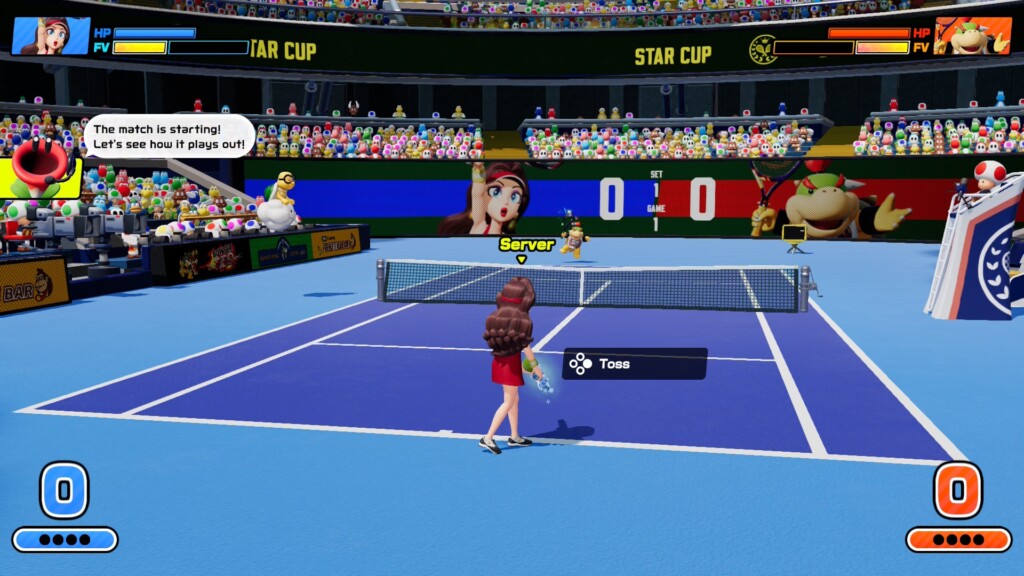
On court, the game feels pleasingly different from 2018’s Mario Tennis Aces on Switch. The play is more forgiving, more fluid, less spiky, and easier to read in motion. The input response and timing windows for returning shots and serving also feel cleaner. Whatever discreet tweaks Camelot has made under the hood improve accessibility without sanding off the satisfaction. In fact, one reason the Adventure mode feels slightly undercooked is that the core game is so easy to learn that it doesn’t really need a slow-paced introduction. Outside of Nintendo Switch Sports or Wii Sports, this is Nintendo’s most player-friendly tennis game in years.
In Free Play, where you can adjust camera position and ball speed, stripping away the spectacle reveals that, underneath the power-ups and visual fireworks, Mario Tennis Fever is simply a solid tennis game.
Power-ups and visual fireworks are fun, though, and that’s where the Fever Rackets come in.
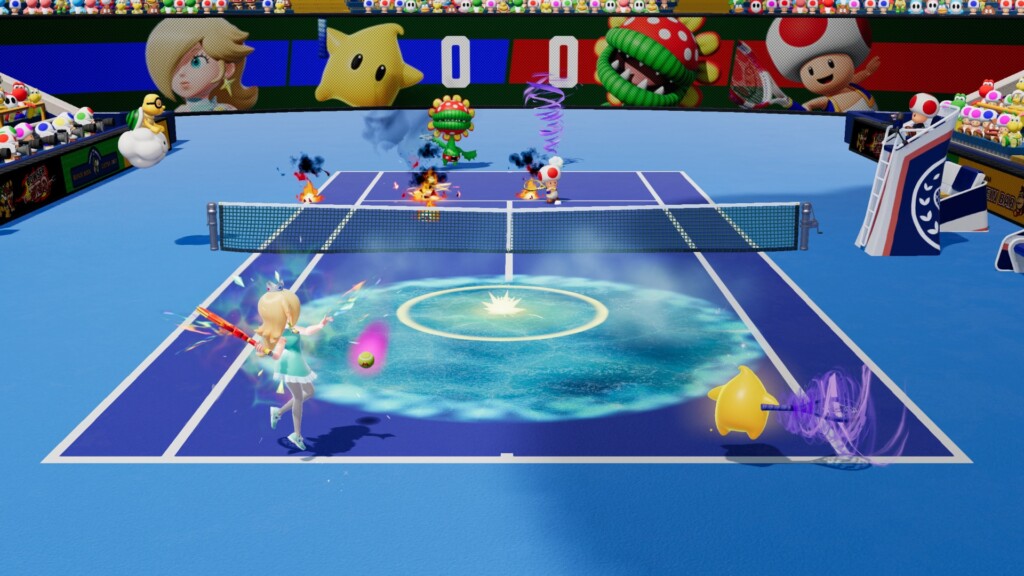
Equip one of the 31 rackets and matches quickly become more unpredictable. The underlying tennis remains strong, but each racket’s signature power, ranging from icing up the court and spawning mini mushrooms to transforming balls and even triggering an on-court volcano, changes the shape of a rally in meaningful ways. Some are more fun to use than others, but only a few, such as the infuriating Pokey Racket, outstay their welcome.
The system works because it feels additive and designed to create surprise without drowning out the fundamentals. Crucially, it avoids a problem Mario Tennis Aces sometimes ran into, where aggressive opponents and an overuse of trick shots could become overwhelming.
It also helps that the racket system sits on top of a strong roster. There are 38 characters to unlock (though, sadly, no Morton), and they feel distinct even before you start layering on the more extravagant power-ups.
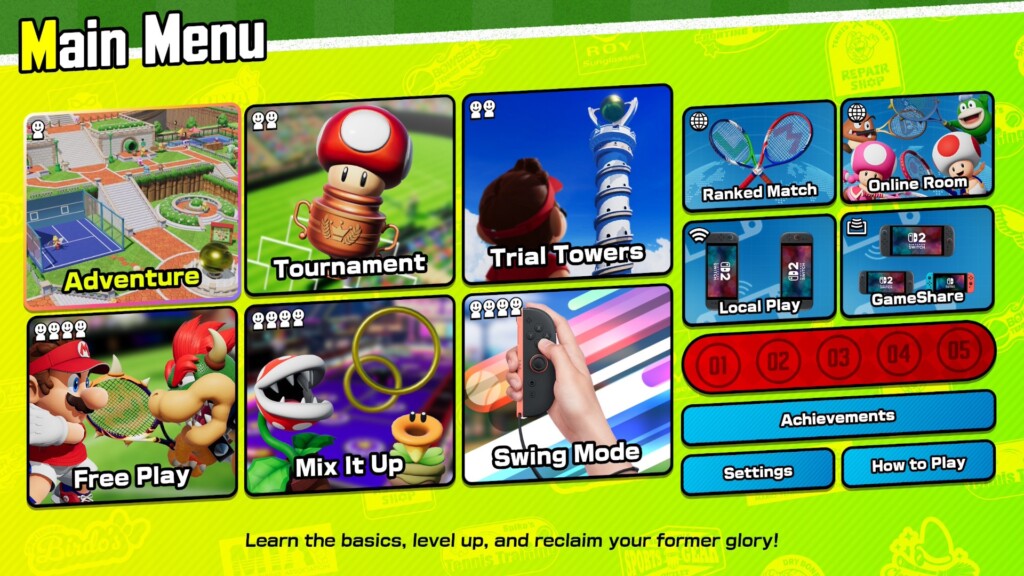
That solid base carries across all of the game’s other modes. Tournament is a simple three-cup run, but it has legs thanks to the range of characters and Fever Racket combinations. It stays fresh because matches rarely play out the same way twice.
Trial Towers, however, might be the game’s secret weapon. Built around three tiers of increasingly difficult challenges, it pairs different characters and rackets across inventive scenarios and objectives. It doesn’t just ask you to win matches; it pushes you to understand the systems, react under pressure, and adapt when the action starts to spiral out of control. It’s a genuine test of skill, and the reward for seeing it through is both generous and unexpectedly worthwhile. It’s playable in Doubles, but it shines as a focused single-player pursuit, and compensates for Adventure mode’s thinness by giving solo players something with bite.
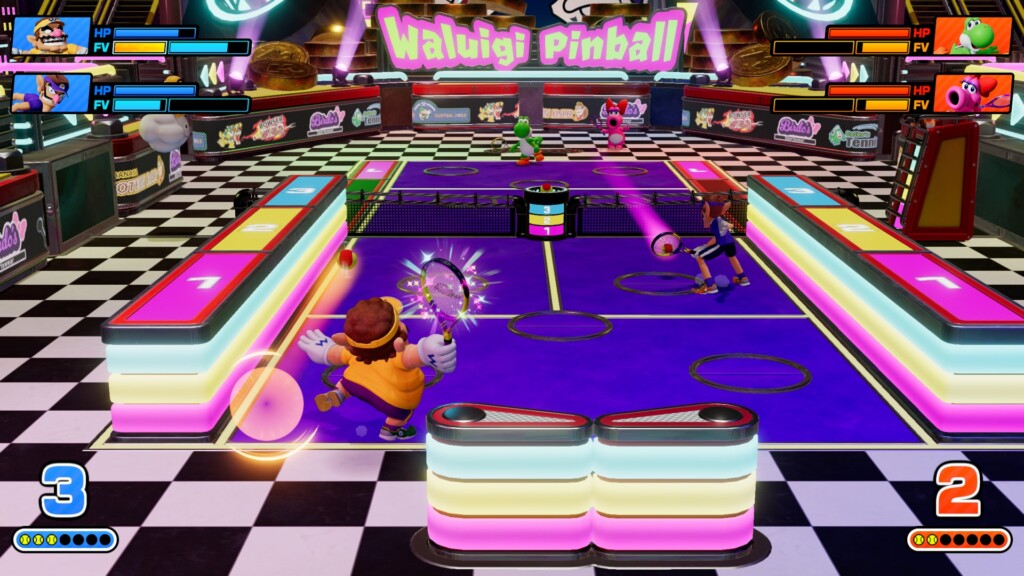
And when you want something lighter, Mix It Up mode is the closest Mario Tennis Fever comes to classic Nintendo party-game territory, stitching matches together with one-off rules and bespoke court gimmicks. Highlights include a match themed around Waluigi’s Pinball, and a Super Mario Bros. Wonder-inspired variant that peppers rallies with transformations and shifting conditions.
The biggest disappointment, surprisingly, is Swing Mode, especially given how accessible the game is everywhere else. Using the Nintendo Switch 2 Joy-Cons, you can play with motion controls, but the movement-to-input window feels noticeably off compared to Nintendo Switch Sports. I couldn’t, pardon the pun, get the swing of it at all. The end result is a mode that feels more like a novelty than a genuine alternative way to play.
There’s also the expected spread of online and local multiplayer options, which is ultimately where the game’s strongest case is made. These modes are quick to start, easy to grasp, and flexible enough to suit different groups. I had no problems with connectivity or finding (and then mostly losing) matches with other players.
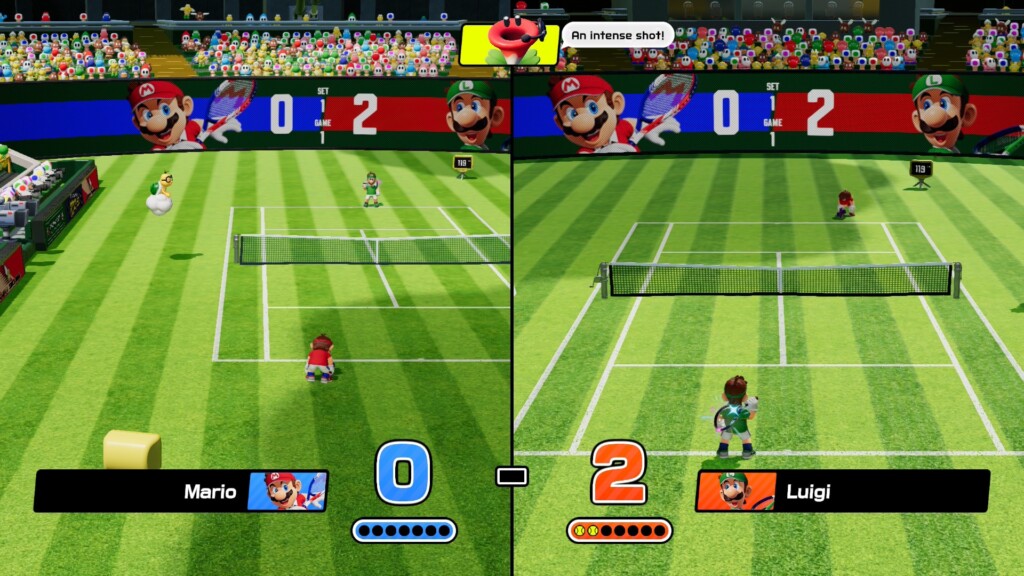
Multiplayer is where my own enthusiasm for the game also got stress-tested. I drafted in my seven-year-old niece, who launched into matches without any grounding but quickly got up to speed. The Fever Rackets helped here in an unexpected way, not so much as an “easy mode”, but as an informal difficulty adjuster. I’d never hand a seven-year-old a game solely so she can flatten her ageing uncle (ahem), but it doesn’t hurt that she can. We also put the game’s GameShare function through its paces using a Nintendo Switch Lite, and experienced no issues or lag at all.
So, no, there isn’t an expansive sports RPG hidden away, but what is here is stronger than the absence suggests. There’s a solid tennis foundation, power-ups that are exciting rather than smothering, and a suite of enjoyable modes that can deliver challenge or low-stakes relaxation whether you’re playing solo or with friends. It’s a convincing mix, and one that makes Mario Tennis Fever well worth playing.
Game: Mario Tennis Fever
Platform: Nintendo Switch 2
Developer: Camelot
Publisher: Nintendo
Release Date: February 12, 2026
Daniel New
Mario Tennis Fever review
Mario Tennis Fever
4
5
0
1
Mario Tennis Fever is Nintendo’s most approachable tennis game in years, with strong core mechanics and a Fever Racket system that adds variety and flair. Adventure mode is slight, but Tournament and Trial Towers modes, plus a robust multiplayer suite, give it real staying power. Oh, and Talking Flower returns to provide commentary. Wonderful!
Mario Tennis Fever is Nintendo’s most approachable tennis game in years, with strong core mechanics and a Fever Racket system that adds variety and flair. Adventure mode is slight and clearly built to teach, but Tournament and Trial modes, plus a robust multiplayer suite, give it real staying power.