
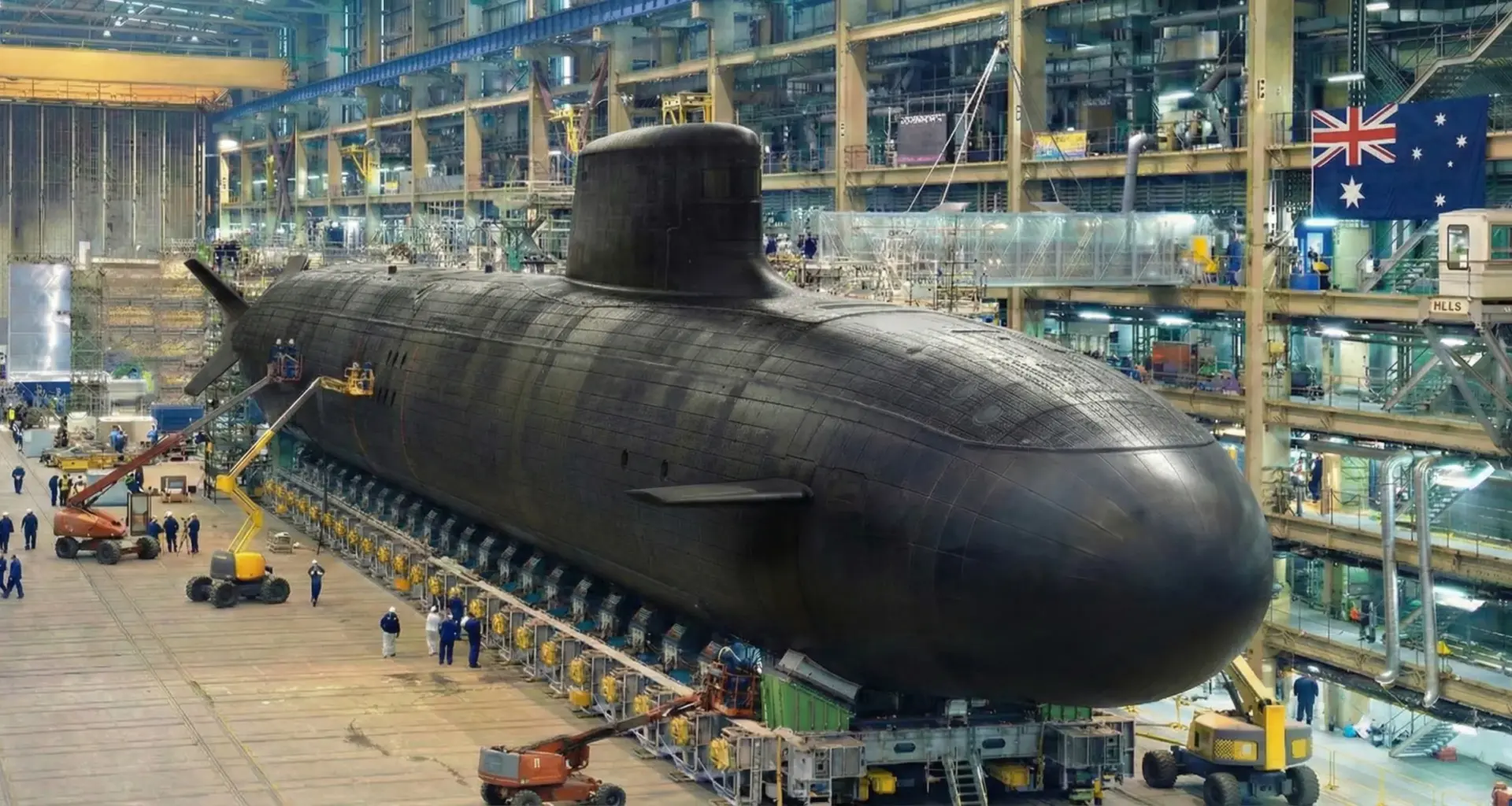
Australia has just announced it will spend around AUS$30bn (£15.6bn) to build a large nuclear submarine construction yard in Adelaide. The new facility at Osborne is intended to replicate the processes in use at BAE Systems’ facility at Barrow.
Vice Admiral Jonathan Mead, Director-General of the Australian Submarine Agency, has confirmed that British and American experts are already advising on the development of the expanded Osborne Naval Shipyard. The manufacturing system will be ‘identical’ to that used at Barrow-in-Furness shipyard and the two yards will build SSN-AUKUS boats in parallel.
The yard is being delivered by Australian Naval Infrastructure (ANI), a government business enterprise established in 2017 to own, develop and manage shipbuilding infrastructure. It will work closely with Defence, regulators and AUKUS partners to ensure nuclear safety and security standards are met. Construction is expected to span more than a decade.
British blueprint
Replicating Barrow’s approach means far more than similar buildings. It implies common production methodology, shared nuclear and quality standards, interoperable supply chains and a digitally integrated build environment. In effect, Australia is inserting a fourth production line into the AUKUS ecosystem, alongside Newport and Groton in the United States and at Barrow.
The facilities in Cumbria are constrained by their Victorian legacy and complicated access, but by contrast, Osborne will be purpose-built to support modern submarine construction methods. Designed around digital shipbuilding principles, the layout is intended to optimise material flow, module movement and assembly sequencing from the outset. If delivered as planned, Adelaide could become one of the most advanced submarine production facilities in the world, rather than simply a southern hemisphere clone.
SSN-AUKUS is a trilateral programme and industrial coherence will be essential if common design authority, shared supply chains and cross-national workforce mobility are to function effectively. A yard operating to the same production logic as Barrow reduces technical risk and enhances resilience across the enterprise.
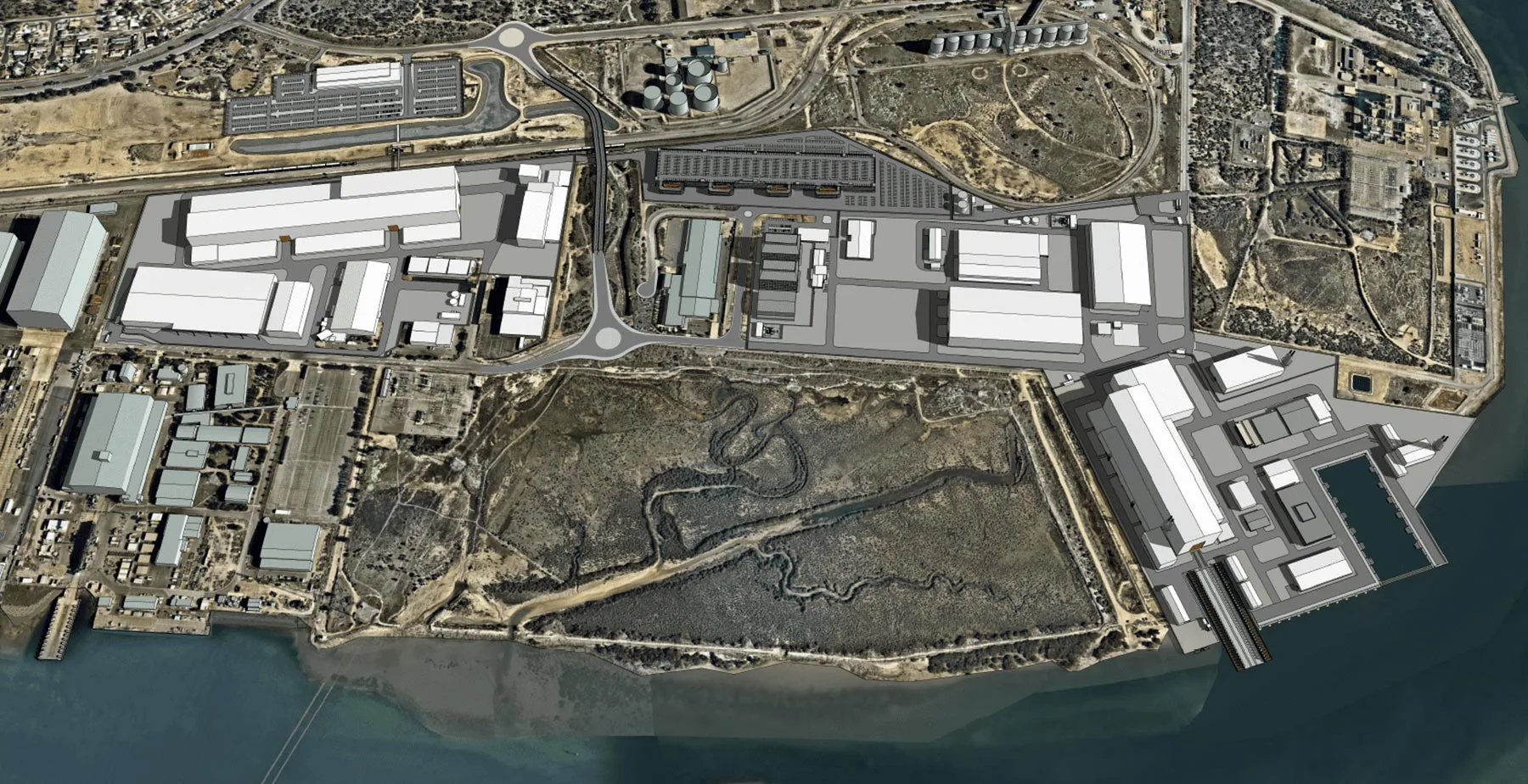 Outline plan for the yard at Osborne, which has three distinct areas. (Left) Area 1 – main fabrication hall and production facilities, (Centre) Area 2 blast and paint workshops, (Right) Area 3 consolidation hall, shiplift and graving dock. The hall will probably have the capacity to accommodate up to 4 boats at various stages of construction simultaneously (Image: ANI).Costs and benefits
The Australian government has committed an initial AUS$3.9bn (£2bn) as a down payment. The scale is reflected in the physical footprint. Plans include a 420 metre-long fabrication hall requiring some 710,000 cubic metres of structural concrete, alongside facilities for testing and commissioning nuclear-powered submarines. (For context, the giant Devonshire Dock Hall in Barrow is 260m in length).
Osborne already hosts infrastructure supporting the Collins-class boats and the Hunter-class frigate programme. The expansion will effectively triple the size of the yard. Upgrades reportedly include a third shiplift and potentially a graving dock to the north of the site to support construction and sustainment of SSN-AUKUS. Once complete, the yard is expected to be one of only a handful globally capable of building large surface combatants and nuclear-powered submarines simultaneously.
For South Australia, already positioning itself as a defence manufacturing hub, the project represents a generational industrial commitment. The construction project will support around 10,000 jobs, and up to 1,000 apprentices per year will be trained on site.
SSN-AUKUS is central to the RN’s future undersea posture and to sustaining the sovereign industrial base at Barrow. An Australian yard that truly mirrors UK processes should strengthen the overall programme. For the RN, whose own attack submarine fleet will transition from Astute to SSN-AUKUS over the 2030s, shared production architecture offers opportunities for collaborative problem-solving, distributed manufacturing and economies of scale.
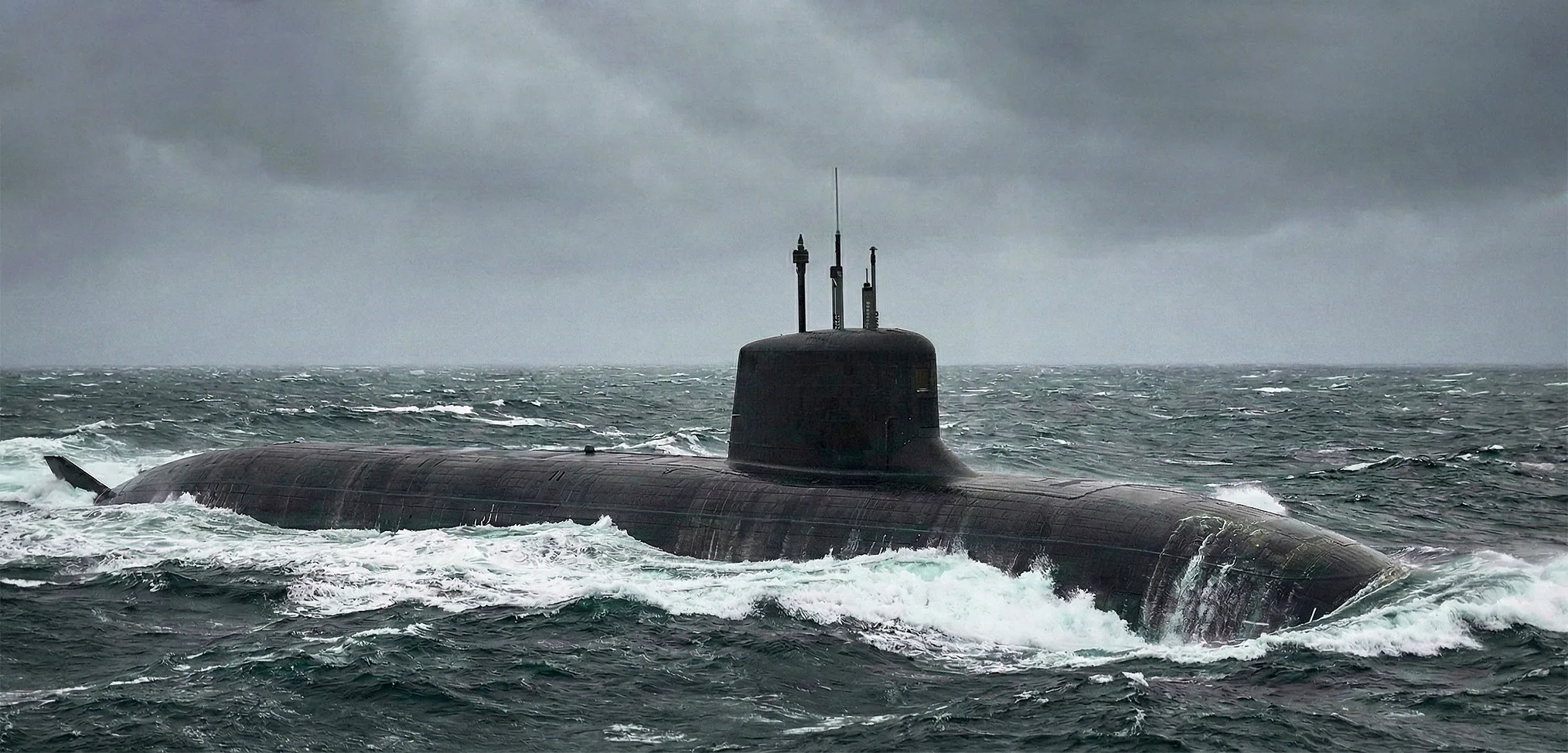 SSN-AUKUS is still being designed but they will be substantially larger than the Astute class and likely displace over 10,000 tonnes. They will be fitted with VLS cells, have X-form aft hydroplanes and be powered by PWR3 nuclear reactors made by Rolls-Royce in the UK.Workforce challenge
Critics will immediately point to the slow pace of delivery of Astutes and Dreadnought class at Barrow and wonder why Australia would want to follow the British model. To understand this better requires the long-term view that underpins AUKUS. Barrow is still dealing with legacy issues relating to strategic government failures dating back to the 1990s, which are slowly being addressed. The specialist submarine design skills gap that plagued the initial stages of the Astute class has been overcome – the development of Dreadnought has been smoother.
The extended construction and delivery times are largely down to a lack of skilled people, but between 2023- 2027, the Barrow workforce should grow by about 5,000 people. This has been backed by a ‘Team Barrow’, a cross-government effort rarely seen in UK defence procurement, building a broader ecosystem required to grow and sustain a larger workforce. Australia will have to embark on a recruitment and training programme on an even larger scale.
It has been admitted that workforce expansion targets are currently behind schedule in the UK. It may take longer than hoped, but it does not invalidate the Barrow model as an example for Australia to follow. SSN-AUKUS is essentially a bilateral endevour and there is little alternative but for Australia to deepen its partnership with the UK. Cost growth, schedule slippage and workforce bottlenecks remain risks for any nation navigating the complexities of nuclear submarine construction, but can be gradually overcome with determination and solid political backing.
In a controversial demonstration of the UK’s unshakable commitment to AUKUS, in the next few weeks, HMS Anson is due to arrive at HMAS Stirling in Western Australia. She will undertake a planned sustainment and maintenance period for about a month before commencing operations from the base as part of Submarine Rotational Force–West.
Main image: Navy Lookout mock-up