
The scourge of AI-slopaganda, viral disinformation campaigns and online attacks against individuals and institutions is going to get far worse before it gets better.
That is how it feels after watching the latest round of public hearings on the topic.
The Senate’s select committee on information integrity on climate change and energy held two days of public hearings in Canberra this week.
It heard evidence from Meta (the parent company of Instagram, Facebook, and WhatsApp), TikTok, Coal Australia, the Minerals Council and academics and community groups.
Lies and big tech algorithms can lead to real-world violence
The committee is investigating how online bots and trolls, disinformation campaigns and tactics like “astroturfing” (fake grassroots campaigns) are delaying global action on climate change and renewable energy.
It is also investigating the connections between Australian organisations and international think tanks and influence networks.
And it sounds like policymakers will have to wrap their heads around three related things:
The very modern problem with AI-slop, toxic algorithms and data surveillanceNew developments in political lobbying techniquesThe existence of a global network of think tanks that fossil fuel companies have poured billions of dollars into, over decades, to delay action on climate change, among other things.
Australia’s Human Rights Commissioner, Lorraine Finlay, told senators this week that it would be an immense challenge to clean up online information channels while protecting people’s rights to free speech and free expression.
“Algorithms that prioritise engagement over accuracy push extreme or sensational content to the top of public debate,” Dr Finlay said.
“Foreign interference, bots, trolls and emerging technologies like deepfakes further complicate the landscape, creating new risks for democratic participation and public trust.
“[But] overly broad or ambiguous regulatory approaches risk creating a chilling effect on public debate and discussion about complex issues that are absolutely critical to our nation’s future.”
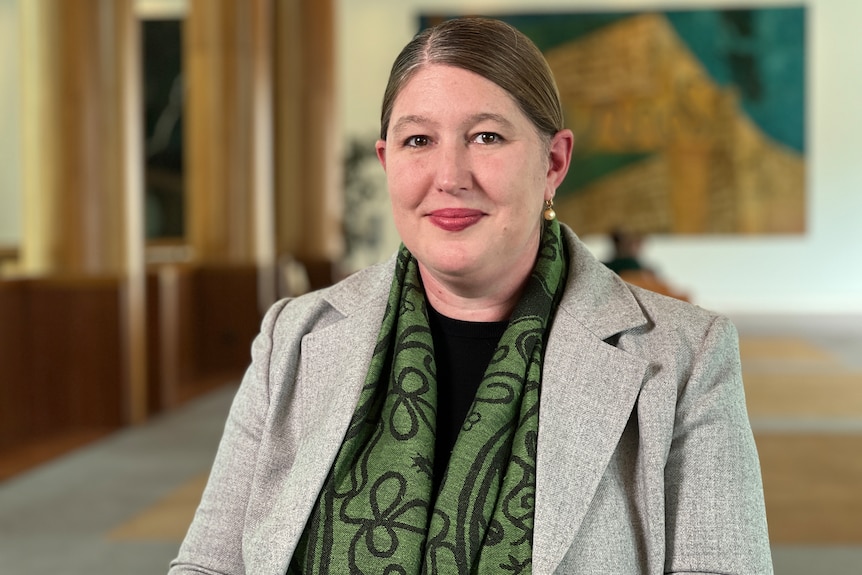
Human Rights Commissioner Lorraine Finlay. (ABC News: Mark Moore)
She hit the heart of the problem.
Bad-faith actors can be very quick to emphasise their right to express themselves and speak freely, while deliberately spreading incorrect information online, knowing that their behaviour is eroding trust and social cohesion.
But how does one definitively “prove” that someone is acting in bad faith? Who gets to be the judge?
Algorithms, viral videos, and the quality of information
It sounds like our political leaders should be warning Australians that the quality of information online will get much worse in the coming years, and that we should brace ourselves.
Because the problem with misinformation and disinformation is not isolated to climate change. And it is going to take a whole-of-society effort to confront the problem.
Qld government department labelled ‘lazy’ for ‘ironic’ use of AI image
Senators heard that technology was progressing extremely quickly. The internet is a major battleground in the fight for control over everyone’s future, and the fusion of AI, social media and data surveillance has made it much easier for our information channels to be polluted by propaganda and foreign actors.
What does it mean for Australia?
Regarding the very modern problems with AI and social media algorithms, representatives from Meta told senators on Monday that Meta had removed hundreds of millions of bots from its social media platforms, and it dismantled “coordinated inauthentic behaviour” when it discovered it.
But they said Meta did not censor the speech of politicians, because politicians’ words were heavily scrutinised by traditional media outlets.
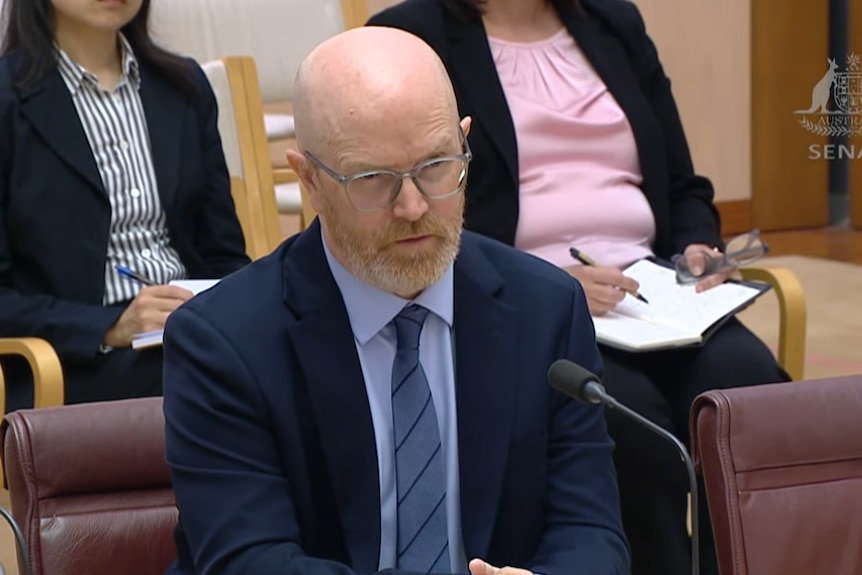
Simon Milner of Meta gives evidence at the Senate select committee this week. (Supplied: Australian Parliament House)
Meta would know that some of today’s most powerful political leaders are relying on the viral nature of algorithms to spread deeply racist, harmful and untrue messages.
It would know about Brandolini’s law, which states that the time and energy needed to correct misinformation is far greater than that needed to produce and spread it.
But Meta did not see that type of censorship of politicians as its responsibility, unless the politician was inciting violence, its representatives said.
“This is the problem,” Labor senator Michelle Ananda-Rajah told Meta’s representatives.
Astroturfing and opaque funding of political campaigns
What about developments in modern lobbying and campaigning techniques?
The committee heard it was becoming more common for lobby groups in Australia to pay “significant third parties” to run political campaigns for them.
Is that contributing to voters’ confusion about who is pushing different ideas in Australia, and who is funding attempts to squash certain policies?
AEC warns coal-funded group over posts
In Monday’s hearing, the lobby group Coal Australia defended sending almost $4 million to “Australians for Prosperity” last financial year, which is a third-party group that attacked Labor, Greens and teal independent candidates during the 2025 federal election campaign.
Stuart Bocking, a former 2GB talkback radio host turned Coal Australia chief executive, denied it was a form of “astroturfing”, telling senators that it was often easier to pay third-party groups to run political campaigns on one’s behalf these days, because it left lobby groups to focus on other things.
“We’re not engaged in astroturfing,” he said.
“It’s just become a technique that’s used by different groups to be able to handle the logistics … the inordinate effort that’s required — we don’t have the capacity as Coal Australia to run election campaigns,” he said.
That’s a line worth investigating, because that phenomenon is not isolated to Australia. Journalists in New Zealand have reported a surge in third-party spending there recently.
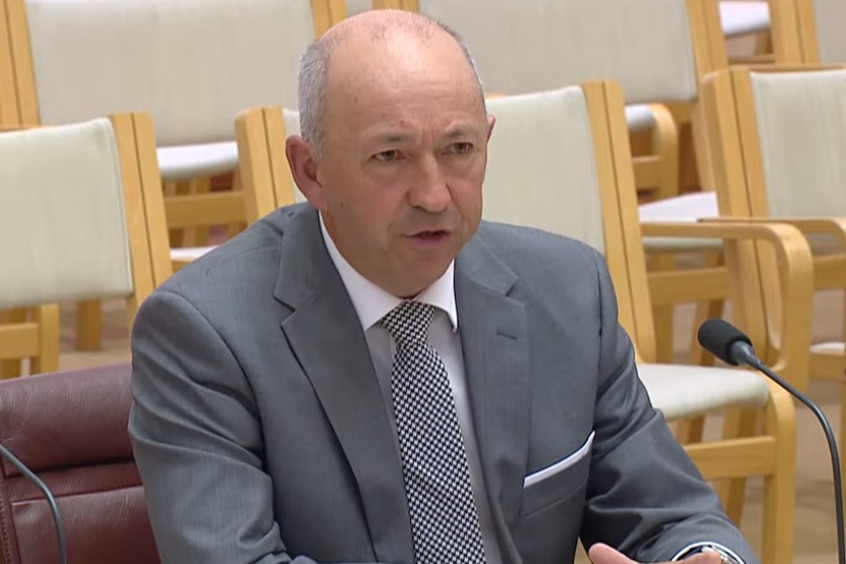
Stuart Bocking says it is becoming more common for lobby groups to send money to “significant third parties” to run political campaigns on their behalf. (Supplied: Australian Parliament House)
According to the Australian Electoral Commission (AEC), Australians for Prosperity received $3.89 million in total receipts in the 2024–25 financial year, of which $3.68 million (roughly 95 per cent) came from Coal Australia.
What is Coal Australia?
It is a relatively new lobby group. It was founded by coal miner Nick Jorss and launched in 2024 to represent the interests of coal miners including Peabody, Whitehaven, Yancoal and New Hope Group, among others, and coal mining communities.
It is a breakaway group from the Minerals Council of Australia, and it was created in response to the politics of coal mining becoming more difficult in recent years.
Coal mine polluter ordered to pay $500,000
Do voters know that Australians for Prosperity has strong links to the Liberal Party?
Jason Falinski, a former federal Liberal MP, was the spokesperson for the organisation during the 2025 election campaign, and its current spokesperson is Caroline Di Russo, the president of the Western Australian Liberal party and sometime-commentator on Sky News.
Did Australian voters feel adequately informed about who those players were during the 2025 federal election?
Are voters happy that political advertising campaigns and aggressive third-party groups are allowed to be funded in an opaque manner in Australia?
The Atlas Network
And what about the global network of hundreds of “free market” think tanks that has been used by fossil fuel companies for decades to attempt to delay action on climate change, among other things?
Jeremy Walker from the University of Technology Sydney told senators on Monday about the history of some of Australia’s think tanks and their decades-long association with the Atlas Network.
How Atlas Network shapes the world
The Atlas Network, first formed in 1981, partners with more than 500 free-market think tanks around the world, with 10 of them in Australia and New Zealand.
The ABC recently published a large piece which explains the history of the Atlas Network and what it is.
Dr Walker said Australians had little idea of the extent of the coordinated effort to prevent attempts to reduce greenhouse gas emissions and transition to renewable forms of energy.
He explained how fossil fuel companies have funded certain think tanks globally for decades to push climate denial, anti-Indigenous rights and anti-renewable messages, a technique that has helped to obscure where ideas and money are coming from.
“For nearly four decades Australians have been daily exposed to professionally produced disinformation campaigns secretly funded by fossil fuel interests,” he said.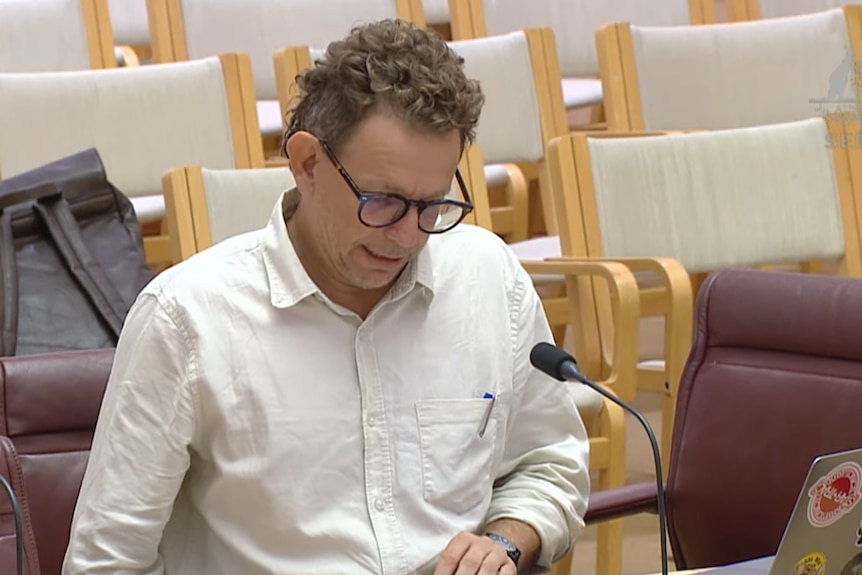
Jeremy Walker says there is a coordinated effort to prevent attempts to reduce greenhouse gas emissions and the transition to renewable forms of energy. (Supplied: Australian Parliament House)
Nationals senator Matt Canavan said that until this inquiry he had never heard of the Atlas Network.
That was interesting, because Senator Canavan has been a regular speaker at events held by CPAC Australia, which is part of the Atlas Network ecosystem, and a regular guest on podcasts and public events at think tanks that partner with the Atlas Network, including the Institute of Public Affairs, the Centre for Independent Studies and the Australian Taxpayers’ Alliance.
Dr Walker said the fact that few people had heard of the Atlas Network was deliberate.
Loading
Coincidentally, with Angus Taylor’s rise to the leadership of the federal Liberal Party last week, the Liberal Party’s new-look front bench has seen a number of former think tank staff from the Atlas Network ecosystem win important portfolios.
New shadow treasurer Tim Wilson (former Institute of Public Affairs), new shadow defence minister James Patterson (former Institute of Public Affairs), and shadow small business minister Jacinta Nampijinpa Price (former Centre for Independent Studies, former spokesperson for Advance), have all been elevated.
A bicycle divided by the square root of a banana
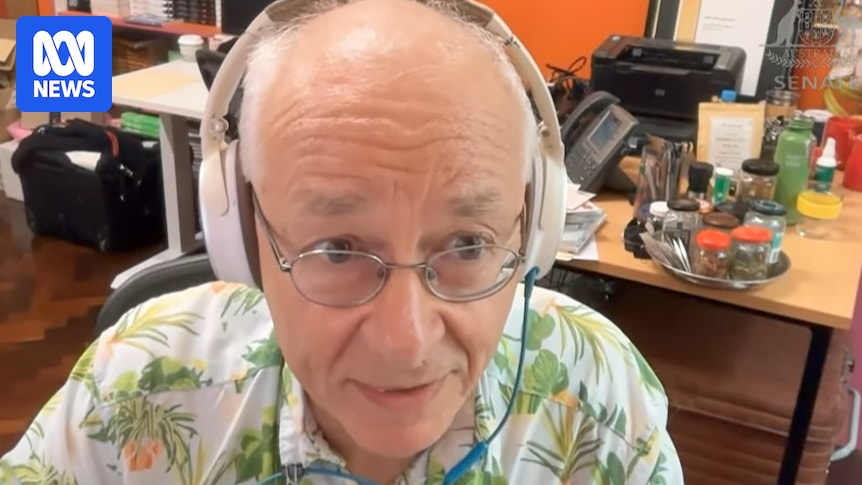
And finally, science communicator Karl Kruszelnicki (Dr Karl) appeared at the Senate committee on Monday.
In an attempt to establish common factual ground with One Nation senator Malcolm Roberts, Dr Karl asked Roberts if he accepted that global temperatures were rising.
Their interaction illustrated how public discussions about the science of climate change get bogged down so easily:
Dr Karl: Do you agree that the climate records show that the last 10 years have been the hottest on record worldwide?
Senator Roberts: The last 10 years in Australia have been cooler than the 1880s and 1890s in Australia.
Dr Karl: Hang on … Worldwide. Do you agree that the last 10 years have been the hottest years on record worldwide?
Roberts: No I don’t.
Dr Karl: I feel like I’m talking to a school child who says seven times two is not 14, but instead seven times two is a bicycle divided by the square root of a banana.
Roberts: That’s one way of making out that I’m a fool.
Dr Karl: But all the scientists disagree with you. 99.999 per cent of the scientists disagree with you.
Roberts: So now you’re into consensus, which is a political tool.
Dr Karl: Hang on, consensus is a political tool? … So if all the scientists agree that seven times two is 14, that’s a political tool?
Roberts: That’s obviously a stupid comment, in my opinion.
You can watch the rest of their interaction here.
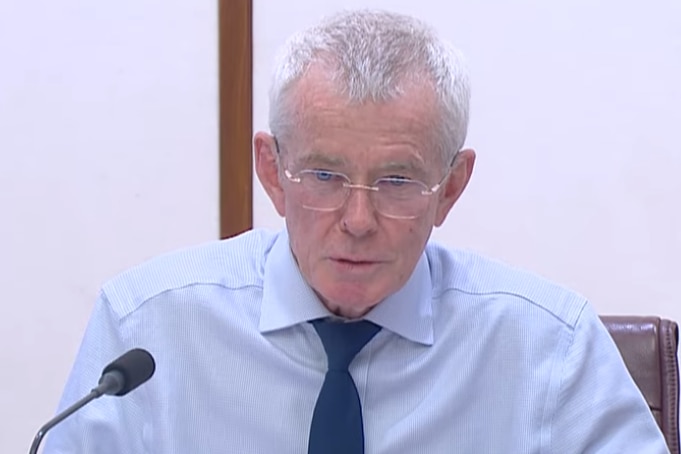
Malcolm Roberts disagrees with the scientific consensus of climate change. (Supplied: Australian Parliament House)
Dr Karl told senators that he had been thinking of ways to use modern technology to help scientists rapidly combat the talking points of climate denialists online, and he had been developing an AI chatbot.
“I realised that I could only work for a few hours a day talking to people about the misinformation [they had heard],” he said.
2025 set to be among three warmest years on record
“People would typically say, ‘Oh yeah, but the climate has always changed’, and following the ‘bulldust asymmetry factor’ [i.e. Brandolini’s law] to set them straight on that … takes around 12 minutes, and I just did not have those periods of 12 minutes.
“So the obvious way out was an AI.”
He said the way to prevent AI chatbots from spreading incorrect and hallucinatory scientific information was to only train the AI chatbot on legitimate scientific papers and studies, rather than on information taken from the internet more broadly.
“Luckily I’ve got 40,000 papers that I’ve gathered over the last 40 years with accurate climate change information,” he said.
The Senate committee is due to present its final report on March 24.