
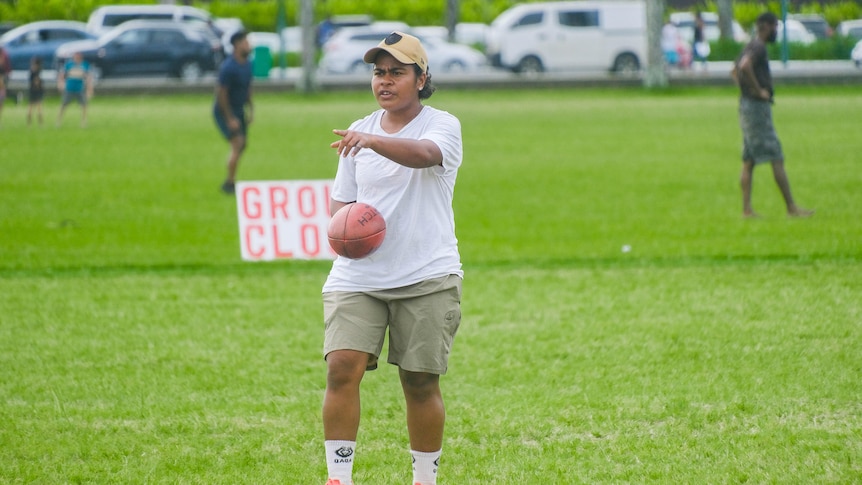
What began with three curious children has rapidly transformed into one of Fiji’s most promising grassroots sporting movements, powered almost entirely by the determination of AFL Fiji Talent Academy manager and development coordinator, Loata Vakausausa.
For Vakausausa, growing Australian Football across the islands has never been about titles, comfort or financial reward; it’s been a mission grounded in a deep commitment to giving young people a chance.
Hailing from Tubou, Lakeba in Lau, she has spent nearly a decade at the heart of AFL Fiji’s development pathway.
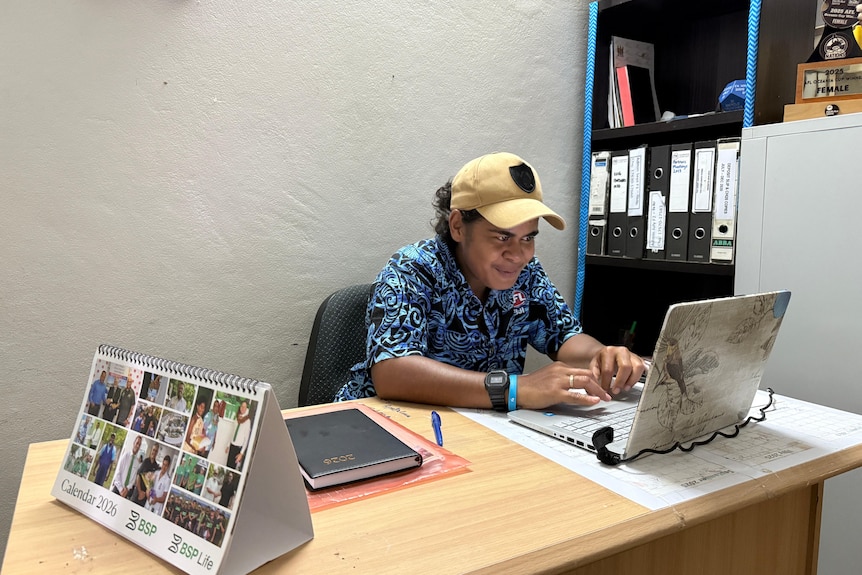 Loata Vakausausa is passionate about growing AFL in Fiji (Supplied)
After joining as a development officer in 2017, she stepped into a broader leadership role three years ago, overseeing grassroots programs, talent identification and national development across the country.
Her own AFL journey began in 2014 when her basketball coach, Max Wolfgramm, introduced her to the sport. Just months later, she represented Fiji at the AFL International Cup in Melbourne, returning again in 2017.
Instead of chasing further personal opportunities, she made a pivotal choice.
“I dropped everything else and moved into AFL development. I wanted to make an impact, especially on kids,” she said.
That decision paved the way for her to become the first female coach to lead a national AFL grid in Fiji and the first woman involved in a South Pacific coaching set-up, a milestone moment for the sport and for women in Pacific coaching.
The challenge that sparked a movement
In 2023, Vakausausa confronted one of her biggest challenges yet with the launch of the AFL Fiji Talent Academy.
What started with three children quickly grew to seven and has now expanded to more than 200 registered athletes across Central, with many of them experiencing organised sport for the first time.
“In the past, we would just pick kids for tournaments, and then they’d go back to whatever sport they were playing,” Vakausausa said.
“Now, this is their first sport, their foundation.”
AFL Fiji has since expanded into communities including Naitasiri, Namosi and the Western Division, where close to 100 young players are now active.
The number of athletes being sent to the AFL South Pacific Talent Camp in Brisbane has also doubled.
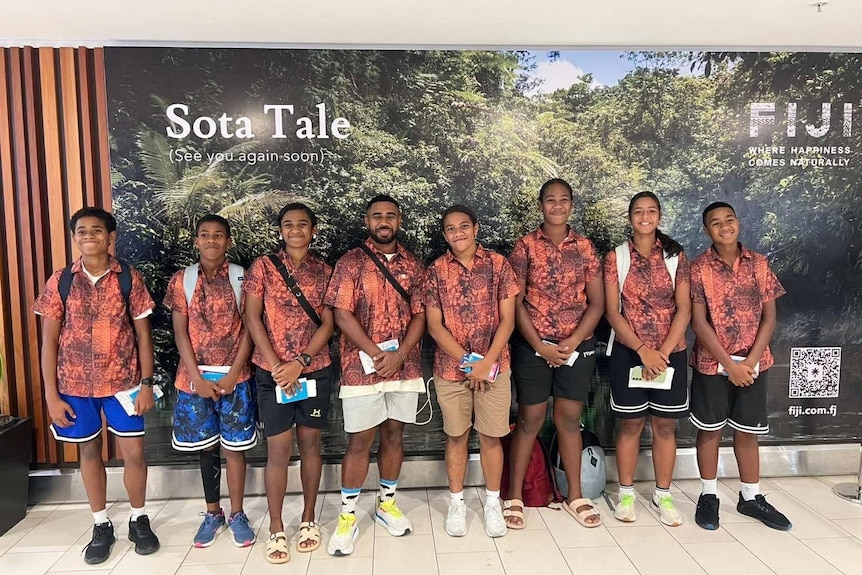 Members of the group of youth from Fiji on their way to attend the South Pacific Camp in Brisbane(Supplied)
Growth, however, has come at a cost.
With limited funding, Vakausausa and her small team often work long hours, travel extensively and make personal financial sacrifices to keep programs running. Transport, meals, equipment and extra community programs are frequently covered out of pocket.
“Most of the time, it’s out of pocket. But we do it because of passion. If we stop, the kids lose.”
A program that goes beyond sport
Despite the strain, Vakausausa remains motivated by the young lives transformed under her guidance. Her office has become a safe space for many athletes, a second home where they feel heard and supported.
“Some parents call me because they can’t control their kids. They ask me to talk to them,” said Vakausausa.
“That’s when you know the program is bigger than sport.
“It’s not about tournaments for me. It’s about seeing a kid change. Seeing them leave drugs behind. Seeing parents proud. That’s success.”
As AFL Fiji prepares for upcoming Pacific camps and continues building athlete pathways, Vakausausa envisions AFL becoming a community sport, one that complements other codes and supports young people who might otherwise be overlooked.
“Not everyone will play rugby or netball. But every kid deserves a chance,” she said.
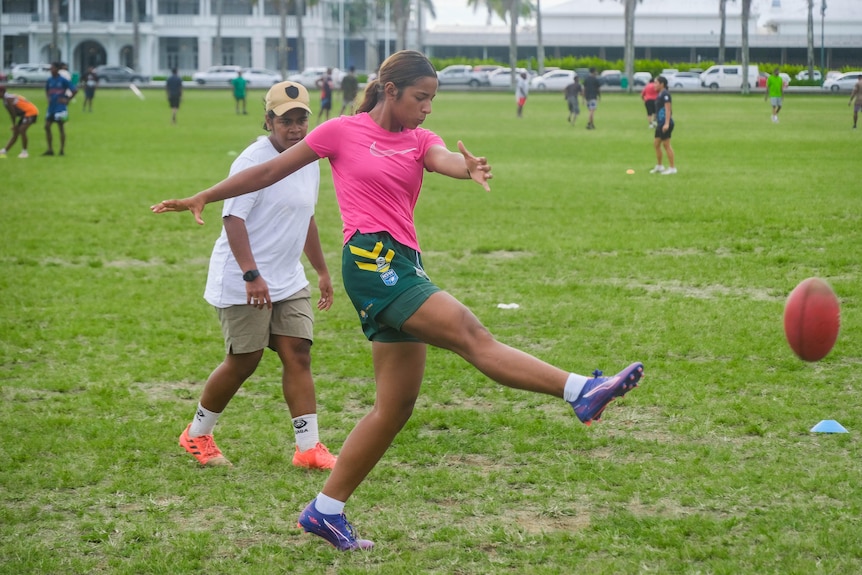 Loata oversees an AFL youth training session in FIji (Supplied)
Overseas clubs have already shown interest, and discussions are underway with stakeholders to provide young players with international opportunities and the chance of a lifetime.
Vakausausa is hopeful it will all work out in due course and acknowledges the support she has received behind the scenes to sustain the growing programs from the AFL Fiji chairman to coaches, administrators and the Tui Vitogo, who provides land for training.
Currently, Vakausausa has a squad of 12 in Brisbane for the South Pacific Camp, with girls competing this week until next Monday, February 23.
Teams from Nauru, Papua New Guinea, New Zealand, Tonga and Vanuatu are also set to participate.