
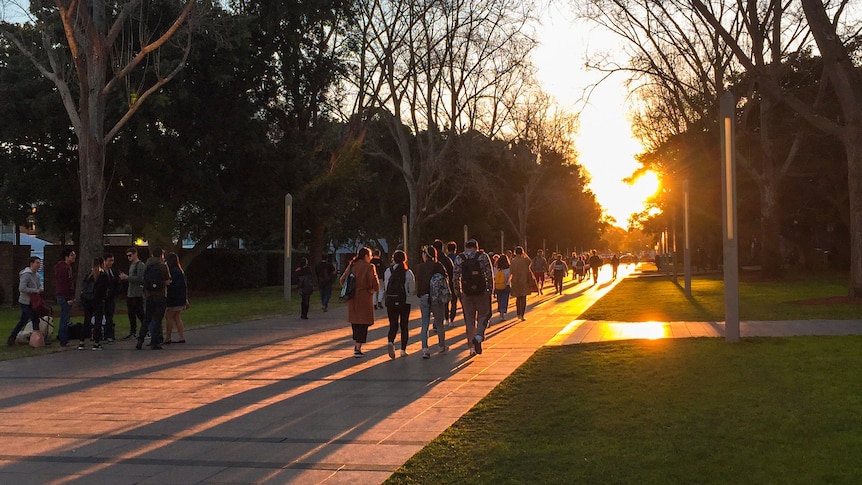
As Muslims in Australia begin the holy month of Ramadan — a time devoted to fasting, reflection, ethical self-discipline and generosity — a national reckoning is also unfolding.
A major new report on racism in Australian universities has confirmed what many students and staff from minority backgrounds have long known: racism in our higher education institutions is not episodic. It is patterned, systemic and normalised. Reports of harassment, exclusion and racial hostility are not confined to isolated events; they shape the everyday experience of belonging of many Australians.
The findings, published by the Australian Human Rights Commission (AHRC), echo a growing body of research — including work I’ve published with colleagues on intercultural relations and structural racism — which has consistently shown that discrimination is rarely reducible to individual prejudice alone. Instead, racism is embedded in institutional cultures, bureaucratic processes and public discourse. It flourishes when silence becomes routine and when political narratives legitimise suspicion of minorities.
That broader political context matters.
In recent days, One Nation leader Pauline Hanson made sweeping anti-Muslim remarks that cast doubt on the legitimacy and character of Muslim Australians as a group. Despite being widely condemned, including by the AHRC, these statements entered the national conversation at a moment when Muslim communities in Australia and around the world were preparing for the holy month of Ramadan — a period of fasting and purification focused on ethical introspection, restraint and compassion.
The timing is particularly poignant, and painful. Many Muslims have reported that recent events have made them feel that is unsafe to practice their faith — including multiple threats to the Lakemba mosque and the NSW Police’s aggressive response to a group of men praying at a protest. For Muslims, praying is a lived expression of moral accountability. Likewise, fasting during Ramadan is often accompanied by heightened awareness of one’s conduct, speech and responsibilities to others. The month invites believers to ask: Are my actions just? Are my words fair? Do they uphold human dignity?
It is precisely these ethical questions that the Racism@Uni study now places before our universities — and indeed, before the nation.
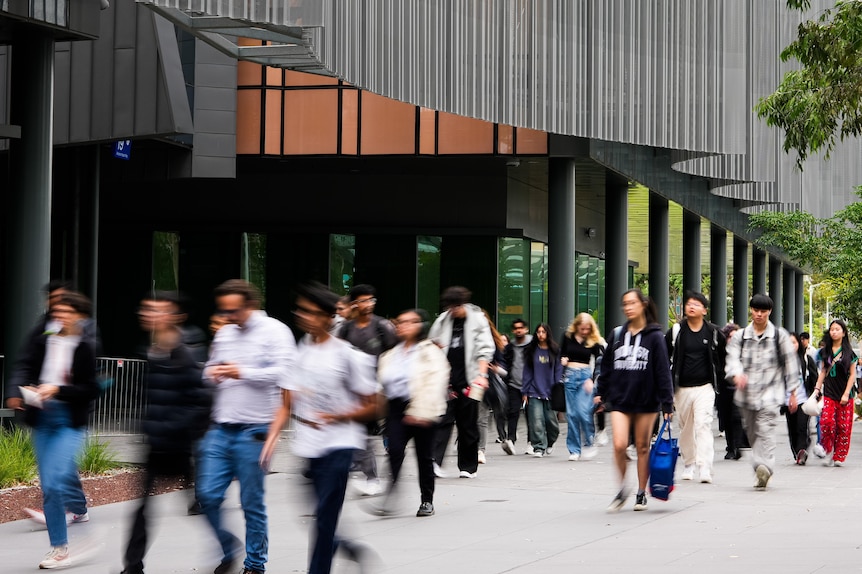
Students on campus at Monash University in Melbourne, Victoria. (Photo by Asanka Ratnayake / Getty Images)
Universities occupy a unique moral space in Australian society. They are not merely credentialing institutions; they are custodians of critical inquiry and public reason. They shape civic norms and train future leaders. When racism becomes routine within such spaces — when students feel unsafe in tutorials, when complaints processes fail, when certain identities are subtly marginalised — the problem is not only administrative. It is ethical.
As research into social cohesion increases, we must be careful not to reduce it to mere abstract notions of “harmony”, which too often translate into a demand for conformity or silence from certain racialised groups who are often depicted as a risk and threat to the nation. Social cohesion should not be one-directional and conditional for certain groups; it should be based on a mutual and active cultivation of intercultural dialogue, equal participation and institutional accountability. Indeed, meaningful and equal belonging is not achieved through rhetorical celebrations of diversity alone. It demands whole-of-society systems that treat difference as a legitimate and valued dimension of the national story.
Want the best of Religion & Ethics delivered to your mailbox?
Sign up for our weekly newsletter.
Ramadan is a month that calls observers to guard their tongues, to avoid slander and to practice restraint even under provocation. It is a spiritual discipline grounded in the conviction that dignity is indivisible. Yet public discourse in Australia too often moves in the opposite direction: towards simplification, generalisation and the normalisation of hate, exclusion and suspicion.
The Racism@Uni study should be viewed as more than an institutional audit. It is a mirror. It reflects not only what is happening in lecture theatres and laboratories, but also the narratives circulating in parliaments and on talkback radio.
As important public institutions, universities should play a leading role in addressing systemic racism. That means introducing reforms that go beyond compliance frameworks. There is a need to embed intercultural competence into curricula, leadership training and governance structures. Universities must treat racism not as reputational risk but as a breach of core academic values. Moreover, they need to ensure that their workforce — especially at the leadership level — reflects the ethno-religious diversity of the students they teach and the communities they serve.
And if political leaders are serious about repudiating hate speech and strengthening social cohesion, they must recognise that words are not neutral instruments. They create climates that perpetuate hate and harm. Political discourse can either widen or narrow the space of belonging for minority groups.
The fight against racism in our universities, and in public life, is not simply about managing diversity. It is about safeguarding the moral foundations of a plural democracy. Ramadan reminds us that self-scrutiny is not weakness; it is strength. Perhaps this is the invitation before us: to fast, in our own civic way, from rhetoric that diminishes others, and to nourish instead a culture of dignity, accountability and shared belonging.
Fethi Mansouri is a Deakin Distinguished Professor in Migration and Intercultural Studies and the founding Director of the Alfred Deakin Institute for Citizenship and Globalisation at Deakin University.