
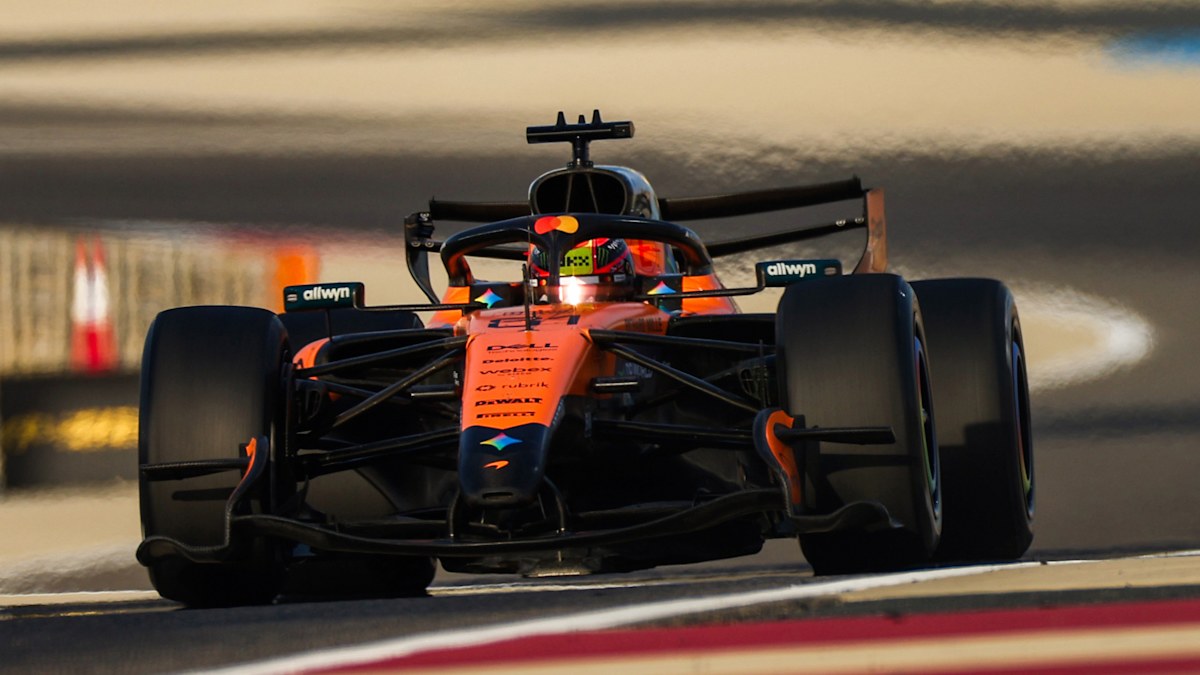
The FIA will trial tweaks to the F1 race start procedure after safety concerns were raised about the existing sequence.
The trials are expected to experiment with a longer start procedure, after teams flagged concerns the existing sequence – which has remained largely unchanged for the better part of three decades – is too fast for the new cars.
Under the new regulations, a small but crucial electric motor has been removed. In the start sequence, its main job used to be spooling the turbocharger, but its removal means drivers now have to rev the combustion engine to spool the turbo manually, a process which practice starts during the first test showed can take more than 10 seconds.
READ MORE: NBA star’s custom Hummer smashed in head-on car crash
READ MORE: An Olympic legend unwittingly mentored Australia’s newest star
READ MORE: Olympic hopes in jeopardy after bizarre Smith snub
McLaren boss Andrea Stella last week said if the start procedure is not changed, it could result in drastic difference in speeds as cars pull away from the grid, which could result in ‘dangerous’, multi-car pileups.
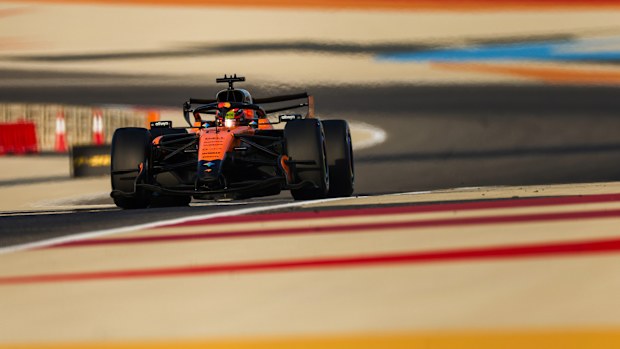
Oscar Piastri during pre-season testing in Bahrain. Getty
“We need to make sure that the race start procedure allows all cars to have the power unit ready to go, because the grid is not the place in which you want to have cars slow in taking off,” he explained.
“This is a bigger interest than any competitive interest. So, I think all teams and the FIA should play the game of responsibility when it comes to what is needed.”
A rule change this close to the start of the season requires unanimous agreement from all teams, or for the FIA to force the changes based on safety grounds. Ferrari have refused to join the movement, putting the onus back on the governing body.
Autosport reports the Scuderia first flagged the potential issue as early as last year, but was told there would be no change to the starts.
As a result, the team’s turbocharger was designed in such a way the time required to spool is shorter than its rivals, but comes with a trade-off of reduced power.
The issue was raised at an F1 Commission meeting in Bahrain ahead of the second test.
“There were constructive talks and proposals centred on the race start procedure during the commission meeting,” the FIA said in a statement.
“As a result, further evaluation of updates to race systems and on-car management will be undertaken during the current Bahrain test.”
The trials will take place at the end of each day during the second pre-season test, which began in Bahrain on Wednesday night (AEDT).
A key element of the all new regulations was the removal of the MGU-K, a small but incredibly complicated electric motor that converted heat into usable energy. It played a crucial part at race starts by pre-spooling the turbocharger.
Its removal means the turbo must be manually spooled by the combustion engine, which can only be done by revving the engine for more than 10 seconds.
During the first test last week, practice starts were clumsy and somewhat comical. It also meant the flaw was exposed, particularly by drivers starting deeper in the field.
The existing procedure begins basically as soon as the last car pulls into its grid spot.
A marshall waves a green flag, before the race director pushes a button which starts the lights sequence. While the cars at the front of the grid have remained idle for sometimes up to a minute, the last car might only be stationary for a few seconds.
George Russell topped the timesheets on the first day of the second test, lapping the Bahrain circuit in 1:33.459, one hundredth of a second quicker than Oscar Piastri.
The second and final pre-season test concludes on Saturday morning (AEDT), before the season begins proper in Melbourne on March 8.