
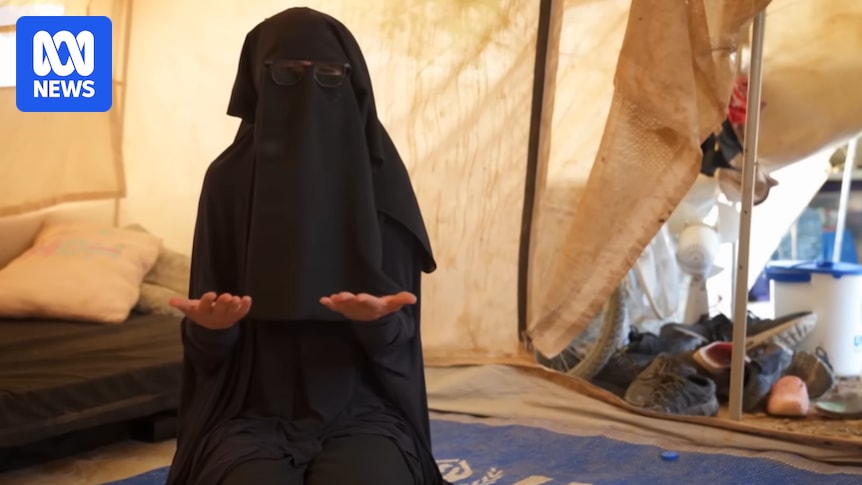
The ABC can reveal the names of the 11 women connected to former Islamic State fighters in Syria who attempted to journey home to Australia this week
The group of 34 Australians, including 23 children, has been living in camps in Syria since the fall of the so-called caliphate, and some of those children were actually born behind the razor wire.
Some of the women are believed to have accompanied their husbands to the war zone, but others came with family and married IS fighters once they arrived. Some say they got stuck in Syria by accident.
Many of them have previously spoken to the ABC.
Read more from the ABC:
They left the Al-Roj camp in north-eastern Syria on Monday in the hopes of returning to Australia, but were forced to turn back shortly afterwards.
An official at the Al Roj camp said that when the group left, staff started dismantling their tents, and when the group unexpectedly returned, some had to bunk in together.
On Wednesday, Home Affairs Minister Tony Burke revealed one of the women is now the subject of a Temporary Exclusion Order (TEO), potentially banning her from travelling to Australia for up to two years on national security grounds.
It is not clear who the woman subject to the TEO is.
But the ABC can reveal the names of the 11 women who tried to leave after obtaining a handwritten list from inside the camp.
Nesrine Zahab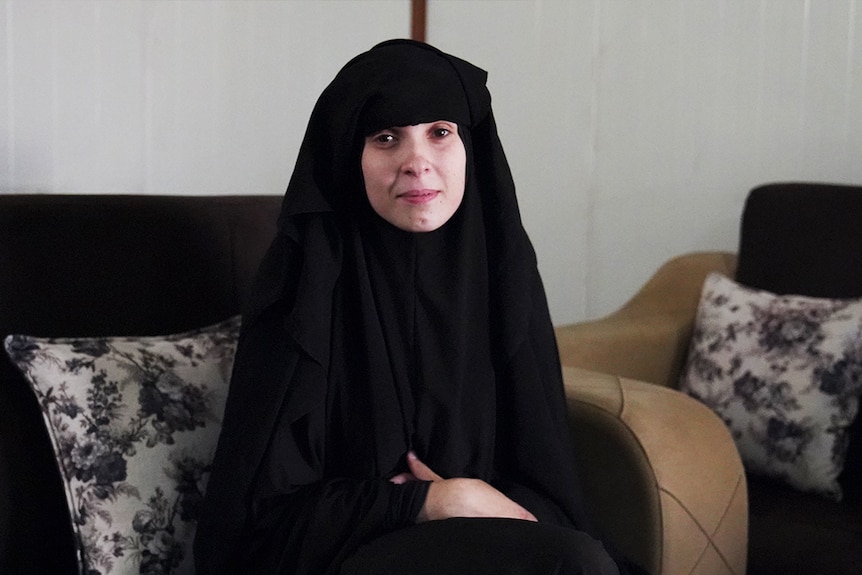
Nesrine Zahab revealed her identity to Four Corners. (Four Corners)
Nesrine Zahab is now in her early 30s, but she came to Syria from Sydney in her early 20s.
She has previously claimed she did not realise she was entering Syria.
“Who walks into a war zone?” she told Four Corners in 2019.
Nesrine said she had been on a family holiday in Lebanon, when she and a female cousin snuck away to deliver aid to refugees on the Turkish side of the Syrian border.
She said someone then asked for her passport.
“That kind of freaked me out,” she said.
She said she only realised she was in Syria when she saw an Islamic State (IS) flag.
“I found that I was in Syria. Did I have a heart attack? Of course I had a heart attack,” she told reporter Dylan Welch.
“Did I cry and scream and chuck a fit like a little girl? I chucked the biggest tantrum.
“Did it work? No. I’m still here.”
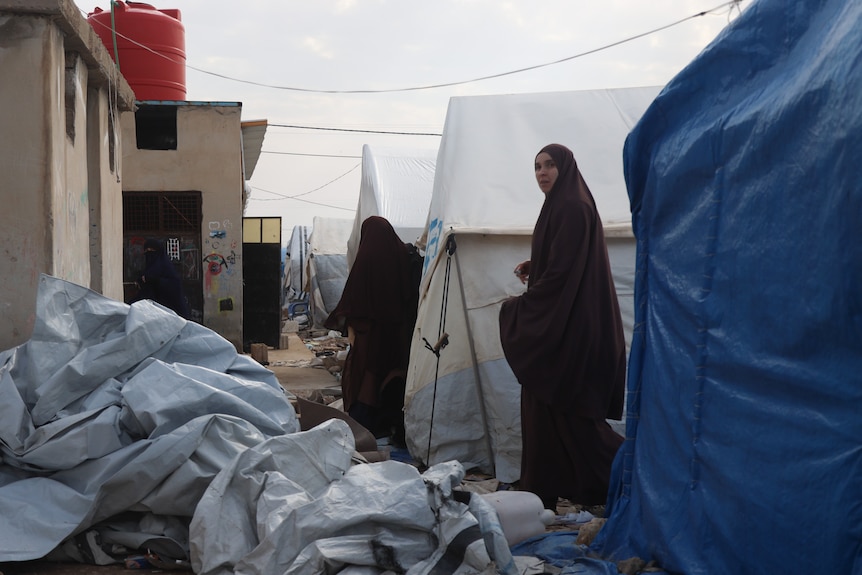
Nesrine Zahab has been one of the women identified who tried to leave the camp. (ABC News: Baderkhan Ahmad)
She later married an Australian-born IS fighter named Ahmed Merhi, who was later captured and sentenced to death.
She said she believed marrying offered her the best chance of survival.
Sumaya Zahab
Sumaya Zahab is in her early 30s.
She is the sister of Muhammad Zahab, a former Sydney maths teacher who joined IS.
He died in an air strike in 2018, but was known to have convinced several family members to travel to Syria.
Aminah Zahab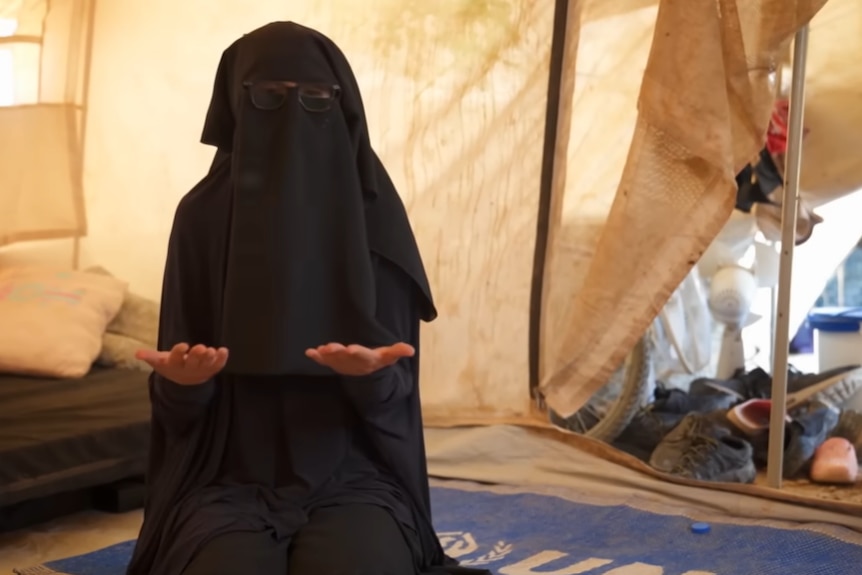
Aminah Zahab says she followed her son to Syria. (Four Corners)
Aminah Zahab is the mother of Muhammad Zahab and Sumaya Zahab, and the aunt of Nesrine Zahab.
She would now be about 50 years old and had followed her son to Syria.
“We’re clueless parents. We had a lot of trust in our children, a lot of trust,” she told Four Corners in 2019 from the Al-Hol camp.
“We didn’t know how to do much things in life. As we raised our children, and we just let the children rule our lives.
“I feel very angry. I feel very devastated. I feel sore, pain.”
Aminah was clearly distressed when she spoke about the conditions in the camp at the time.
“Tents have been burning down, and they’re right next to each other,” she said.
“You don’t understand, you see charcoaled women and children.”
Zeinab Ahmed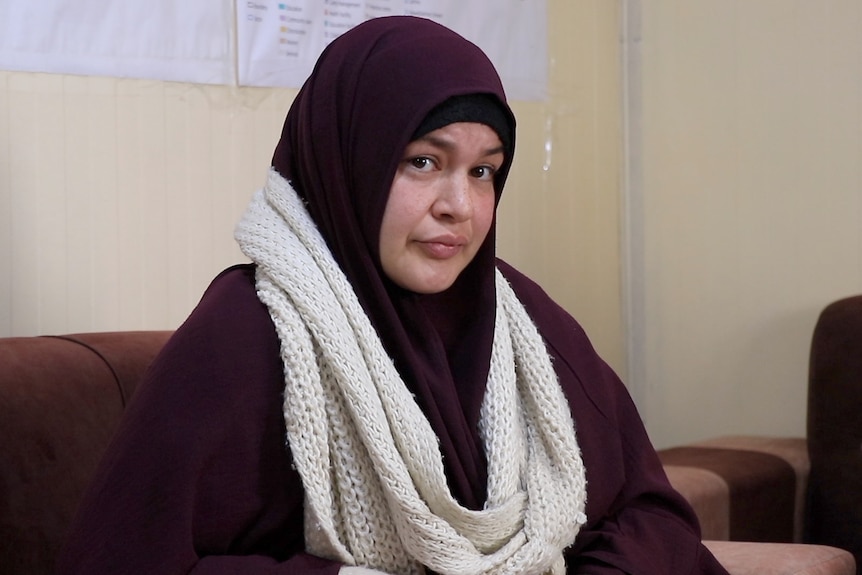
When Zeinab Ahmed spoke to the ABC in 2025, she refused to talk about how and why they came to be living in Syria. (ABC News: Haybar Othman)
Zeinab Ahmed is the second-eldest daughter of Mohammed and Kawsar Abbas.
She last spoke to the ABC from Al Roj in early 2025, as she made an impassioned plea to the Australian government to help get the group home.
She feared for her safety, and the lives of her children.
At the time, she revealed that Australian officials had travelled to the camp in 2022 to meet with the women and children.
Health checks and DNA tests were conducted.
Months later, four families were repatriated to Australia.
“They took the first group and we were so happy that some of us were getting out, some of our kids will be saved,” Zeinab said.
“Once they took them in there was backlash, there was backlash from when the announcement was made and then they never came back.”
The process undertaken by officials in 2022 likely paved the way for travel documents to be issued for the group of women ahead of their failed attempt to leave Al Roj earlier this week.
In recent days, the Australian government has repeatedly denied offering support to the group to make the journey home — with the exception of what they are legally obligated to do.
This would include issuing travel documents.
Al Roj officials have told the ABC that the group have been issued with single-entry passports.
Kirsty Rosse-Emile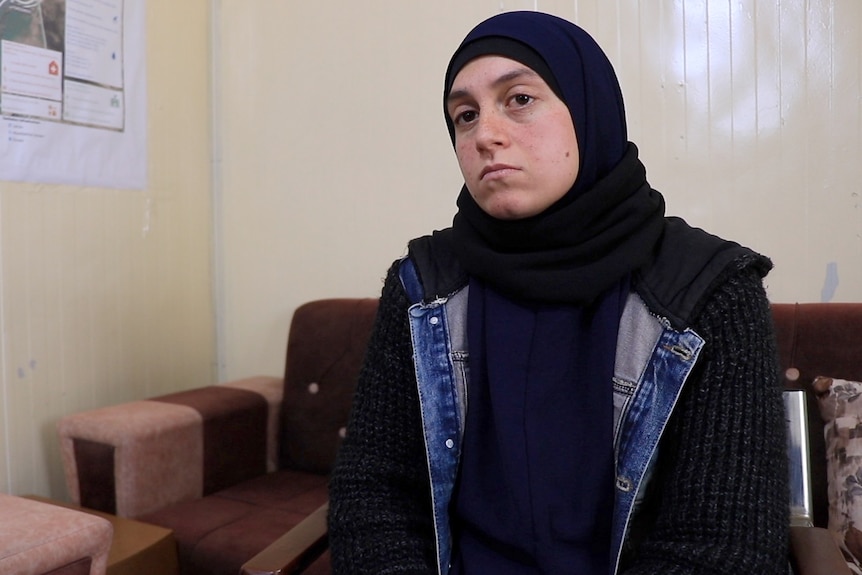
Kirsty Rosse-Emile told the ABC in 2025 she has been detained in the Syrian desert for many years. (ABC News: Haybar Othman)
The ABC also spoke to Kirsty Rosse-Emile in early 2025 in the Al Roj camp.
“Hello, I’m here. Can you just come and get me, finally, and my children and all the other Australians here?” she said in a message to the Australian government.
“We’re ready to start our lives afresh.”
Australian women who lived under Islamic State want to come home
She spoke of her desire to see her mother and take her kids to the beach, and conceded that detailing how she ended up in Syria “might make problems for me.”
In 2020, The Guardian reported that Kirsty’s husband, Moroccan-born Nabil Kadmiry, had his Australian citizenship stripped from him by the federal government.
Janai Safar
Janai Safar was among the women whom Four Corners met in the Al-Hol camp in 2019.
She mentioned at the time that the group were aware of new legislation which could prevent them from returning to Australia.
“We’ve heard about the laws being passed, TEOs and stuff,” Janai told the program.
A TEO has been imposed on one of the 11 women in the group — but exactly who remains unclear.
Her grandfather, John Crockett, told the ABC at the time that it was better they return to Australia than languish in camps in Syria.
“If some of them are going to go to jail when they come home, it’s far better for them to be in prison back here and do a term of whatever they’ve been convicted of,” he told Four Corners.
“At least if they come back here and they’re jailed, at least we’ll be able to go and see them.”
Kawsar Abbas
Kawsar Abbas, from Melbourne, is in her early 50s.
She’s the wife of Mohammed Ahmad, who ran a charity to support the people of Syria.
The Australian Federal police suspected the charity of funnelling cash to Islamic State.
Want to get ABC News at the top of your Google search results?
Here’s how to see more from ABC News

In 2019, Mohammed Ahmad told the ABC that he and his family got trapped in Syria after travelling from the charity’s headquarters in Turkey to attend the wedding of his son, Omar.
Mohammed said soon after arriving in Syria, he realised Omar had sworn allegiance to Islamic State. Omar also kept a Yazidi slave, who Ahmad said was treated well.
Ahmad implied that he did not approve of his son keeping the woman, but said he did not raise his concerns as other fathers in the caliphate had been killed for standing up to their children.
Mohammed insisted he was never an Islamic State supporter, but he was imprisoned in north-eastern Syria when IS was defeated.
Zahra Ahmad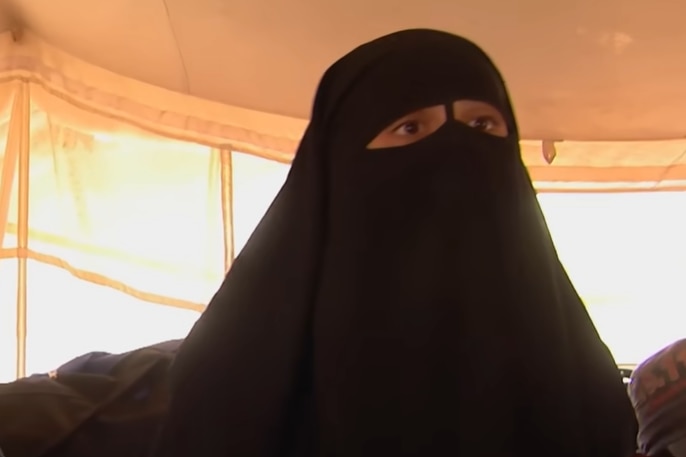
Zahra told SBS “we are left to suffer with our kids”. (Four Corners)
Zahra Ahmad is the eldest daughter of Mohammed and Kawsar Abbas.
She’s in her early 30s.
According to her father, the family got trapped in Syria in 2014 when they came for a wedding.
But the circumstances of how Zahra’s family came to be in Syria are contested, SBS reported in 2024.
The outlet wrote that when some male members of her family joined the IS group, Zahra said the women had no choice but to follow.
“I didn’t make this bed,” she told SBS.
“We are now forced to suffer for the decisions that other people — other male influencers — have made on our behalf, and now they’re all gone, and we are left to suffer with our kids.”
Zahra later married notorious Islamic State recruiter Muhammad Zahab, who died in an air strike.
Hodan Abby
The Sydney Morning Herald and The Age revealed details of Hodan Abby’s case in 2021, through an emotional appeal from her father.
Hodan had left her western Sydney home and fled to Syria in 2015 when she was still a teenager, the newspapers reported, in a bid to become a jihadi bride.
She gave birth to a daughter in Syria, and the child later suffered shrapnel wounds to her head.
Doctors told her surgery was required outside of the camp.
Hodan’s father said he feared for his daughter and granddaughter and urged the government to intervene.
The newspapers reported at the time that Hodan had agreed to be placed under a Terrorism Control Order if she returned to Australia, giving law enforcement and intelligence agencies the power to monitor her.
Kawsar Kanj and Hyam Raad
There are two more Australian women on the list: Kawsar Kanj and Hyam Raad.
Little to no public information is available about them.
Another woman with the same surname, Mariam Raad, returned in 2022.
She was convicted of travelling to a proscribed area in 2024.