
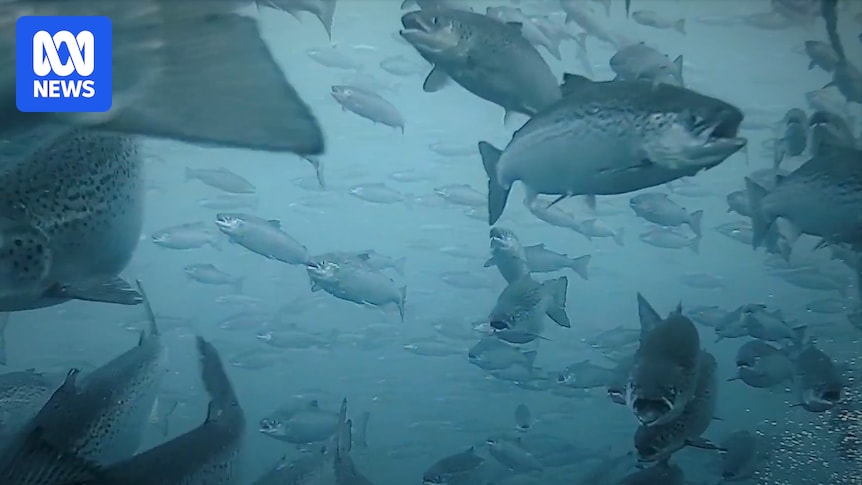
The federal agency that approved the use of the antibiotic florfenicol in Tasmania’s salmon industry has proposed to suspend that licence.
The Australian Pesticides and Veterinary Medicines Authority (APVMA) granted an emergency permit for the use of florfenicol in salmon in the south-eastern biosecurity zone of Tasmania, in November last year.
On Thursday, the ABC reported the antibiotic was detected in waters more than 10 kilometres from the closest salmon farming operation using it, and was found in parts of abalone, bryozoans, urchins and whelks.
The testing was undertaken by the Institute for Marine and Antarctic Studies (IMAS) for Tasmania’s Department of Natural Resources and Environment (NRE).
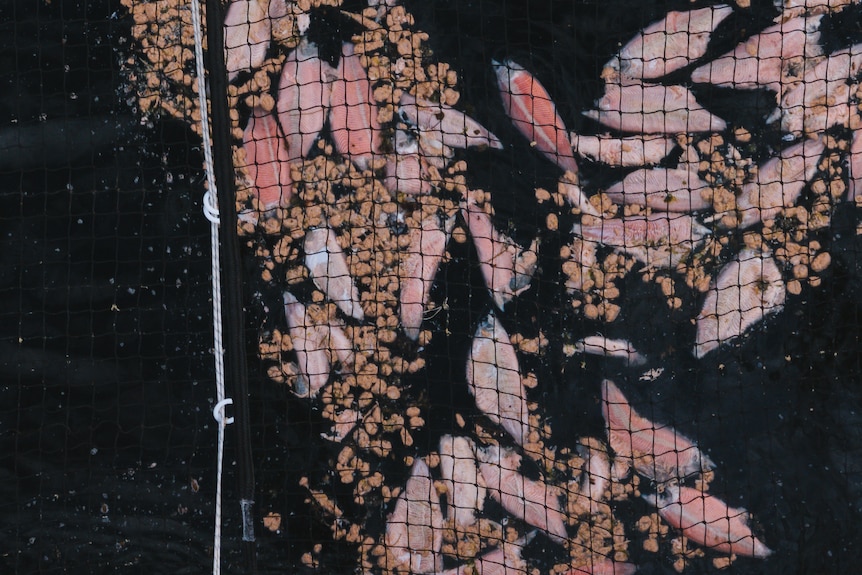
The bacterial outbreak has caused huge losses for the Tasmanian salmon industry. (Supplied: Bob Brown Foundation)
How many salmon farms are there in Tasmania — and who owns them?
In a statement released today, APVMA said it requested this new information from NRE, which found that “very low-level detections of florfenicol amine in some non-target/wild fisheries species have been found at various distances from the salmon leases”.
“After reviewing this data, the APVMA has advised the permit holder that it proposes to suspend this permit,” the statement said.
“The permit holder has been notified that they have until Monday, March 2, 2026, to provide evidence to satisfy the trade criteria.”
The permit holder is Abbey Laboratories, the manufacturer of the antibiotic, which combats the piscirickettsia salmonis bacteria.
Industry ‘takes environmental responsibilities seriously’, Salmon Tasmania saysSalmon company defends use of antibiotics
In a statement, Dr John Whittington, chief executive officer of Salmon Tasmania, the peak industry body for producers, said the medication is “used solely to ensure our fish are healthy”.
Dr Whittington said the industry would be “making a submission as per the authority’s notification”.
“The salmon industry only applies medication to its fish under strict veterinary advice, within established protocols and regulations. Like any primary producer, we have a legal and ethical obligation to provide medical treatment for our animals when required.
“Florfenicol has proven to be a very effective treatment for P. salmonis and does not impact the environmental health of our waterways or affect the safety of fish caught from them.
“The Tasmanian salmon industry is recognised for its science and innovation, and work is already underway to develop the next generation of vaccines to protect our fish and reduce the need for medication.”
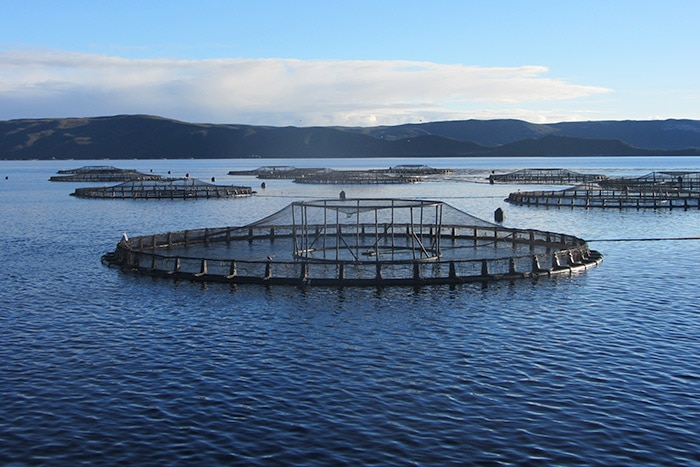
The Tasmanian salmon industry’s fish stocks were hit hard by the bacterial outbreak. (Supplied: Tassal)
Dr Whittington said the Tasmanian salmon industry “takes its environmental responsibilities seriously”.
“[It is] committed to working with government and research organisations to build on the knowledge and understanding of the marine environment, and how it can improve what it does through the science that underpins Tasmania’s world-class seafood industry.
“Where veterinary advice directs, salmon growers may medicate fish with florfenicol under the current permit while the APVMA finalises its determination.”
Greens welcome action
In a statement, the Tasmanian Greens welcomed the proposal from the APVMA to suspend the Tasmanian salmon industry’s permit for florfenicol.
“This decision is an indictment of the Liberal government, which never should’ve supported the rushed approval of the antibiotic in Tasmanian waterways,” leader Rosalie Woodruff said.
“They’ve consistently dismissed concerns of the community and local fishing industry, even yesterday, as the antibiotic was recorded in wild fish more than 10 kilometres away from salmon pens.
“Premier [Jeremy] Rockliff now has no other option. He must stop supporting the salmon industry’s use of the florfenicol in Tasmanian waters and require diseased pens be destocked immediately.”
The Tasmanian government has been contacted for comment.