
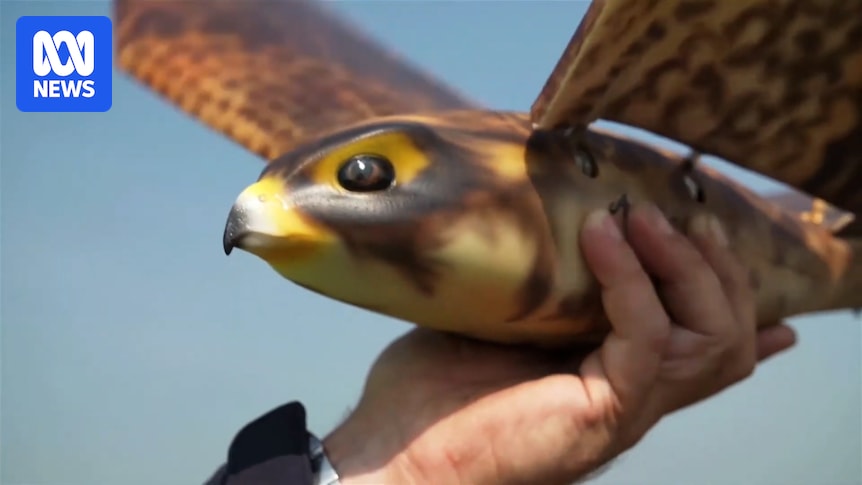
Canadian-made drones masquerading as peregrine falcons are being used to watch over Australian fruit and almond orchards.
The drones come in fixed-wing and flapping wing models that rely on bio-mimicry technology to keep smaller birds away from the fruit and nut trees.
That means they look and behave as a predator would, to scare off species such as corellas or cockatoos.
With most of Victoria recording minimal rainfall over the past year, birds have been looking to agricultural crops for food.
AERIUM Analytics president Jordan Cicoria said field-testing of the drone in Victoria and South Australia showed that the machines can cope with the Australian heat.
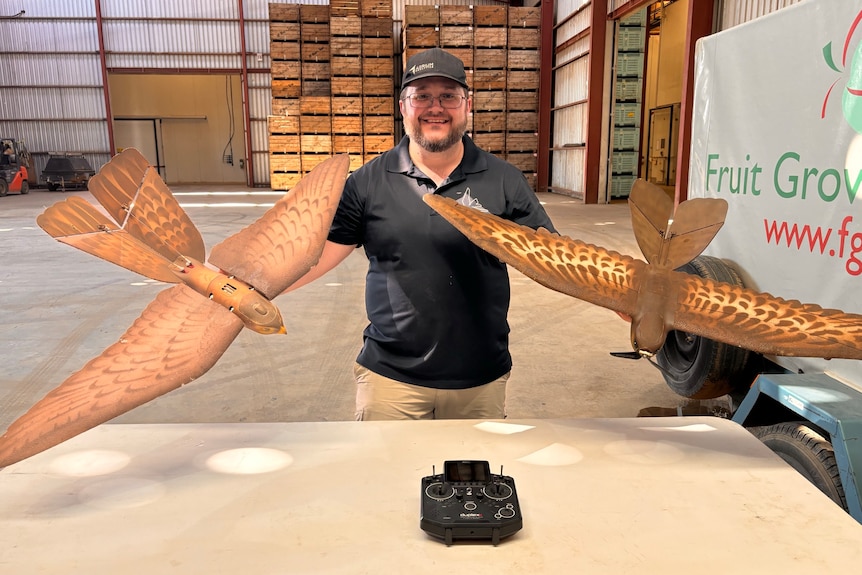
Jordan Cicoria with the fixed-wing drone which has a propeller on the nose, and the flapping version has activated wings. (ABC News: Charmaine Manuel)
“These trials were never about proving whether the technology works — we already know that.
“We’re collecting data on the effectiveness of the robot … against a range of bird species that cause significant fruit and crop loss in Australia,” he said.
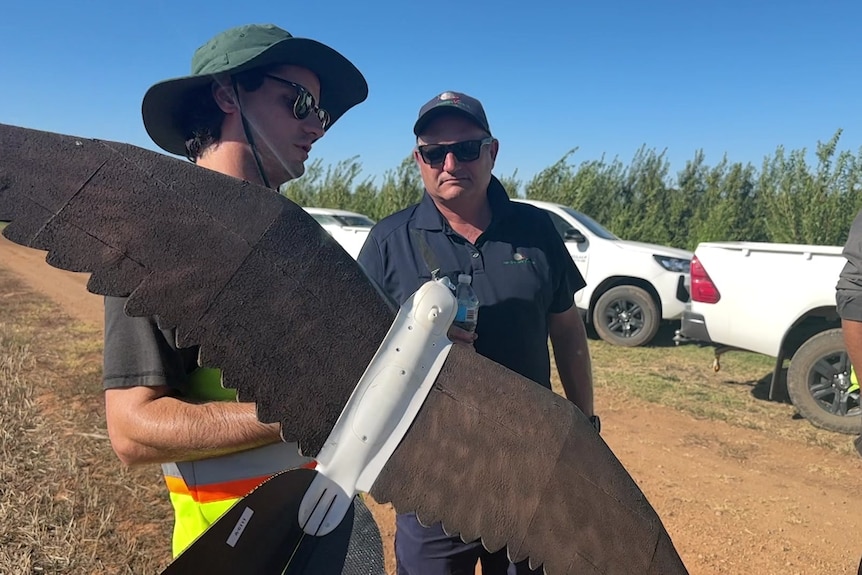
The drones are being adapted to work in harsh Australian conditions. (ABC News: Charmaine Manuel)
He said the drones had been in operation for 10 years in the mining and aviation industries.
“In airports, for example, it’s helped significantly reduce bird strikes and prevent birds from landing in dangerous areas.”
“The real question for us was how that translates to agriculture, how it applies to specific crops and farming systems,” Mr Cicoria said.
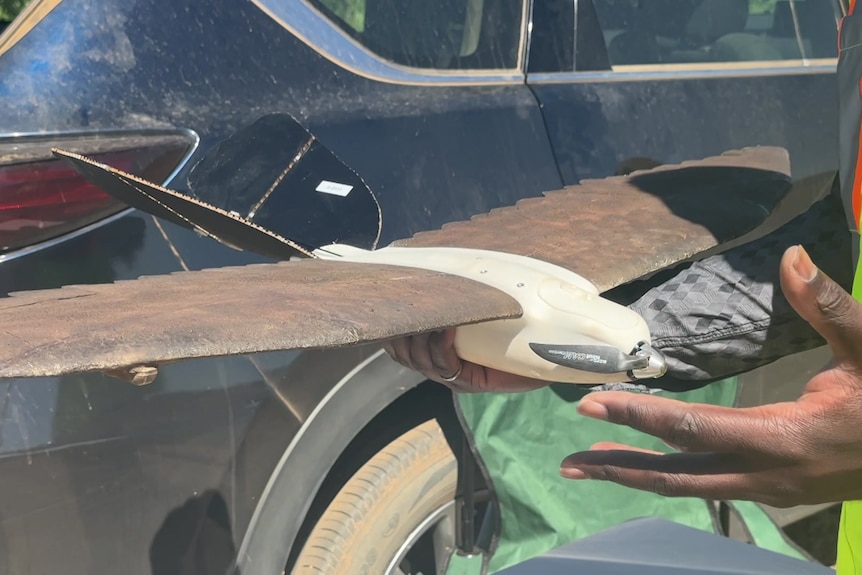
Jordan Cicoria says the drone replicates a falcon’s silhouette and wing-flapping motion to scare smaller birds. (ABC Shepparton: Charmaine Manuel)
Aiming for clear skies
Ardmona farmer and Victorian Fruit Growers chairman Mitch McNab grows apples, pears and stone fruit — all of which are appealing options for birdlife.
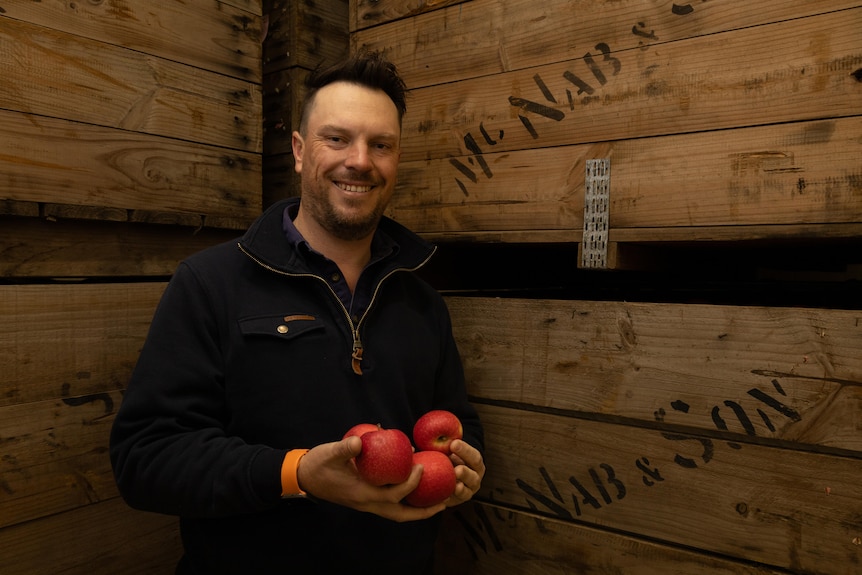
Mitch McNab says growers will have to use tools like drones and other technology to protect crops. (ABC Rural: Annie Brown)
He was trialling the drone in the months leading up to harvest, which kicked off a few weeks ago.
“So far, we’ve seen reasonably positive results,” Mr McNab said.
He said he was optimistic about the drones because the number of birds circling Goulburn Valley orchards had increased this year.
“This year has been drier, and birds are clearly looking for alternative food sources: irrigated horticultural crops like apples, pears, and stone fruit become very attractive in those conditions,” he said.
“Typically, we might lose around 1 to 3 per cent of our crop to birds, but this year that’s probably closer to 3 to 5 per cent.
“Fruit is very valuable and protecting yield is critical, even a small percentage of crop loss represents a significant financial impact.”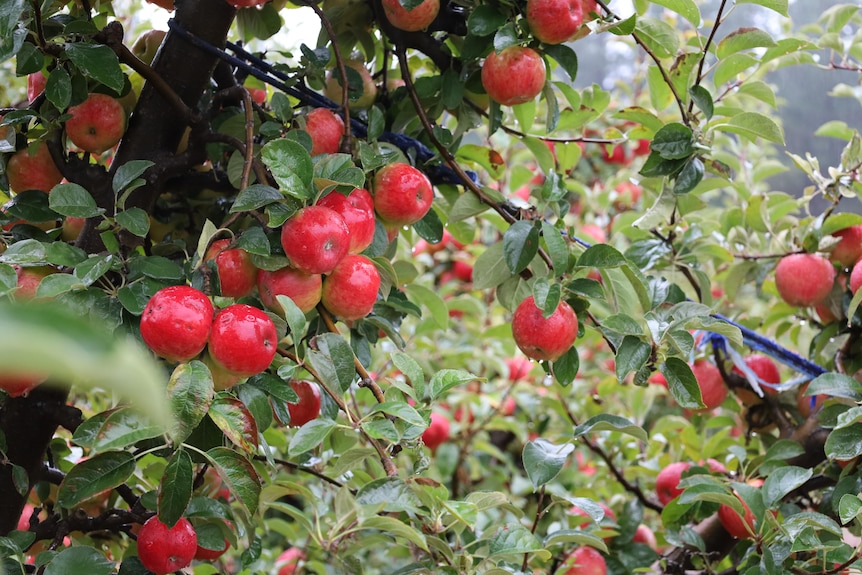
Mitch McNab says there have been more bird attacks on crops due to lower rainfall. (ABC Rural: Annie Brown )
To balance the cost of purchasing, maintaining and operating the drone, Mr McNab said a cooperative model was being considered.
“The capital cost of purchasing a drone and having someone operate it isn’t always justifiable for individual growers, especially in lower-pressure years,” he said.
“A shared or cooperative approach would allow better utilisation of the technology, and I think that’s something Fruit Growers Victoria and Goulburn Valley growers would seriously consider.”