
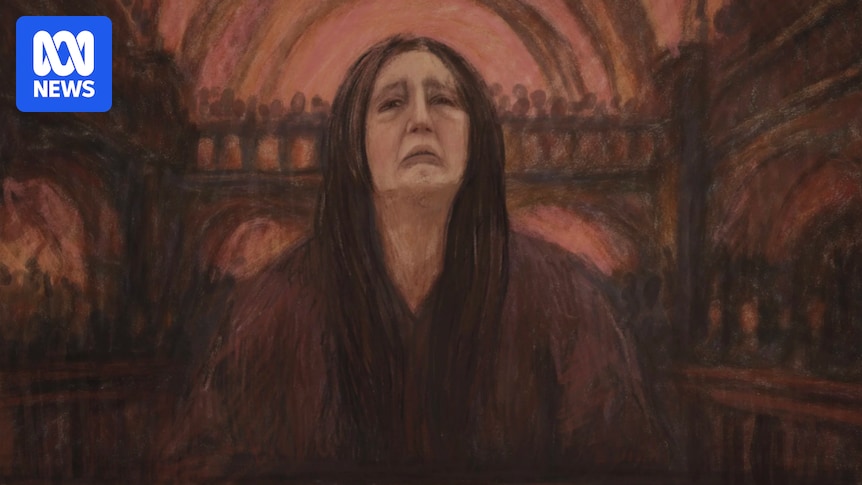
A shuffle. Officers enter.
A figure in prison greens follows.
So begins the flurry of lines. Charcoal curves or digital ink.
Acting as the public’s eye, they draw the faces of the innocent, the guilty, and the yet to be decided.
Welcome to the world of courtroom artists.
It has been months since Erin Patterson was last seen in public. The odd details of her deadly mushroom lunch are already percolating in Australia’s collective imagination.
As artist Anita Lester enters the small Morwell courtroom, an atmosphere of adrenaline bubbles ahead of Patterson’s in-person appearance.
And Lester only has five minutes to capture it all.
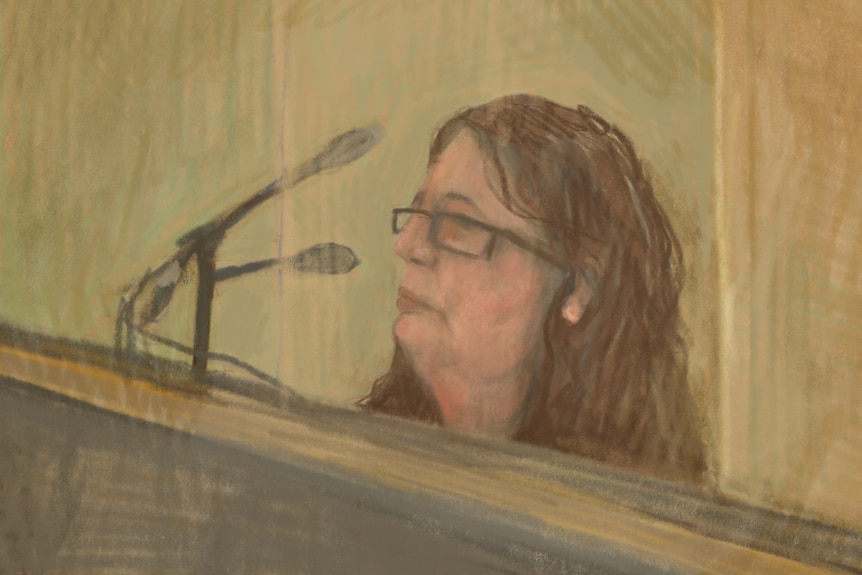 Artist Anita Lester captured this sketch of Erin Patterson during her November 3, 2024 court appearance. (Supplied: Anita Lester)
Rocco Fazzari is in a virtually empty appeal hearing when Ivan Milat stares him down.
The cold gaze of a serial killer convicted of kidnapping and murdering at least seven victims.
“To feel his eyes on me, the same eyes that had seen what he had done, was quite frightening to me.”
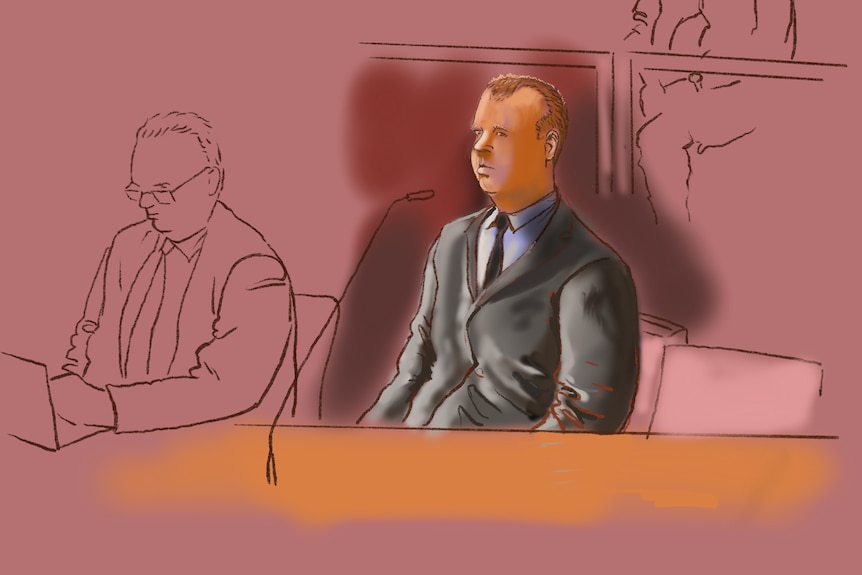 A court sketch of former NSW police officer Kristian White who tasered 95-year-old Clare Nowland and was found guilty of manslaughter.(Supplied:Rocco Fazzari)
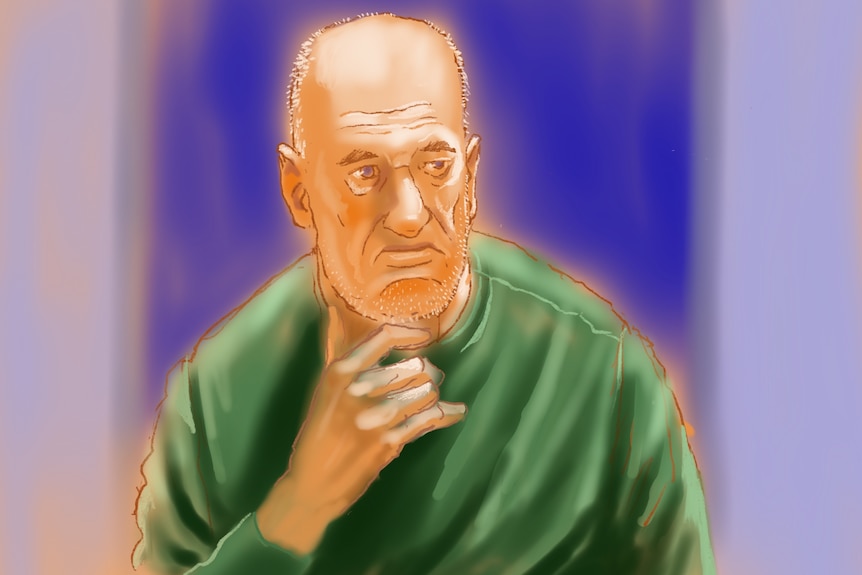 A sketch of Chris Dawson. Dawson was found guilty in 2022 of the murder of his wife Lynette in 1982. (Supplied: Rocco Fazzari)
Both Lester and Fazzari are part of a small but curious cohort.
A line of work that remains shrouded in curiosity, even when it makes the front page.
But these courtroom artists are also in a rapidly changing industry; one adapting to technology, shrinking newsrooms, and a new era of true crime.
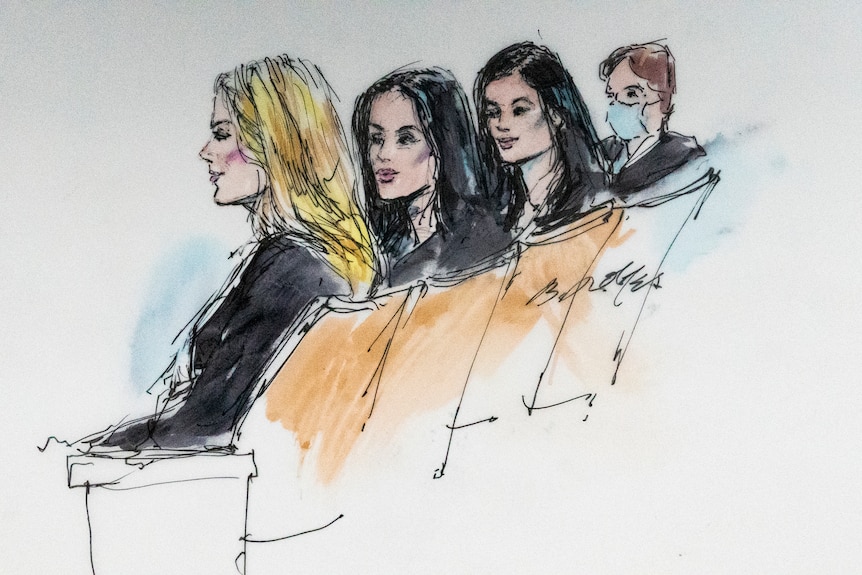 Publicised cases now often involve celebrities, like the Kardashian family here. The famous family won a defamation case brought against them by influencer Blac Chyna in 2022. (Author: Bill Robles/ Supplied: AP)A brief history of the courtroom sketch
One of the earliest courtroom sketches features the trial of Mary, Queen of Scots.
When Émile Zola and Oscar Wilde — 1800s versions of celebrity — took to the witness box to proclaim their innocence, an artist was there.
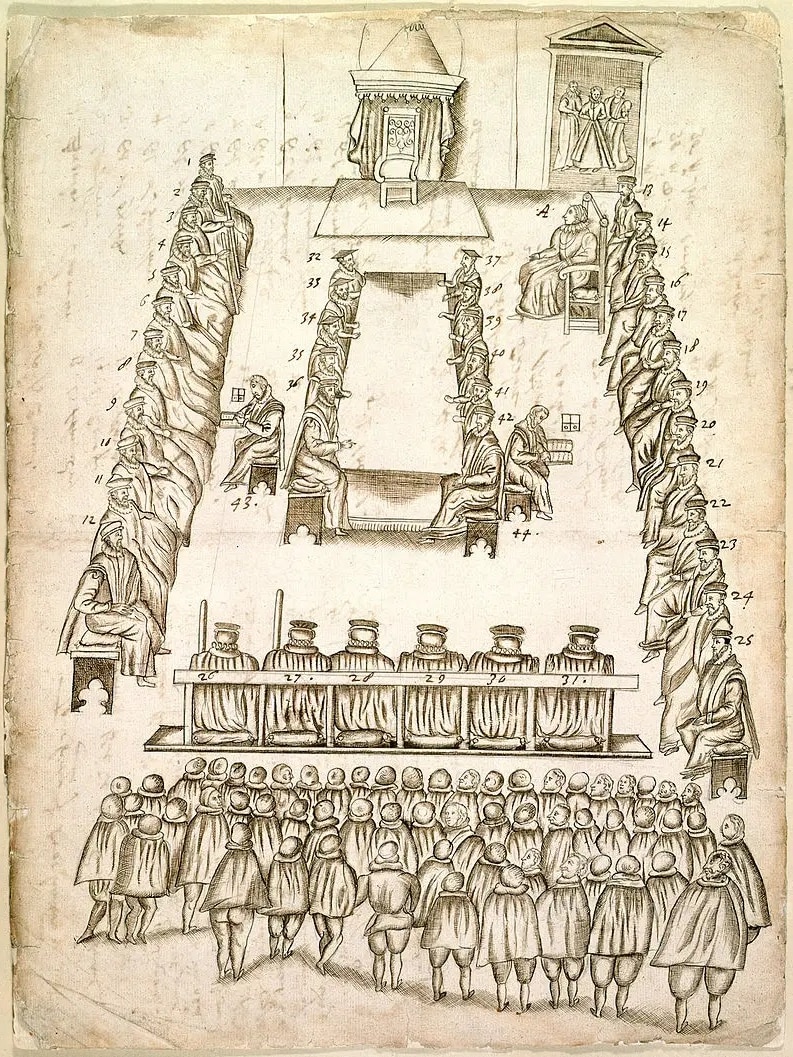 A sketch of the trial of Mary, Queen of Scots, from around 1586.(Wikimedia Commons: British Library/ Trial of Mary, Queen of Scots/Creative Commons licence)
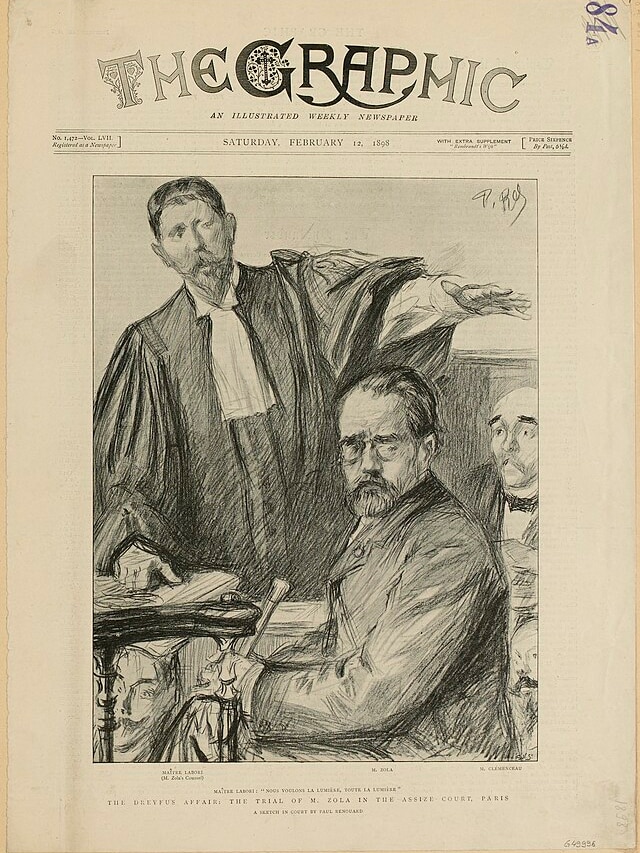 Emile Zola’s trial around 1898. (Wikimedia Commons: Charles Paul Renouard/Creative Commons licence)
Almost as long as there’s been a courtroom, there has been a courtroom artist.
In Australia, its exact origins remain unclear.
Still, we have proof of its existence during the trials of high-profile bushrangers, including Ned Kelly.
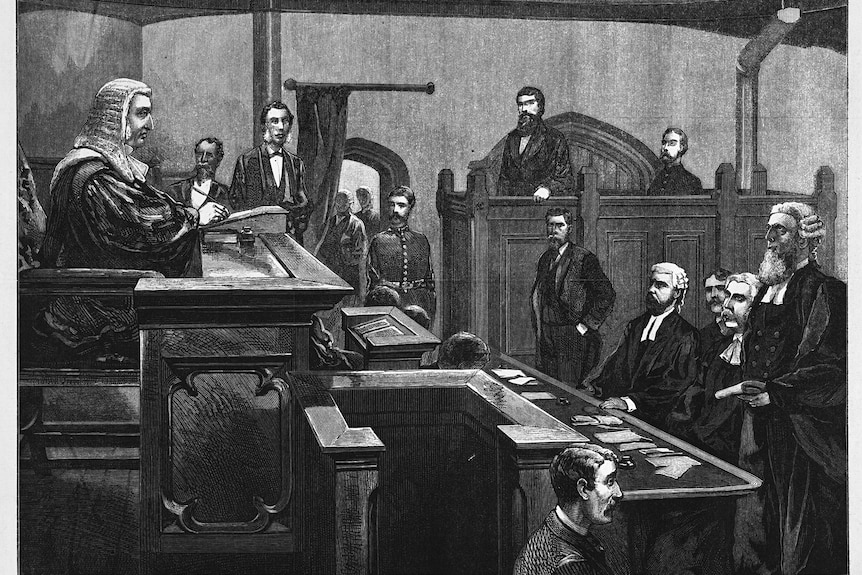 Ned Kelly’s trial of 1880, showing Kelly in the dock.
(Supplied: State Library of Victoria)
Jason Bosland, an associate professor at University of Melbourne’s law school and expert in the relationship between media and the law, says generally the media’s role evolved with the late 18th century creation of the courtroom.
“[Prior], there’d be the town square where you dragged the accused out and they’d have to sink or swim,” he explains.
“That was always conducted in public.
“And it wasn’t until those purpose-built courthouses started to appear that the law had to turn its attention to the legal principle of open justice, and that’s where it emerged.”
The open justice principle relates to the idea that court proceedings should be public, except in exceptional circumstances.
This includes media’s right to watch on.
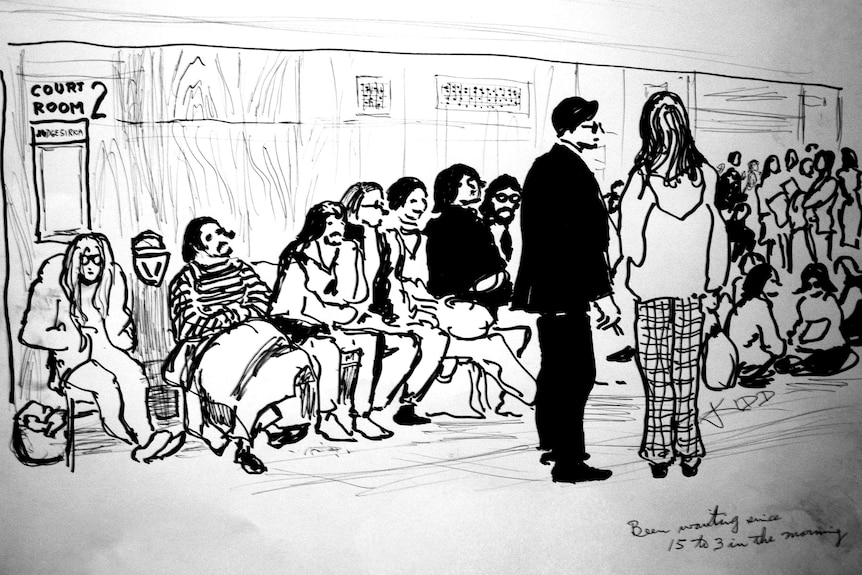 Steven Kidd sketched this view of people waiting outside the courtroom hearing the Watergate cover-up. Four major Watergate defendants were found guilty of conspiracy and three of them guilty of obstruction of justice and perjury. (AP: Steven Kidd)
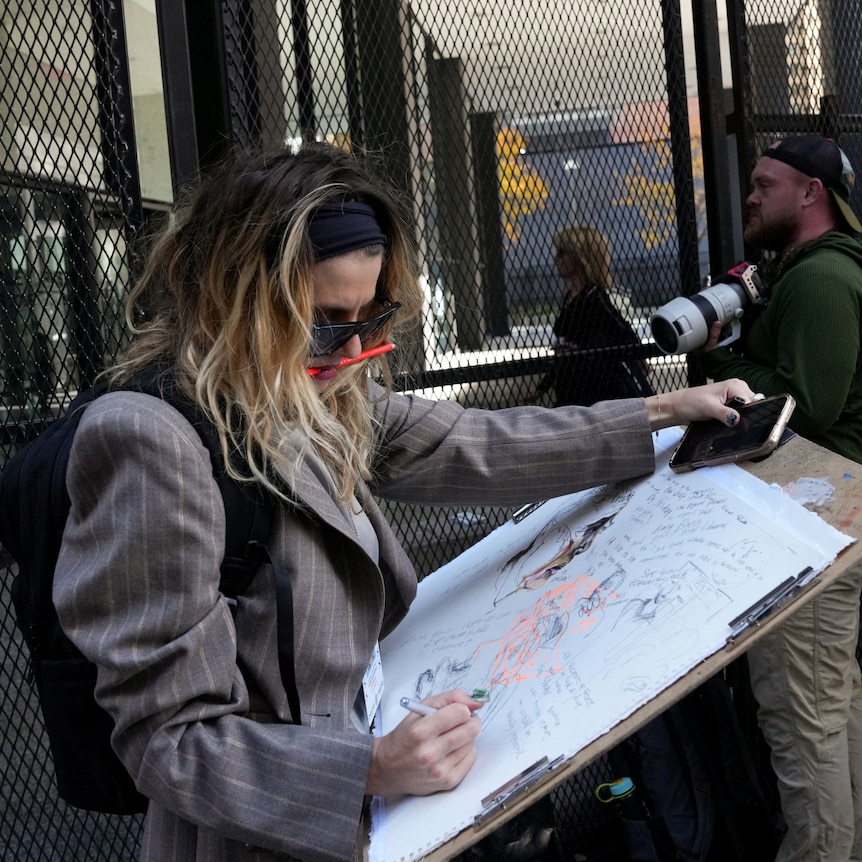 The tradition continues to this day, with artist Isabelle Brourman sketching outside a Illinois courthouse. (Reuters: Leah Millis)
When the camera was invented, the limits of that access was tested.
The 1930s US trial of Bruno Richard Hauptmann — who kidnapped and murdered aviator Charles Lindbergh’s son — saw hundreds of news hounds flock to court, reportedly climbing on the counsel’s table and shoving flashbulbs in witnesses faces.
The ensuing photography ban essentially nullified the idea of televised court reporting for decades.
It wasn’t until OJ Simpson’s 1995 trial — attributed with making “trials into television” — that the filmed trial became more common in America.
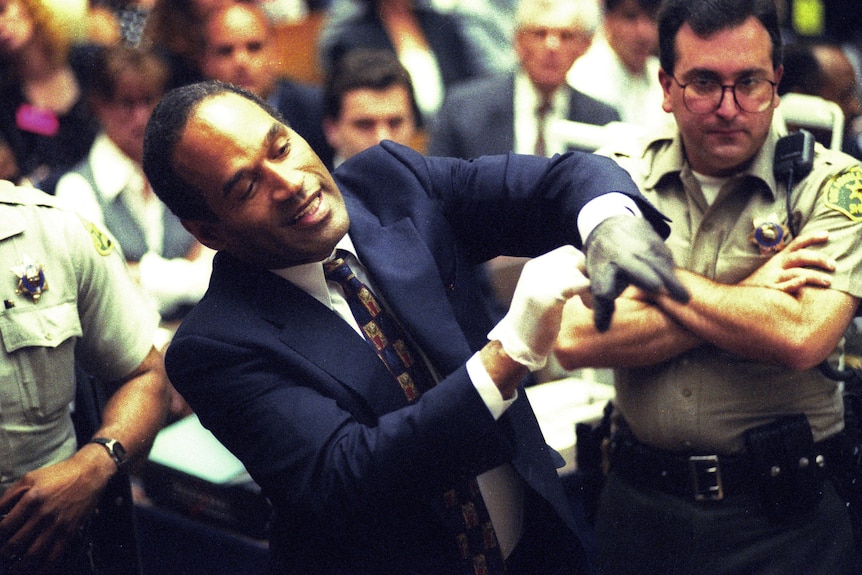 OJ Simpson’s trial is attributed with forever changing how media covered high-profile court cases. (Reuters: Sam Mirocovich/ Pool/Landov)
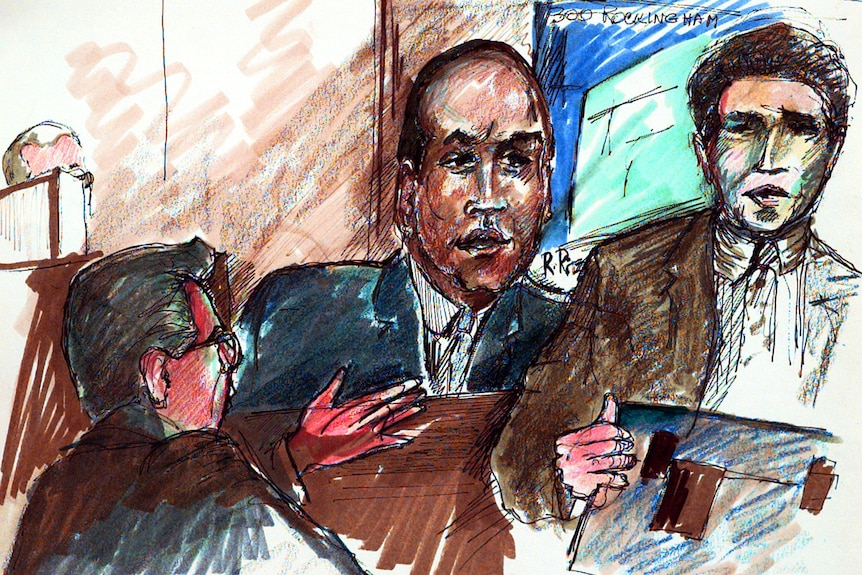 A sketch from Simpson’s more subdued 1996 civil trial. Simpson was acquitted at the criminal trial but was ordered to pay $33.5 million to the families of Nicole Simpson and Ron Goldman in civil proceedings.(AP: Rosalie Ritz)
Even then, no such rules apply in Australia, where only rarely trials are livestreamed by the courts.
Media access globallyUS: While photography has been banned in federal proceedings since 1935, state judges are able to make individual decisions about allowing cameras into a courtroom. This includes the 2nd and 9th US Circuit Court of Appeals.UK: Artists are not permitted to sketch while in court and must create sketches from memory. In 2013, American artist Priscilla Coleman was given permission in London’s Supreme Court to sketch during an appeal hearing — becoming the first to do so in nearly 90 years.
Dr Bosland says it remains a balance between transparency and the sanctity of the courtroom.
Too often, it could become a distraction.
“The detrimental consequences (of livestreams) for the legal counsel have been pretty severe, and also for witnesses as well, who are having their testimony webcast,” Dr Bosland says.
“And that’s because of social media essentially, I think.
“What should be at the forefront of your mind when you’re an advocate is getting the job done to the best of your ability, not making sure that you don’t misspeak.”
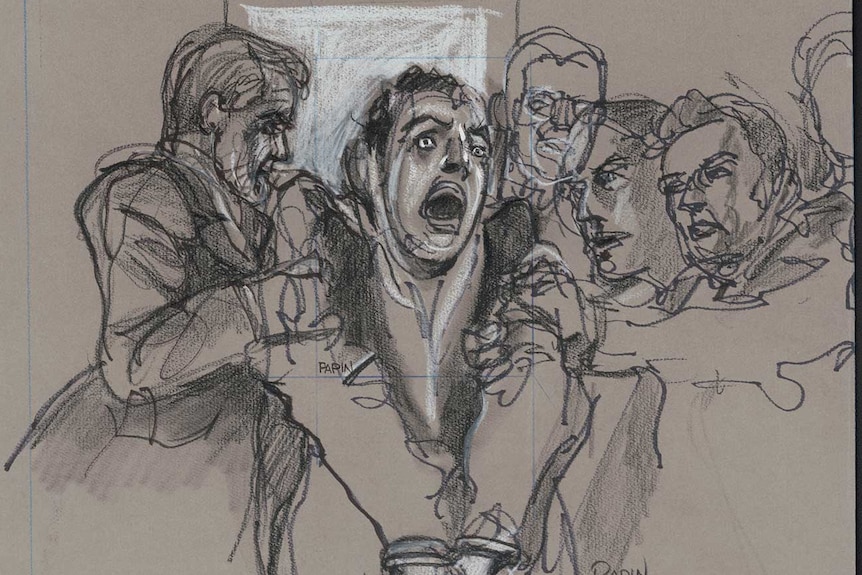 David Berkowitz, New York’s Son of Sam killer, explodes during his 1978 court appearance shouting “I’ll kill them all”. Joseph Papin’s drawing, which captured criminal’s anguished mental breakdown. (Author: Joseph Papin/ Suppplied: Library of Congress)
The result? A prevailing need for the courtroom artist, as American artist Bill Robles argues.
“We’re a necessary evil,” he told The Washington Post in 2016.
“When there’s no camera permitted in the room, ‘we’re the king of the court.'”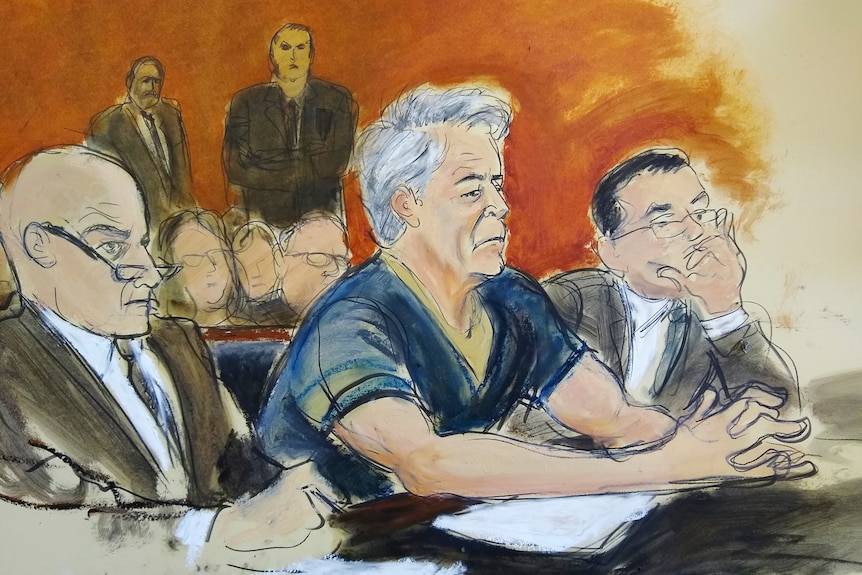 Convicted sex offender Jeffrey Epstein pleading not guilty to federal sex trafficking charges. He died by suicide before a trial could be held. (Author: Elizabeth Williams/ Supplied: AP)
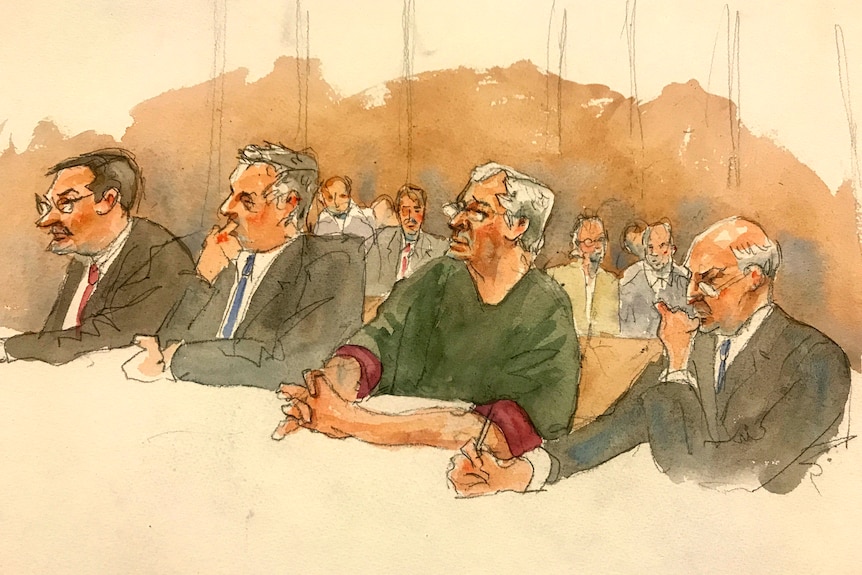 Epstein (second from right) in court that same month in 2019, sketched by another court artist. (Author: Aggie Kenny/Supplied: AP)When a trial goes global
The public’s interest in the form reached new levels last year as Patterson faced trial.
Lester’s sorrowful portrait of the triple-murderer became one of the defining images sent around the globe.
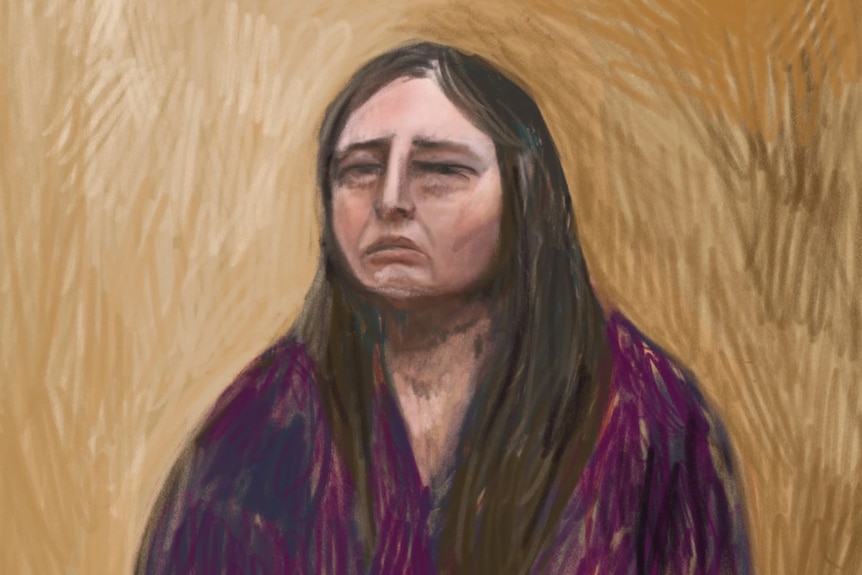 Artist Anita Lester says she was close enough to Patterson in some hearings she could see her lashes. (Supplied: Anita Lester)
She describes it as an odd and exhilarating career moment.
“I think that was sort of the shock of my life,” Lester says.
“It obviously has nothing to do with my decisions and my choices of vocation.
“But I think when you’re only given these very limited windows into what you’re seeing … people become glued to the images they’re fed.
“It just so happens that a couple of my images were really resonant with people.”
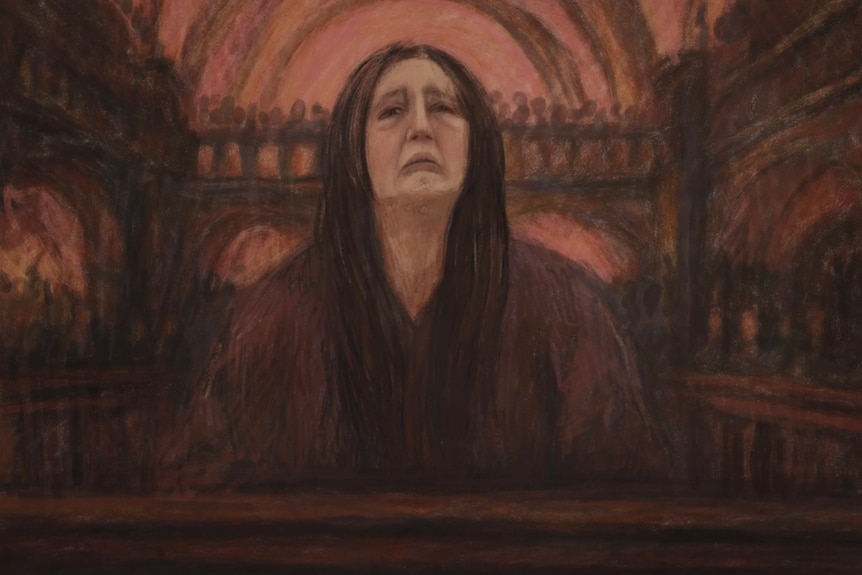 Lester says she imbues her sketches with “humanity” for all involved. (Supplied: Anita Lester)
Lester had been working as a children’s book illustrator when she discovered her “very particular” set of skills that made court artistry a perfect match.
Among them, speed, facial recall and the ability to encapsulate an emotion.
The latter, she posits, is what made her second Patterson sketch so memorable — even if she was initially a “bit devastated” with the 15-minute sketch.
“[I thought] people are not going to want to run this. It’s not detailed enough and it’s pretty impressionistic,” she says.
“But I actually learned something during that case, which is that you don’t have to be so committed to the details of what you’re seeing.
“That expressionistic quality is an attribute to the work that you’re doing.”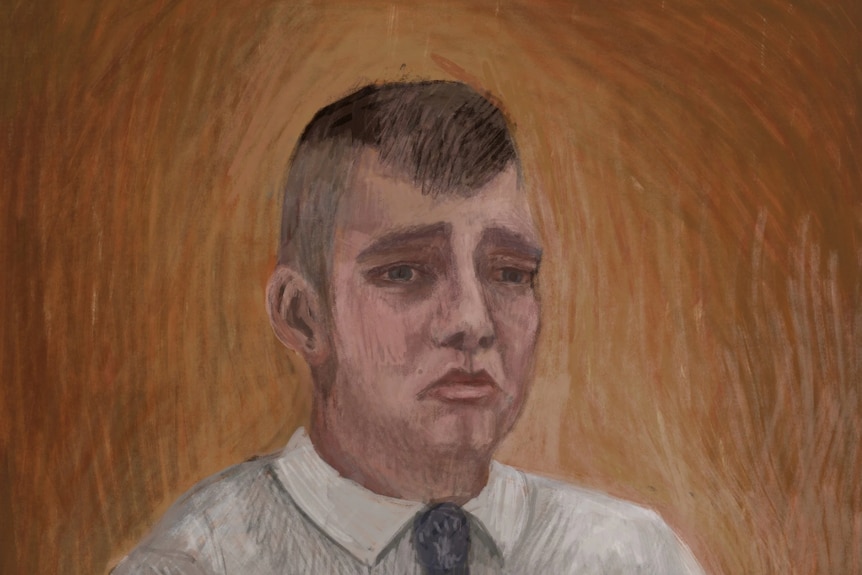 Lester has since taking the expressionistic quality to other cases, like this sketch of convicted murderer Lachlan Young. (Supplied: Anita Lester)
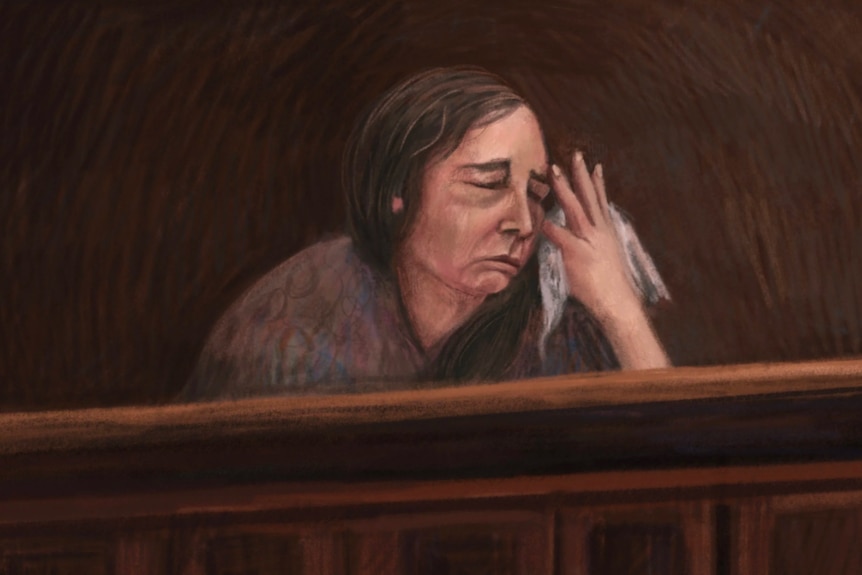 Patterson during her pre-sentence hearing. (Supplied: Anita Lester)
It was also a necessary reminder in exercising in “ego death”, something Lester has gotten good at since picking up the profession.
News outlets can often expect a sketch filed within the hour to make deadline.
“You have to be able to let go of your work way earlier than you are probably comfortable with,” Lester says.
“I think a lot of people have questions like, ‘How come this courtroom drawing is so bad?’ or ‘My kid could have done that!’
“It is because it is such a specific skill set.”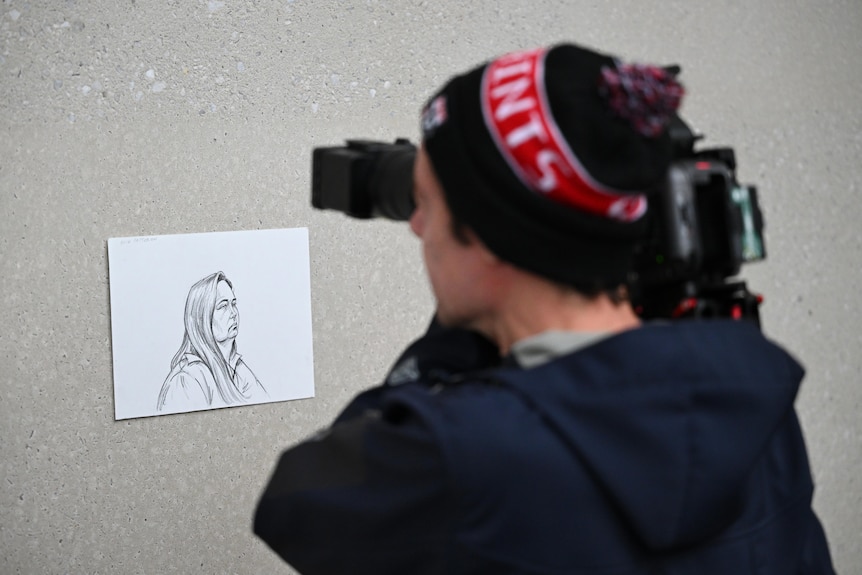 Fellow Patterson court sketch artist Paul Tyquin also saw his art picked up by multiple news outlets. (AAP: James Ross)’It’s always a challenge’
Fazzari has been a courtroom fixture since the 80s.
Part of the job’s intrigue, he says, is you never know how a court appearance will pan out.
“No matter how much practise or how much experience you have, it’s always a challenge,” Fazzari says.
It has led him to build a rough playbook of sorts.
First, he captures his subject’s likeness. Then with extra time, he adds in atmosphere. A moving hand. An outburst of tears.
Often a balance between drama and objectivity.
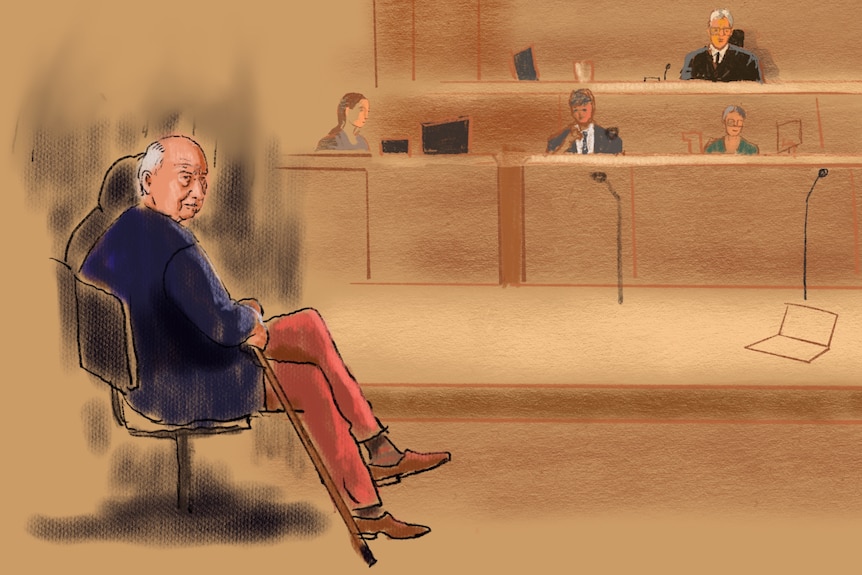 Broadcaster Alan Jones faces court on allegations of indecent assault. Mr Jones has denied all allegations and is defending the charges. (Supplied: Rocco Fazzari)
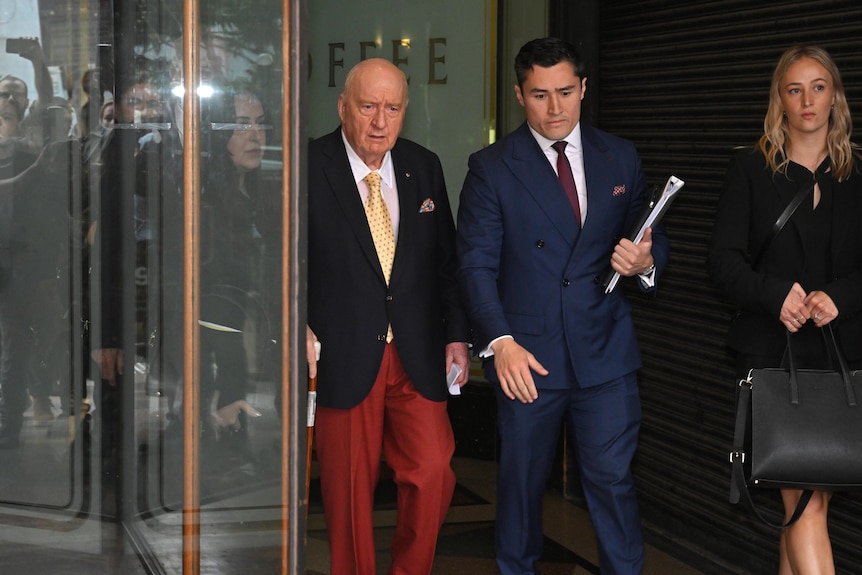 The photo of Mr Jones leaving court. (AAP: Mick Tsikas)
“My job is to be impartial,” Fazzari says.
“I don’t want to be in a position where I have overstated someone’s appearance.
“You can’t really bring your own personal view on the whole thing.”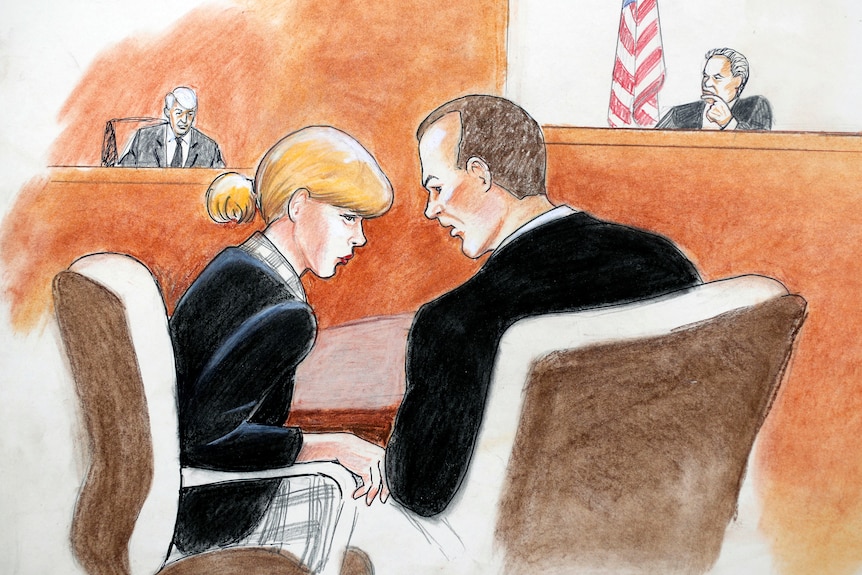 The perils of getting it wrong are also a risk. This court sketch of Taylor Swift made headlines in 2017 for its supposed lack of likeness.(AP: Jeff Kandyba)
Of course, there are some stories that have dragged Fazzari away from the sketchpad.
The young accused who decided to make his own courtroom sketch of Fazzari (“I think he should probably stick to crime,” he jokes.)
The corrupt former detective sergeant Roger Rogerson who fixed up his tie before the sketch.
“He turned towards me and went, ‘Hope it’s a good one, mate.'”
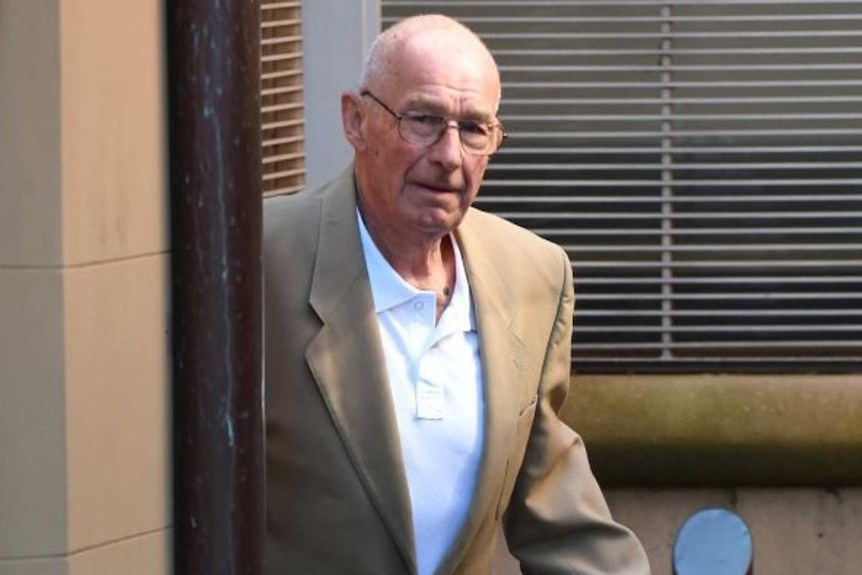 NSW detective Roger Rogerson was convicted of perverting the course of justice in 1992. (ABC: File)
Or Kathleen Folbigg — wrongfully convicted for the death of her four children — in a case that sticks with Fazzari for its equal parts complexity and tragedy.
It would be impossible to ignore the weight of decades of cases and the details he hears day-in day-out.
“It does affect you,” he says.
“There’s lots of cases that I’ve worked on that come back to haunt me.
“You hear the horrible things that people do to each other.
“But I do try to detach myself from that and focus on the challenge of getting the drawing done.”
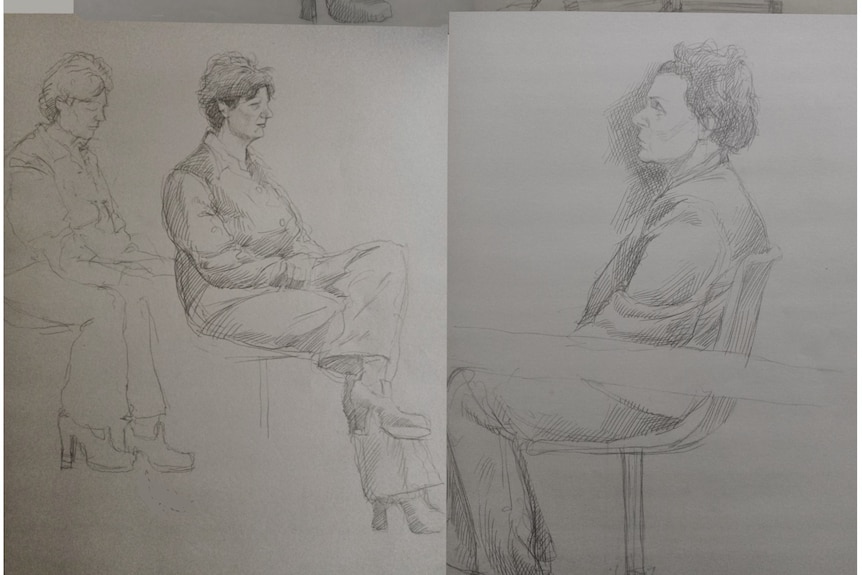 Fazzari says his sketches during Kathleen Folbigg’s 2003 trial may be some of his favourites. (Supplied: Rocco Fazzari)An evolving art form
Early in his career, Fazzari set up studio on the media bench with his watercolours.
Now, he uses an iPad.
It’s all part of how he has seen the craft and court change.
Lester was one of the first people to be allowed her digital tools inside a courtroom.
Now, it’s essentially assumed.
“That’s really interesting as a kind of an evolution of the art form,” she notes.
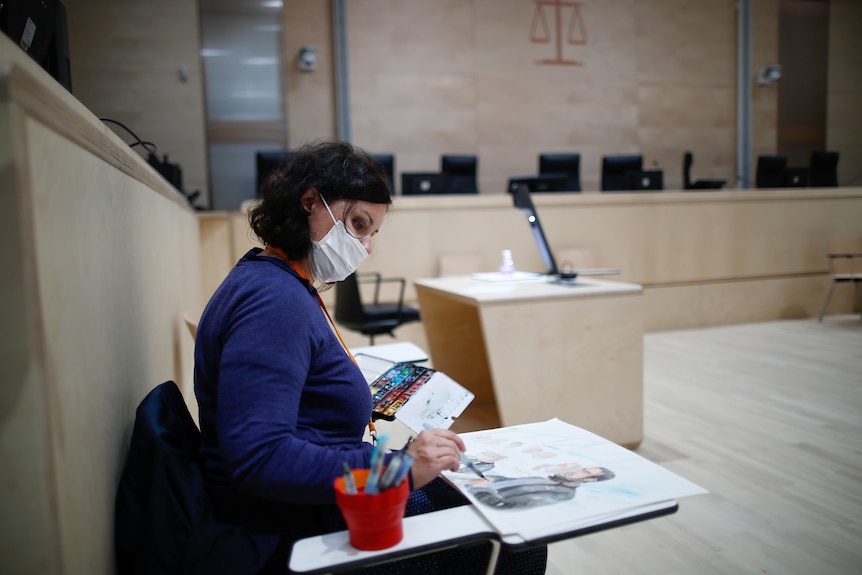 French court artist Elisabeth de Pourquery uses watercolours to paint her sketches. (Reuters: Gonzalo Fuentes)
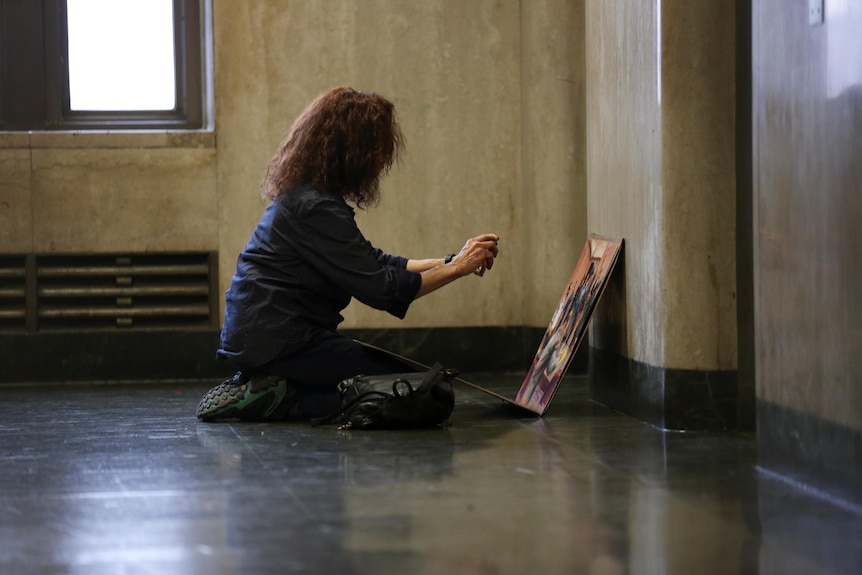 Now, many artists work in a digital world. (Reuters: Caitlin Ochs)
Some evolutions, like the increase in audio visual screens, came with COVID.
Others came with a shrinking newsrooms and shifting priorities.
Fazzari says there used to a daily place for his art, where now outlets are more focused on the big cases.
“It’s a matter of time and space in newspapers,” he says.
“The role of court reporting is changing in the sense that the media landscape generally is changing,” Dr Bosland posits.
“Budgets are becoming tighter and there are fewer dedicated court reporters.”
But several high-profile cases may also be leading a revival.
Veteran court artist Jane Rosenberg’s sketch of Donald Trump’s 2023 arraignment made the cover of The New Yorker in what Fazzari calls “a bit of a comeback”.
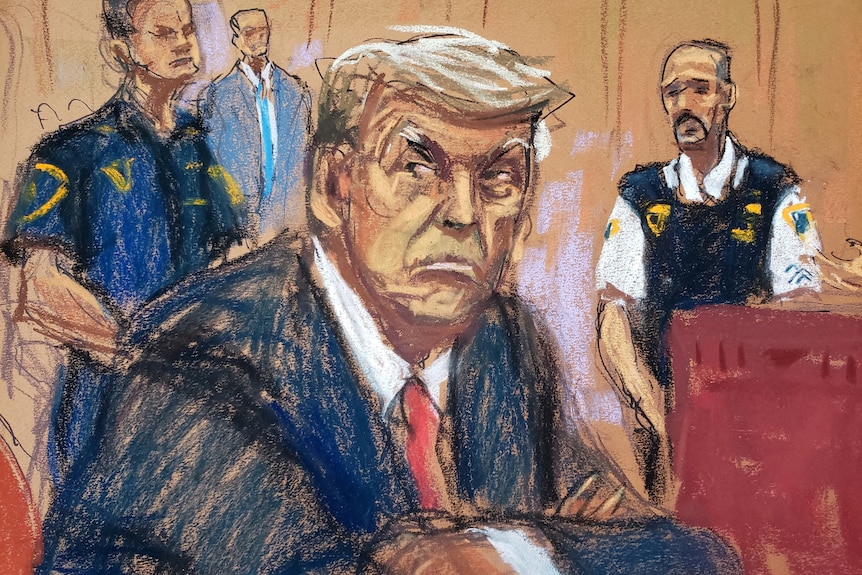 This sketch appeared on the April, 2023 cover of The New Yorker.(Reuters: Jane Rosenberg)
True crime buffs can attend sessions in Sydney’s King Street courts to sketch like a pro.
Lester says she is regularly asked by people how they get can their foot in the door.
“That [Patterson] sketch was responsible for a little bit of a renaissance in in the art form,” she says.
“And like I said, it’s got nothing to with me, it’s got everything to do with the folkloric nature of that particular case.”
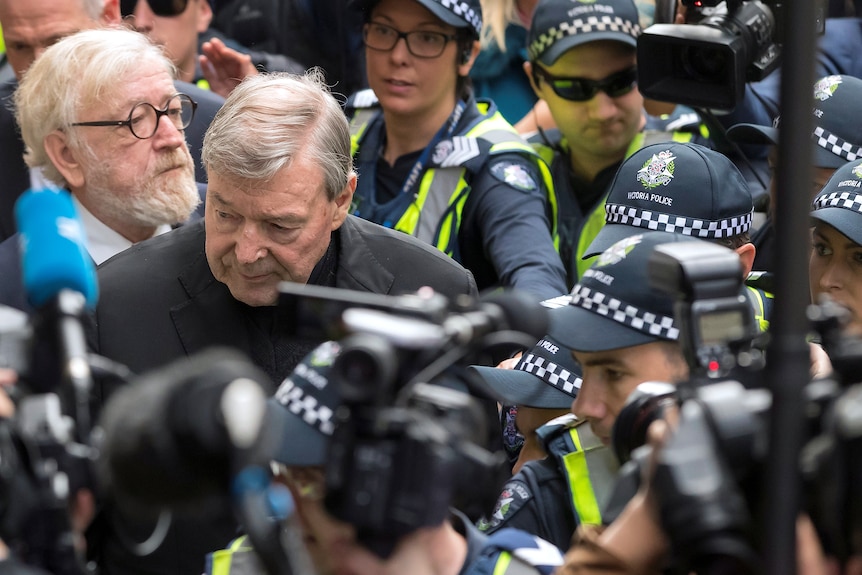 Vatican Treasurer Cardinal George Pell is surrounded by Australian police and members of the media as he leaves the Melbourne Magistrates Court in Australia, July 26, 2017. (Reuters: Mark Dadswell)
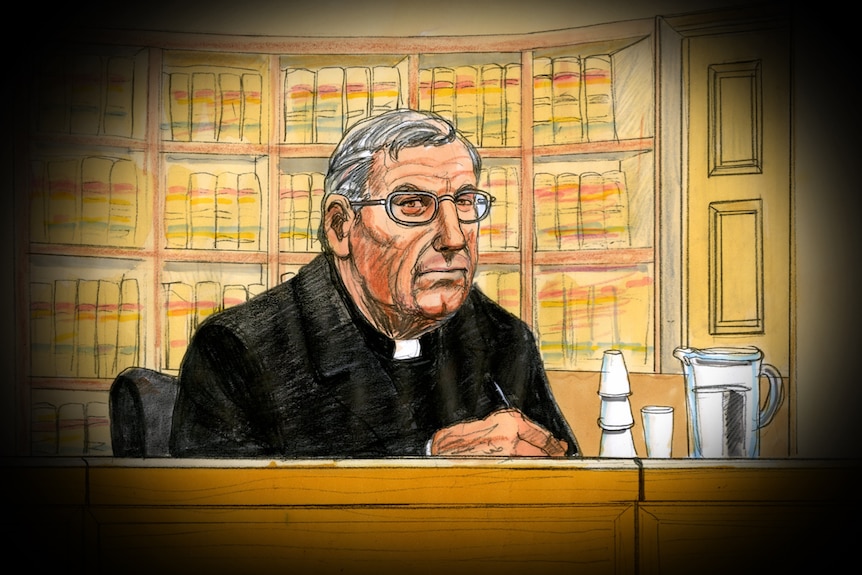 A much later sketch of Cardinal Pell as he appeals his conviction for sexually abusing two boys in the 1990s. He was later acquitted of all charges.(AAP: Jeff Hayes)
Both Lester and Fazzari find it hard to imagine a day when cameras will fully overtake their role.
There are concerns over the privacy of the accused and also alleged victims.
They also believe a drawing captures more than just photo realism.
“The court sketch adds a sense of drama and atmosphere,” Fazzari says.
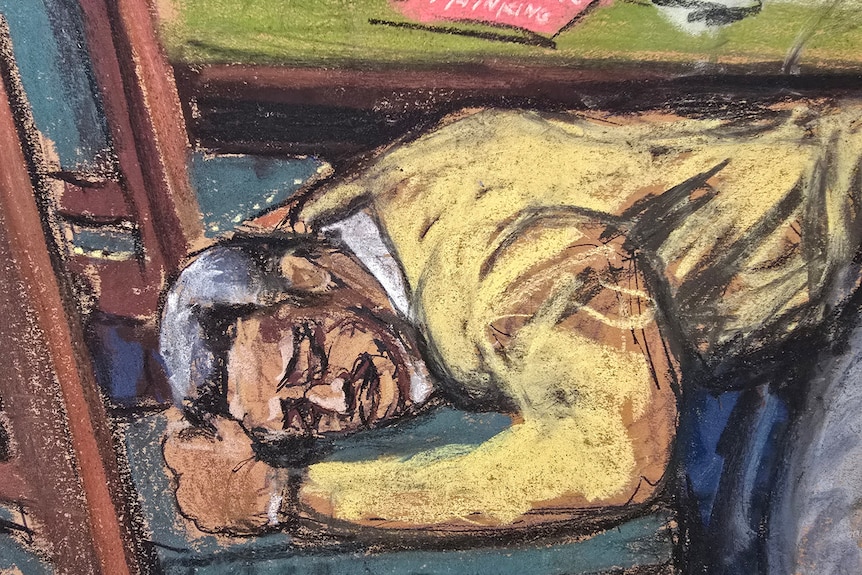 An emotional Sean “Diddy” Combs reacts after verdicts are read in his sex trafficking trial. (Reuters: Jane Rosenberg)
“I think that it is really one of the remaining art forms that has a function,” Lester says.
“You can’t feel a photo, but you can feel art.
“You can feel it in the strokes of the pencil and brushes and the colours and directions.
“All of these qualities of drawing really shine in the storytelling context of the courtroom”