
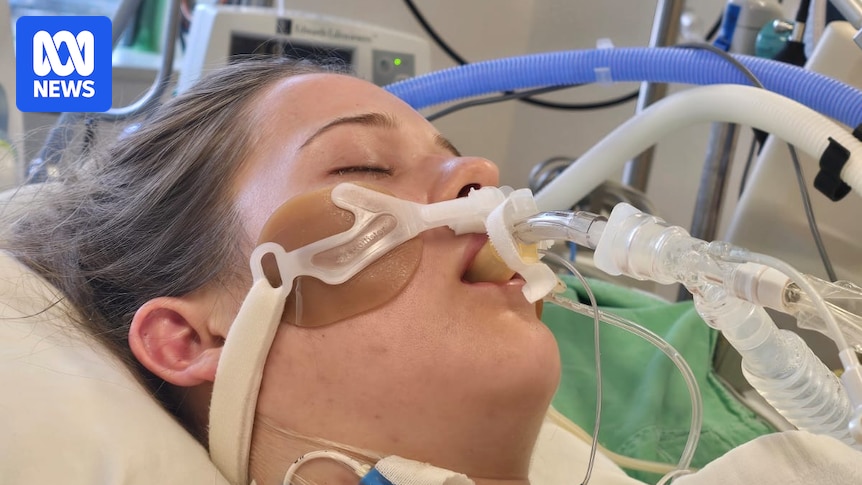
Anna Gallo’s voice sounds remarkably clear for someone who was on death’s door less than a fortnight ago.
It’s 10am in Tokyo when she answers the phone.
“A nurse has just come in, sorry,” she says.
“It’s OK, she’s going to come back later.”
This tightly-tucked hospital bed has been the centre of the 24-year-old’s universe since she woke from a coma on February 10.
It is a stark contrast to the month she and her partner, Liam McDonald, had just spent traversing Japan — a flurry of ski slopes, kimonos, and karaoke bars.
It was a dream trip until the very last night.
“We were supposed to catch the plane home that night when everything went downhill very quickly,” Anna says.
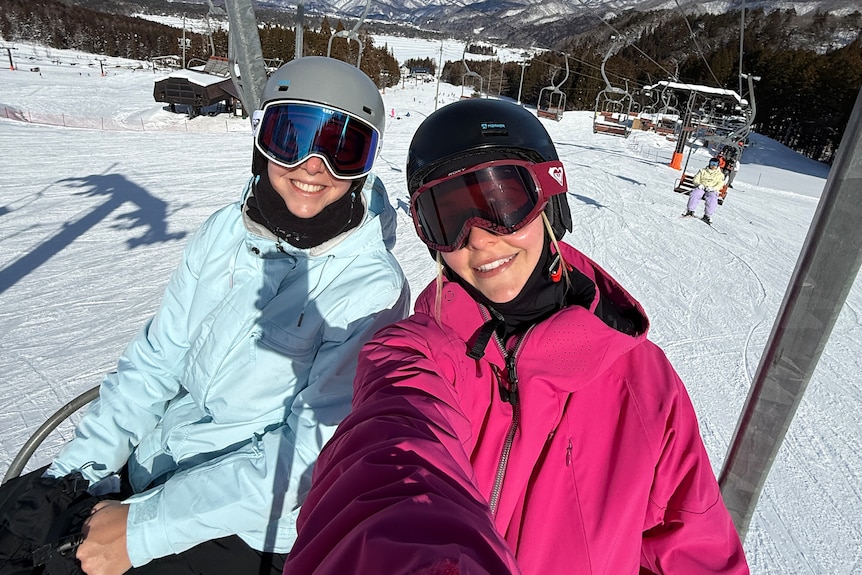
Anna Gallo (right) met up with friends on the ski slopes of Hakuba. (Supplied: Anna Gallo)
From ski slopes to septic shock
The young Queensland couple were hunkered down in their Tokyo hotel room when Anna woke up shivering on the night of February 5.
The shivering soon gave way to shaking. Then came the uncontrollable vomiting.
“I actually fainted on the toilet, which my partner woke up to,” Anna says.
“He thought I was basically dead, but he woke me up.”
Suspecting food poisoning, the pair held out hope they would still make their flight.
But by 4pm — just four hours before take-off — Liam noticed something that changed everything.
A rash of red spots was blooming all over Anna’s body.
It was a sign of septic shock — a life-threatening complication where the body’s immune response attacks its own organs.
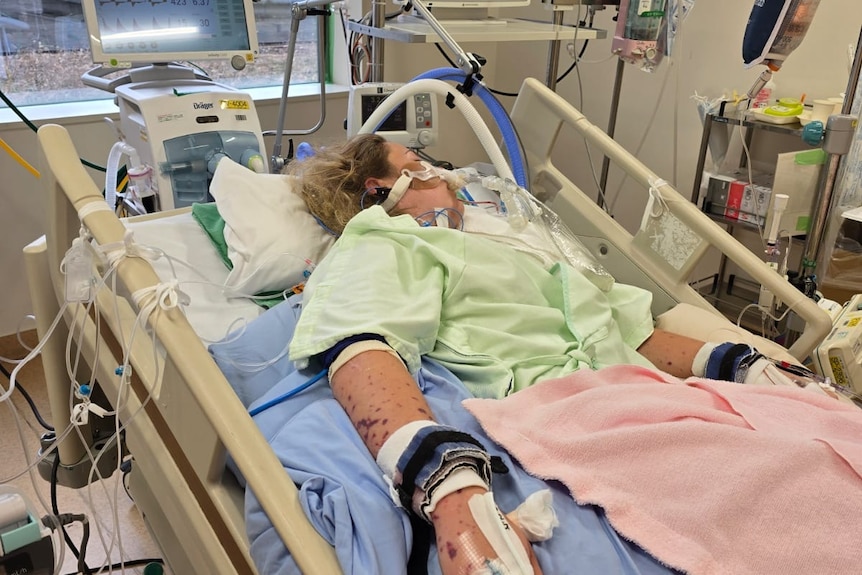
Anna Gallo was in a coma for three days after contracting meningitis in Japan. (Supplied: Anna Gallo)
The two-hour window
Liam called an ambulance.
Anna was delirious and flailing and had to be strapped to a stretcher to avoid injuring herself en route to hospital.
She has had to piece her own story together from the traumatic recollections of others.
“The ambulance said if [Liam] hadn’t have got me there within two hours, I would have died,” she says.
Doctors at Tokyo’s National Center for Global Health and Medicine diagnosed Anna with meningococcal B, which had rapidly escalated into meningitis and septic shock.
She fell into a three-day coma, her life suspended by machines and intravenous antibiotics.
She remembers nothing of those lost days, but they are chiselled into her mother’s memory.

Anna Gallo’s dream holiday to Japan included a Mario Kart-style go-kart tour through the streets of Tokyo. (Supplied: Anna Gallo)
Silence at 30,000 feet
While Anna was in a coma, her Atherton-based parents Ghis and Adrian Gallo were living a nightmare in real-time back in Australia.
Their daughter’s boyfriend was giving them updates on the phone whenever he had news to share.
“She’s sick.”
“She’s getting worse.”
“We’re going to hospital.”
The final call came as they stood at the check-in gate at Cairns International Airport, preparing to fly to her bedside.
“The doctor told us her blood pressure was now dangerously low, she’d had a blood transfusion, and she needed to be intubated,” Ghis recalls.
“We asked if she was going to be OK? He said, ‘I don’t know.'”
The Gallos spent the next eight hours over the Pacific Ocean wondering if their daughter would still be alive when they landed.
“We must have said to each other a hundred times, ‘Is this real?'” Ghis says.
“It just didn’t feel real.”
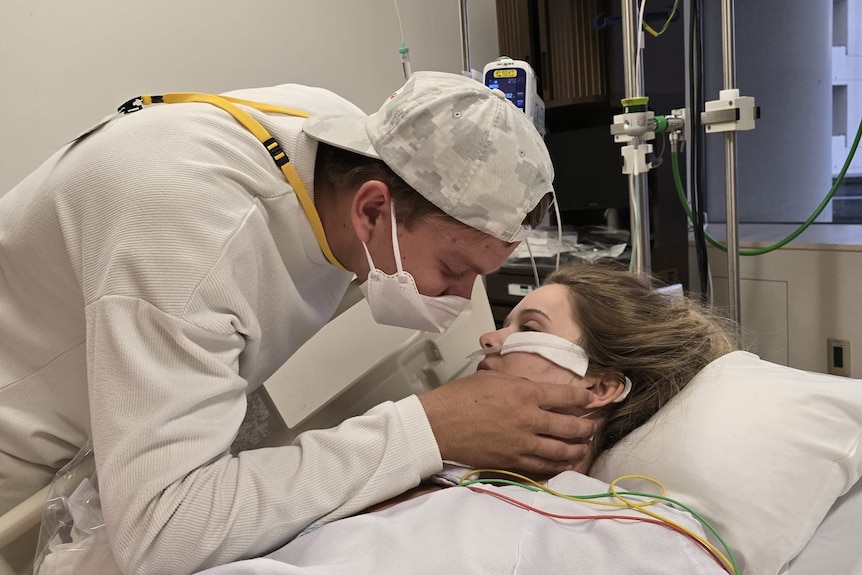
Liam McDonald cares for his partner Anna Gallo after she wakes from a coma. (Supplied: Anna Gallo)
An empty ICU bed
The news was grim when they arrived in Tokyo.
A doctor warned them that their daughter may never wake up from her coma.
If she did survive, he said there was a high chance she would have permanent brain damage.
“I was so angry that he even suggested it,” Ghis says.
“But I guess he had to.”
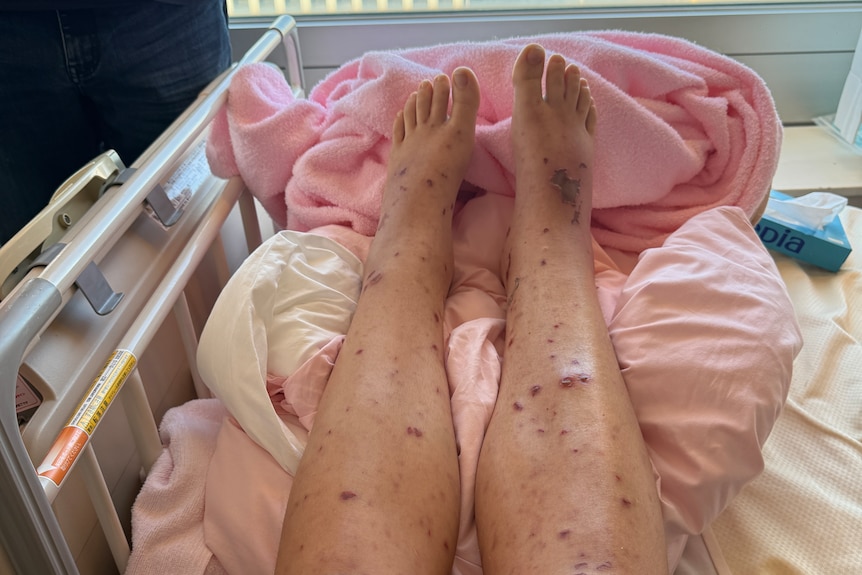
Anna’s legs and feet still have serious necrotic lesions, which will require treatment back in Australia. (Supplied: Anna Gallo)
Their daughter was lying there with tubes and wires poking out from all over her body.
“I watch a lot of ER-type shows, and it was exactly like that,” Ghis says.
The following day, they returned to the ICU to find Anna’s room empty.
Panic set in.
“I started freaking out. Where is she? What’s happened?” Ghis says.
But Anna hadn’t been moved out because of a decline.
She had been trundled out of intensive care and into high care.
“She was sitting in bed, her eyes were open, and the tube was out,” Ghis says.
“She was awake.”
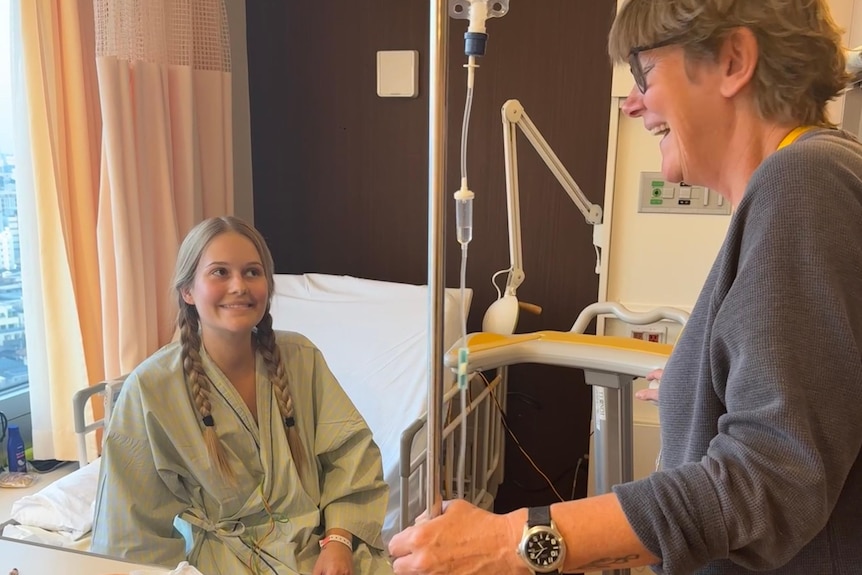
Ghis Gallo celebrates her daughter Anna’s incredible recovery after her near-death experience. (Supplied: Anna Gallo)
Australia’s vaccine gap
Anna is now preparing to return home.
She still cannot walk due to necrotic lesions — patches of dead or dying tissue — on her feet and legs. Painful reminders of how close the bacteria came to winning.
There is one detail she keeps coming back to.
“I was vaccinated for meningococcal back in school, but not for type B, which is the kind I got,” she says.
Queensland has had a free, state-funded immunisation program for meningococcal C since 2003 — upgraded to a “four-in-one” vaccine that covers the A, C, W and Y strains in 2017.
But free type B vaccinations — using the drug brand Bexsero — only started rolling out in March 2024.
South Australia is the only other state with a similar program.
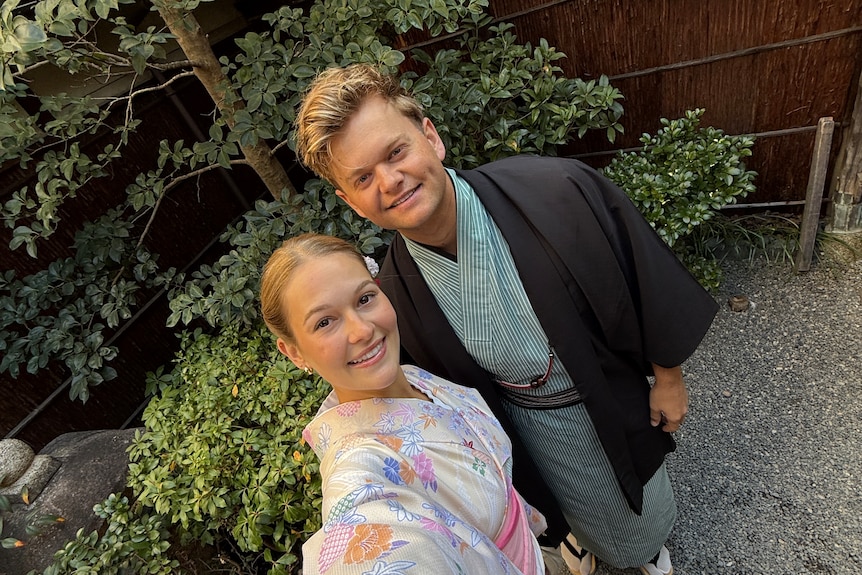
Anna Gallo and her family credit her partner Liam McDonald with saving her life. (Supplied: Anna Gallo)
Mater Health Services director of infectious diseases Paul Griffin says Anna’s story is a reminder of why Australia needs a consistent national immunisation program.
“Because it’s relatively rare, people perceive the risk as low,” he says.
“But the consequences can be devastating.
“We need as many people protected as we can.”
Japan is not some hotspot for this disease, either.
The country recorded an average of fewer than five confirmed cases per year between 2003 and 2020.
Australia had 109 cases in 2024 alone.
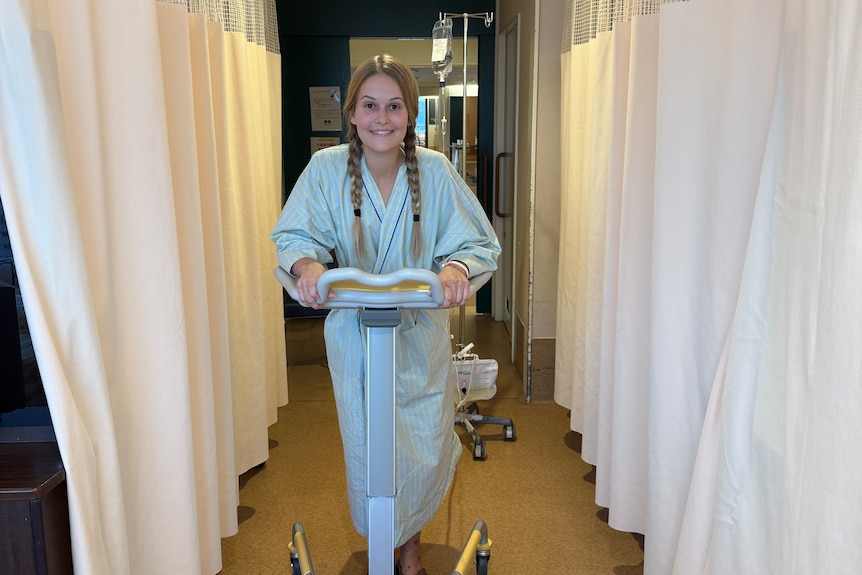
Anna Gallo, originally from Atherton but now living on the Gold Coast, undergoes rehab work to start walking again. (Supplied: Anna Gallo)
Homebound at last
A week and a half after waking from a coma, Anna’s hair is brushed and plaited.
Her brain scans have come back perfect.
The lesions will take time to heal, and the scarring will be permanent.
But she is alive.
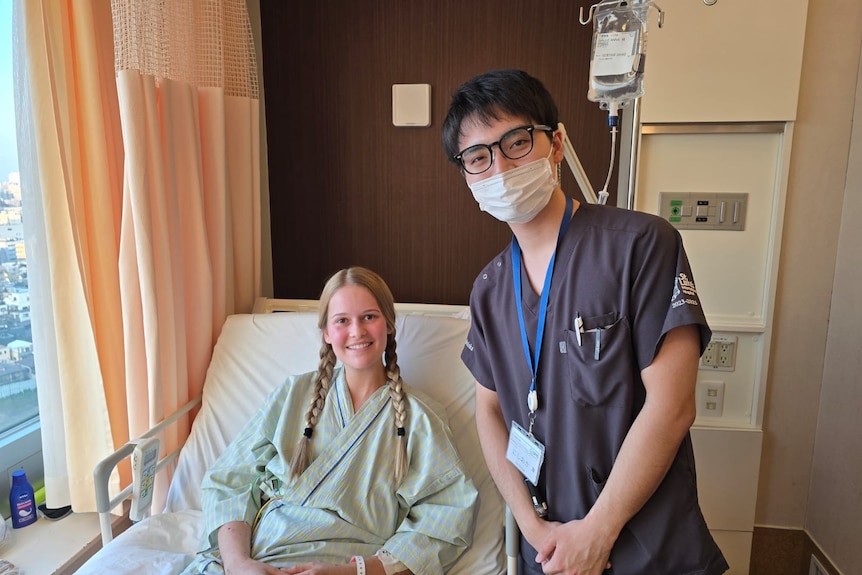
Anna Gallo says she is grateful for the treatment she received in Japan and the travel insurance that covered the costs. (Supplied: Anna Gallo)
She started a new job at Griffith University on the Gold Coast just a fortnight before her trip and hopes to return to work as soon as possible.
“I’m just so grateful,” she says.
“I’ll definitely cherish every day from now on.”