
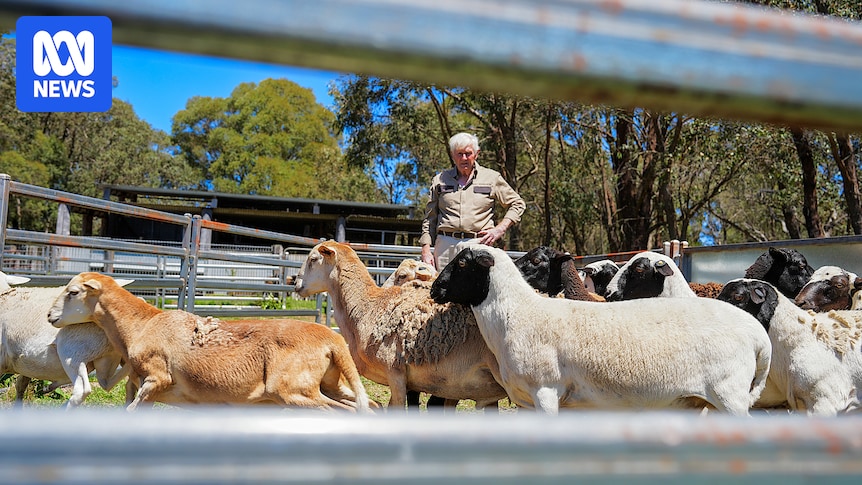
Frank Egan imagined he would spend the rest of his days peacefully farming the English Suffolk sheep he had been running for more than 20 years.
But when his wife became sick and needed his care, he was faced with a choice.
“It was give up the wife or give up the sheep,” he said.
It was a fork in the road that ultimately led to a years-long “experiment”, which transformed the way the 83-year-old farms and has also helped expats feel more at home in Australia.
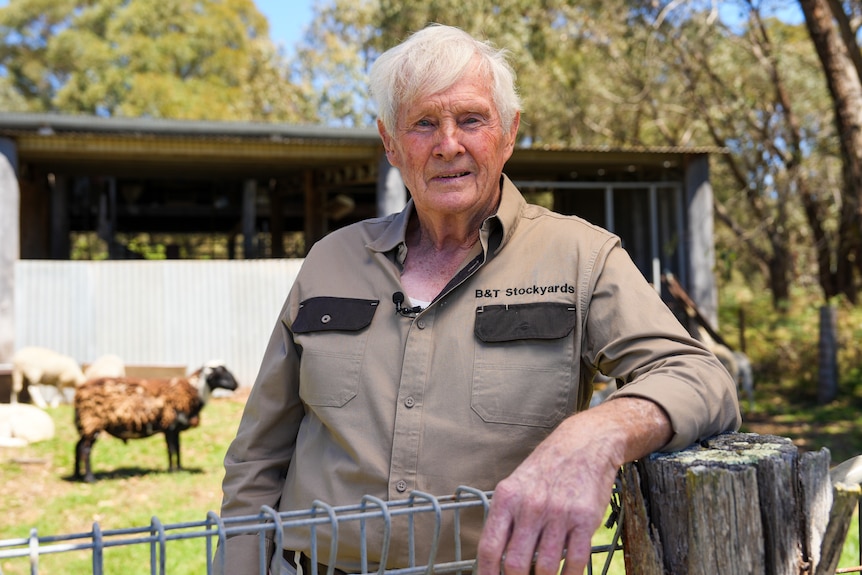
Braidwood farmer Frank Egan was forced to sell off his flock of English Suffolk sheep to care for his wife. (ABC News: James Tugwell)
Building a composite herd
Mr Egan researched animal breeds that required less hands-on maintenance so that he could keep farming.
“I have to have some stock on the place otherwise I’m going to get too fat and so will the dogs,” he said he thought at the time.
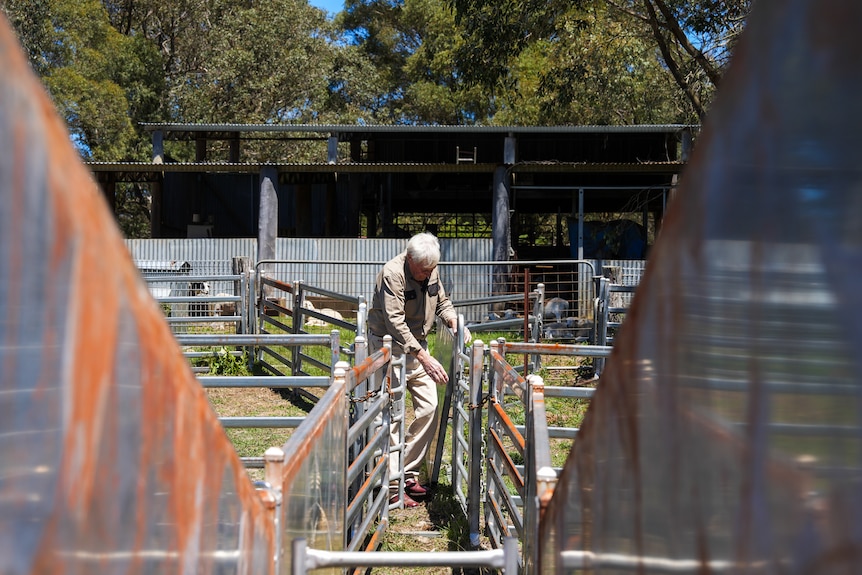
Mr Egan said his experimental approach was the only way he would have been able to continue farming. (ABC News: James Tugwell)
He bought a total of 100 head of nine different purebred sheep species — from Iran, across Africa, the UK and Australia.
The purebreds each had a narrow gene pool, including traits Mr Egan thought were suitable for his environment.
He picked out animals with desirable characteristics — no wool, no horns and no tails — and let them naturally crossbreed.
Like a 16th-century peasant
Seven years later, he now has a flock of unusual-looking “naturally adapted composites” and a farming approach reminiscent of a 16th-century peasant, he said.
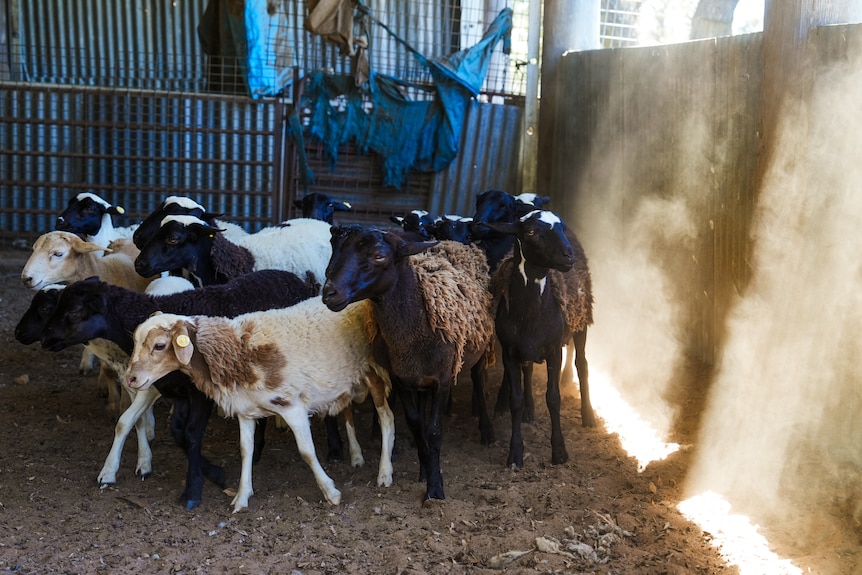
The naturally adapted composites on Mr Egan’s farm have never been vaccinated nor drenched. (ABC News: James Tugwell)
“This flock has not been vaccinated or drenched for six generations,” Mr Egan said.
“My sheep come into the yards once a year to get an ear tag. The rest of the time they’re just out there.”
He said his approach was to “change the livestock to suit the landscape, don’t change the landscape to suit the livestock”.
It has saved him time as well as money on pharmaceuticals, he said.
But when he tells other farmers, their eyes often roll back in their heads.
“The reply has been ‘are any of your sheep still alive?’ Yeah — they’re alive and thriving and I’m looking after their health,” Mr Egan said.
“You’ve got to get their natural immunity back up where it should be. Years of line breeding with the same genetics weakens the animals.”
Around 20 per cent of adults died in the first few years, he said, but now “each generation is naturally healthier and stronger than the one before it.”
Suppling local restaurants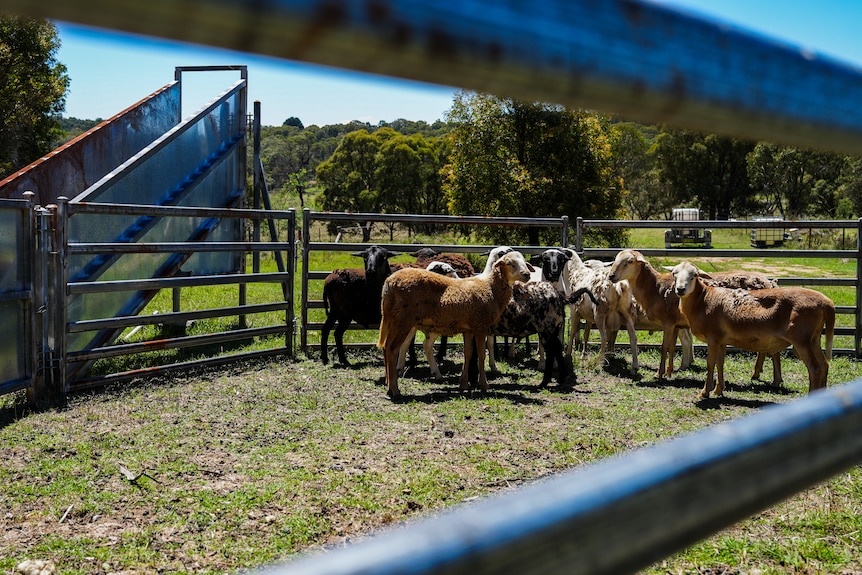
Mr Egan said his lamb meat was less fatty than that traditionally sold in Australian supermarkets. (ABC News: James Tugwell)
Mr Egan sells his sheep to hobby farmers wanting a low-maintenance pet, and has begun supplying local, expat-run kitchens in Braidwood in the Southern Tablelands of New South Wales.
He said his meat was appealing to chefs cooking Middle Eastern, Asian and Indian cuisines.
“The meat from these sheep is different,” Mr Egan said.
“You don’t grill it, you don’t fry it, you don’t roast it. It’s a meat that’s designed for curries and casseroles.
“You can’t compete against the people that supply Woolies and Coles, but you can find a little niche.”
Mr Egan said supplying local kitchens was “proof of concept”.
“What I’ve spent all these years doing actually works,” he said.
Like coming home to Java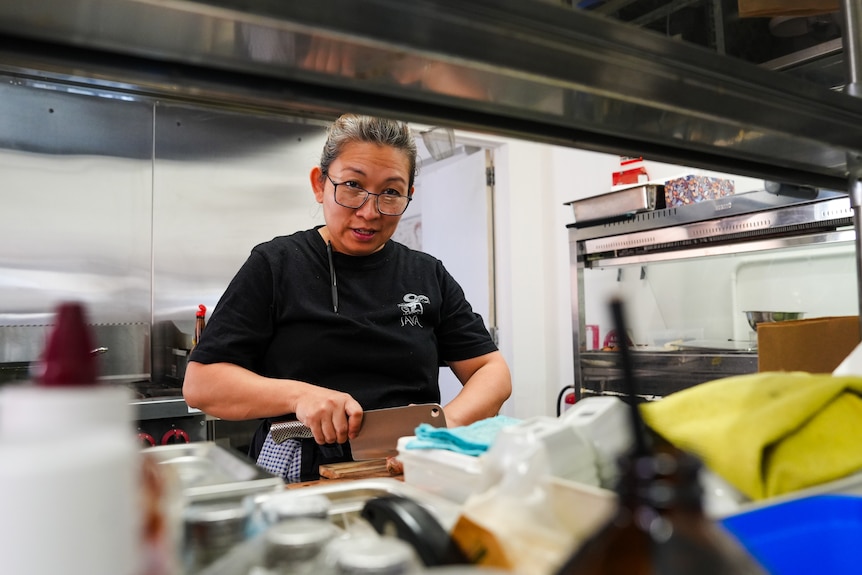
The owner of an Indonesian restaurant in Braidwood, Daniar Robinson, says the flavour of Mr Egan’s lamb suits her native cuisine. (ABC News: James Tugwell)
When Daniar Robinson moved from Indonesia in 1999, she found Australian flavours were no match for those of her homeland.
“I missed a lot of Indonesian food — the complexity of the flavour,” she said.
She now runs a local Indonesian restaurant in Braidwood, just 20 minutes from Mr Egan’s farm.
“He gave me a sample of his lamb, and the taste just reminds me of the goat meat in Indonesia,” she said.
“I put in some roast garlic, I put in some turmeric and boom — it was amazing.
“And the smell — it doesn’t smell like lamb. It’s hard to describe, but you can taste it.”
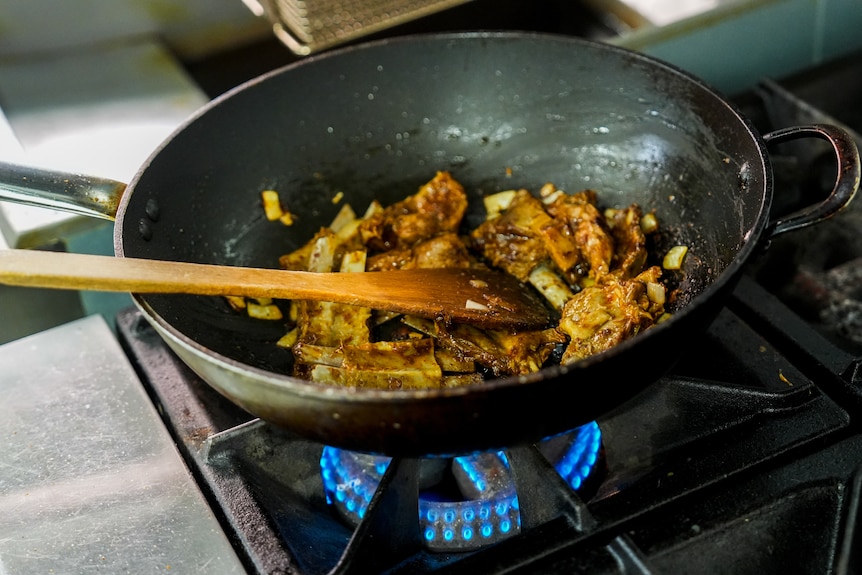
Ms Robinson said the smell of the lamb cooking was completely different to traditional supermarket products. (ABC News: James Tugwell)
Ms Robinson “never imagined” she’d be eating meat like that in Braidwood.
“I feel thankful and grateful that Australia managed to grow everything we need,” she said.
“We don’t need to travel to Indonesia just to get this flavour.”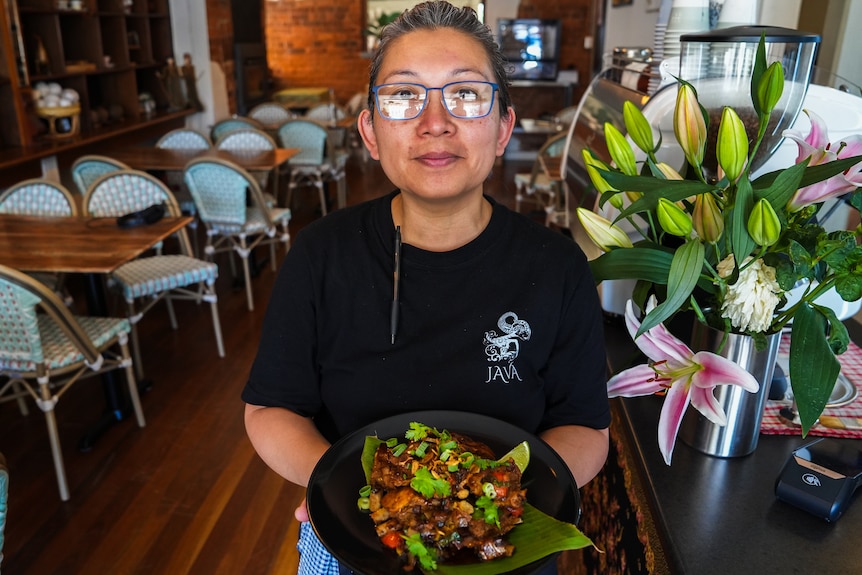
When Ms Robinson moved to Australia she missed the taste of Indonesian food. (ABC News: James Tugwell)
Tucking into what Ms Robinson called an “experimental stir fry”, Mr Egan grins in delight.
“They may not look pretty, but they taste bloody good,” he said.