
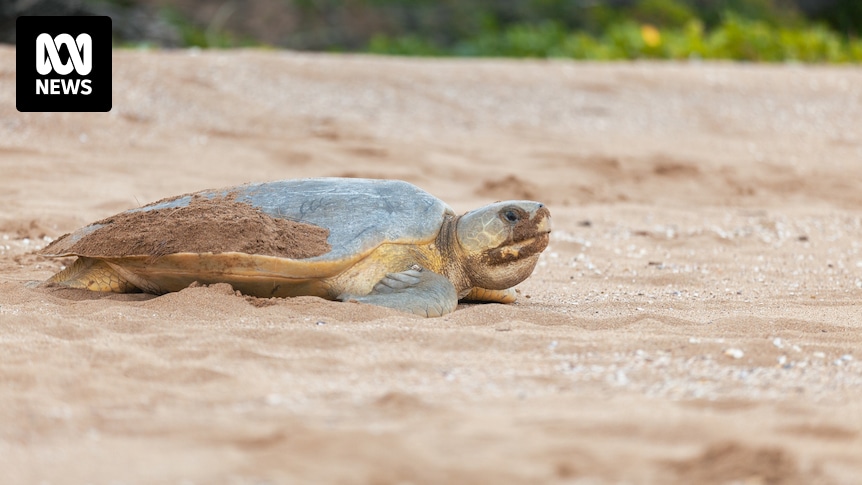
At first light on Bucasia beach, Joely Whiting scans the sand for tracks most people would miss.
Report a sick or injured turtle:Marine Stranding Hotline 1300 130 372QWildlife App
For more than 30 years, volunteers like Ms Whiting have walked Mackay’s beaches at dawn, counting turtle nests and quietly guarding the future of a vulnerable species.
Now, they’re getting the community on board.
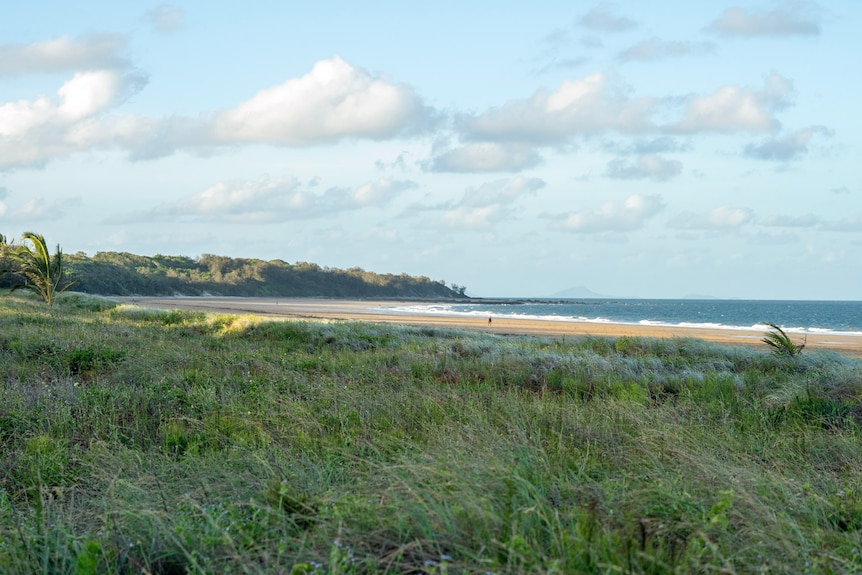
Bucasia beach’s well-vegetated sand dunes offer prime turtle-nesting habitat. (ABC News: Yasmine Wright Gittins)
The faces of local action
Climate and development pressures have increased for marine turtles globally.
Flatback turtles, a vulnerable species endemic to Australia, nest along the Mackay coast.
By February, almost all hatchlings from 36 nests along Bucasia and Shoal Point beaches had emerged.
Mackay and District Turtle Watch volunteers returned to excavate nests and collect data.
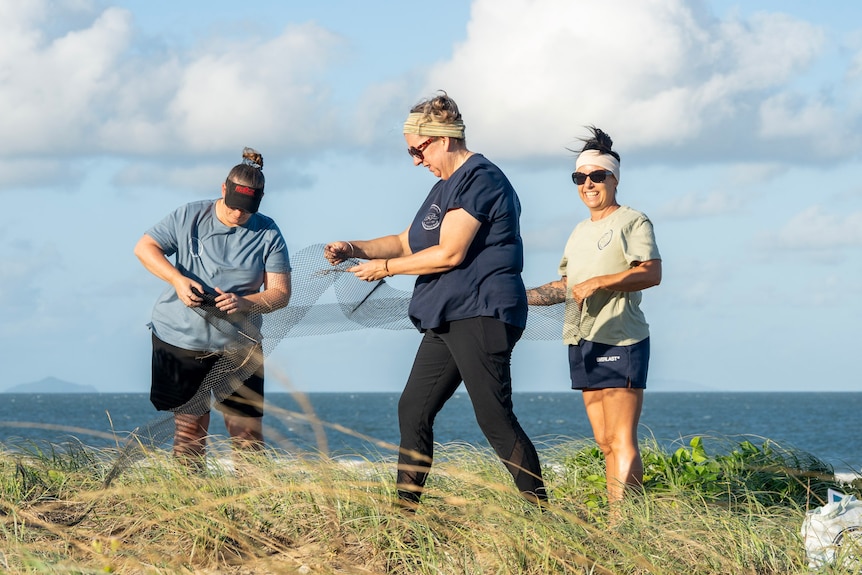
The Turtle Watch volunteers monitor more than 5km of shoreline. (ABC News: Yasmine Wright Gittins)
Armed with a permit, buckets, a notebook and pen, the three volunteers make their way to a section of sand dune ringed by mesh fencing. Their routine is well practised.
“We’re just checking the eggs and the success of the nest. We like to see lots of empty shells,” Ms Whiting said as the team recorded undeveloped eggs and hatch rates.
Loading
This nest yielded 53 eggs, most of which successfully hatched. It’s a good outcome.
But not every survey ends this well.
Saving ‘doomed nests’
The association’s president, Steve Fisher, said turtle populations on the Mackay coast had stabilised recently, despite seasonal fluctuations.
“There’s probably been some actions which have taken place over the last 30 years which have helped stabilise those numbers,” he said.
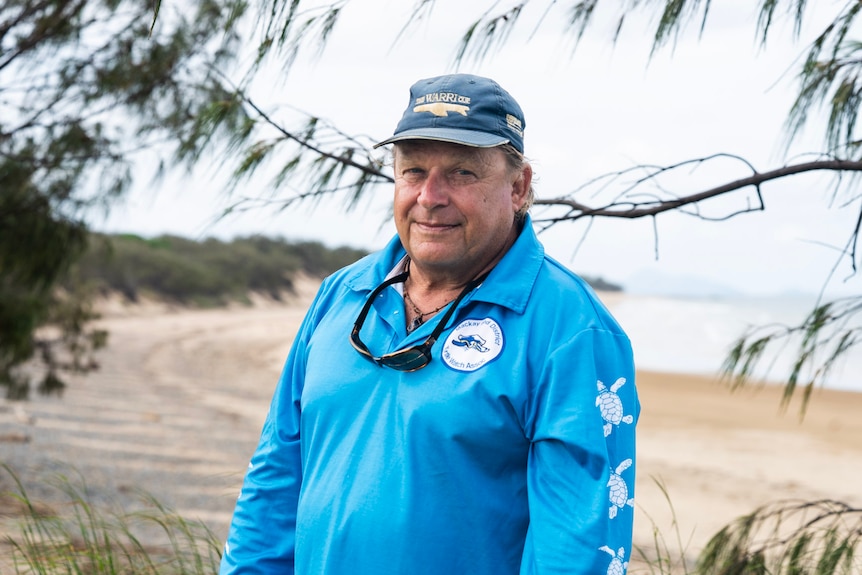
Steve Fisher has seen the Mackay and District Turtle Watch association evolve in the past three decades. (ABC News: Yasmine Wright Gittins)
While monitoring remains central to their work, the group’s volunteers increasingly intervene when nests are under threat.
“The official term is a doomed nest,” Mr Fisher said.
Coastal development, erosion, and king tides threaten nests, while extreme temperatures can skew the embryos’ gender and survival.
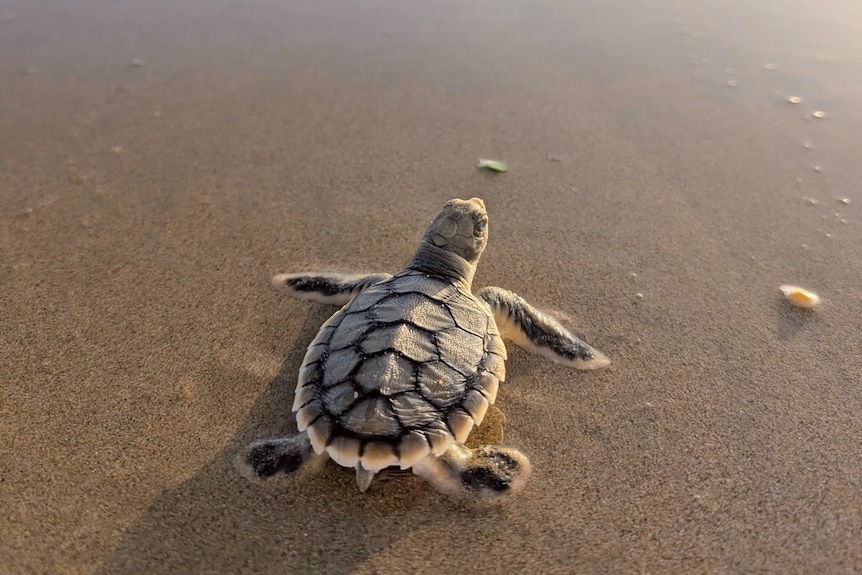
A hatchling from the excavated nest at Bucasia beach in Mackay. (Supplied: Joely Whiting)
In these cases, trained volunteers will delicately transfer the eggs to a safer position.
“It’s trying to put some favours back in the balance of the turtles,” Mr Fisher said.
“There are threats that happen when they’re in the water that we have no control over, but we do have the ability to undertake conservation and support turtle populations on our beaches.”
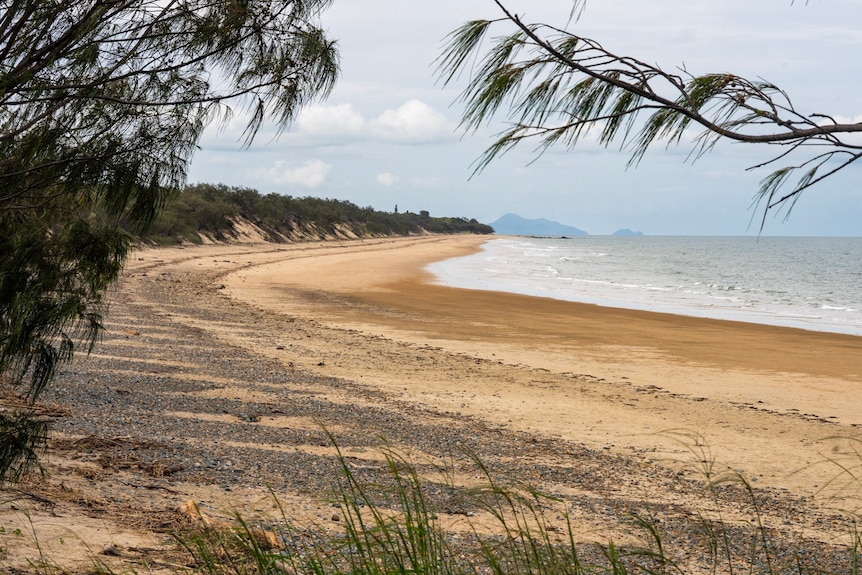
The parabolic dune formations that support turtle nesting in the Mackay region have been eroded in places like North Wall. (ABC News: Yasmine Wright Gittins)
The years of monitoring have helped build the case for stronger protections along Mackay’s beaches.
Beach driving ban
In 2024, the Mackay Regional Council introduced a ban on driving on the beach at East Point in Mackay’s north.
Before the ban, volunteers would find hatchlings trapped in grooves left by four-wheel-drive tyres. In worse cases, nests get crushed.
“It was causing huge environmental damage,” Mackay Mayor Greg Williamson said, citing aerial shots of the dunes, which showed degradation of dune vegetation over the previous years.
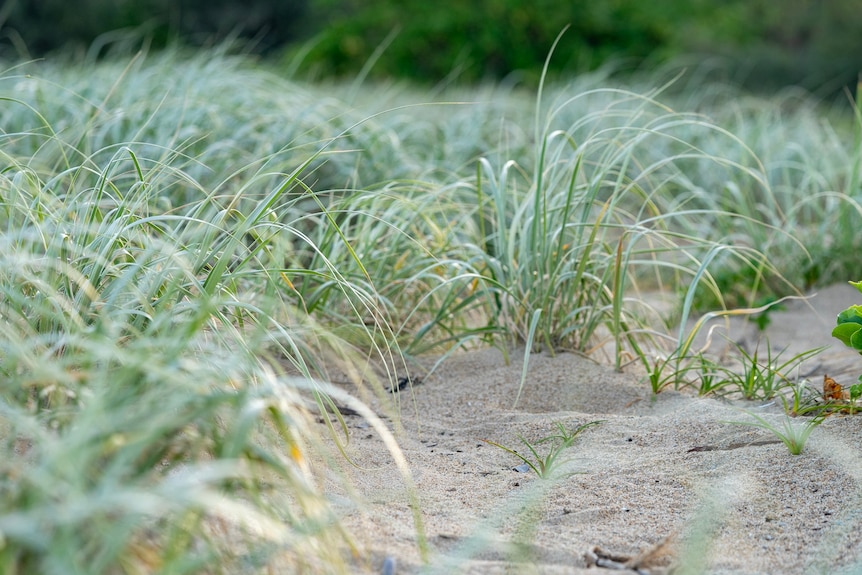
Vegetation is critical to a healthy dune ecosystem. (ABC News: Yasmine Wright Gittins)
The decision was met with backlash, with some drivers ignoring the signs and barriers until the council enforced an $800 fine.
“It hasn’t stopped, but it has significantly improved,” Cr Williamson said.
Changing attitudes
The Turtle Watch association has focused heavily on shifting community attitudes.
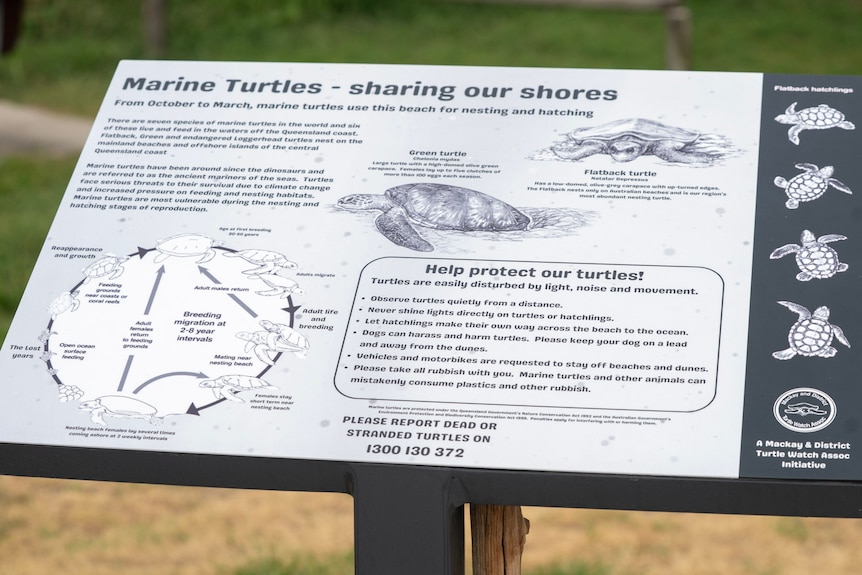
The Mackay and District Turtle Watch association has been working to educate beachgoers about turtles in the region. (ABC News: Yasmine Wright Gittins)
Mr Fisher said social media had become a powerful awareness tool to reach those not already aware of the turtles.
“It’s really starting to swing,” he said. “People now understand there are turtles on their beaches and are becoming more and more protective.
“It’s quite a good community feel along the beaches.”
‘Ancient mariners’
Libby Edge, manager of the Whitsunday Turtle Rescue Centre, said public awareness in the broader region had improved rescue outcomes.
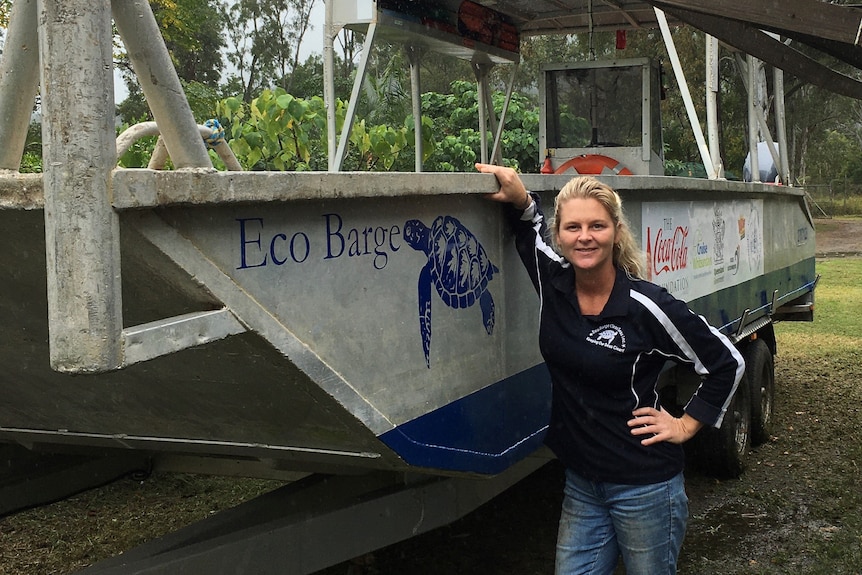
Libby Edge is the founder of Eco Barge, which runs the Whitsunday Turtle Rescue Centre. (Supplied: Whitsunday Turtle Rescue Centre)
“What I have noticed is the confidence that our locals have in rescuing turtles now,” she said.
Ms Edge said the recovery rate was nearing 100 per cent because the public was able to safely rescue turtles and bring them into the centre.
“The relationship humans have with turtles is amazing” she said.
“They are our ancient mariners of the sea.”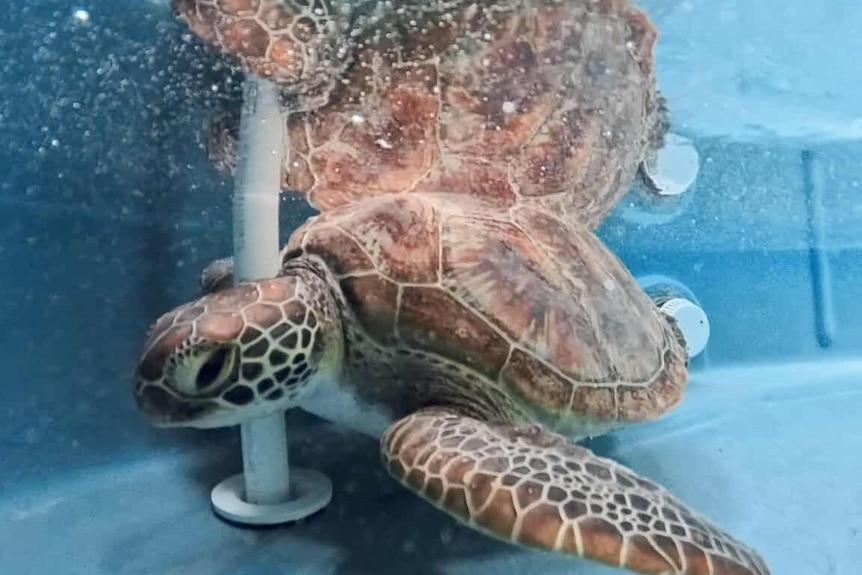
A recovering turtle at the Whitsunday Turtle Rescue Centre. (Supplied: Whitsunday Turtle Rescue Centre)
An ‘honour’ to help
The volunteers may never know if each of the tiny hatchlings scrambling toward the ocean will survive the decade-long, treacherous journey to maturity.
“It’s a real honour to be trying to help get those babies out there as much as you can,” Turtle Watch volunteer Skye Barron said.
“They say one in 1,000 comes back to nest on the beach. Hopefully, some of those babies make it back here one day, and hopefully there’s enough beach in that time for them to come back and nest on.”
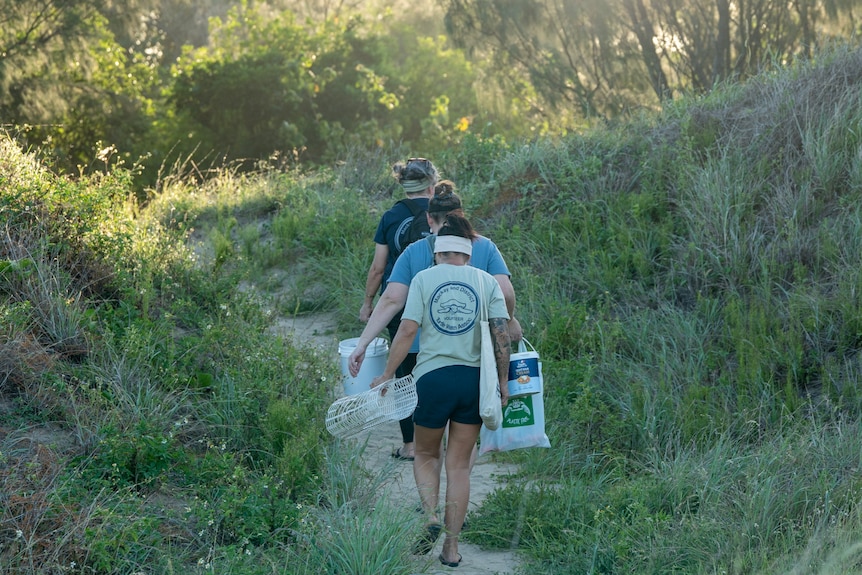
The Turtle Watch volunteers said they always miss the early morning walks together when the nesting season finishes. (ABC News: Yasmine Wright Gittins)
By the time the next generation returns, Ms Whiting and Ms Barron may no longer be walking these beaches at dawn.
But they hope someone will be.