

It is known for reducing stress, improving sleep, and is even used for cleaning.
But despite an Australian lavender industry dating back to the 1850s, you are more than likely using an imported and “watered-down” product, according to the lavender growers association.
Phe and Ken Viljoen have been growing Grosso lavender for 24 years in Milthorpe, Central West NSW.
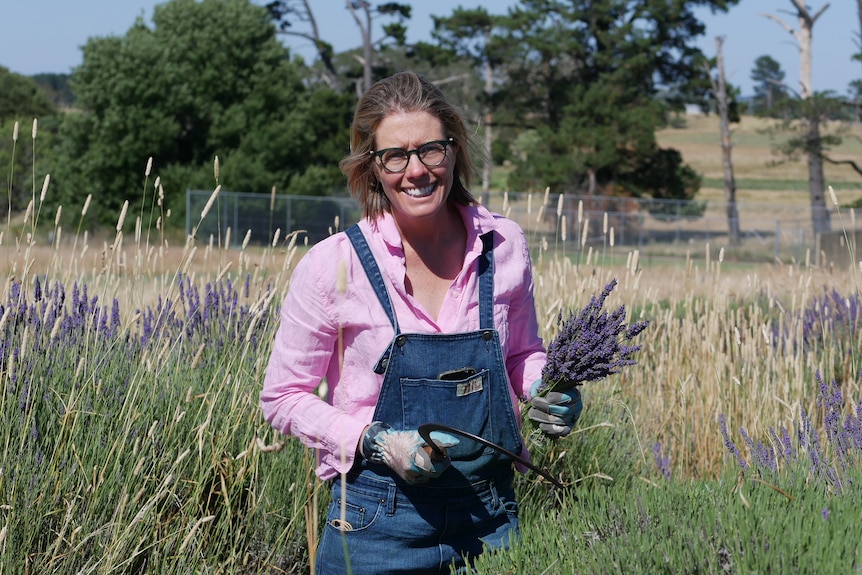
Phe Viljoen has been harvesting lavender for eight years. (ABC Central West: Emily Middleton)
For the past eight years, they have been harvesting lavender for both oil and cut flowers.
Considered a small enterprise with 6,000 plants, making roughly 10 litres of oil a year, the Viljoens distil their products themselves.
“It’s certainly a labour-intensive process with our harvesting all hand harvested with very rustic sickles,” Mr Viljoen said.
However, while they sell directly to customers through local retailers, they are facing a growing challenge of competing with low-cost imports.
“We need to support what’s on your doorstep,” he said.
“Otherwise, we won’t exist.”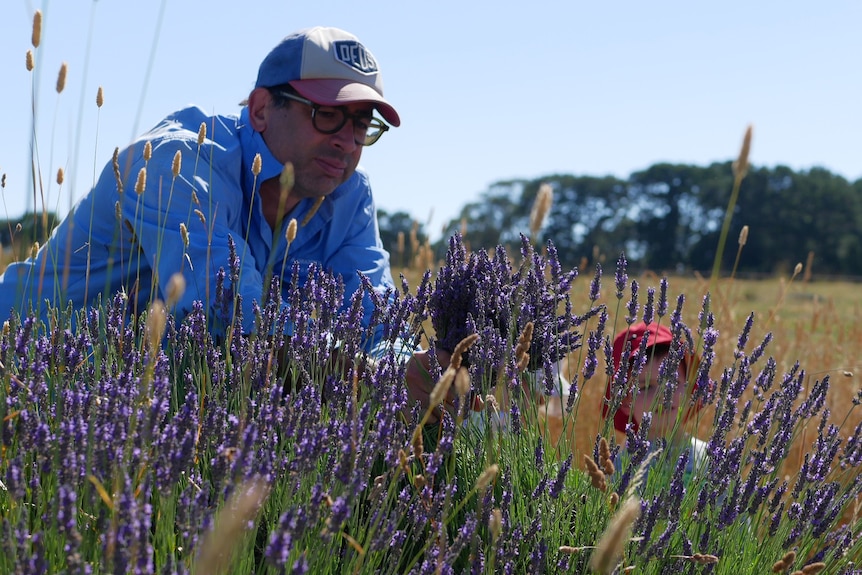
Ken Viljoen harvests lavender using a sickle. (ABC Central West: Emily Middleton)
A new report produced by AgriFutures Australia found that Australia imports more than five times the amount of lavender it produces.
One of the biggest concerns for the industry, according to The Australian Lavender Growers Association (TALGA), is the “lower quality” lavender oil being brought into the country, with some producers claiming they just can’t match their prices.
The distillation process on the Viljoens’ farm produces 100 per cent lavender oil that is unadulterated.
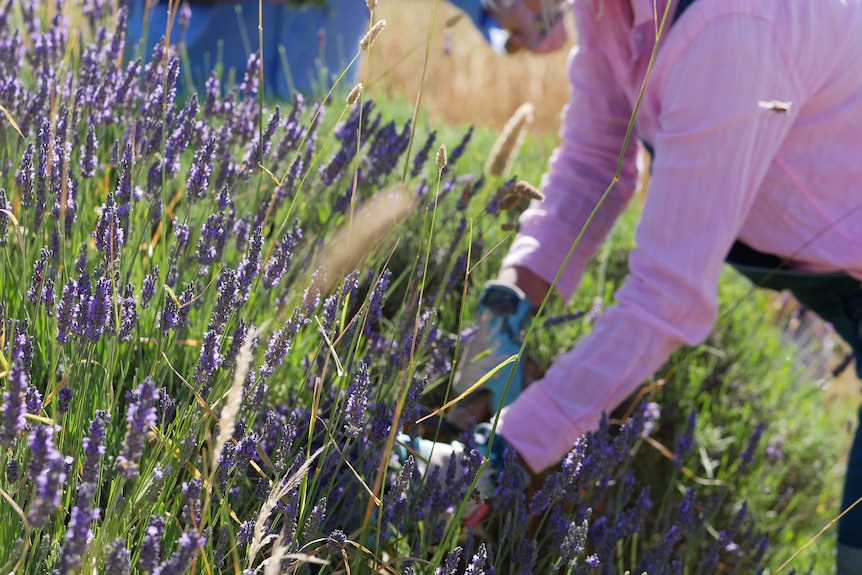
Lavender is often used in relaxation products. (ABC Central West: Emily Middleton)
The family says no water is used to dilute their oil, a problem the industry faces with imported products.
“It’s very accessible, and for those who love it and want to use it in cleaning, then yes, they’re just going to be buying what’s on the shelf,” Mrs Viljoen said.
“We find those that are really into aromatherapy and want to use lavender for those purposes; they are quite conscientious as to where they’re buying it from.”
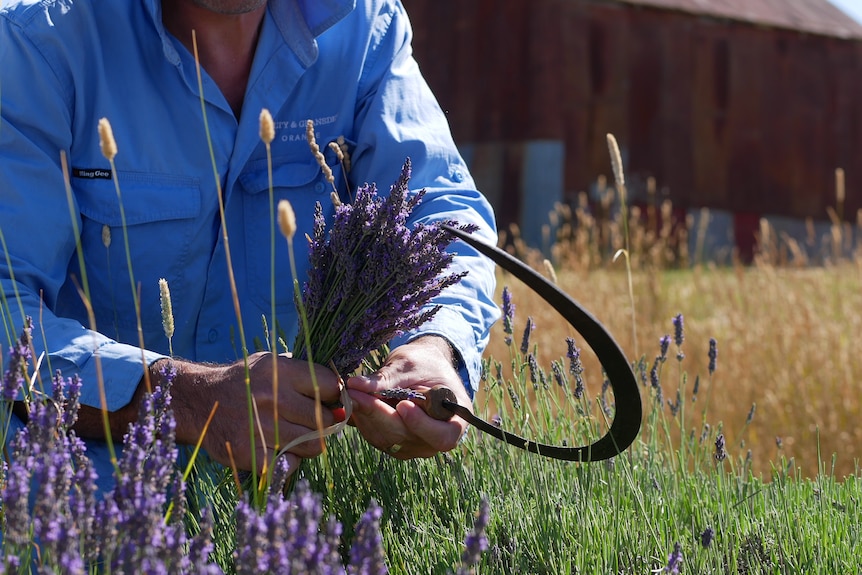
Lavender farmers often use old-school hand sickles to harvest lavender. (ABC Central West: Emily Middleton)
Growing international competition
AgriFuture’s Australian Lavender RD&E Plan 2023-2028 noted that the most recent data suggested the industry’s gross value of production was in the vicinity of $1.3 million, based on 3.5 tonnes of production.
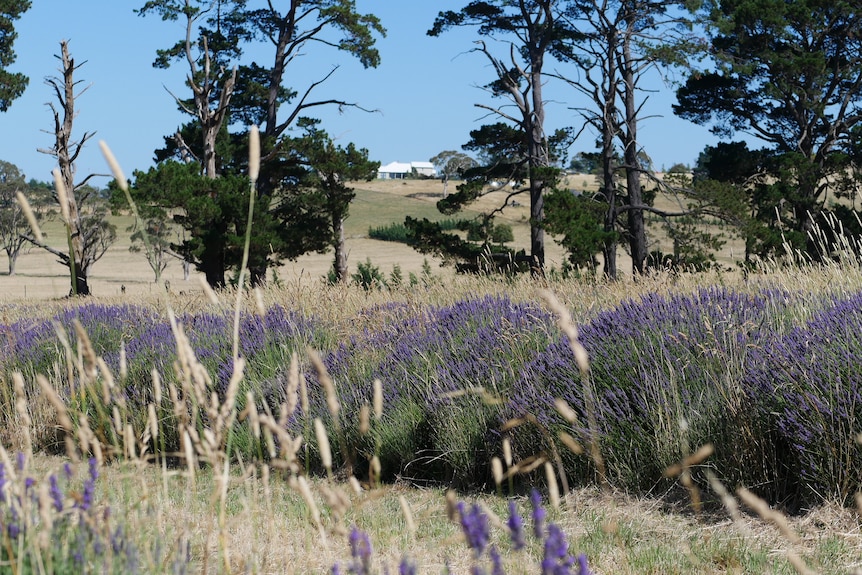
Lavender often grows well in cool climates. (ABC Central West: Emily Middleton)
This is compared to the 20.6 tonnes, worth $7.7 million, that were estimated by AgriFutures to be imported.
“There is always demand for lavender essential oil,” lavender grower and TALGA committee member from Canberra, Pascal Jallier said.
There are just over 100 lavender growers across Australia, according to TALGA, making the product a niche commodity for the country.
“We are competing against the world in terms of production,” Mr Jallier said.
“Since 2007 when Bulgaria joined the EU and started producing lavender, they overproduced or over planted, and started producing in massive quantities to a point that, today, they alone are representing 50 per cent of the market.”
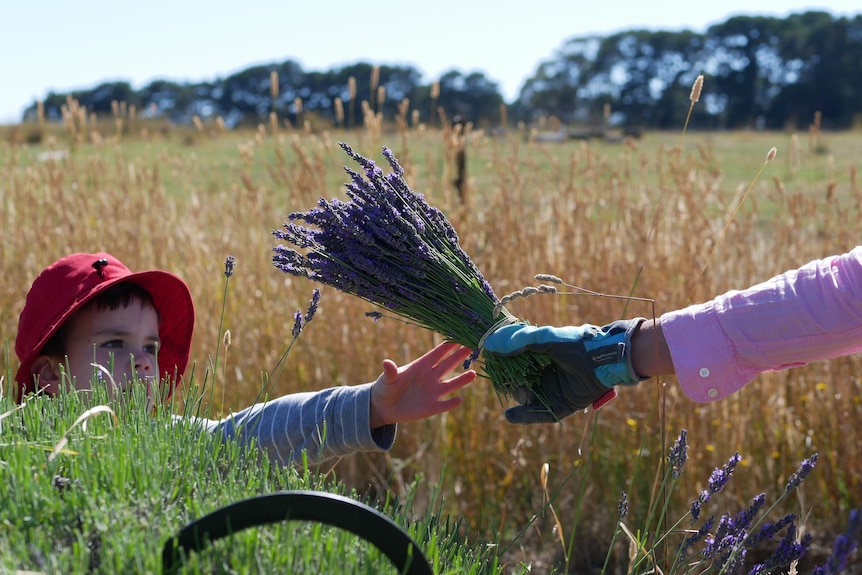
There are only just over 100 lavender growers Australia-wide. (ABC Central West: Emily Middleton)
This feeds into Australia’s limited export of lavender.
According to the Therapeutic Goods Administration (TGA), importing lavender oil into Australia is subject to several regulatory requirements depending on how the product will be used and supplied.
“For example, if it is intended for therapeutic use, it would be regulated by the TGA, whereas products intended for cosmetic or fragrance use are regulated by the Australian Industrial Chemicals Introduction Scheme (AICIS),” a TGA spokesperson said.
Imported lavender oil must also meet Australia’s biosecurity requirements.
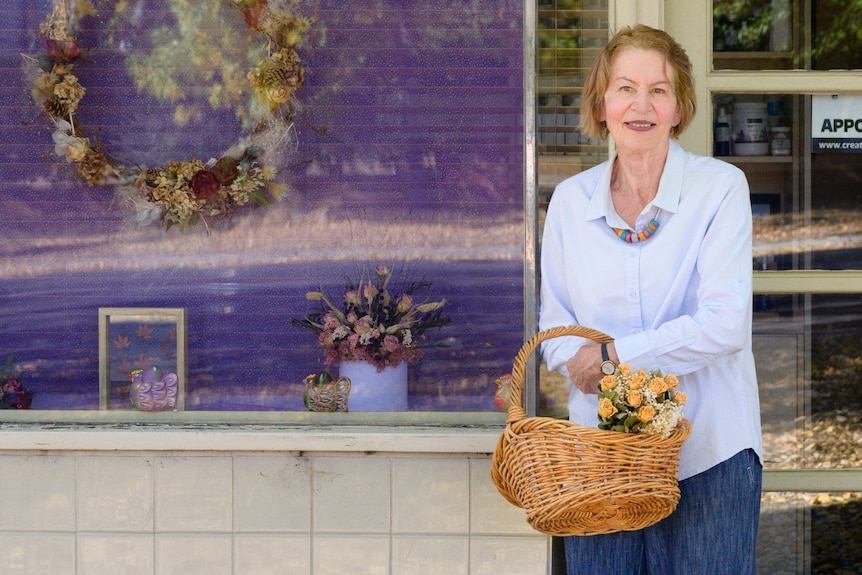
Fiona Glover says she can identify imported lavender products on supermarket shelves. (Supplied: Fiona Glover.)
Inconsistent product
Purchasing an Australian-made product can guarantee where the oil has come from, according to TALGA’s public officer, Fiona Glover.
“We have standards to follow … we can guarantee that it is an unadulterated oil that is well produced,” she said.
“I think it [imports] definitely must be watered down.”
Ms Glover said she can tell by looking at imported products on supermarket shelves.
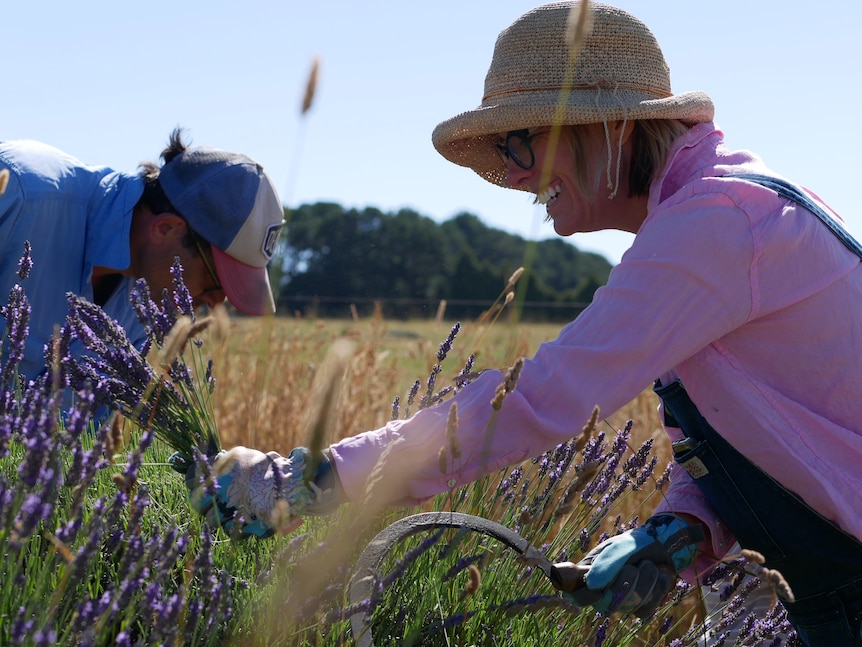
Ken and Phe Viljoen from Ashburton Lavender Farm in Millthorpe distil all their own lavender oil. (ABC Central West: Emily Middleton)
“The colour of lavender oil … there’s a yellowness to it.
“What I’m seeing on supermarket shelves is clear. It’s like water.”
On top of this, the price of imported lavender oil is significantly less than a homegrown product.
For a 10 millimetre bottle of imported 100 per cent pure lavender oil on Australian shelves, prices start from $3, with homegrown oil starting at $20.
“We can’t match the low price of some of the imported oil,” Ms Glover said.
“Our labour charges and materials are higher than those in a European or Asian country. Even though we’re superior in quality, we can’t match the low prices that are being asked for.”