
 Alhasan/Getty Images
Moneywise and Yahoo Finance LLC may earn commission or revenue through links in the content below.
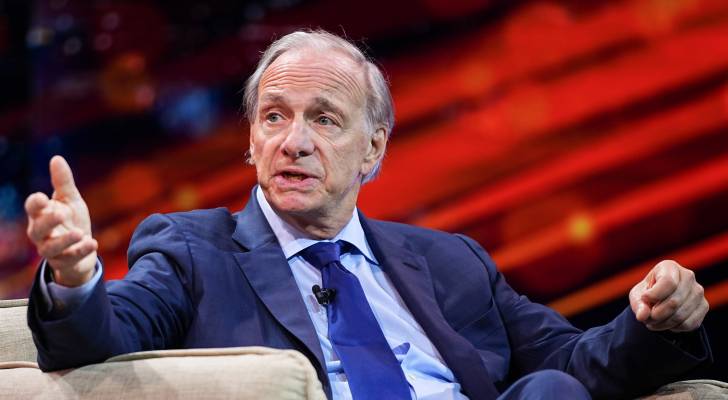
Billionaire investor Ray Dalio is sounding the alarm on what he sees as a historic geopolitical turning point — one that could reshape markets, money and the global balance of power.
In a recent post on X, the Bridgewater Associates founder declared bluntly: “It’s official: The world order has broken down,” pointing to growing consensus among global leaders that the post-1945 system is unraveling (1).
Dalio argued that the world is moving into what he describes as a late stage of a long-term historical cycle marked by disorder, conflict and shifting power balances between major nations.
“In my parlance, we are in the Stage 6 part of the Big Cycle in which there is great disorder arising from being in a period in which there are no rules, might is right and there is a clash of great powers,” he wrote.
According to Dalio, international relations are increasingly being driven by “raw power dynamics” rather than rules-based cooperation — a change that could have severe consequences.
He noted that when individual countries become more powerful than global institutions, those nations ultimately determine how events unfold.
“For example, if the U.S., China, or other countries have more power than the United Nations, then the U.S., China, or other countries will determine how things go rather than the United Nations,” he said. “That is because power prevails and wealth and power among equals is rarely given up without a fight.”
Dalio cautioned that the international order now resembles the “law of the jungle” more than a system governed by international law. As he explained, “When powerful countries have disputes, they don’t get their lawyers to plead their cases to judges. Instead, they threaten each other and either reach agreements or fight.”
As a longtime student of history, Dalio noted that managing money during periods of conflict has never been straightforward.
“Protecting one’s wealth in times of war is difficult, as normal economic activities are curtailed, traditionally safe investments are not safe, capital mobility is limited and high taxes are imposed when people and countries are fighting for their survival,” he wrote.
Dalio also offered clear guidance on positioning during wartime environments.
“As for investing, sell out of all debt and buy gold because wars are financed by borrowing and printing money, which devalues debt and money and because there is a justifiable reluctance to accept credit,” he said.
He pointed out that the role of money itself tends to change during major conflicts. Historically, money and credit between non-allied countries were often viewed with skepticism, given concerns about whether currencies would retain their value. In contrast, tangible stores of value tended to remain more widely accepted.
“Gold — or, in some cases, silver or barter — is the coin of the realm during wars,” he noted.
Gold has long been considered a go-to safe haven. It can’t be printed out of thin air like fiat money and because it’s not tied to any single currency or economy, investors often flock to it during periods of economic turmoil or geopolitical uncertainty, driving up its value.
This is not a new view for Dalio. Last year, he told CNBC that “people don’t have, typically, an adequate amount of gold in their portfolio,” adding that “when bad times come, gold is a very effective diversifier.”
Despite a recent pullback, gold prices have climbed more than 70% over the past 12 months.
One way to invest in gold that also provides significant tax advantages is to open a gold IRA with the help of Thor Metals.
Gold IRAs allow investors to hold physical gold or gold-related assets within a retirement account, which combines the tax advantages of an IRA with the protective benefits of investing in gold, making it an attractive option for those looking to potentially hedge their retirement funds against economic uncertainties.
To learn more, you can get a free information guide that includes details on how to get up to $20,000 in free metals on qualifying purchases.
Read More: I’m almost 50 years old and don’t have retirement savings. Is it too late to catch up?
Read More: Non-millionaires can now invest in this $1B private real estate fund starting at just $10
Legendary investor Warren Buffett has also addressed how major conflicts can reshape the value of money.
“The one thing you can be quite sure of is if we went into some very major war, the value of money would go down — that’s happened in virtually every war that I’m aware of,” Buffett told CNBC in 2014 (2), adding, “The last thing you’d want to do is hold money during a war.”
What should investors own then?
“You might want to own a farm, you might want to own an apartment house, you might want to own securities,” he said.
Over the years, Buffett has repeatedly highlighted real estate as a prime example of a productive, income-generating asset.
In 2022, Buffett stated that if you offered him “1% of all the apartment houses in the country” for $25 billion, he would “write you a check (3).”
Why? Because no matter what’s happening in the world, people still need a place to live and apartments can consistently produce rent money.
Real estate also provides a natural hedge against inflation. When inflation rises, property values often increase as well, reflecting the higher costs of materials, labor and land. At the same time, rental income tends to go up, providing landlords with a revenue stream that adjusts with inflation.
Of course, you don’t need $25 billion — or even to buy a single property outright — to invest in real estate today. Crowdfunding platforms like Arrived offer an easier way to get exposure to this income-generating asset class.
Backed by world-class investors like Jeff Bezos, Arrived allows you to invest in shares of rental homes with as little as $100, all without the hassle of mowing lawns, fixing leaky faucets or handling difficult tenants.
The process is simple: Browse a curated selection of homes that have been vetted for their appreciation and income potential. Once you find a property you like, select the number of shares you’d like to purchase and then sit back as you start receiving any positive rental income distributions from your investment.
Even better, for a limited time, when you open an account and add $1,000 or more, Arrived will credit your account with a 1% match
mogul is another option. It’s a real estate investment platform offering fractional ownership in blue-chip rental properties, which gives investors monthly rental income, real-time appreciation and tax benefits — without the need for a hefty down payment or 3 a.m. tenant calls.
Founded by former Goldman Sachs real estate investors, the team hand-picks the top 1% of single-family rental homes nationwide for you. In other words, you gain access to institutional-quality offerings for a fraction of the usual cost.
Each property undergoes a rigorous vetting process, requiring a minimum 12% return even in downside scenarios. Across the board, the platform features an average annual IRR of 18.8%. Offerings often sell out in under three hours, with investments typically ranging between $15,000 and $40,000 per property.
You can sign up for an account and then browse available properties here.
Dalio has also cautioned that in periods of economic stress and rising inequality, there are typically “revolutionarily large redistributions of wealth,” including in the form of “large tax increases.”
That’s why the wealthy don’t just focus on what they invest in — they also pay close attention to where those investments sit. Using tax-advantaged retirement accounts can be a powerful way to keep more capital compounding over time.
For seasoned investors with portfolios of $50K or more, you might consider diversifying your nest egg through a flat-fee self-directed retirement account.
A self-directed retirement account is a tax-advantaged individual retirement account (IRA) that lets investors allocate funds to a significantly broader range of alternative assets than typical IRAs offered by banks or brokerage firms.
While traditional IRAs limit options to stocks, bonds and mutual funds, a self-directed account allows you to invest in real estate, cryptocurrency, private businesses, precious metals and private lending.
With IRA Financial, you can work directly with experienced retirement specialists. If you prefer making your investments online, their platform and mobile app make it easy to manage your account. They also have an in-house tax team to ensure your investments stay fully compliant with IRS rules.
With over $5 billion in retirement assets under custody, guaranteed IRA audit protection, 25,000+ clients nationwide and a 97% client retention rate, IRA Financial can help you grow your retirement fund with alternative assets.
Simply answer a few questions — including the kinds of assets you would like to invest in and how much you’d like to start with — to prequalify for an account in just 90 seconds.
At the end of the day, everyone’s financial situation is different — from income levels and investment goals to debt obligations and risk tolerance — which means the best move for someone else might not be the best move for you.
If you’re unsure where to start, it might be the right time to get in touch with a financial advisor through Advisor.com.
Advisor.com is an online platform that matches you with vetted financial advisors suited to your unique needs. They can help tailor a strategy to your particular financial situation, whether you’re looking to grow wealth, diversify beyond stocks or plan for long-term financial security.
Once you’re matched with an advisor, you can book a free consultation with no obligation to hire.
Join 250,000+ readers and get Moneywise’s best stories and exclusive interviews first — clear insights curated and delivered weekly. Subscribe now.
We rely only on vetted sources and credible third-party reporting. For details, see our editorial ethics and guidelines.
This article provides information only and should not be construed as advice. It is provided without warranty of any kind.