
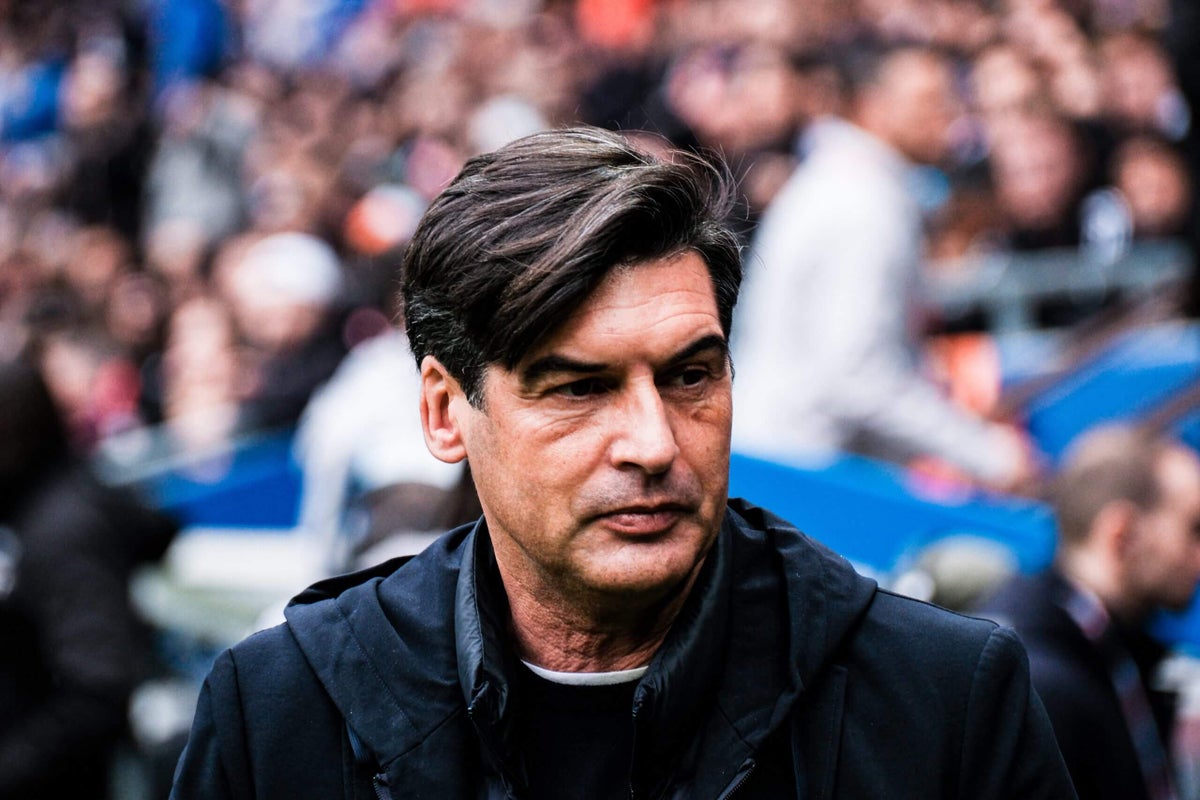
At the end of their 13th consecutive victory, a visibly emotional Paulo Fonseca waved a Lyon scarf in the air in front of the adoring home fans.
Fonseca, a football romantic, is masterminding one of the great stories in Europe this season at the home of the seven-time French champions.
Last Sunday’s 2-0 win against Nice prompted Fonseca’s celebration, with Lyon third in Ligue 1. They topped the Europa League table, finishing above Aston Villa on goal difference, and will host Lens in a Coupe de France quarter-final on March 5.
L’émotion de Paulo Fonseca face aux supporters 🥹
Quelle saison de l’OL et quelle saison de son coach portugais. #OLOGCN pic.twitter.com/KI9GaDfK0q
— L1+ (@ligue1plus) February 15, 2026
Having leapfrogged Marseille — whose head coach Roberto De Zerbi left last week — into an automatic Champions League spot, they are seven points behind leaders Lens and six behind Paris Saint-Germain.
For Lyon to be fighting on three fronts is remarkable given their situation last summer — and Fonseca’s.
They were initially set to begin this season in Ligue 2. In June, the DNGC, French football’s financial watchdog, had relegated them due to the club’s financial problems, which included soaring debts and a bloated wage structure. A week later, owner John Textor resigned from Lyon’s board.
However, they won an appeal the following month, allowing them to remain in Ligue 1, subject to financial controls on their wage bill and transfer spending.
Fonseca was forced to overhaul his squad. Key players were sold, including star attacker Rayan Cherki to Manchester City, goalkeeper Lucas Perri to Leeds United, and forward Georges Mikautadze to Villarreal. Former Arsenal and France forward Alexandre Lacazette also left his hometown club on a free transfer to free up the wage bill.
In their place, at a fraction of the cost, arrived 20-year-old winger Afonso Moreira from Sporting CP; Tyler Morton, who has been a revelation in midfield, from Liverpool; defender Ruben Kluivert (Patrick’s son and Justin’s younger brother) from Casa Pia in Portugal; goalkeeper Dominik Greif from Mallorca; and Czech Republic striker Pavel Sulc, who has been a standout performer in Ligue 1.
“We have built a real team, with humble players who work hard together,” Fonseca tells The Athletic.
Under Fonseca, who has developed a reputation for nurturing young talent, Lyon have promoted teenagers from their fabled academy, including Khalis Merah, Adil Hamdani and Remi Himbert.
They were further bolstered in January by the high-profile signing of Brazilian striker Endrick, on loan from Real Madrid.
“He’s a unique talent and if he continues to focus, he will have a great future,” Fonseca says.
Fonseca has gone through a period of reflection, too, after he was handed a nine-month ban for angrily confronting referee Benoit Millot in March last year.
The suspension prevented him from accessing the touchline or the officials’ changing rooms until November 30, and he could not enter the players’ changing rooms, the pitch or the tunnel until September 15.
“Look, it was a difficult moment,” Fonseca says. “I didn’t deserve this punishment, and I think everyone agrees. I never touched anyone, I never had the intention to. I just screamed in the face of the referee, something that happens every week, in every place, in every country.
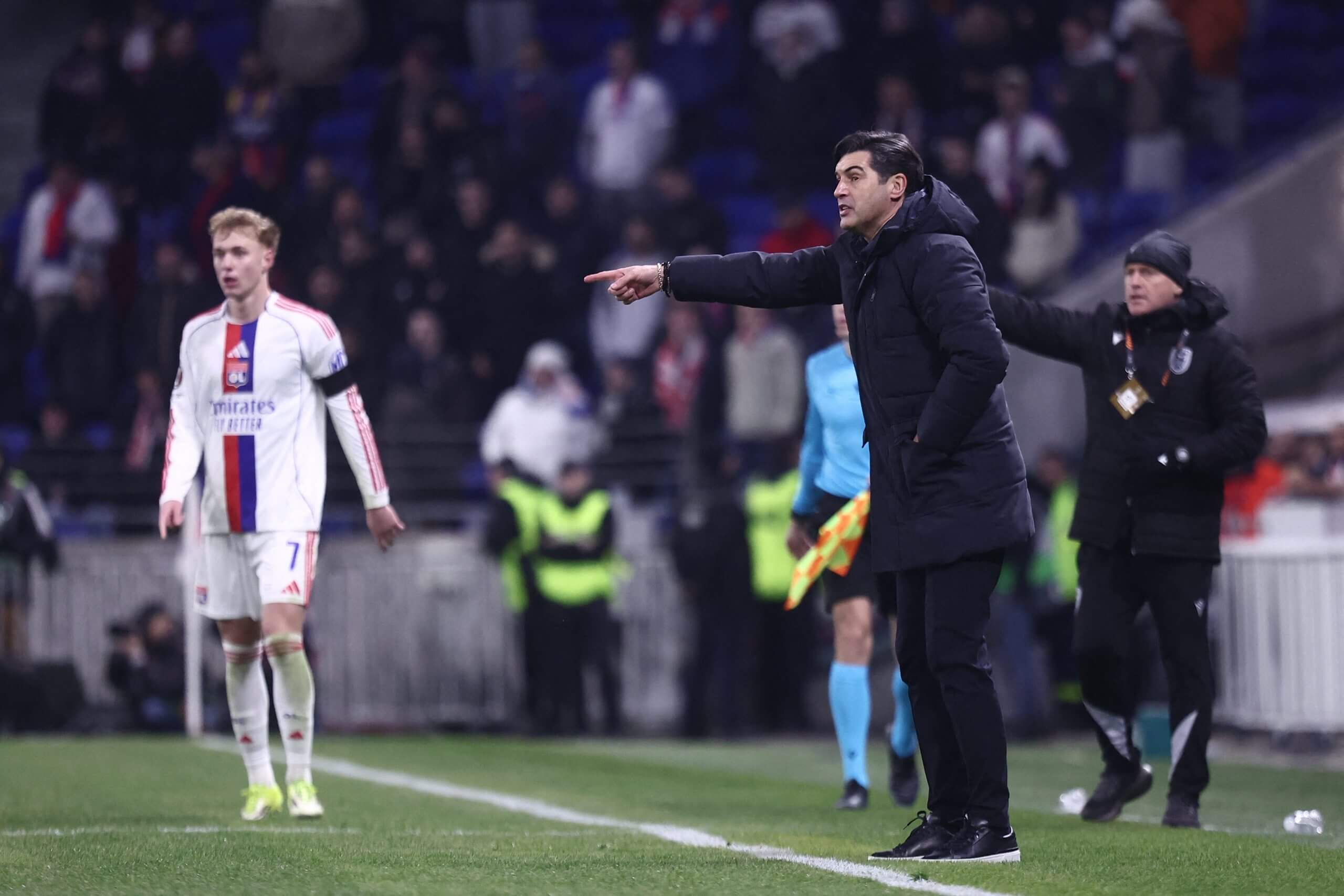
Paulo Fonseca is on the touchline again after a nine-month suspension (Alex Martin/AFP via Getty Images)
“But I pay for the moment in the French league. It’s in the past, and I don’t want to think more about this. You cannot fight against some things and we have to learn to maybe be more balanced in some moments of the game and I’m trying to do it.”
It begs the obvious question of how he carried out his job during that period.
“To not be with the team in the important moments, in the dressing room, at the end of the game, at half-time, it was really difficult,” Fonseca says. “But I had the help of everyone in the club at the time, and that’s something I’ll never forget. We continued to have good results, so the time passed very fast.”
During that time, Fonseca spoke with his team in the hotel before a game, before then leaving his assistants, Jorge Maciel and former Chelsea defender Paulo Ferreira, to deliver the team talks in the dressing room.
He leaned on the support of his senior players, such as Corentin Tolisso, Moussa Niakhate, and Clinton Mata.
“My captains were fantastic, they were amazing,” Fonseca says. “I spoke with them and said, ‘I need your help, I need your intervention in the dressing room. I want you to be me in the dressing room’. I’m very grateful to them because they were so important, and they continue to be.”
Fonseca still led training sessions and the ban only applied to France, so he was allowed in the dressing room and dugout during their European matches. Their Europa League dream ended last season with an incredible 5-4 quarter-final loss away to Manchester United at Old Trafford (7-6 on aggregate), with two goals at the end of extra time.
Back in France, that meant he observed games from the stands, something that’s more typically seen in rugby.
“I have to confess, it was a very good experience,” he said. “You have another view from high up, you can see much more than you see when you’re on the bench. You can see a lot of details. We could see more coaches doing this, like in rugby, because you have another vision.”
Despite that, Fonseca said he was glad to return to his usual position on the touchline when his ban ended. His first game back was a 1-0 loss against Lorient on December 7, their last defeat before the run of 13 victories in a row.
“For me, the most important thing was to be back with the team in the dressing room,” he said. “When you speak in the hotel, you have one and a half to two hours before the start of the game. So when you have direct contact moments before the game, it is totally different, the energy you can pass on. You cannot compare. Even what you can create in half-time, after a game, it’s really important for the team.”
Lyon feels like a perfect fit for Fonseca after a difficult spell at Milan at the end of 2024.
Milan sacked Fonseca after just six months in charge, before he was replaced by Sergio Conceicao, who was dismissed after a similar period.
Fonseca was afforded an undignified exit at Milan. The details of Conceicao’s impending appointment were broken by a Sky Italia journalist before Fonseca had even conducted his post-match media duties following Milan’s 1-1 draw with Roma. Fonseca was left to confirm his departure to reporters from a company car as he exited San Siro an hour later. Milan formally announced his dismissal the next day, with a 31-word statement.
“I deserved more time,” he says. “Milan is an amazing club and I enjoyed it a lot. I’m really sorry I didn’t have time — their proposal was to change the game (to a more expansive style). To change one thing they had for so many years is not easy; you need time, especially in Italy, where it’s even more difficult, almost impossible.
“We had amazing games, playing really good football. We needed to be more consistent, it’s true, but to change something in Italy is really difficult.”
Lyon is the latest stop in a managerial journey that has taken Fonseca from Portugal, where he coached Aves, Pacos Ferreira, Porto, and Braga, before spells at Shakhtar Donetsk, Roma, Lille and Milan.
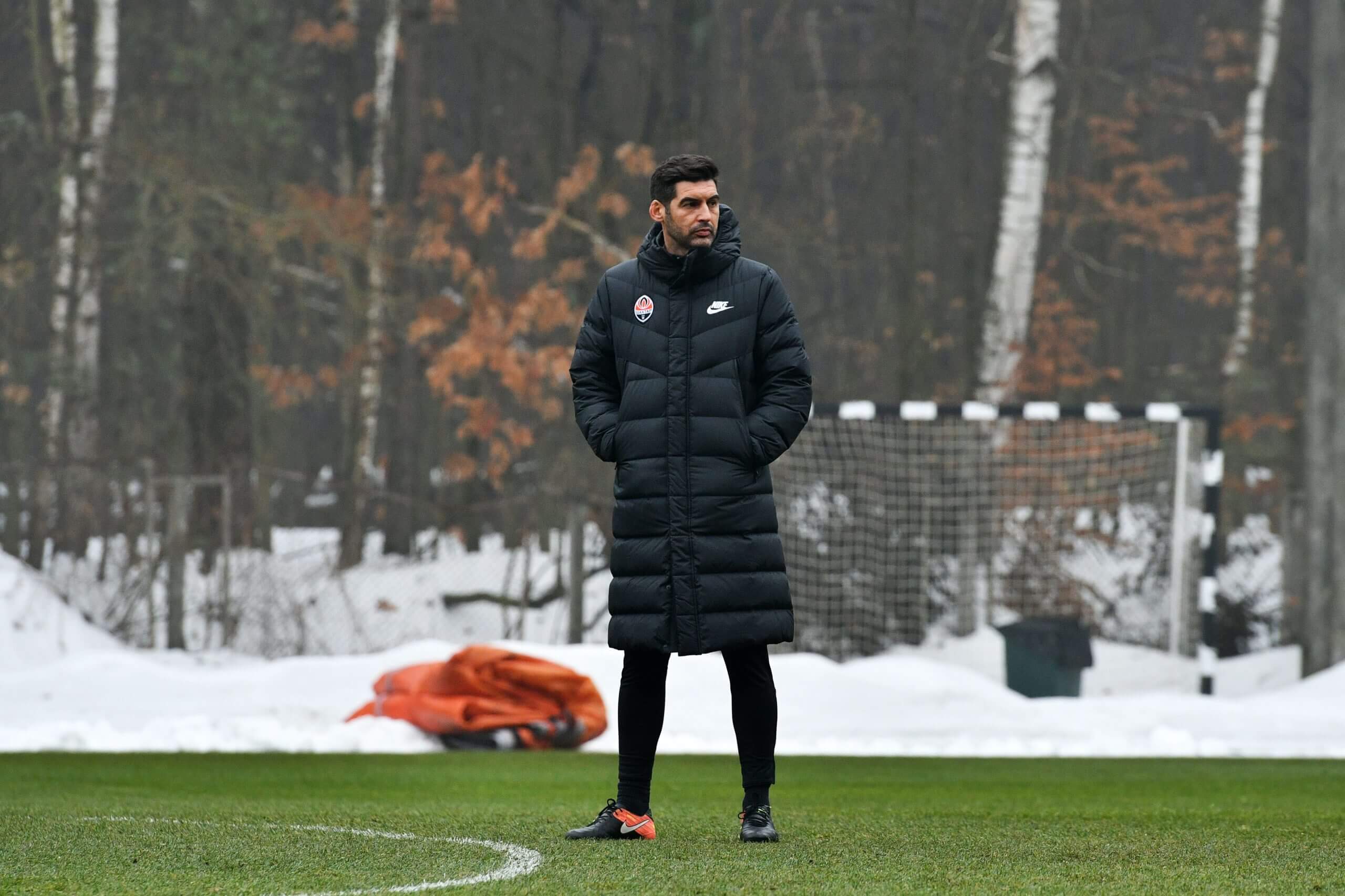
Paulo Fonseca during his time with Shakhtar (Genya Savilov/AFP via Getty Images)
How does he feel he’s evolved as a manager?
“I learn a lot from each phase of my career. You can see Portuguese coaches everywhere because we have this capacity to understand the environment, the countries, the cultures.
“I’m better now defensively, because I learned a lot in Italy. In Ukraine, I learned a lot how to play in the last 30 metres because I had that scenario all the time, and that’s the hardest thing in football.
“I love being in France. The championship here is amazing, with modern stadiums that are full, and a lot of quality players and very good coaches. I love that the game here is open and players love to play.”
He came close to taking the Tottenham job in the summer of 2021. Does the chance to manage in the Premier League still hold appeal?
“I’m just thinking about Lyon. I don’t know what will happen in the future, all of us have ambitions. But I’m in a big club, an amazing club, that wants to grow, wants to become stronger. The most important thing for me is to be in a place where the people believe in you and your ideas.”
Style matters to Fonseca — Pep Guardiola is the coach he admires the most. “For the coaches who love to play, it’s becoming even more difficult,” Fonseca says. “Football is pleasure. We cannot forget that it is the most admired show in the world.
“As a coach, I feel we have an obligation when the people come, 50,000, 60,000 to see our games, to create a good show. No one wants to go to a stadium to see a boring game without opportunities. The game is changing a lot. The game we are seeing today is not beautiful.”
Fonseca’s first spell abroad was a successful three-year stint at Shakhtar Donetsk, where he won three domestic titles and beat Manchester City away in the Champions League.
Following that victory, he dressed as the fictional character Zorro in the resulting press conference, keeping to a promise he made if Shakhtar reached the knockout stage of the competition.
Fonseca, who met his wife, Katerina Ostroushko, during his time in Ukraine, is heartbroken by the conflict in the country, following the Russian invasion in 2022. At the start of that year, Fonseca and his family drove 30 hours and spent a night in an underground bunker to escape the country, Sky Sports reported at the time.
“The people are there and it’s -10, -15 degrees (as cold as 5F), without energy, there’s bombing, people dying, things are getting worse and worse,” he says.
“Ukraine is amazing, the people are amazing, humble people who just want to live in peace. I suffer a lot with this. My wife is Ukrainian, and I have a kid who is Ukrainian. I’m so upset, it’s difficult for me to speak about the situation in Ukraine. I’m really sorry for the people living there because we cannot imagine how difficult it must be.”
Back in Lyon and Fonseca’s side are entering a crucial period, with tough away matches coming up against Strasbourg and Marseille, before their cup quarter-final with Lens and the Europa League round of 16.
Fonseca is determined to keep his young side grounded, but the excitement around Lyon is becoming impossible to ignore.
“Everyone here believes we can make something special this season,” he said.