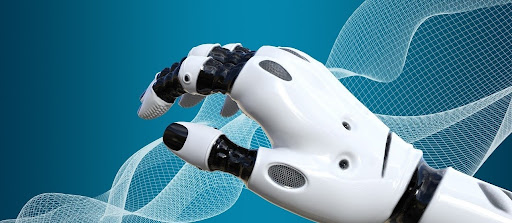
If you were to do a quick search for “AI art” and “FIU” together, you’d very easily find the Division of Information and Technologies website, which declares in its banner, “Embracing an AI University.”
Another page offered by the university’s library allows one to search for resources, research guides, and various tools for the creation of AI art.
You may be shaking your head; you most likely are. And that just may be a problem.
As the art world continues to debate the merits of AI, commercial and business enterprises continue to eschew traditional forms of graphic design, possibly disrupting the career paths of up-and-coming artists.
As an educational institution, however, it is necessary to educate, prepare, and provide opportunities to people of all backgrounds so that they may be ready to tackle life’s many nuances. This can only be achieved by being open to both the risks and benefits of a technology that is reshaping how we make and engage with media.
It was once thought that photography would undermine the artist, and that the emergence of digital tools could not yield the same results as physical pen and paper, and yet what we found were new and unique opportunities for expression and now established names who challenged the status quo through experimental creative expression.
Whether you consider AI the solution or the danger, it is most likely here to stay, and it will require an understanding of the technology itself. We will have to consider engagement if we are to see ourselves as the ones to direct it towards an optimistic future, rather than it directing us.
In the same way we consider the need for practicality in tandem with our concerns for our future careers and our lively ambitions, we can also consider our relations in using AI with careful balance in the arts and education.
That balance becomes difficult when institutional enthusiasm begins to resemble endorsement.
Generative AI systems, which are trained on massive datasets of existing images and text, have quickly become normalized across institutional spaces. When institutions adopt generative AI uncritically, they risk alienating creative students and accelerating the very disruption they claim to help students navigate.
For example, when universities choose to use AI-generated visuals over student-made artwork, it raises a fundamental question: what kind of creativity does the university choose to elevate?
Using generative AI on official webpages risks signaling that creativity is secondary to convenience to creatives studying at FIU, whilst simultaneously risking the university looking cheap, prioritizing convenient AI use over student contribution. The use of AI by student organizations and university programs normalizes it and veers onto a slippery slope.
A recent campus event promotion, “Roary’s Spring Luau,” featured fully AI-generated imagery rather than original artwork.
 AI-generated promotional artwork | Photo from @fiustudentlife and @fiustx on Instagram
Universities should prepare students for a changing technological landscape. But preparation is not the same as institutional alignment. Education requires critical examination and restraint, not unexamined enthusiasm.
Where is the university talking about the legal, economic, and technological instability surrounding a field that is still evolving at breakneck speed?
Branding an institution around a field whose regulatory frameworks, intellectual property boundaries, and labor impacts remain unsettled is not a particularly neutral decision. The university should provide students with the tools and resources necessary to come to their own conclusions regarding AI, rather than diving headfirst into it.
Questioning an institution’s enthusiastic embrace of a rapidly emerging field is not Luddism; it’s a recognition of the responsibility universities carry.
Advocacy of AI by FIU professors makes sense. AI will be an inescapable presence in the future, even more so than it is now.
It is true that students should be prepared and that they should be able to use AI so as not to be left behind. However, this must never come at the expense of cognitive development or the surrender of the creative process, and problem-solving to automated systems.
AI seems to be most encouraged by large corporations and those with stakes in them who know that with potential success comes reduced labor costs. Universities, however, should not seek to mirror corporate efficiency models, but to develop intellectual capabilities and creative capacities that defend artistic students’ careers.
About Post Author