
Thatched roofs may be synonymous with traditional architecture, but this roundup points to a revival of the age-old craft in contemporary buildings across the globe.
Used to create thick, insulating shelters, a thatched roof is an ancient roofing method achieved by layering bundles of dried vegetation such as reed.
The technique is often associated with old, rustic cottages in Europe, but it has been used historically across continents, seen everywhere from rural farmhouses in Japan to round huts in Ethiopia.
While some may consider thatching to be a dying craft, the examples in this roundup suggest many designers are bringing back the technique for modern-day architecture.
Read on for nine buildings heralding a thatched-roof renaissance:
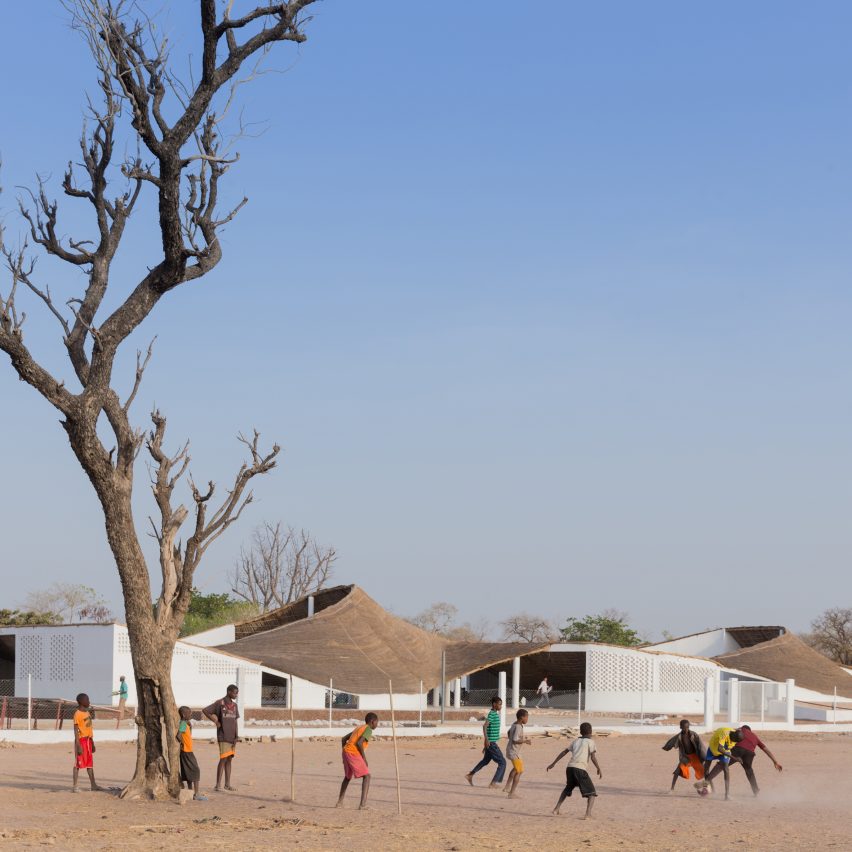 Photo by Iwan Baan
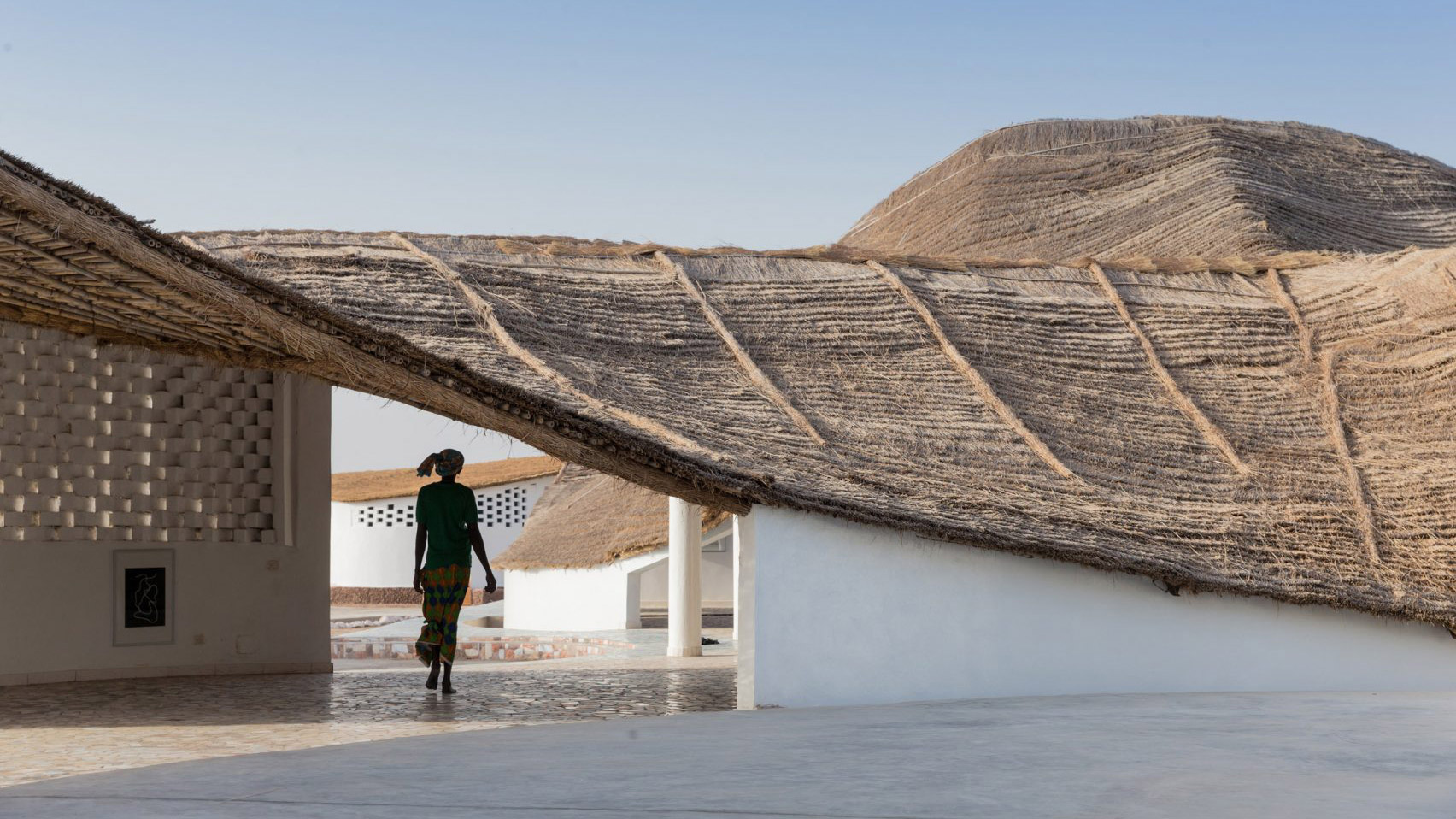
Thread, Senegal, by Toshiko Mori
Japanese architect Toshiko Mori looked exclusively to local materials and building techniques for her design of Thread, a cultural centre in the remote village of Sinthian.
This is visible in the contemporary thatched roof that crowns the building, which features undulations in its surface to help collect rainwater for crops.
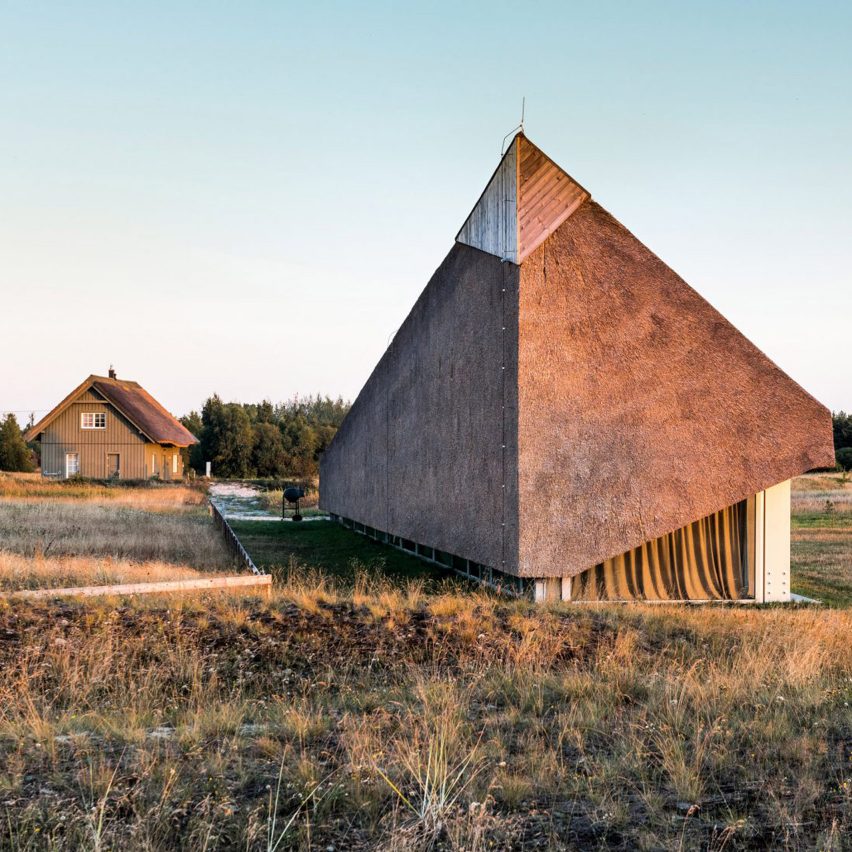 Photo by Juozas Kamenskas
Dune House, Latvia, by Archispektras
This lopsided thatched roof shields the exterior Dune House, which Archispektras created for an avid kitesurfer in Latvia’s grassy Pape Nature Reserve.
It was designed by Archispektras as a contemporary interpretation of local buildings that traditionally use thatched reed for roofing.
“We took the material and exploited it to the maximum effect by creating a modern shape and covering it in a sculptural manner,” the studio told Dezeen.
Find out more about The Dune House ›
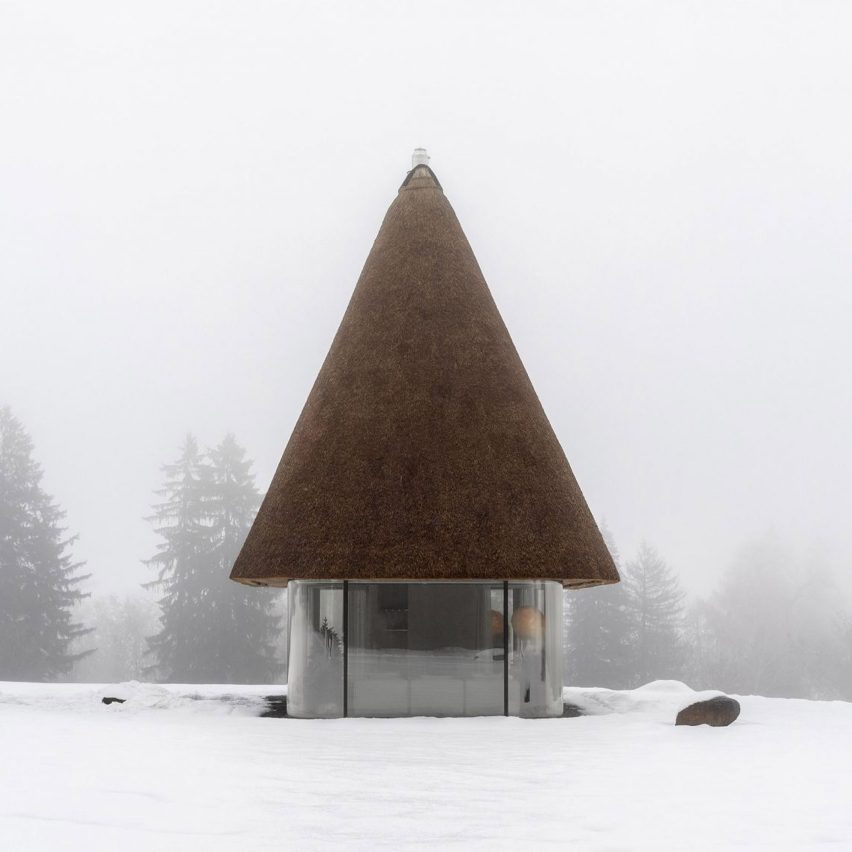 Photo by Mykhailo Lukashuk
Hata-Mazanka, Ukraine, by YOD Group
In Ukraine, YOD Group recently married tactile thatch with clean-cut glass to create the Hata-Mazanka guesthouses.
The design is a nod to a mazanka – a rural Ukrainian residence with a thatched roof and white walls. Unlike a traditional mazanka, the height of the roof is deliberately exaggerated, rising to 10 metres in height to stand out in the landscape.
Find out more about Hata-Mazanka ›
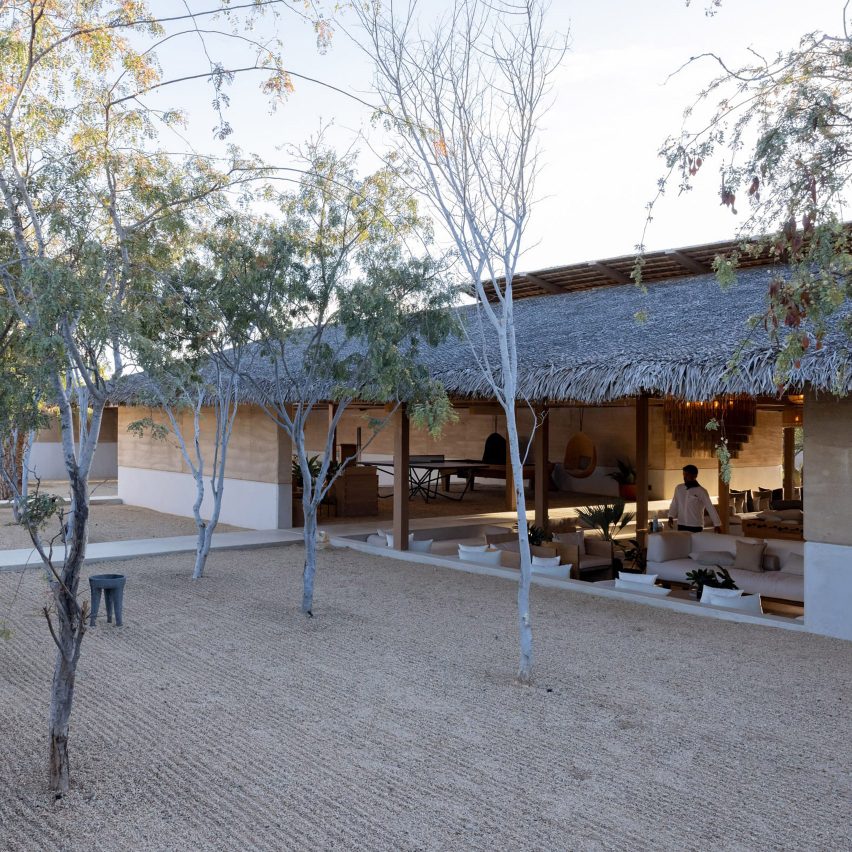 Photo by Iwan Baan
El Perdido Hotel, Mexico, by Estudio ALA
A series of outbuildings capped by thatch is dotted across this hotel on the southern tip of the Baja California peninsula.
Estudio ALA designed the roofs with long, visible straws, resulting in a shaggy look that complements the rammed-earth walls tucked below.
Find out more about El Perdido Hotel ›
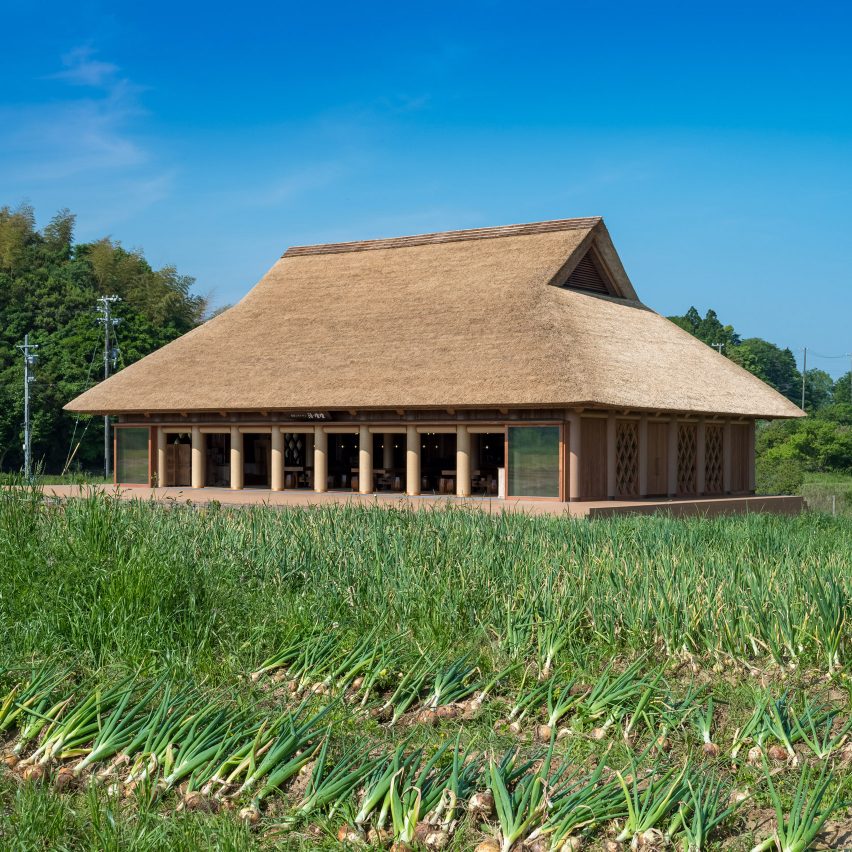 Photo by Hiroyuki Hirai
Farmer’s Restaurant, Japan, by Shigeru Ban
Shigeru Ban created this restaurant on Awaji Island as a homage to traditional Japanese farmhouses.
It features an oversized thatched roof formed from tailored and tightly packed reeds, which overhangs the cardboard tubes that wrap the structural columns of the building in true Ban fashion.
Find out more about Farmer’s Restaurant ›
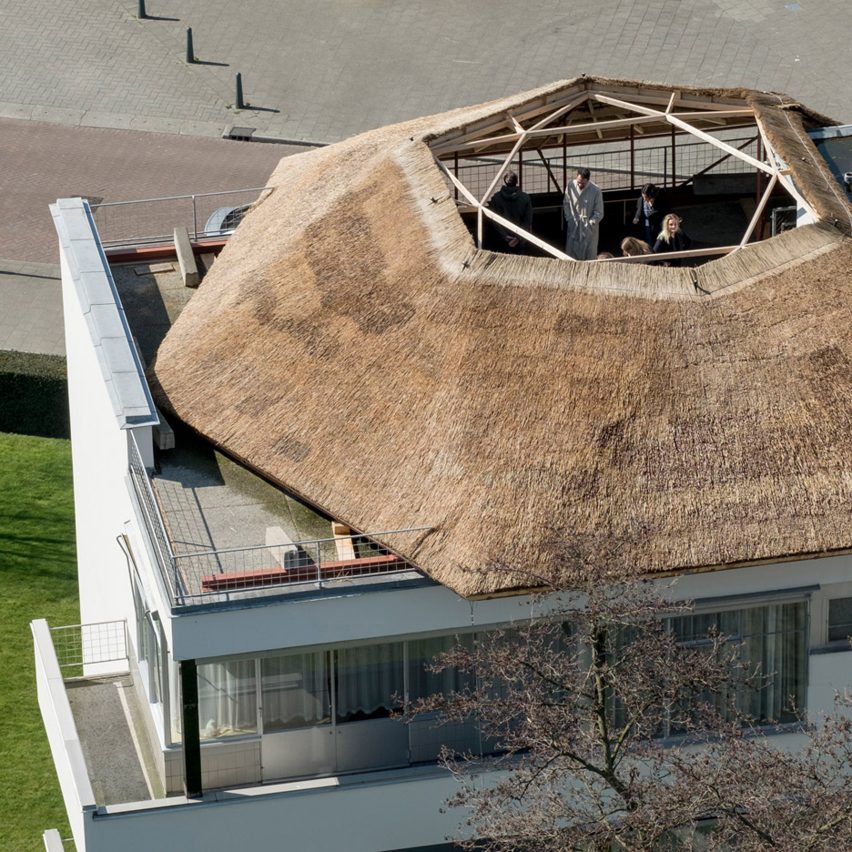
A Mental Image, the Netherlands, by Santiago Borja
This observatory, temporarily installed on top of the modernist Sonneveld House in Rotterdam, was visible from afar thanks to its distinctive hexagonal roof.
It was designed by artist Santiago Borja as a contemporary take on traditional Dutch construction methods while deliberately contrasting the white walls below.
Find out more about A Mental Image ›
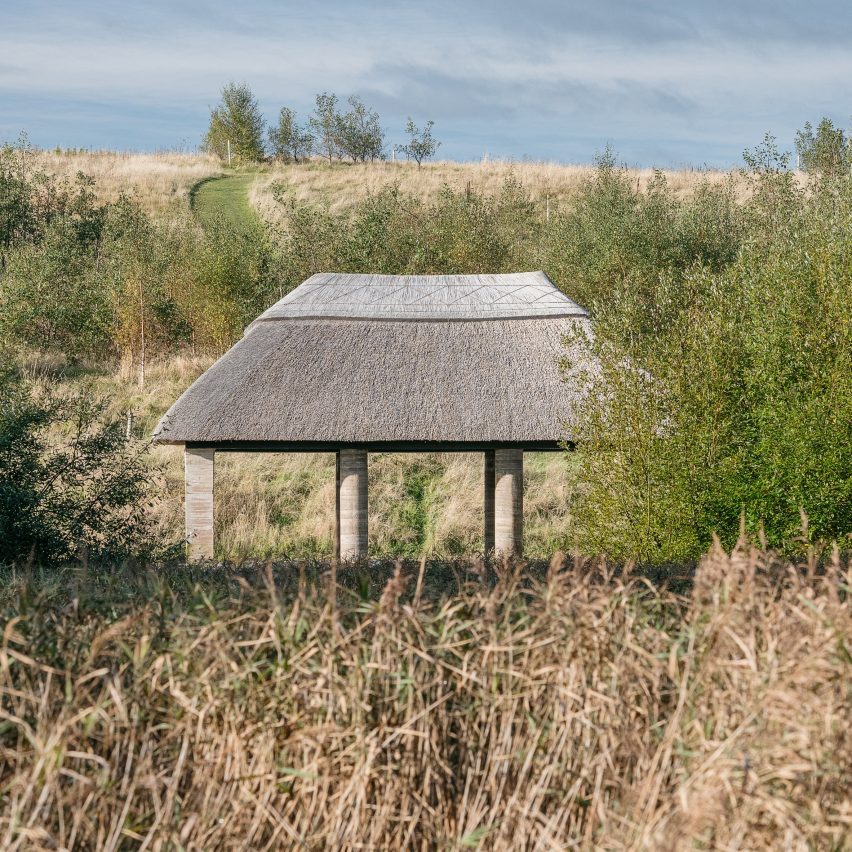 Photo by Jed Niezgoda
KinShip EcoLab, Ireland, by Fuinneamh Workshop Architects
KinShip EcoLab is a rammed-earth shelter in the Tramore Valley Park in Cork, Ireland, designed as a space for events on biodiversity.
Its design draws on its natural setting and was crafted from biomaterials that can return to the ground at the end of its useful life. This includes its hipped roof, which is made from thatched reeds raised on a timber frame.
Find out more about KinShip EcoLab ›
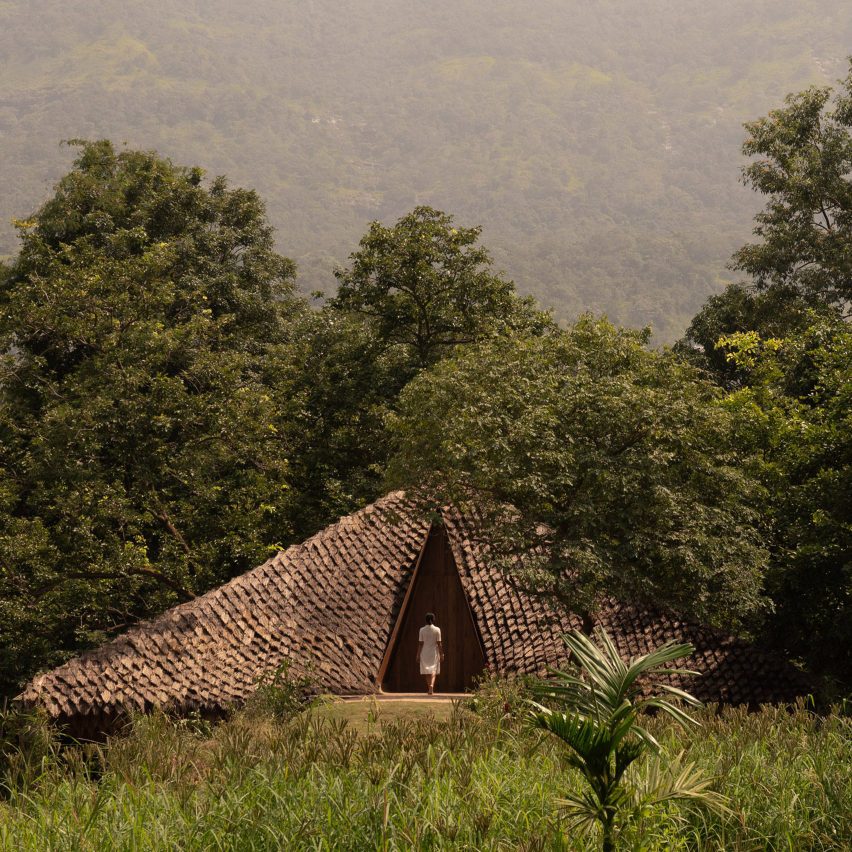 Photo by IKSHA
Bridge House, India, by Wallmakers
Rather than layering bundles of reeds, the roof of this house by wallmakers is formed from furry-looking shingles made from thatching local grasses.
The scales are mounted on its twisted exterior, which is formed from a grid of steel cables stabilised with a layer of mud. According to the studio, the design was intended to resemble a pangolin.
Find out more about Bridge House ›
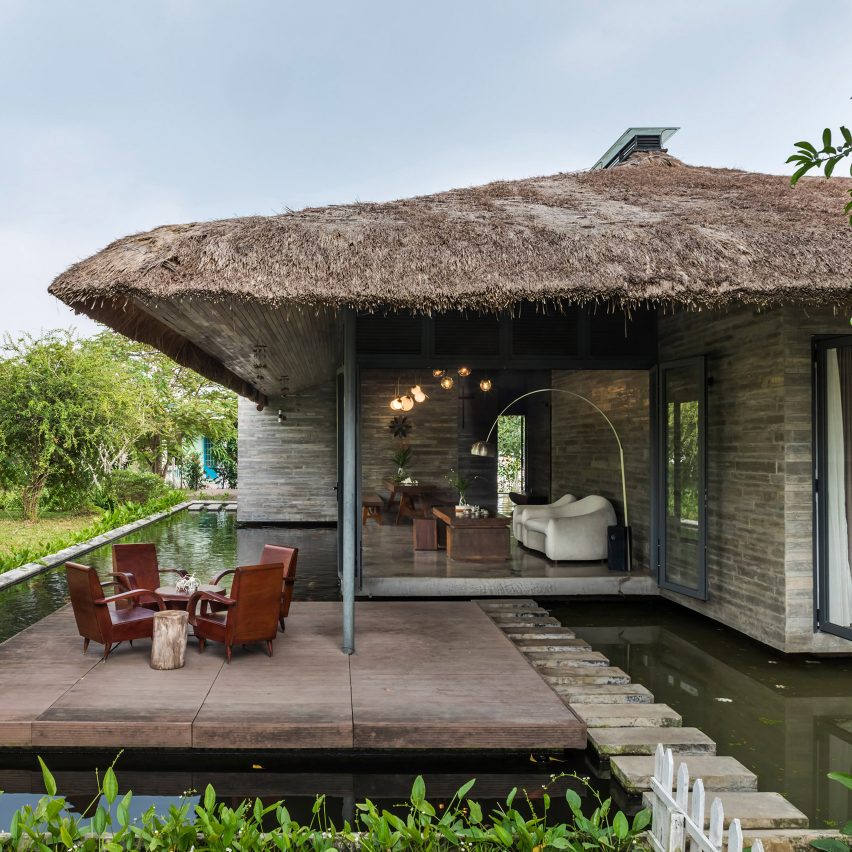 Photo by Hiroyuki Oki
AM House, Vietnam, by AmDesign Office, Time Architects and Creative Architects
The rugged thatched roof of this Vietnamese dwelling contrasts with the geometric concrete walls of its living spaces.
It offers a modern spin on vernacular in southwest Vietnam while introducing natural details to the home, which is surrounded by a pond.