
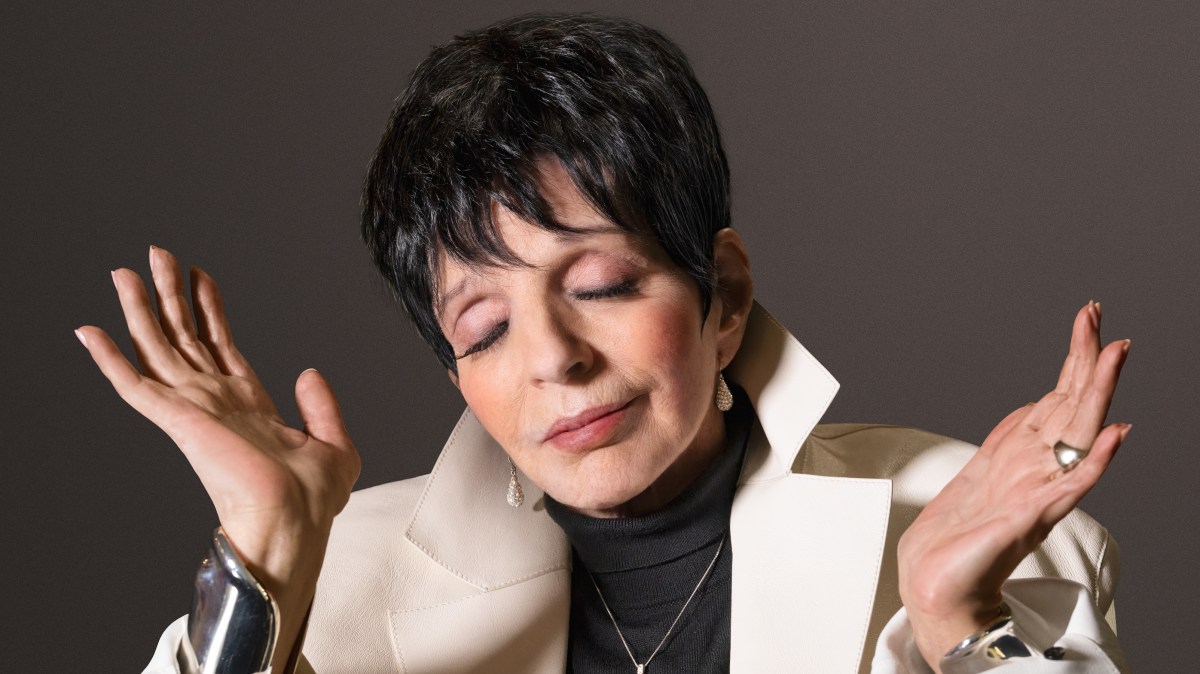
I’m the daughter of Vincente Minnelli, one of the greatest film directors of all time, and Judy Garland, one of the most defining entertainers of the 20th century. Like many parents, they spent hours deciding what my name should be. The way they made that decision will tell you a lot about the tribe I was born into. Late one night, while Mama was very pregnant with me, she shot up in bed, woke up Papa and said, “Vincente — Liza, like the Gershwin song. Liza Minnelli! Liza Minnelli! It’ll look terrific on a movie marquee!” Boom! The die was cast.
When I was born in 1946 Hollywood was still more like a close-knit community than a global media hub. Our house just above Sunset Boulevard was a two-storey gem with a dynamite view of the hills. It wasn’t unusual for my playmates to be the children of household names like Humphrey Bogart, Lauren Bacall, Lana Turner, Fred Astaire, Bing Crosby and Ira Gershwin, brother of George. Uncle Ira, as I called him, was my godfather and wrote the lyrics I’m named for.
The neighbourhood could be paradise or a nightmare. I remember playing with my friends Mia Farrow and Candy (Candice) Bergen, our nannies gossiping about Oscars. Down the street was Crosby, who was very strict with his children. His first wife drank herself to death while fighting cancer, and two of his kids died by suicide. Bogart and Bacall lived next door to us and loved my parents. My father was directing Lauren in Designing Woman when Bogie died of cancer in 1957. We were devastated. Our community had its share of tragic deaths, alcoholism, drug use, infidelities, broken marriages, suicides and other unravellings. Honey, there was a lot going on.
Judy Garland, my amazing mama
Nobody fascinated me more than Mama. She was a megastar and the press was always writing about her. They said she was a bad mother, that she drank too much, took too many pills and ignored her family. I’ve said this many times over the years, so let me say it again, loud and clear: Mama loved me passionately, and to this day I love her just as much. She loved Papa when she married him. But they learnt not to like each other.
Mama spent millions of dollars in rehab units and hospitals, praying that they could heal her. She had rounds of electroshock therapy. Nothing worked. It’s no secret who the culprits were. Industry executives — and, I’m told, my grandmother — had poisoned her with uppers and downers since she was a child star.
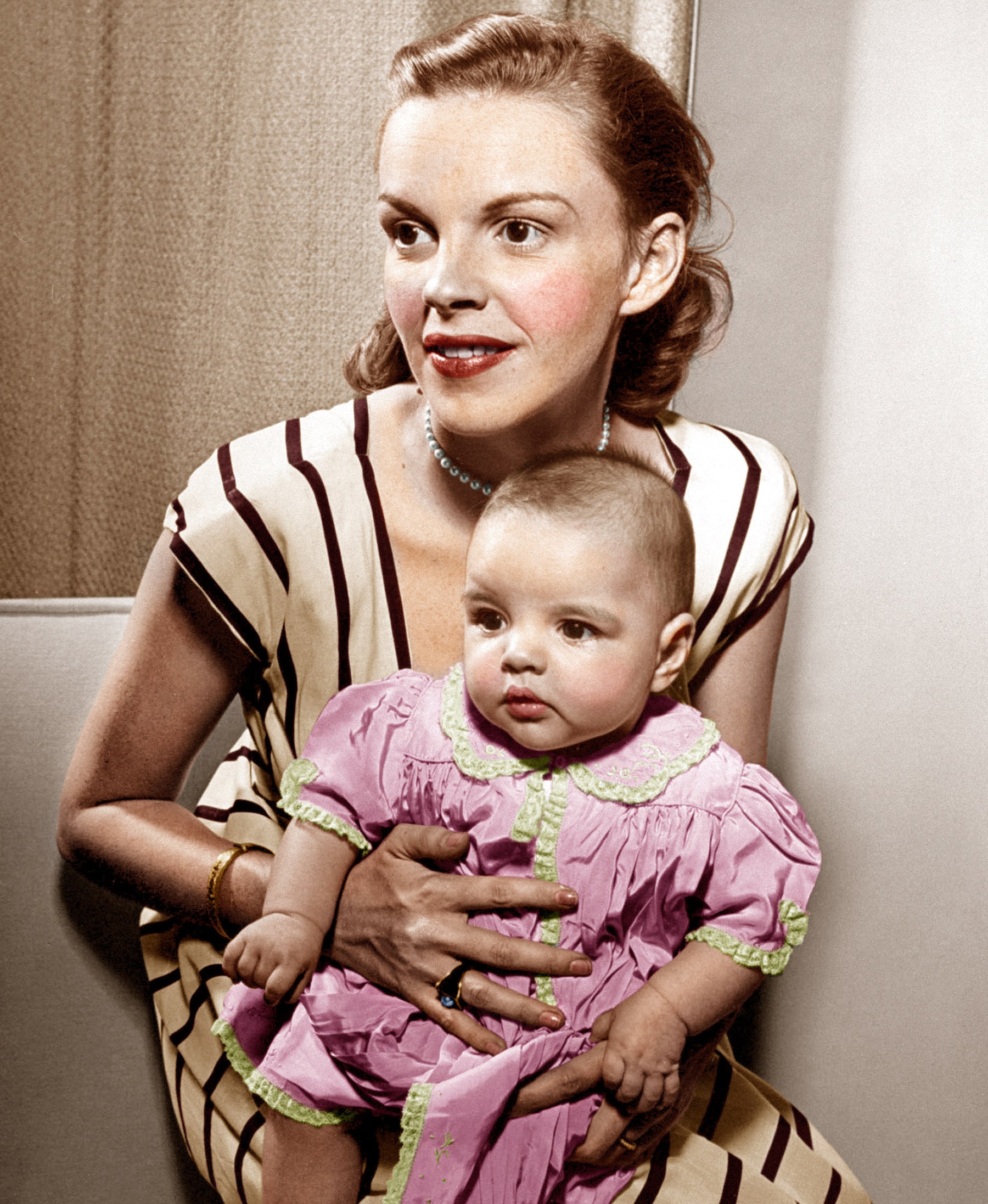
Mother and daughter in 1946
SHUTTERSTOCK EDITORIAL
My sister, Lorna, was born to Mama and her new husband, Sid, on November 21, 1952. Within days Mama tried to kill herself. She was found collapsed in her bathroom and the floor was covered with blood. Mama had slashed her neck with a razor blade. Doctors raced to the scene and stitched her up. The next morning Mama was in a great mood. Despite the bandages she wolfed down a lumberjack breakfast, asked aloud why she was always battling depression, then brightened up the world around her like nothing had happened. I fooled myself into believing she was immortal.
In 1955 she gave Lorna and me a choice; our brother, Joey, was less than one year old at the time. We could stay in Los Angeles. Or we could come on the road with her. We’d be in and out of different hotels, different schools (I’d eventually attend 22 of them) and different cities. “When do we leave?” we answered in unison. By 13 I was my mother’s caretaker — a nurse, doctor, pharmacologist and psychiatrist rolled into one. I’d give Mama drugs every day so she could function. I once asked her, “What happens after happily ever after?” She said, “You’ll find out.” She also said, “I believe in you, Liza, so you believe in you.” She was gutsy.
I lost track of the number of times we snuck out of hotels early in the morning because Mama was flat broke and couldn’t pay the bill. Each time she made a game out of it for us kids. We’d put on all the clothes we could, maybe five layers, and walk out laughing, leaving the rest of our stuff behind. On our way out of the lobby, Mama would whisper, “Oh hell, I needed a new wardrobe anyway.” Then, with a straight face, she’d say: “Remember, I am Judy Garland.” Mama was the most fun person in the world. She had a genius for finding comedy in tragedy, a survival skill. That’s how she handled life’s toughest moments — with a clever quip, a pill and a drink.
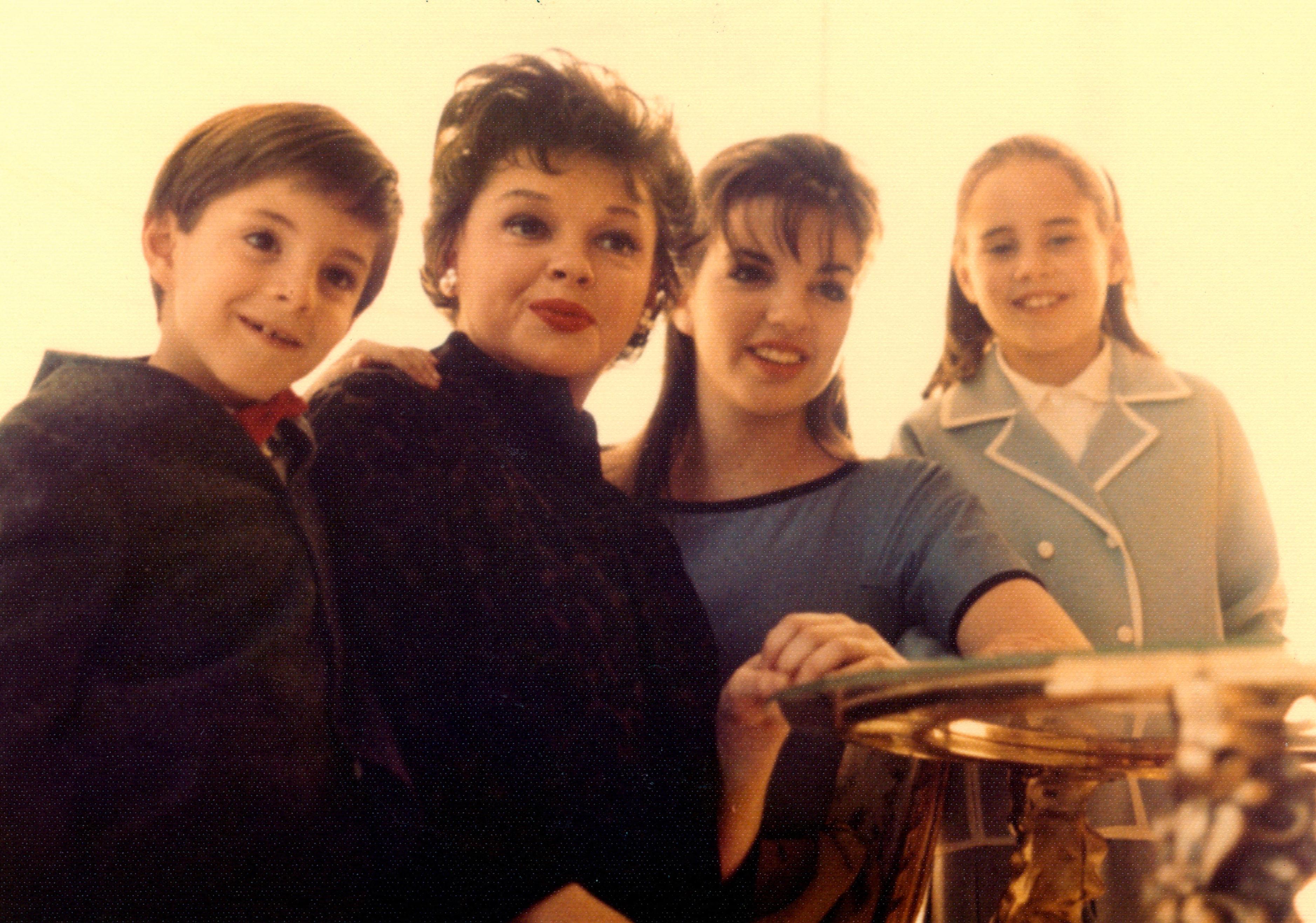
Garland, second left, with her children, from left, Joey Luft, Minnelli and Lorna Luft, 1961. Joey and Lorna were from Garland’s third marriage, to the film producer Sidney Luft
ALAMY
Mama was found dead in her London flat on the morning of June 22, 1969. I cried for eight straight days. I didn’t believe Mama would kill herself, even though that’s what the press said. Hell no! She was a performer to the end, and wouldn’t go out wearing the nightgown they found her in. I was relieved by the autopsy finding: Mama had died from an “incautious self-overdosage” of sleeping pills. For me it was a time of unimaginable sadness and fateful change. A doctor prescribed Valium to help me relax before the funeral. It was the first time I took any such drug and I marvelled at how quickly it took the edge off. Where had it been all my life? Valium eventually triggered something dreadful in me, like a match igniting a fire. A one-day blessing turned into a habit, then a full-blown case of addiction. It was a final gift, a genetic inheritance from Mama I could not escape.
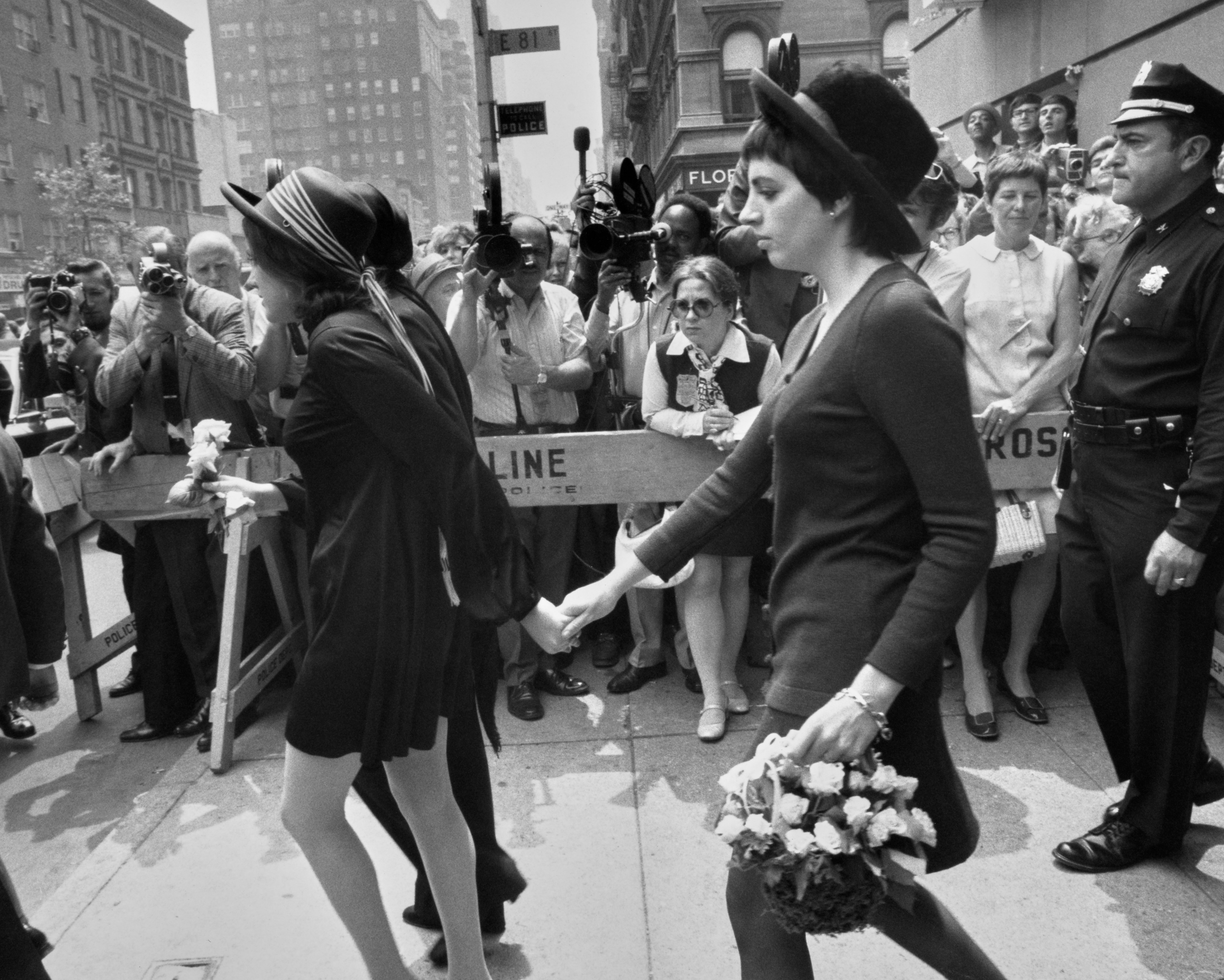
Minnelli and her siblings leave the funeral service for their mother in New York on June 27, 1969
GETTY IMAGES
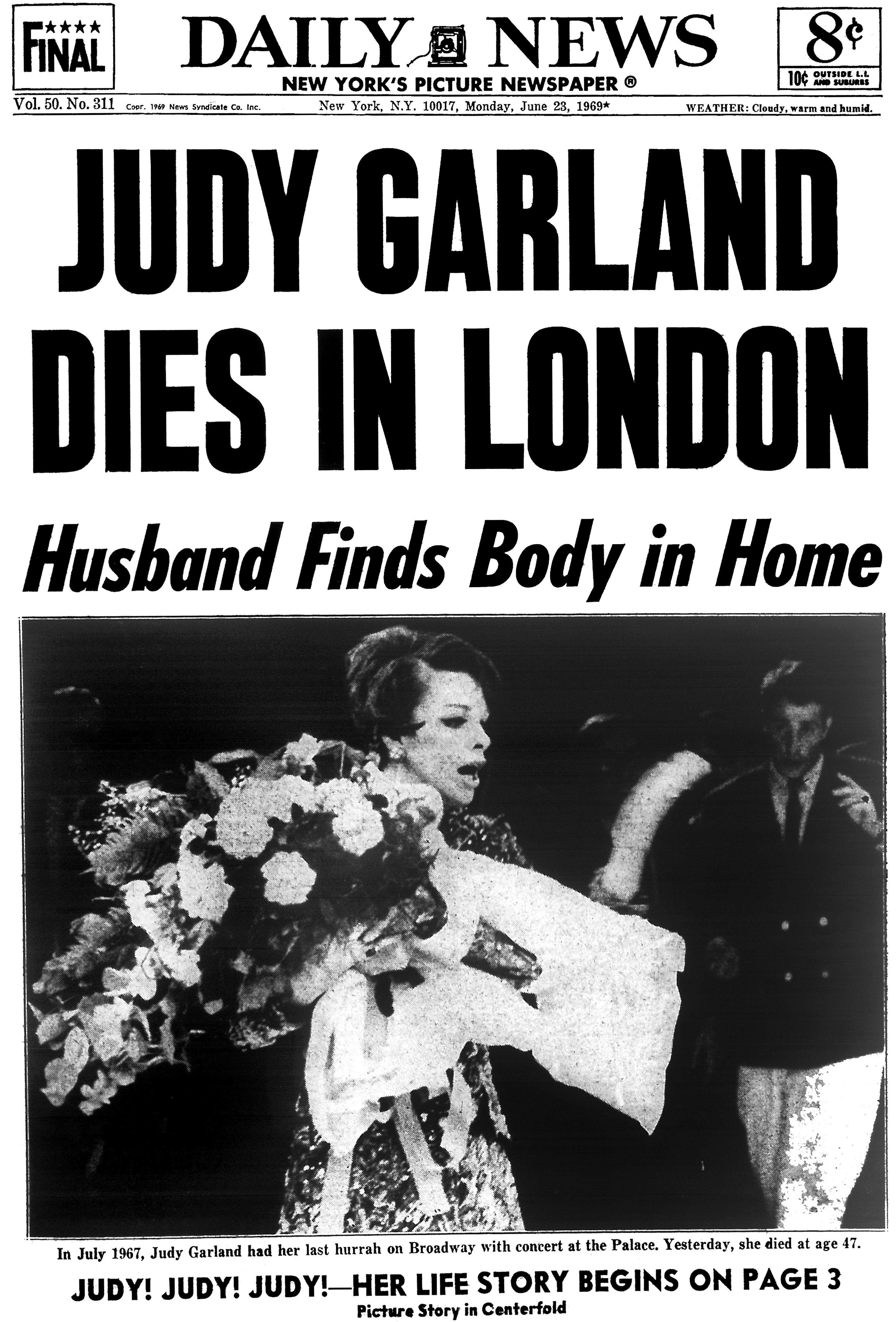
News of Garland’s death made the front page of New York’s Daily News on June 23
GETTY IMAGES
The love of my life — who turned out to be gay
At 19 years old I was sitting in a New York City ballroom for Broadway’s biggest night. The 1965 Tony awards were being announced, and I couldn’t believe what happened: I won best actress in a musical for Flora the Red Menace, the youngest winner ever. I was the original “nepo baby”. Now, at last, I had my own identity. I’d go on to win three more Tonys and be nominated twice for an Oscar (winning one, for playing Sally Bowles in Cabaret). I’d win an Emmy for my concert film Liza with a “Z” and receive a Grammy Legend award. I’d enjoy an extraordinary career doing what I love. But that would only be part of my story.
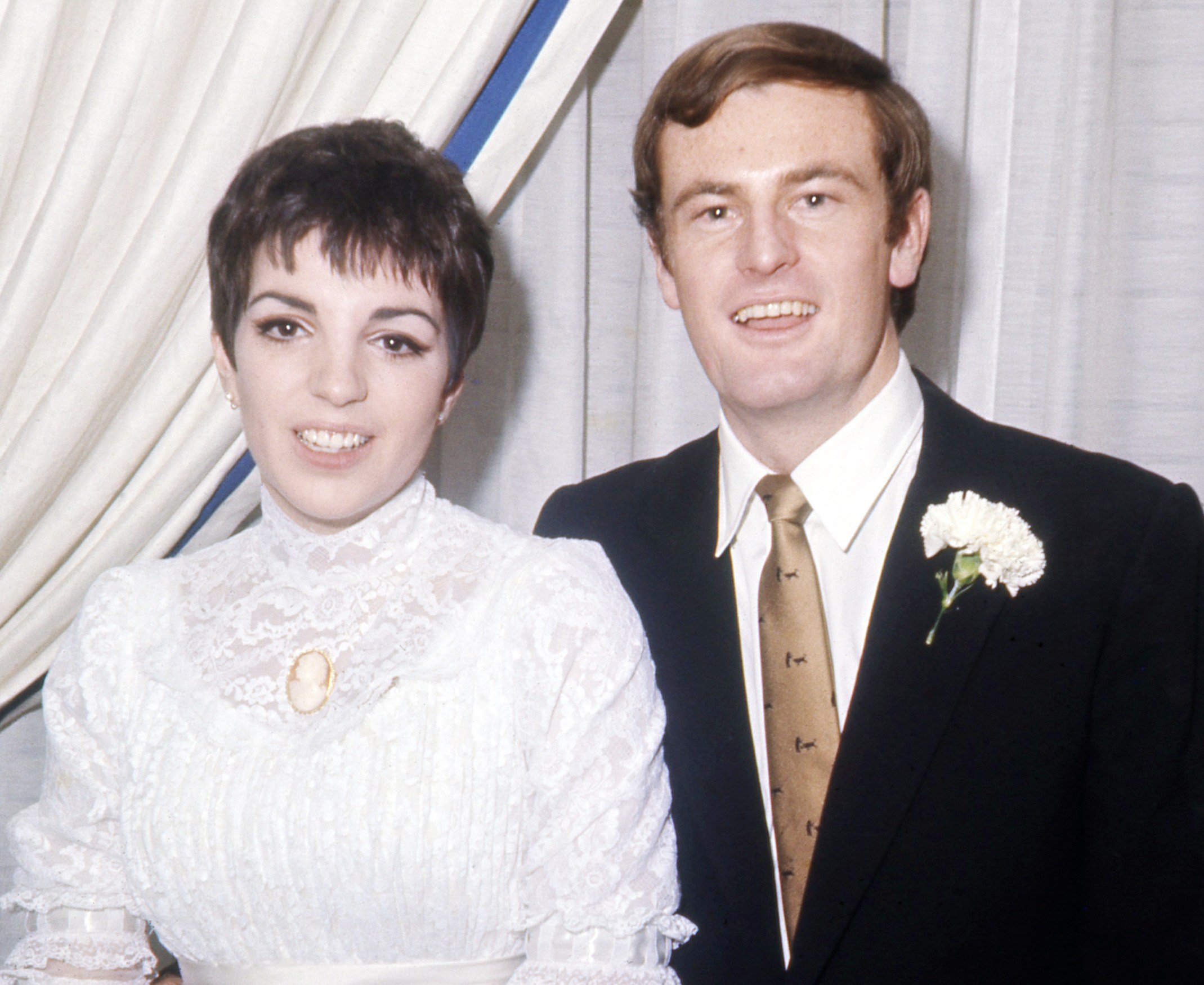
Minnelli weds her first husband, the Australian singer Peter Allen, in 1967
GETTY IMAGES
When I got engaged to the Australian singer Peter Allen in 1964 I knew I had met the love of my life. We married in 1967. I asked myself, “What could go wrong?” One afternoon, returning early from an indulgent shopping spree, I walked into our apartment and found Peter having passionate sex. With a man. In our bed!
At first I couldn’t process it. It was impossible for my heart to absorb what my eyes had seen. As the other gentleman quickly dressed and disappeared, I felt fragile and afraid. All I could do was stand there. Peter walked up and held me tightly. We both began crying. He told me for the first time, “Liza, I love you more than anyone in the world… and I’m gay.” This didn’t break us. We continued to love and respect each other and were married for seven more years. Did we still have an active, fulfilling sex life? Yes. You gotta know, Peter was a very sexy guy. Our love for each other remained powerful, even though we’d both eventually move on. It still has a precious place in my heart, years after Peter passed away from Aids in 1992.
Becoming Sally Bowles
I’d wanted to play Sally Bowles on Broadway since 1966 and when I didn’t get the part I sang Cabaret in concerts around the world, biding my time. Industry gossip that I was under consideration for the film in 1971 wasn’t enough for me. When I heard that Cy Feuer, who would produce it, was in Paris I quickly arranged a meeting with him, dressed up in a slinky dress from the 1930s — something Sally might wear — and invited Cy to see my show that night. He was intrigued. Bingo! The audience went nuts that evening, and the high point was my performance of the song Cabaret. Let’s just say I sang it to him, for him, at him, all over him, and baby I kept my focus on him. I wasn’t singing for an audience. I was singing for Cy. He got a glimpse of my Sally and I could tell he was blown away. I got it.
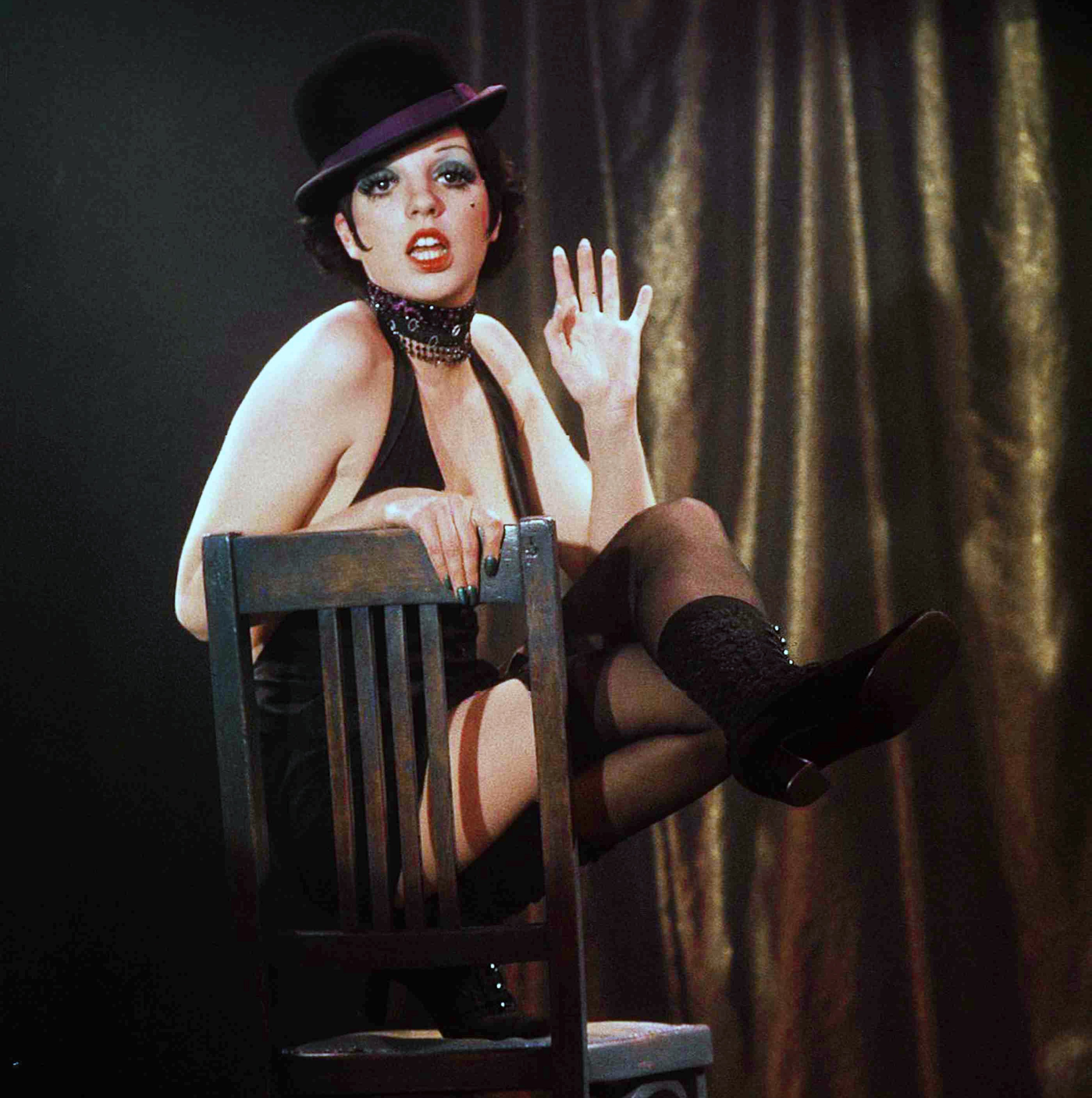
Playing Sally Bowles in Cabaret (1972)
GETTY IMAGES
Bob Fosse was directing. He took a foreboding tale about the rise of fascism in Germany and turned it into a cinematic tour de force. Fosse had a profound influence on me as a singer, dancer and actress. Did we get physically close? It would have been impossible not to. We had chemistry, a back-and-forth that was electric and sometimes felt like a bonfire. Yes, there was sexual energy between us. Yes, a lot of people hated him. I was crazy about him.
It was the most exciting time of my life. On the day we wrapped I cried because I didn’t want to leave the set.
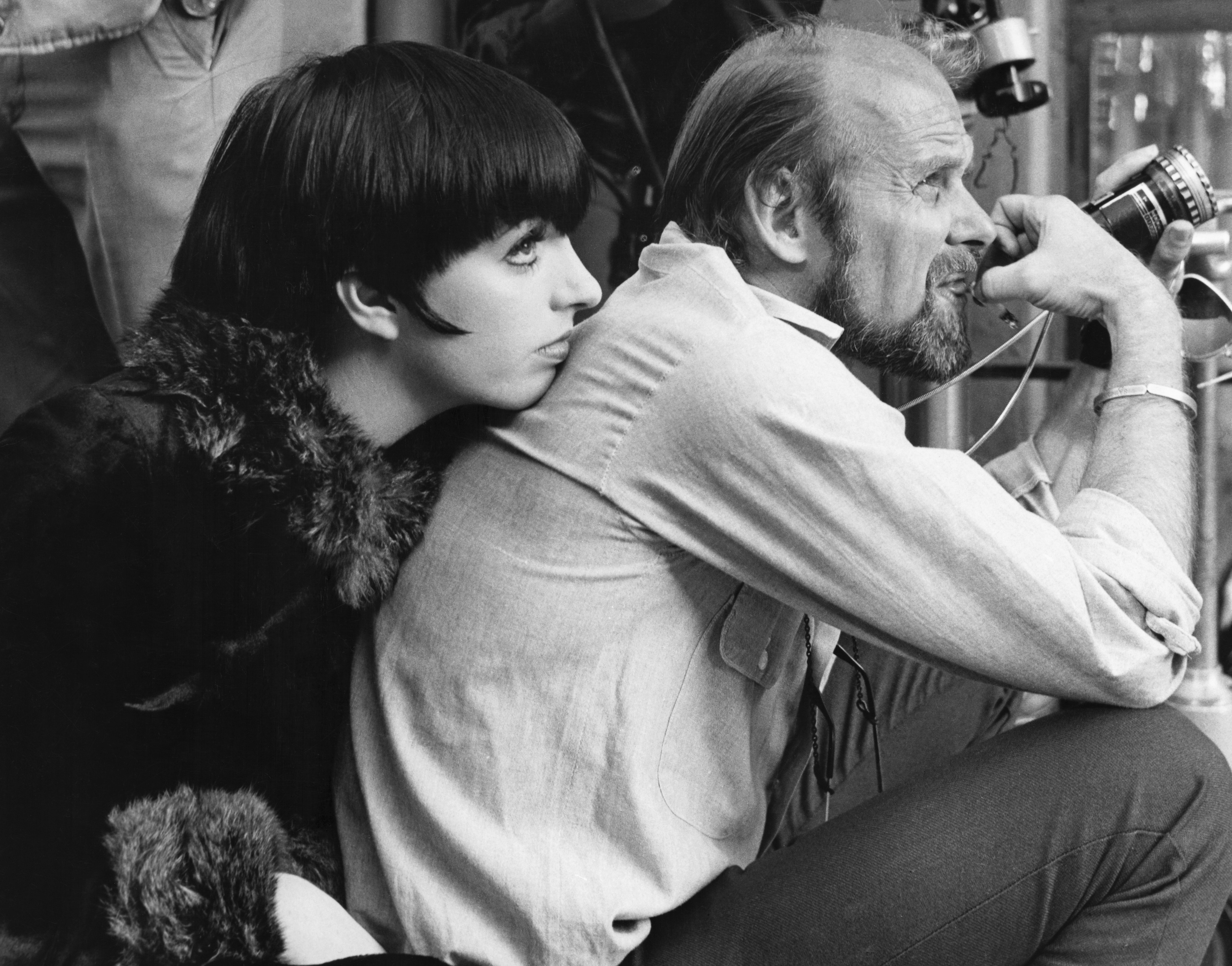
With Fosse on the Cabaret set. The director was a powerful influence on Minnelli as a singer, dancer and actress
The many sides of Peter Sellers
After winning my Oscar in 1973 more doors opened for me. I looked forward to my biggest concert tour yet. I was flooded with movie scripts. Life was terrific. Although I was still married to Peter, there was a new love in my life — Desi Arnaz Jr, the son of Lucille Ball. We were engaged but my situation was about to become even more complicated.
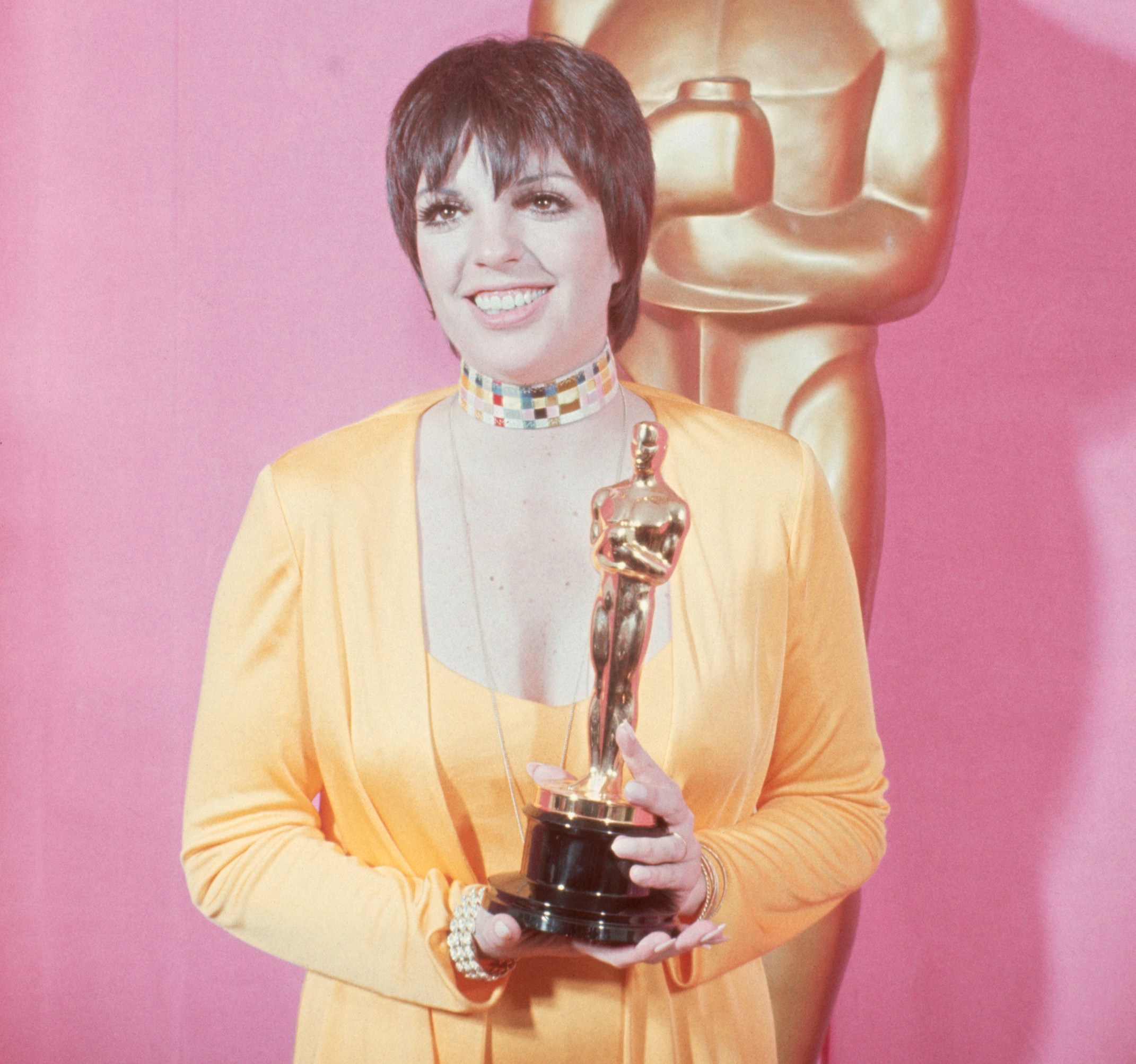
Winning the Oscar for best actress for Cabaret at the Academy Awards in 1973. The film won eight Oscars in all
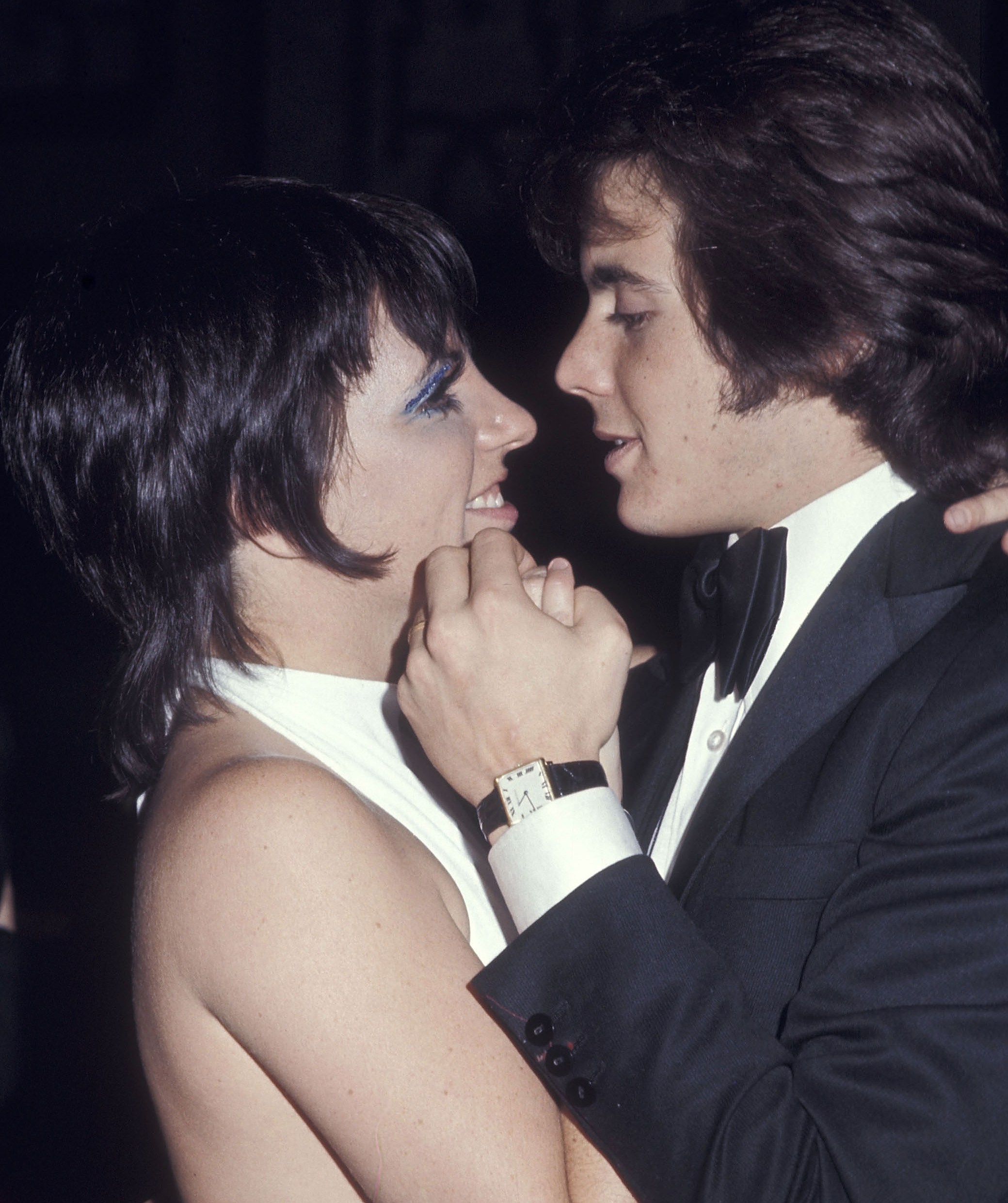
Her engagement to Desi Arnaz Jr, the son of Lucille Ball, in 1972 was short-lived
GETTY IMAGES
Nine years earlier, when I was 18, I had lunch in London with Mama and the actor Peter Sellers, who was brilliant, cutting, genial and vaguely menacing all at once. Also hugely entertaining. Now I was back. He sat in the front row for my Palladium show, and when he came backstage afterwards there was an electrical charge between us. We had a marvellous time drinking bottle after bottle of exquisite champagne and acting out scenes from his films. Our romance began that night in my dressing room. I absolutely believed we were madly in love. News leaked quickly, filling tabloids with hot copy and images. Peter and I called a press conference. We announced to the world that we were getting married. If this is confusing to you, how the hell do you think I felt? I was married to a gay man at the same time I was engaged to two other men!
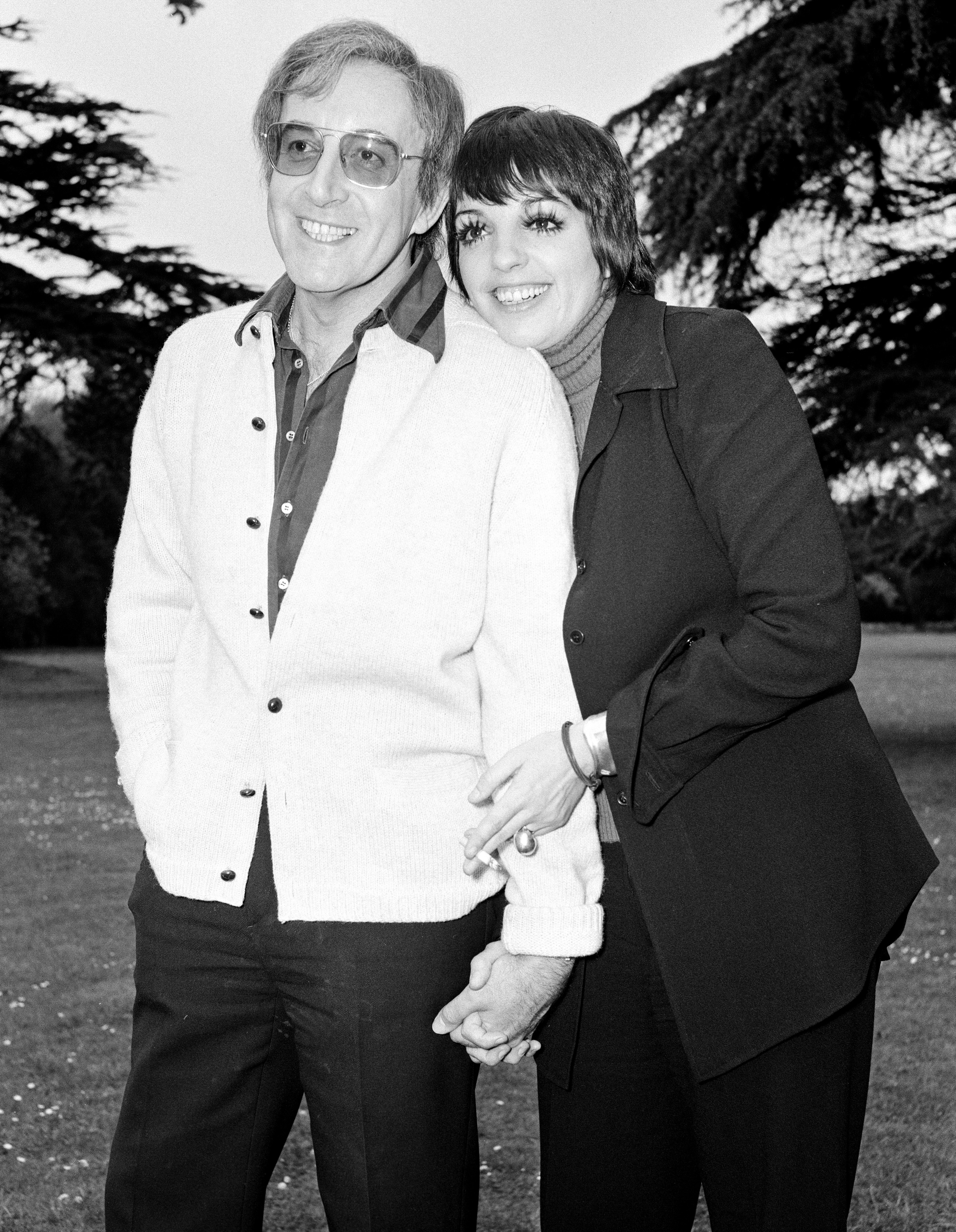
Minnelli and Peter Sellers announce their engagement in London in 1973
GETTY IMAGES
It didn’t last. Peter began unravelling. He would scold me, taunt me, bully me in the voices of different characters. They weren’t fictitious or part of a script. They appeared to be coming from somewhere deep in him — and weren’t pleasant to be around. Then he’d calm down and change back to the warm, loving man who I thought he was.
Peter had a raging case of schizophrenia, and there was no way I could or would put up with that. In fairness, I think he had reached the same breaking point with me. We were both friends with Joan Collins. One day he called her and said, “I’ve been locked up with Liza. I’m suffocating! Can I come over?” Joan, who is still a good friend of mine, said sure, and Peter drove to her house in Highgate, a London neighbourhood with a significant number of Jewish residents, wearing full Nazi regalia! When he got out of the car, he shouted, “Sieg Heil! Sieg Heil!” It was a costume from a film he was making and he stayed in character. This is great if you’re directing him but who the hell was he to pull this crap in everyday life? Yes, Peter was a genius. Big deal.
Marty and Bobby
New York, New York was to be a trailblazing musical about the Big Apple, set in 1945, in the aftermath of the Second World War. Martin Scorsese, a charismatic young director whose Taxi Driver had won the best film award at Cannes, would helm the picture. Robert De Niro would play the male lead. They wanted me — only me — for the female lead. I could just see it all: a return to the Oscars. A gracious speech and a second award, a homecoming to the winner’s circle.
I had barely been married for two years to my second husband, Jack Haley Jr. Marty and I quickly got swept up in a passionate romance. Our love affair had more layers than a lasagna. We were both Italian. We both had volcanic tempers. He was a diabolically handsome man who shared my love for film. I was a director’s daughter who respected Marty’s role and authority.
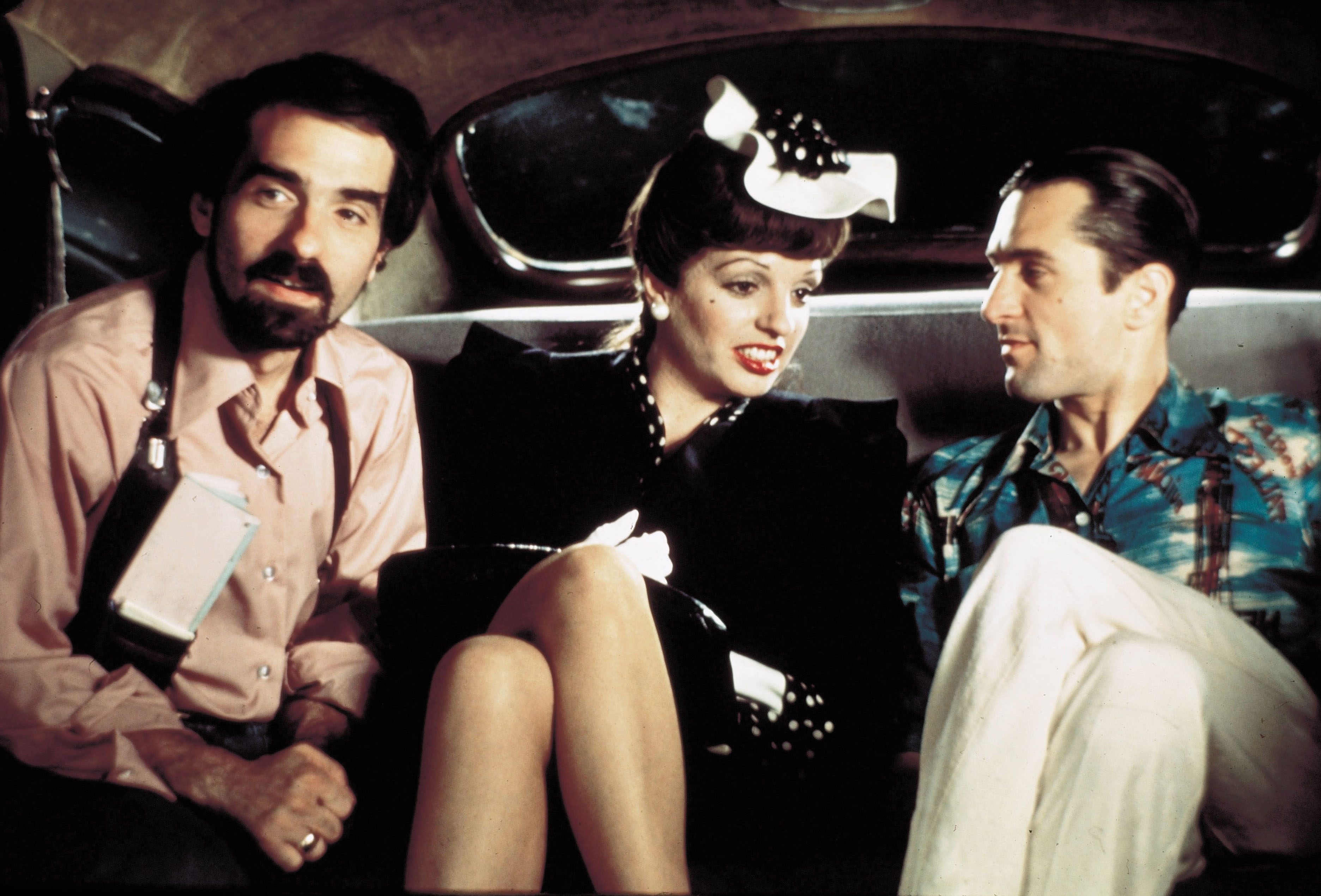
Filming New York, New York with Martin Scorsese and Robert De Niro in 1977. Minnelli had an affair with the director
B23
The dynamic was similar to my relationship with Fosse. Both men were married. I, too, was married when both these affairs began. Once the fire was lit, it burnt us all. I’m not here to judge or apologise, because it was deeply compelling at the time. Marty and I couldn’t get enough of each other, and it was the worst-kept secret on the set. As we filmed, Marty became a heavier and heavier user of cocaine. On the set, in between takes and in the evening. We were constant companions and I was there beside him. Line by line. Nothing good could come of it.
By the time we wrapped the rough cut was four-plus hours. Impossible to market. Our $7 million budget rocketed north of $12 million. A film that was supposed to be finished in 14 weeks went more than 22. The movie did not live up to box-office expectations, although I was over the moon about New York, New York, the final number that was written for me. It’s been a staple of my career, a powerhouse love song to the city I love. I never get tired of singing it. True, I’ve shared it with Frank Sinatra over the years. And he did just fine with his version. But I got there first, baby. Thankfully Marty and Bobby went on to have amazing film careers. I did not.
Girl talk with Princess Diana
I met Princess Diana at movie premieres, fundraisers and the like, and we became friends. She and I fiercely guarded each other’s privacy. We’d catch up and meet for tea. Sometimes she’d come to my hotel and we’d have lunch. My instinct was always to protect her. She was a great lady, under siege from the moment she entered the royal family. We talked girl talk, and could have spent weeks together. We had some great laughs at the party after the London premiere of my film Stepping Out in 1991. Sitting at a table with two Cokes, we smiled for the cameras. When they turned away, Princess Diana whispered, “It’s good to see you, feisty lady!” I laughed and said, “Good to see you, too!” We had a long conversation that night.
Diana spoke candidly about the pressures she was facing, in her married life and as a member of the royal family. I told her about my own experiences. It was honest and real. We understood each other. She was one in a million. After her separation from Prince Charles she decorated her private quarters at Kensington Palace with memorabilia that meant something to her. I later learnt that, among a handful of framed photographs on her living room mantelpiece, there was a picture of me. Tragically, like so many people I love, she was gone too soon.
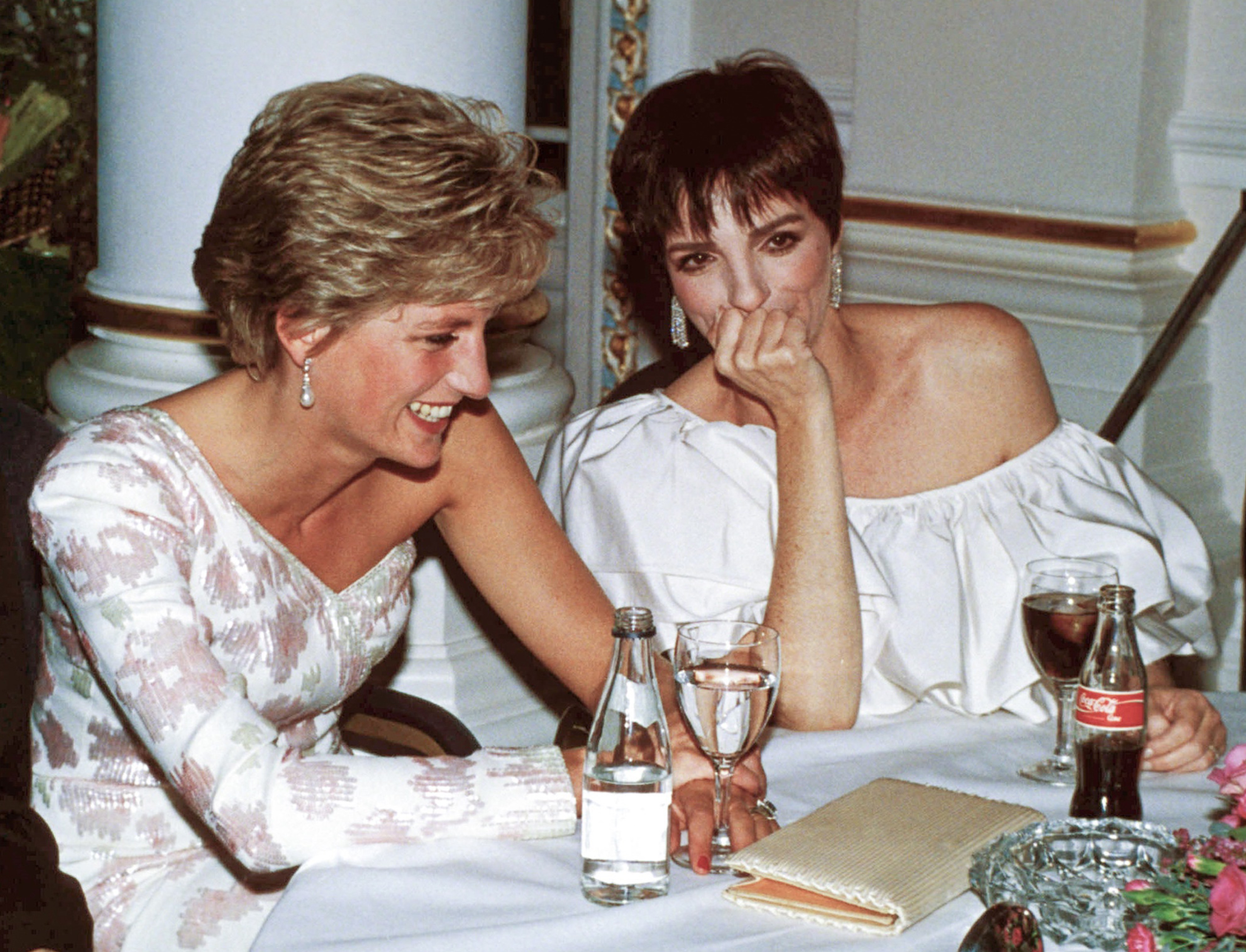
Laughing with Princess Diana at a party for the film Stepping Out at the Langham Hilton hotel, London, 1991
GETTY IMAGES
The mosquito bite
On October 8, 2000, paramedics rushed to the Florida home where I was staying. Two of my staff found me collapsed on the floor. My speech was slurred, my facial muscles sagging. Dr Maurice Hanson, a neurologist, later told the press that I had a severe case of encephalitis — a sudden inflammation of the brain that can be fatal. I was warned that I might never read, walk, sing, or talk again. Excuse me? All I could do was accept personal responsibility for what had happened. Friends found more than 60 OxyContin pills stashed under my mattress and more in other places where I was staying. Doctors told me the abuse of narcotics and other drugs can trigger brain inflammation, and OxyContin had brought me to this terrifying place. Still, when we told the public about my hospitalisation I said that I got it from a mosquito bite. I realised I could die, and if I did, how it happened was nobody’s business. So I kept the real story quiet. Gradually I got better.
David Gest and the worst day of my life
David Gest became my fourth husband in 2002. This guy claimed to love me. He claimed to be very rich. He vowed to change things. And he did. If I could wave a magic wand, I would have avoided this creep like salmonella. I’d have kicked his bony ass to the ground wearing stilettos — which is something he later accused me of doing. How absurd. Why on earth would I ruin a perfectly beautiful shoe? This idiot should have been nothing more than an ugly speed bump in the road.
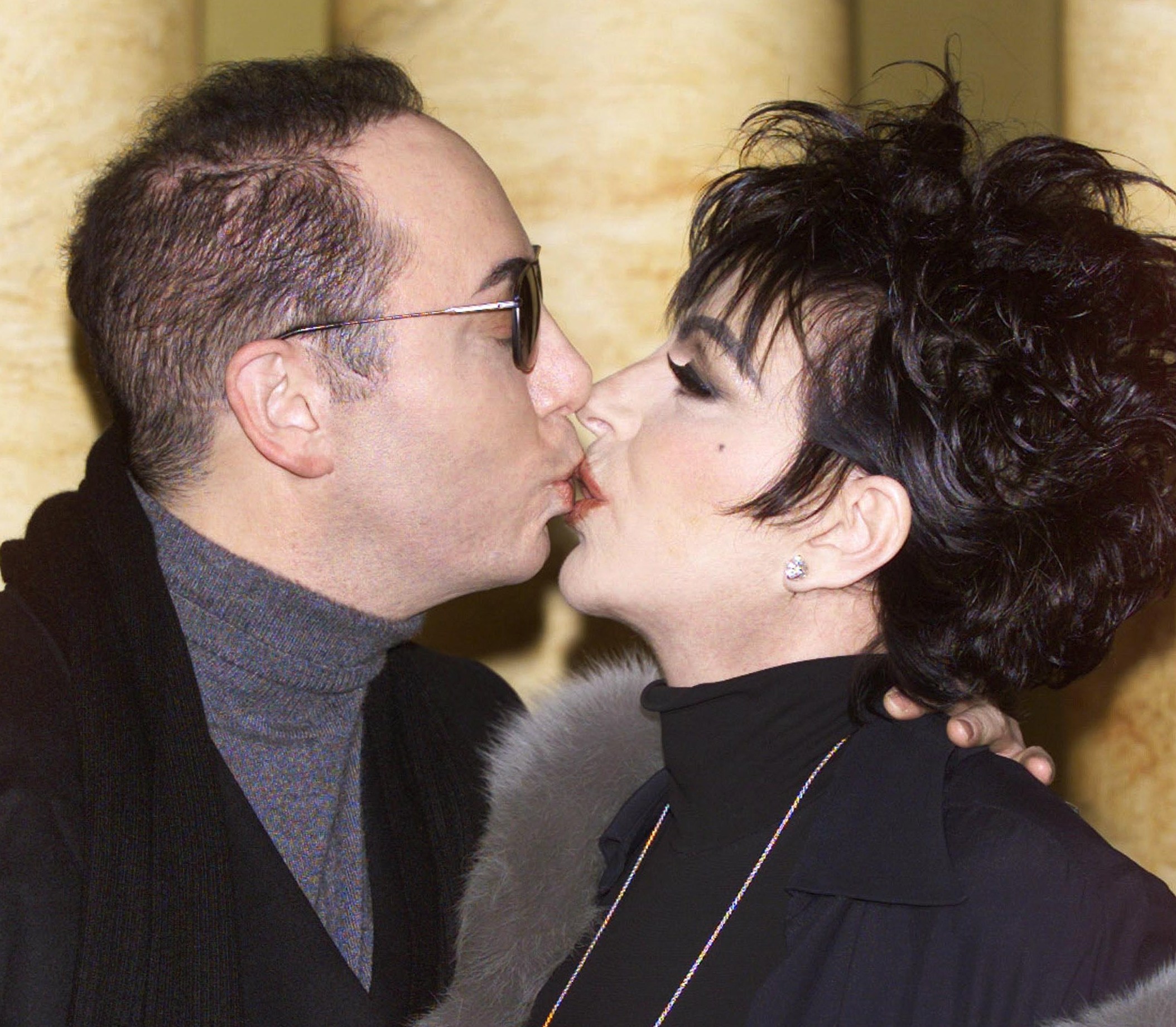
With fiancé No 6, the American producer David Gest. They married in March 2002
When we finally went our separate ways in July 2003 I was overjoyed. But old problems were haunting me. The physical pain of pushing my body onstage for decades had done its damage. I was now 57, with arthritis, sprains, replaced parts and surges of anxiety about my future. Several months later I screwed up big time. It was quite possibly the worst day of my life.
While my sweet new assistant was helping me pack for a trip I quietly walked into the living room of my Upper East Side apartment, opened the front door, took the stairway down a floor or two, and then got on an elevator to our lobby. Within minutes I was on the street, walking to Lumi’s, a favourite watering hole. I don’t remember what I drank. It didn’t matter. Soon I was wobbling out to the street. I made my way unsteadily down Lexington Avenue. Within minutes I collapsed, falling to the sidewalk, almost comatose. I lay on the ground for God knows how long. And the most horrific thing is that hundreds of people stepped over or around my body. What must they have thought? Did they see another homeless person, drunk and passed out on a busy sidewalk? Or did they take a closer look and see Liza Minnelli, dead to the world? I’ll never know for sure. I’ve had difficult, embarrassing, crazy moments in my life, but nothing like this. After my team finally found me I took a long, hard look at myself in the mirror and was more ashamed than I’d ever been in my life.
Rescued by Ron Howard
A month later, a stroke of incredibly good luck came my way. If there’s any lesson, it’s that it helps to be a good babysitter. In 1962 Papa was making The Courtship of Eddie’s Father, a romantic comedy starring an adorable little rascal named Ronny Howard. I babysat Ronny, as I’d always call him, and we became pals. Years went by, 40 to be exact. My phone rang one day. It was Ronny, now Ron Howard, Oscar-winning director. He’d created a new TV series called Arrested Development. There could be a great cameo role in it for me. Was I interested? I looked at the early episodes and was hooked. The role they had in mind was a ditzy rich widow who runs through a flurry of men, some of whom she beds. She’s manic and loveable. What’s not to like? I signed on.
Could I rise to the same comic level as the cast around me? You bet your ass I could. The writers had a field day with riffs about the real me. My character, Lucille Austero, wasn’t just a rich lady. She owned a rehab centre! When my dead body popped out of a wall, someone commented, “She looks like Judy Garland.” The theme song from Cabaret played as another character drove away from the scene. Nice send-off, fellas!
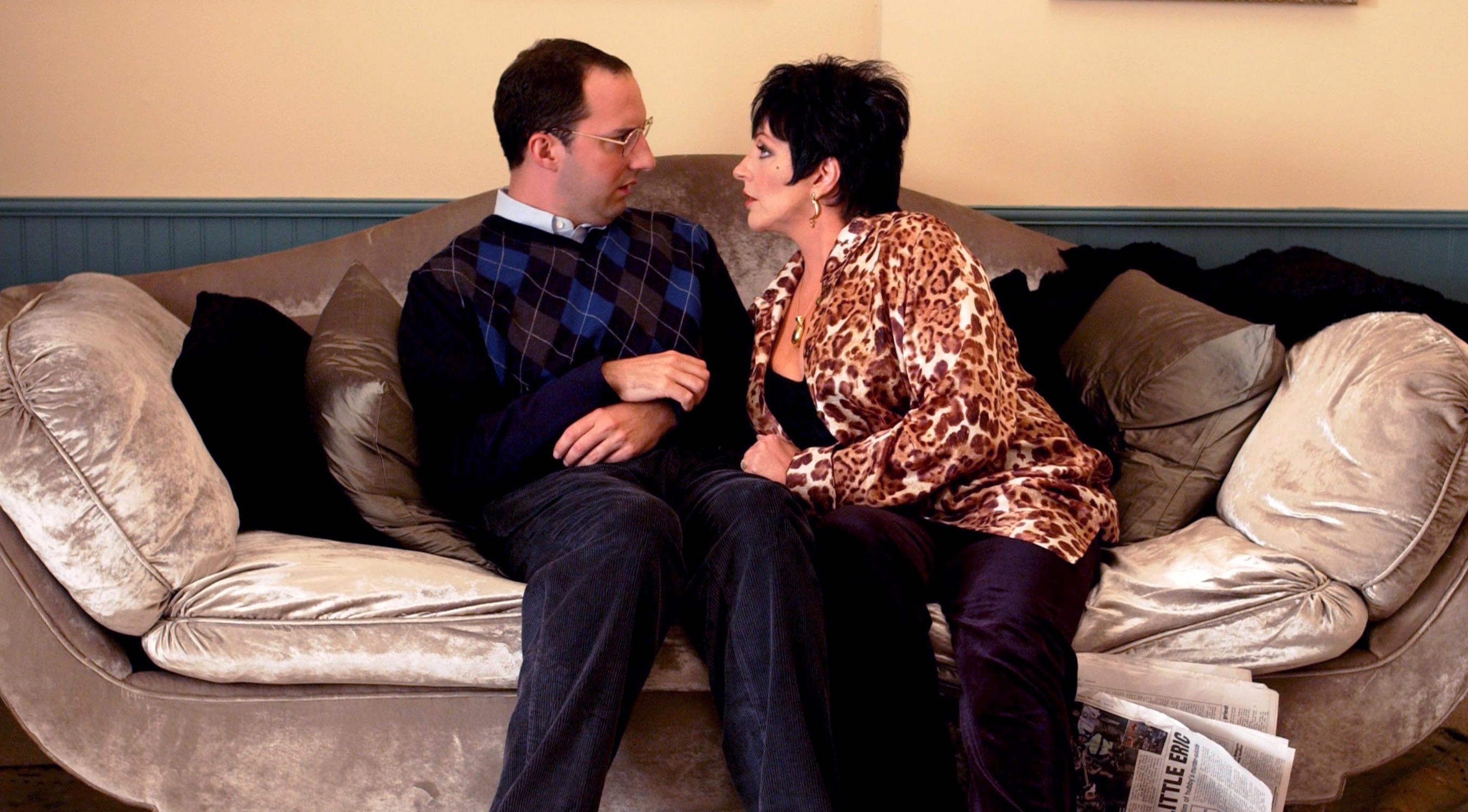
With Tony Hale in the US sitcom Arrested Development, 2003
SHUTTERSTOCK EDITORIAL
Sabotage at the Oscars
In 2022, the 50th anniversary of Cabaret, the producers of the Oscars invited me to co-present the best picture award. I had goosebumps just thinking about it.
I expected to sit on stage in my usual director’s chair. It’s easiest on my back. Minutes before airtime I was ordered — not even asked — to sit in a wheelchair or not appear at all. I was stunned. I was told it was because of my age, which was insulting, and for safety reasons, which was bullshit. I fought back but my co-presenter — Lady Gaga, who I had mentored and whose talents I had admired for many years — insisted she would not go on stage with me unless I was in a wheelchair.
Then, incredibly, she asked if I wouldn’t be better off going home. At one point she quizzed me, to see if my memory was intact. “What’s the name of your film we’re celebrating this year?” And “What’s the name of the character you played in the film?” Like I was an idiot.
I wondered if something else was going on. Was this just a ploy to get me off the stage so my co-presenter could have the spotlight all to herself? I’ve always said I was tough enough to handle whatever Hollywood sent my way. But what happened that night was a knockout punch. The lights were dimming and I was out of options. They wheeled me out.
Sitting in the wheelchair, I was much lower down than I would have been in the director’s chair. Now I couldn’t easily read the teleprompter. I was jittery instead of my usual collected self. So when I stumbled over a few words, Gaga didn’t miss a beat. “I got you,” she said, holding my hand and leaning down over me. That night and in the days that followed she was widely praised for this seemingly gentle gesture, which came at my expense. I believe she bears some responsibility for the havoc before we went on stage. I believe I was sabotaged.
I was so hurt by this young woman. Stefani Germanotta, who created the fantasy of Lady Gaga, became someone I didn’t know on Oscar night.
As I rode home I thought more seriously about writing a memoir. I’m sure there are plenty of people out there eager to cash in on the life of Liza Minnelli, just like they did with Mama and Papa. Sadly, my parents never got the chance to set the record straight for themselves. But now I do.
It’s not just about the good times. My battle with addiction has been as much a part of my story as my life as a performing artist. As I write this, I’ve been sober for 11 years. It’s my greatest personal victory. If you’re fighting the same battle, please — please — reach out and get the help that is available to you and could save your life.
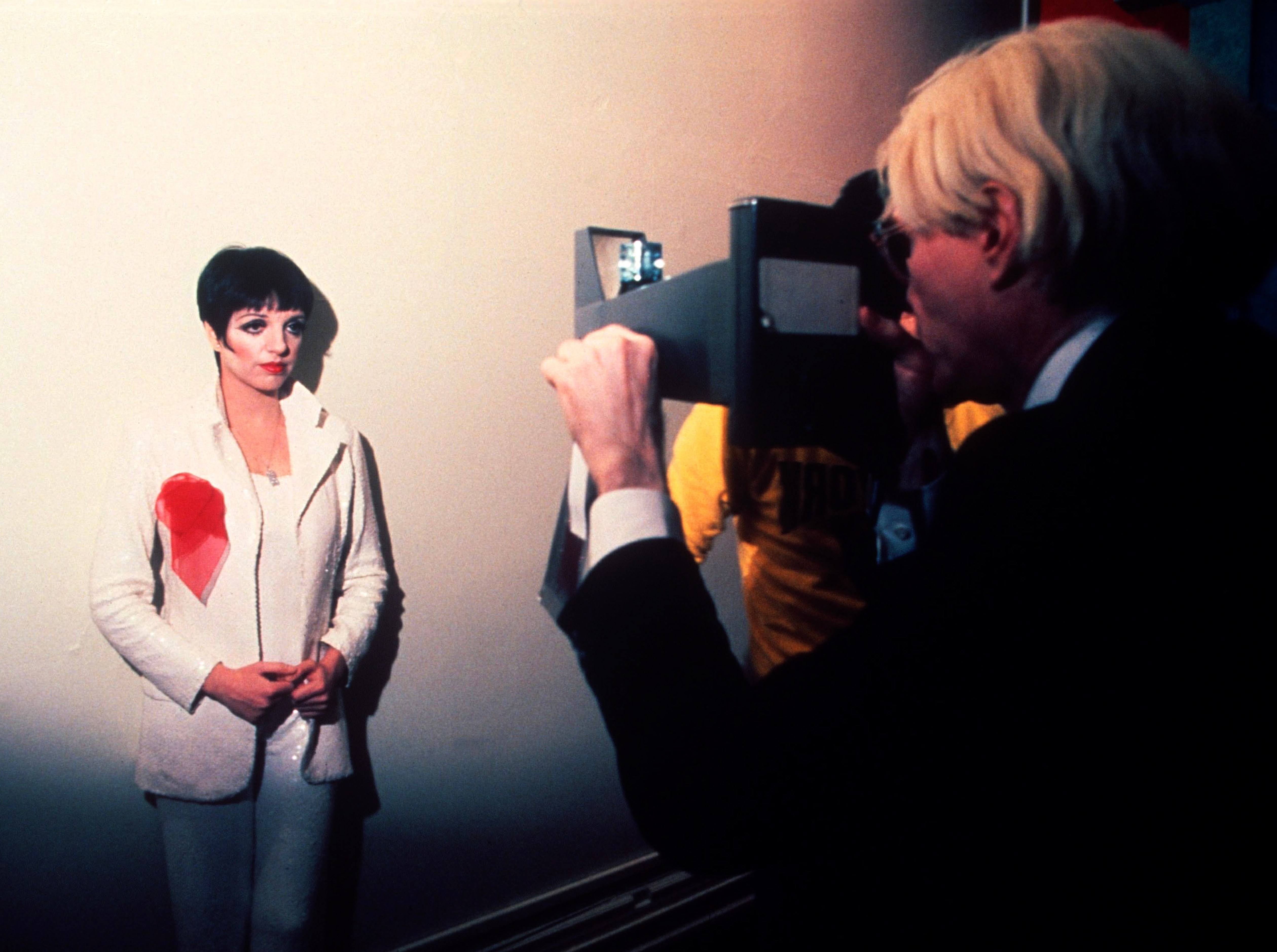
Liza Minnelli poses for Andy Warhol, 1978
SHUTTERSTOCK
One last thing: If you’re picturing me in a rocking chair on a porch somewhere, looking back nostalgically, guess again. As much as I can be, days away from turning 80, I’m still in the game, baby. I was given a dancer’s body that steadily weakens, but also a big heart and a life force so strong, I don’t know where the hell it comes from. To paraphrase the best song in Bye Bye Birdie, the show that lit a flame in me to entertain when I was a teenager, I’ve got a lot of living left to do.
© Liza Minnelli. Extracted from Kids, Wait Till You Hear This! My Memoir as Told to Michael Feinstein (Hodder & Stoughton £25), to be published on March 10. Order a copy at timesbookshop.co.uk
“I should have called the cops”Read the full story of Liza Minnelli’s marriage to David Gest in Monday’s Times