
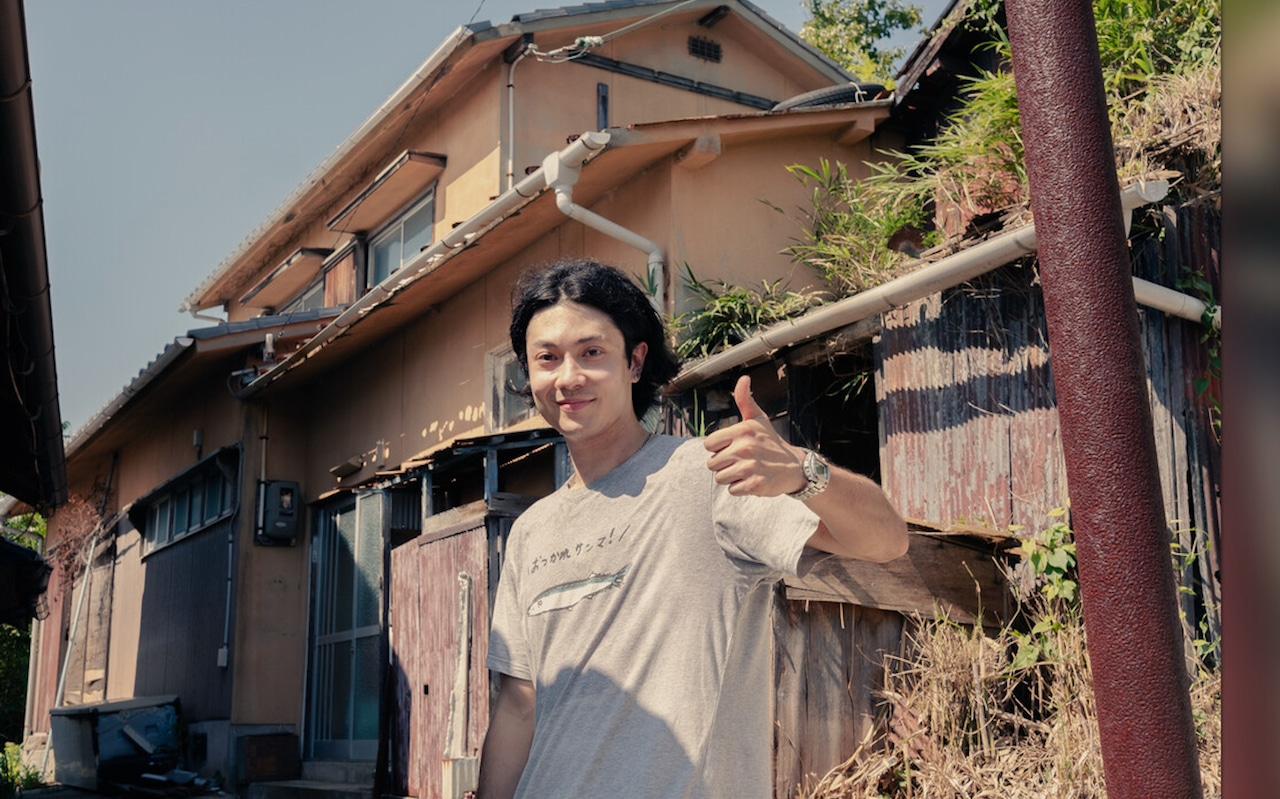
It was in Worcester that Noriyoshi Needle’s love for art blossomed.
Growing up in New England’s second-largest city, Needle, 27, often spent time at the Worcester Art Museum, or “WAM” as he affectionately calls it.
Whenever he wasn’t taking his scholarship classes there, Needle spent countless hours admiring contemporary art exhibits, such as a painting of a fisherman surrounded by sharks with slack jaws and piercing eyes.
As he talked about the painting, Needle grew increasingly excited. His hands rapidly moved across his face to accentuate the bizarreness of the sharks’ eyes and mouths.
“I don’t think I would even begin to call myself an artist if it wasn’t for the museum,” Needle said in an interview over Zoom on Thursday.
Now, Needle has taken his passion for art to Japan, where he is working to turn a 100-year-old house into an artists’ residency.
The beige-colored house is located in Himeji, 47 miles west of Osaka. The house, located near the sea, was left abandoned after its owners died 10 years ago. While the house is structurally sound, Needle says it has been untouched and needs serious care.
Needle’s dream is to turn this house into a space where artists from Japan and all over the world can come and work on their craft.
He has named the project Kiwama, a mix of the Japanese words kiwa, meaning borders and thresholds, and ma, meaning living space between things.
The art house will feature three studios, a kitchen, dining room, bathroom and an annex on the first floor, and two rooms on the second floor.
Needle says the house will be a cultural space where ideas can be shared and artists can work together as a collective.
“It’s a personal project,” Needle said. “I can kind of imbue it with a lot more of my own sensibilities.
Crossing barriers
Many homes in Japan have been abandoned due to the country’s aging population, he said. An analysis released in 2017 by the Nomura Research Institute estimated these abandoned houses, known as akiya, could account for 30% of the country’s housing stock by 2033.
Needle, who was raised in Worcester but born in Japan, moved there in 2021 after graduating from the Massachusetts College of Art & Design with a Bachelor of Fine Arts in Studio for Interrelated Media.
He works for The Haioku Group, which finds the abandoned houses and renovates them. One of the projects the group worked on is called “Bison,” a cluster of nine houses that was turned into a village for artists.
Needle lived in the village for three years and met with artists who inspired him.
“When I meet artists from all over the world, it widens my worldly perspective but also my material research,” he said. “There were working materials that I didn’t know before, and we were able to exchange ideas. It feels super fruitful because we are able to cross these barriers of different worlds.”
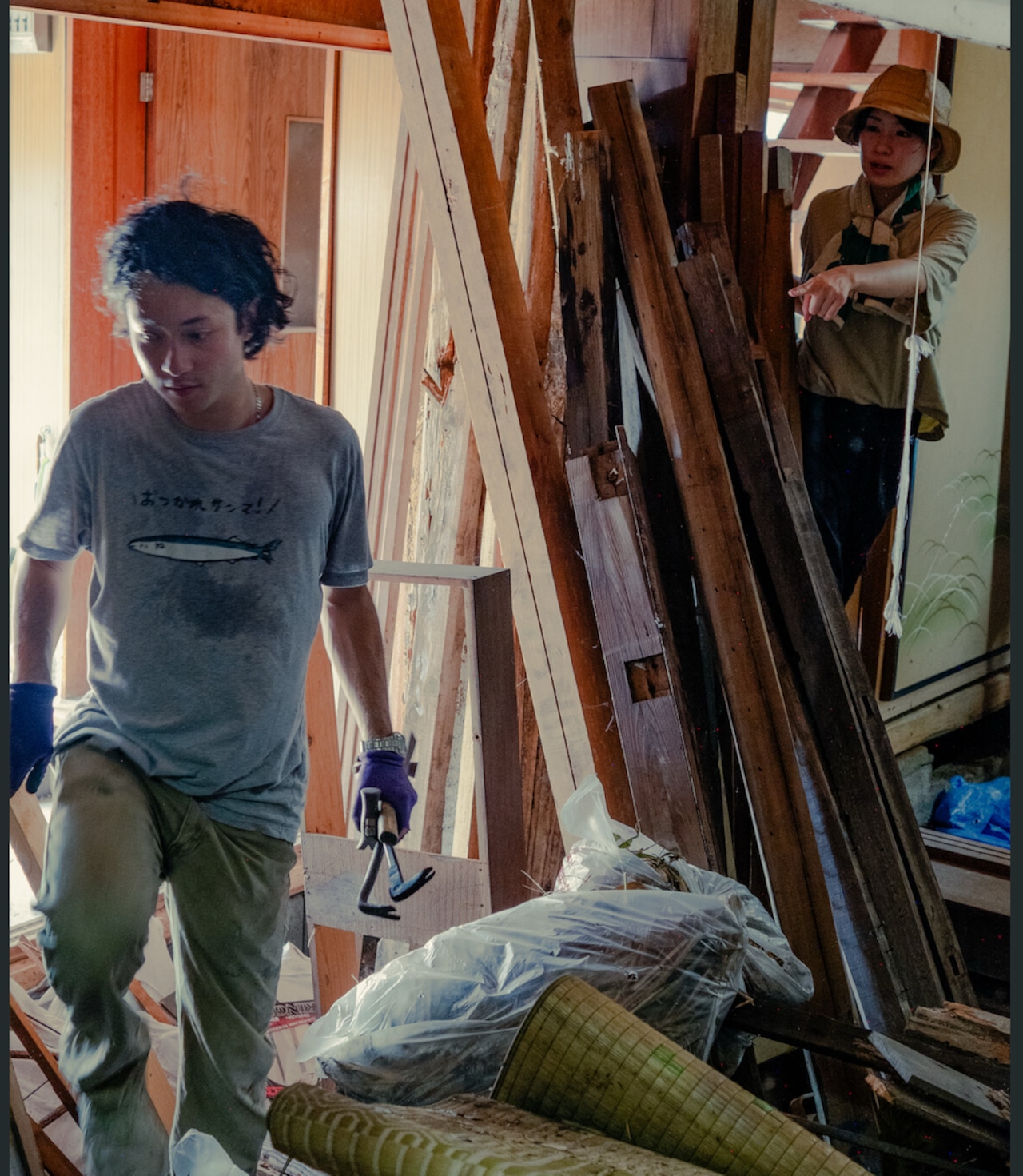 Noriyoshi Needle of Worcester is working to renovate a 100-year-old house in Japan into an artist residence. (Photo courtesy of Nat Needle)
Needle got his chance to start building an art residency of his own when his boss told him about the property in Himeji.
Unlike previous projects, however, Needle is transforming this house on his own, rather than as part of a team project.
“This is definitely something on a much larger scale because it’s a full amount,” he said. “I’ve done like a studio apartment, and I’ve done a store. But this is my first time taking on a larger house by myself.”
The project is still in its early stages. Needle has been raising money to cover structural and technical work on the house. As of February, Needle has been moving furniture out of the abandoned house to get it ready for renovation.
He set up a crowdfunding page in early February to raise $10,000 for technical work, such as roof repairs, according to the webpage. When he launched the fundraiser, a wave of doubt washed over him. He was unsure if he was really helping people by pursuing this project.
Those doubts subsided when donations began to roll in. As of Feb. 20, Needle has raised $7,265 from 74 donations. He said he was flabbergasted that people liked what he was doing. The realization set in that what he is doing could make a positive difference in the world.
“I didn’t expect this project to resonate with people,” Needle said. “I think it’s kind of been super affirming that other people feel as I do. That creating spaces for artists is ultimately a larger cultural and creative impact to the community.”
Worcester energy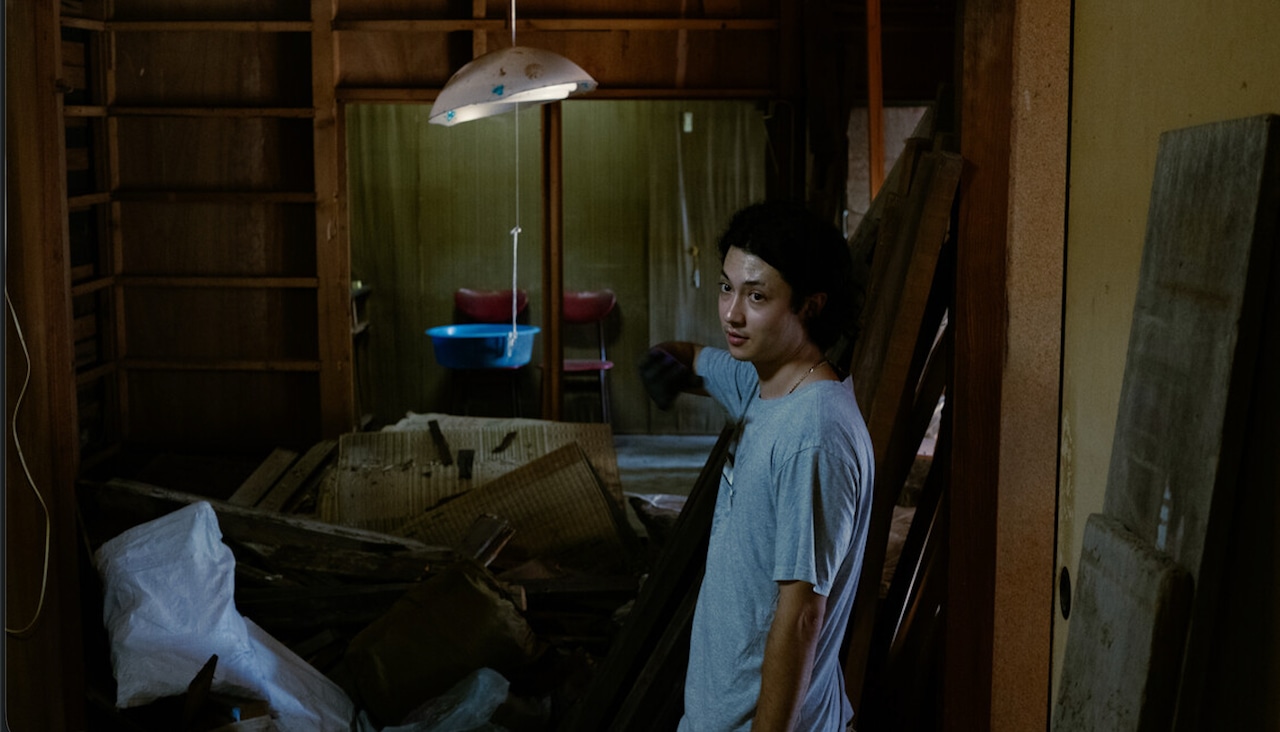 Noriyoshi Needle of Worcester is working to renovate a 100-year-old house in Japan into an artist residence. (Photo courtesy of Nat Needle)
Though he was born in Japan, Needle grew up in Worcester and is proud of his community. As a child, he loved spending time at the Worcester Public Library and enjoyed taking classes at the Think Tank, an educational center for homeschooled children. Though he is thousands of miles away from his beloved Worcester Art Museum, Needle still speaks with his teachers regularly.
Whenever residents of Japan ask him where he is from, he always shows them a picture of the famous “Turtle Boy” statue near Worcester Common. Every time he shows the photo, the reaction is the same: one of amazement and disbelief.
“They were like, ‘Woah what is that?!’” he laughed. “They were like, ‘What is going on there?’ or like, ‘Is this normal for your town?’”
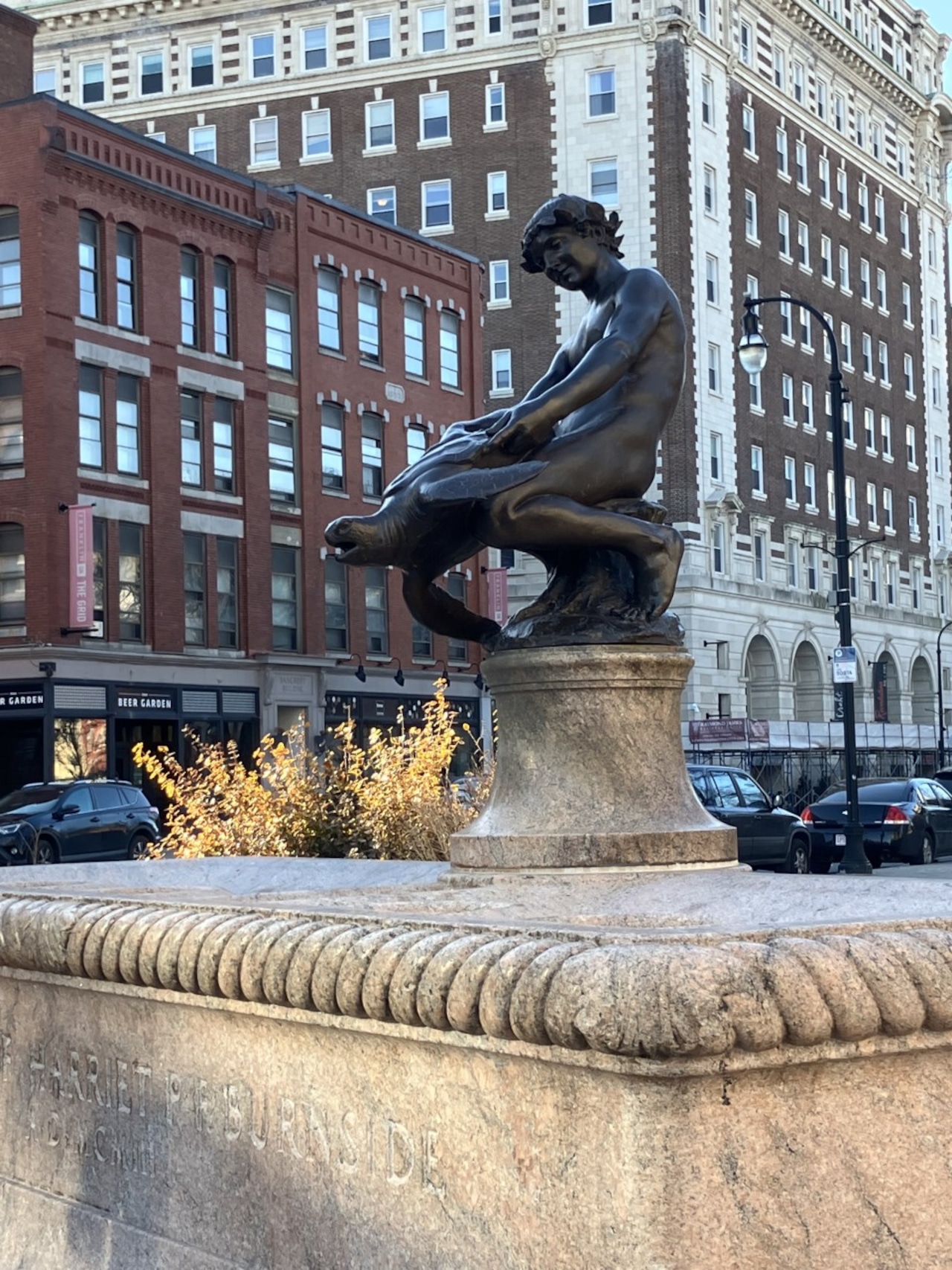 The Turtle Boy statue outside Worcester Common in Worcester. Nicole Simmons
What sets Worcester apart from Japan, Needle said, is the mix of different cultures in his hometown. He misses meeting people from different backgrounds and learning something new. He misses going to the Pickle Barrel, a deli on Pleasant Street, and That’s Entertainment, the comic book store on Park Avenue.
He is thinking of returning home for the summer to visit his parents, both artists on Shrewsbury Street.
“I see Worcester as this amazing melting pot of people and culture and all these personalities,” Needle said. “Kind of everyone trying to make it in their own way.”
Though he hasn’t been home for five years, Worcester is still a part of Needle. He said he brought what he calls Worcester energy to Japan — a humorous yet scrappy attitude he is sharing with what he describes as a monoculture in Japan.
“I think they are mostly grateful for it because I think they are not used to being surrounded by a lot of people from different cultures,” he said. “I think I’m someone who kind of takes that in stride. I think a lot of people can, at least in that way, kind of follow my lead.”
When he returns home, Needle has plans to help fix up his mother’s house, using the lessons he learned in renovating abandoned homes. In Needle’s mind, property isn’t about making capital, it’s about making art.
“That house itself is a piece of art or a fixture of your community,” he said about the art house project. “I wish more people could feel this sense of opportunity around space and not just think of space as just an investment.”