
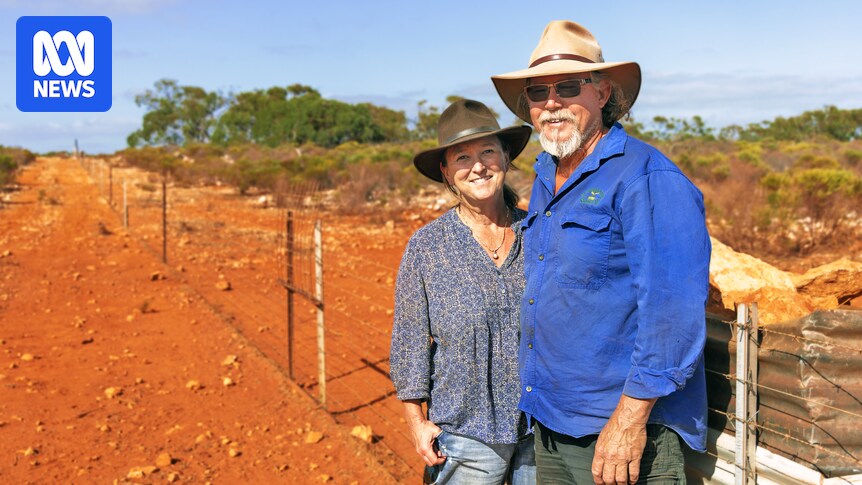
Quiet has become the key word at Murchison House Station.
Where mustering the thousands of feral goats that plague the station usually involves the roar of helicopters and motorbikes — and racing nerves for riders and animals — the pests can now be herded at walking pace.
Woven through the station’s rock and red dirt, 570 kilometres north of Perth, a 9km fence is quietly reducing livestock stress and slashing operating costs.
“Effectively what we have built is a total grazing-management trapyard,” Murchison House owner Calum Carruth said.
“It may be one of the biggest in the world, it’s 9km long by 25 metres wide.”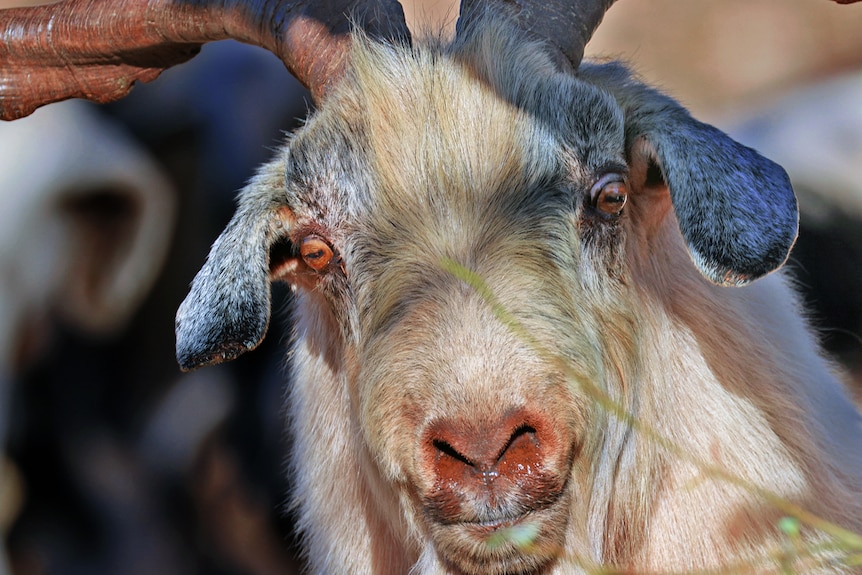
Goats are a declared pest in Western Australia. (ABC Mid West & Wheatbelt: Chris Lewis)
While using yards to trap animals is nothing new for pastoralists, the Carruth’s yard can also be operated remotely.
Its 10 entry gates can be closed by smartphones 20 kilometres away, and seven water tanks with sensors provide clues when large numbers of animals are drinking.
“When the gates are closed and the goats [are] trapped, they are herded to a holding yard at one end, loaded onto a truck, and taken to market,” Mr Carruth said.
“Not only is it more cost-efficient, it’s safer [for staff] and friendlier on the animals. It’s low-stress stock handling.”
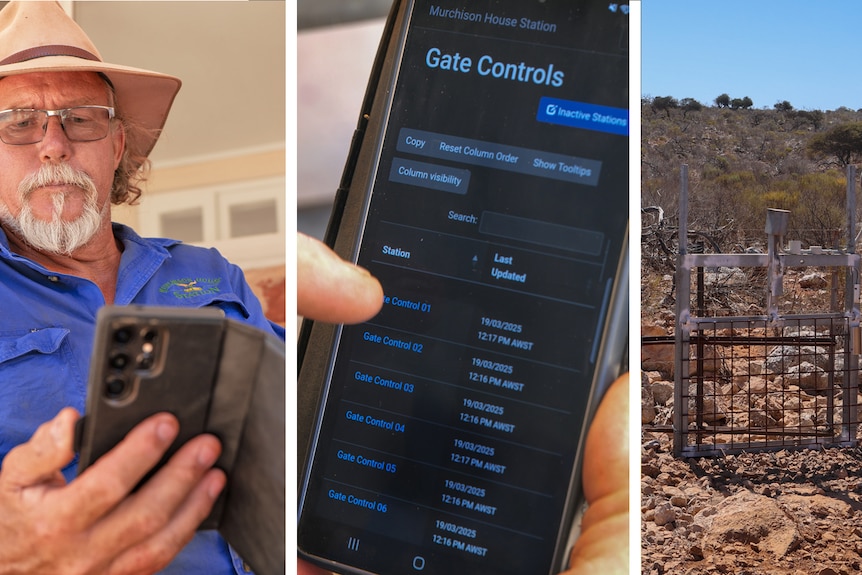
The network allows the Caruths to open and close the trap gates remotely from home. (ABC Mid West & Wheatbelt: Chris Lewis)
A valuable pest
Calum and Belinda Carruth have owned Murchison House for over 30 years, operating a tourism business and selling goats and cattle.
The station has unique boundaries: the Murchison River, the Kalbarri National Park and the Indian Ocean.
The trapyard is positioned to capture goats as they move down from the coastal fringes of the station and national park seeking water in summer.
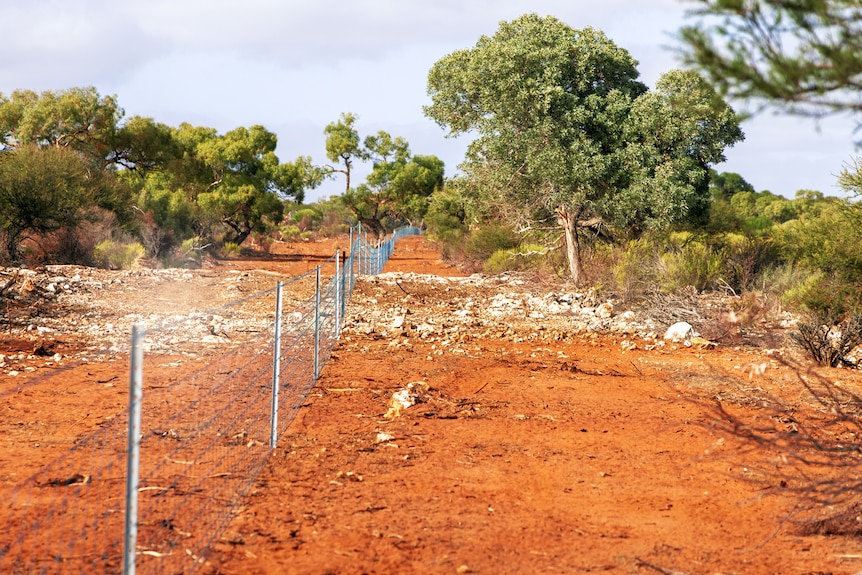
The trapyard fence weaves through red dirt and rock. (ABC Mid West & Wheatbelt: Chris Lewis)
Feral goats are a destructive declared pest in Western Australia and are well established in the Kalbarri National Park.
They are also valuable livestock, with goat meat popular across Asia and the Middle East, and demand growing in the United States.
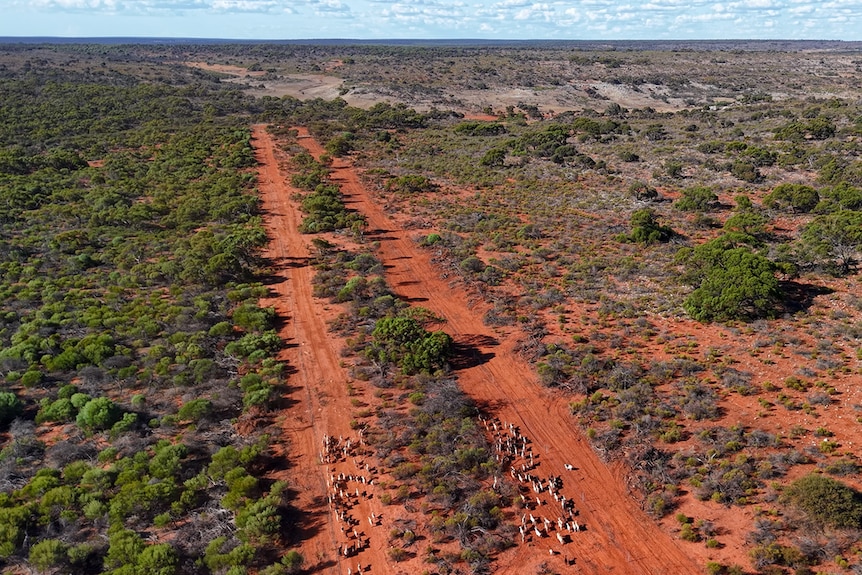
The yard is wide enough to contain some brush, giving the goats shade on warm days. (ABC Mid West & Wheatbelt: Chris Lewis)
The Carruths sell goats caught on the property every year, but believe they will never be eradicated from the landscape.
“We have got the goat numbers down to something we think is sustainable, environmentally, ecologically and hopefully economically,” Mr Carruth said.
“The cost of the trapyard, it’s not cheap, it would be $350,000 to $400,000. But I think we’ll see a return on investment in five years.”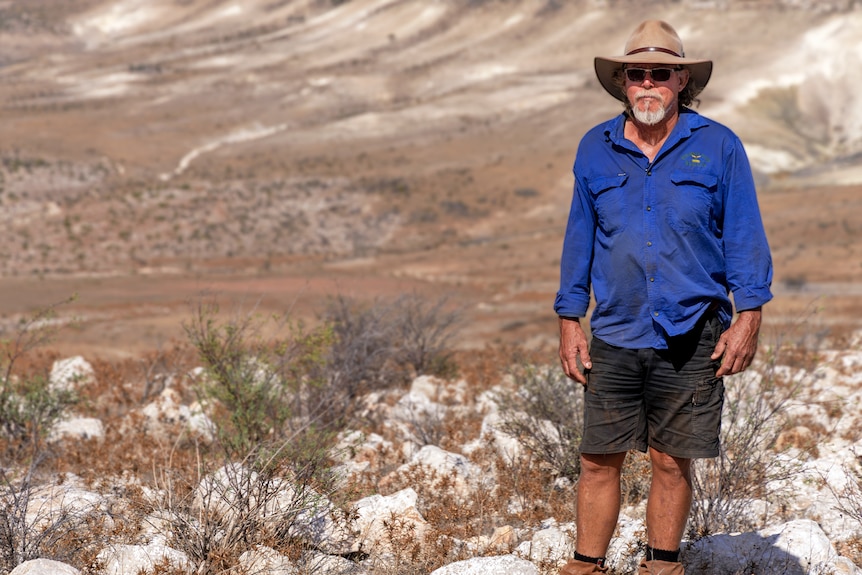
Calum Carruth says the Pillawarra is very fragile. (ABC Mid West & Wheatbelt: Chris Lewis)
Protecting the Pillawarra
The idea for the trap began when the Carruths realised the need to fence off the fragile Pillawarra land system — a unique area of the station containing prehistoric marine sediments, recognised for its fossil, geological and historical significance.
“It’s a giant limestone escarpment that runs up the backbone of Murchison House station for about 70km … it has very soft limonitic clays and is very erosion-prone,” he said.
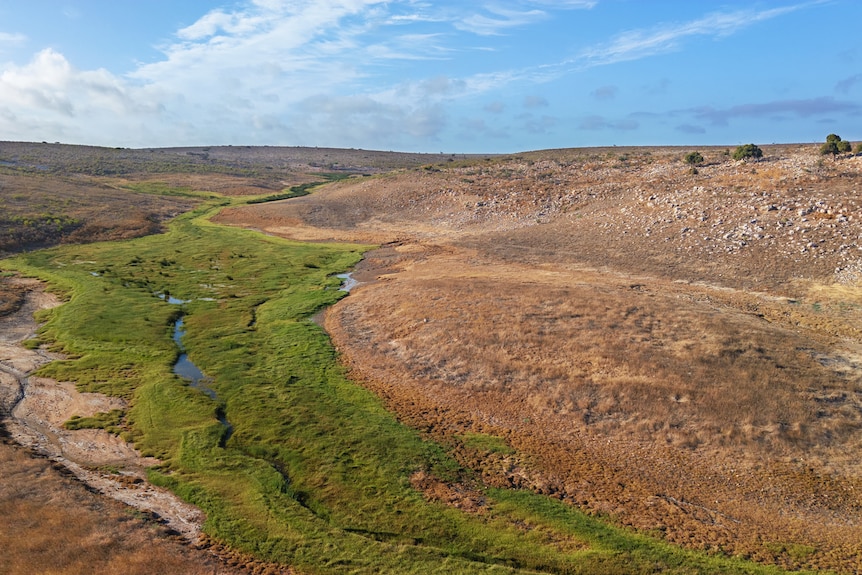
The Pillawarra holds plentiful water supplies during the region’s hot summers. (ABC Mid West & Wheatbelt: Chris Lewis)
Mr Carruth said goats were drawn to the area in the heat of summer, where local temperatures could reach 50 degrees Celsius.
“The Pillawarra has long sections of freshwater soaks and springs in the bottom of it, and very good grazing,” he said.
“The goats would come for the water and wouldn’t leave.”
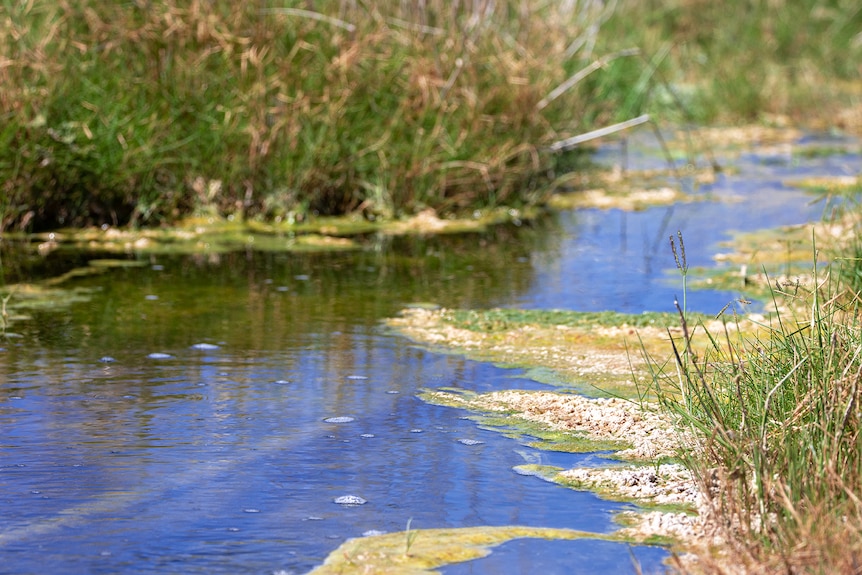
Water attracts animals to the Pillawarra in summer when other sources dry up. (ABC Mid West & Wheatbelt: Chris Lewis)
Mr Carruth said when his family purchased the station over 30 years ago, their first priority was a destocking program.
“There were about 5,000 head of sheep, 2,000 head of cattle, and maybe 20,000 goats,” he said.
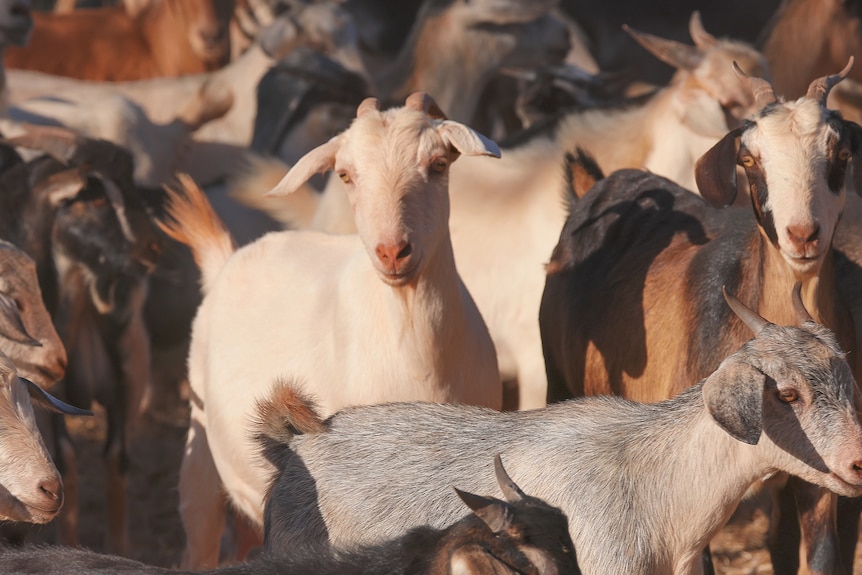
Goats can fetch up to $90 per head depending on weight. (ABC Mid West & Wheatbelt: Chris Lewis)
“It became fairly obvious that the bulk of the property, 87 per cent, was recovering well, but the 13 per cent that wasn’t is the limestone hills that constitute the Pillawarra land system.”
They began building a 2,500-hectare exclusion paddock to protect the Pillawarra, and then successfully applied for $150,000 in government funding to help build the trapyard off the paddock’s edge.
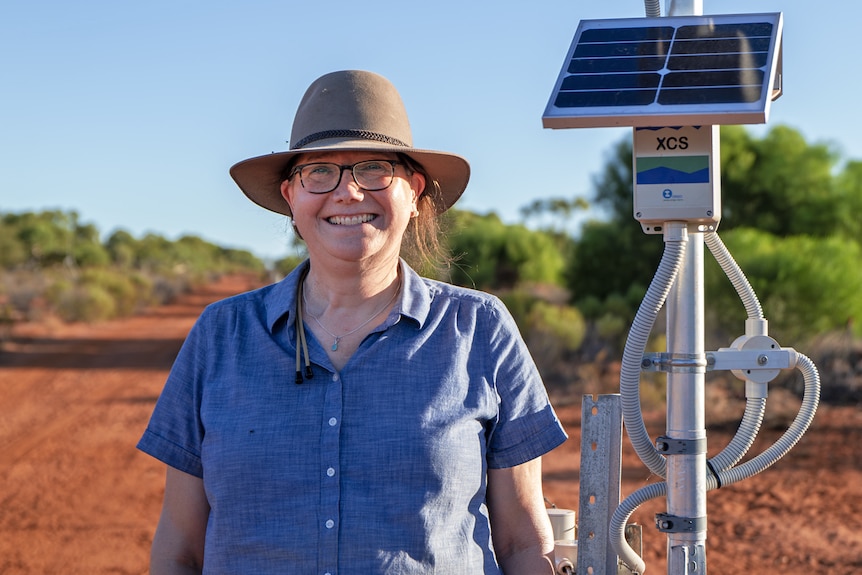
Annie Brox helped design and build the trap system.
(ABC Mid West & Wheatbelt: Chris Lewis)
New technology in old paddocks
Underpinning the trapyard and its operation is an extensive telemetry network.
Tiny solar-powered antennas receive signals from a meshing network, triggering actions such as closing the trap yard gates.
The Carruths worked with Annie Brox and her team from Origo.ag to design and build the system.
“So the magic here is that we’re using well-known radio frequency technology … it’s like wi-fi, but it’s in a different frequency,” Ms Brox said.
“At the homestead there is an internet connection, so [signals] go from this private meshing network to a gateway … between the private network and the internet.”
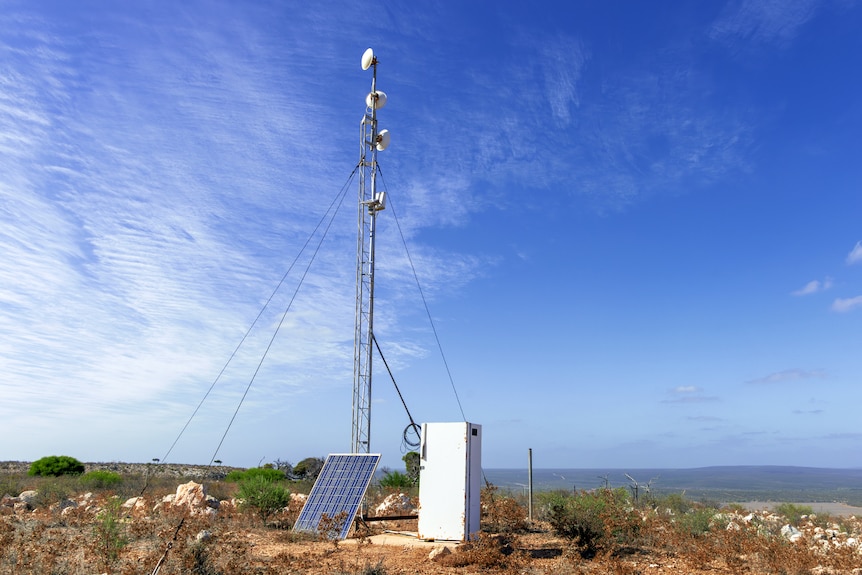
Murchison House Station is 570 kilometres north of Perth. (ABC Mid West & Wheatbelt: Chris Lewis)
The Carruths believe their trapyard concept could be used to capture and reduce feral populations in other remote areas of Australia, such as wild pigs or camels.
“The fences obviously would need to be much more robust and therefore more expensive, but electric fences will hold a lot of those animals pretty well,” Mr Carruth said.
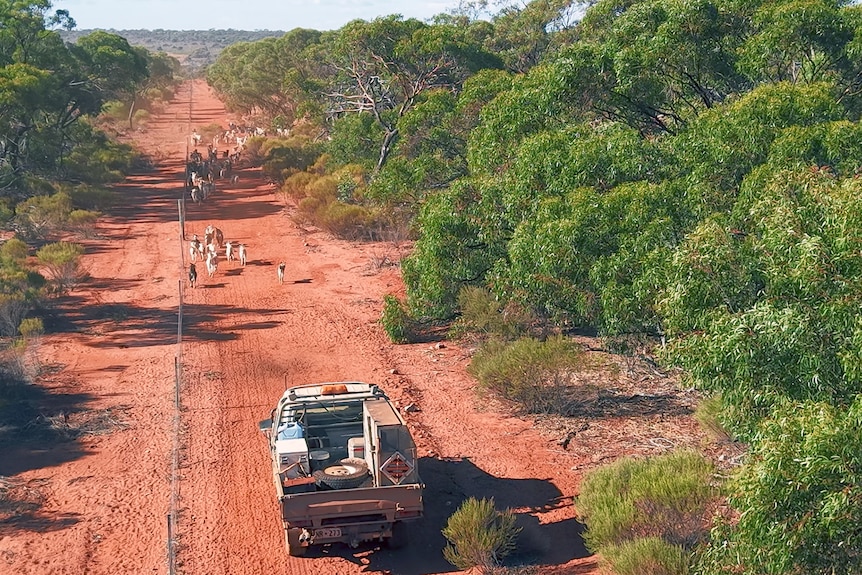
The goats are herded towards a holding yard. (ABC Mid West & Wheatbelt: Chris Lewis)
They plan to extend the the trapyard, with the dream to one day replace most traditional motor-based mustering on the station.
“Since Belinda and I have been here, all we’ve ever wanted to do is leave it better than we’ve found it,” Mr Carruth said.
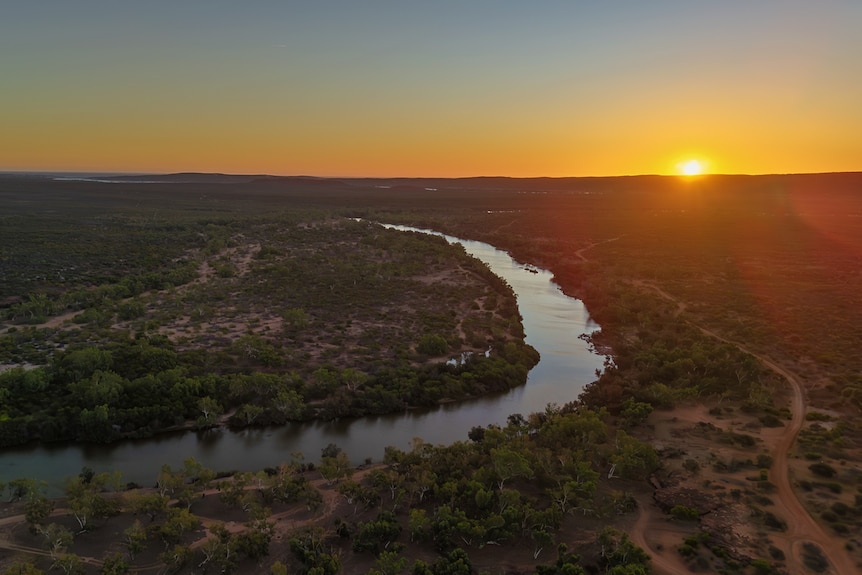
The Murchison River runs through Murchison House Station. (ABC Mid West & Wheatbelt: Chris Lewis)