


February 22, 2026 — 4:00am
Save
You have reached your maximum number of saved items.
Remove items from your saved list to add more.
Save this article for later
Add articles to your saved list and come back to them anytime.
Got it
AAA
Home builders have given up on middle-income Australians, erecting thousands of million-dollar properties while leaving almost nothing for people earning less than $120,000 a year.
Amid warnings from the housing sector that any changes to the capital gains tax concession will result in fewer homes being built, new data shows up to a third of prospective buyers are now squeezed out of the market as they are caught between community housing and high-end homes.
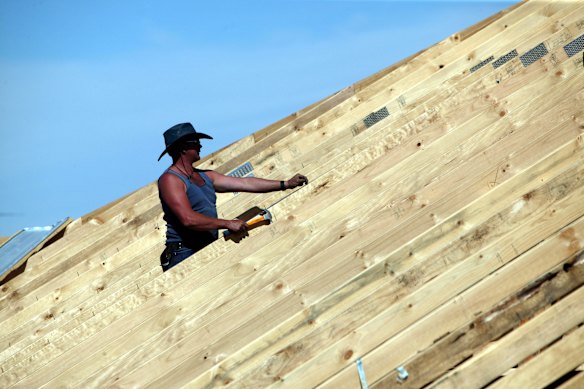 No chance for young people: Builders are building more expensive homes, leaving little for middle-income earners.
Over a six-year period, KPMG analysis shows the number of new properties worth at least $1 million being built has gone from just 6 per cent of all homes to more than a quarter.
In the past two years alone, the number of properties starting at $2 million has doubled, from 5224 to almost 10,600.
Builders are chasing big-ticket properties at the expense of more modestly priced homes that were once their bread and butter.
In 2018-19, almost 21 per cent of homes approved for construction had a value of between $500,000 and $600,000. By 2022-23, they accounted for just 1.5 per cent before falling to 0.9 per cent, or 1556, in 2024-25.
The single largest construction sector is now for homes worth between $800,000 and $900,000. In 2024-25, they were 22 per cent of the total market, compared with 9.3 per cent in 2018-19.
KPMG’s director of planning and infrastructure economics, Terry Rawnsley, said the soaring cost of building materials had been a major factor behind the large increase in new houses and units.
In the five years from mid-2020 to mid-2025, construction costs as measured by the Australian Bureau of Statistics soared by almost 40 per cent, as factors including the pandemic-era HomeBuilder program, global supply chain interruptions and low interest rates drove up prices.
Rawnsley said there was now a huge number of middle-income earners who were not poor enough to benefit from an increase in community and government-supported housing but who could not afford high-priced homes either.
Related Article
He said it was affecting couples who might want to start a family but found themselves unable to afford a property with two or three bedrooms.
“If people want to get a three-bedroom place and have their two children, then there’s nothing that is really affordable for them,” Rawnsley said.
“There’s a reason that places like the eastern suburbs of Sydney are being drained of children. Families can’t afford to live there.”
The federal government is already at least 80,000 properties behind its target of 1.2 million new homes by mid-2029.
It has put in place a range of policies aimed at boosting supply while state governments, especially NSW and Victoria, have sought to overhaul planning restrictions that they argue have held back construction in areas close to public transport or employment centres.
Rawnsley said that efforts to build affordable housing should continue, but there should be a focus on people who earned between $50,000 and $120,000.
“This one-third of all Australian households will continue to face increasing housing stress and an overall lack of housing without action,” he said.
A spokesman for Housing Minister Clare O’Neil said it was evident that housing feasibility was an issue, but noted that housing construction inflation had fallen from 17 per cent under the previous government to 2 per cent.
“There’s more to do, but we’re making progress on reforming our system to build more homes because that’s the best way of making housing more affordable long term,” he said.
Treasurer Jim Chalmers has signalled that his May 12 budget will focus on policy changes around productivity and tax with an emphasis on “intergenerational equity”. Changes to the current 50 per cent concession on capital gains tax, which overwhelmingly benefits Australians over the age of 65, are being considered.
But the real estate sector fears any changes to the 27-year-old concession will lead to fewer homes being built.
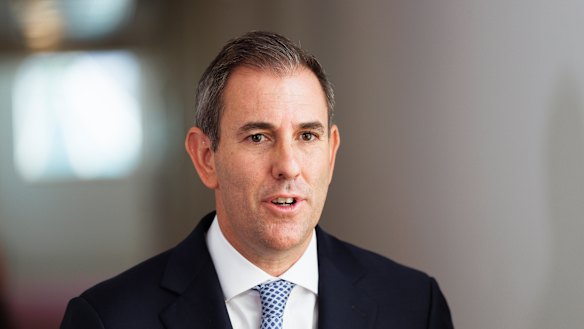 Treasurer Jim Chalmers has signalled a focus on “intergenerational equity” in the May budget.Dominic Lorrimer
In submissions to a Senate inquiry into capital gains tax, public hearings for which start on Monday, property-related interests have raised concerns that any changes to the concession will flow through to the rental sector.
The Urban Development Institute of Australia said options such as a 25 per cent concession or a 40 per cent concession, or limiting the concession to newly built homes, would act as a disincentive for investors to build new homes.
“Irrespective of the motivation, any change to capital gains will change investment and divestment decisions which will adversely impact existing housing and affordable supply, rental prices and ordinary Australian investors,” institute national president Oscar Stanley said.
Bureau of Statistics figures released last week showed of the 179,000 new mortgages taken out by investors in 2025, 83 per cent were for an existing dwelling. In NSW, the proportion was 86 per cent while in Victoria, it rose to 77 per cent.
Cut through the noise of federal politics with news, views and expert analysis. Subscribers can sign up to our weekly Inside Politics newsletter.
Save
You have reached your maximum number of saved items.
Remove items from your saved list to add more.
 Shane Wright is a senior economics correspondent for The Age and The Sydney Morning Herald.Connect via X or email.From our partners