
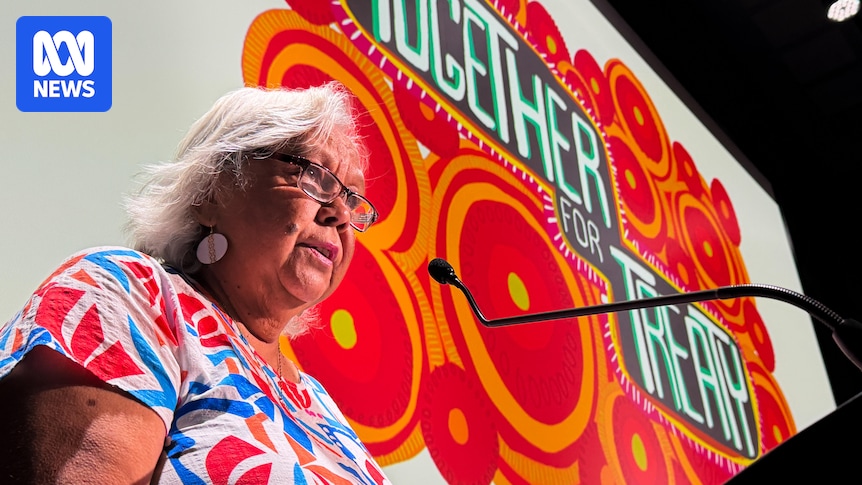
A coalition of First Nations leaders, Elders and advocates have renewed its push for the federal government to commit to a national treaty and truth-telling process while labelling some states as “hostile” to the notion.
More than 350 people gathered at the Together for Treaty National Summit in Melbourne on Sunday, with Victoria praised for its introduction of treaty last year.
Conference organisers penned an open letter to Prime Minister Anthony Albanese which described “a unifying federal-level Treaty and truth-telling process” as critical.
“Many of the decisions that most affect First Nations peoples — including around Country, water, climate and cultural heritage — sit with the federal government,” the letter read.
“Without a federal process, responsibility is fragmented and recognition remains inconsistent.”
Jackie Huggins is a board director for Common Threads, the First Nations-led organisation behind the conference, and the ABC’s Elder-in-residence.
She accused some states of being unwilling to discuss treaty with the group.
“As we know, the treaty has been active and alive here in Naarm [Melbourne] and we’re truly grateful for that,” she said.
“For us that don’t have treaties, that have hostile governments — such as Queensland — we’re here to gain some insights to take back to our people in terms of the day that we get a progressive government, we will be able to work with that,” she said.
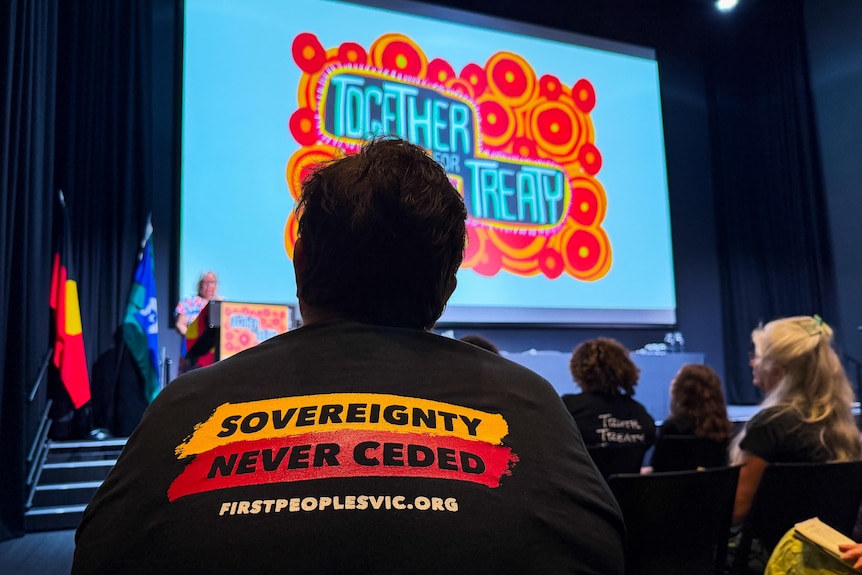
Hundreds meet for the Time for Treaty conference in Melbourne on Sunday February 22, 2026. (ABC News: James Oaten)
In Queensland, the LNP scrapped the state’s Path to Treaty Act soon after winning government in 2024 as Premier David Crisafulli had pledged during the campaign.
In New South Wales, treaty consultations led by two commissioners are underway.
Professor Huggins, a Bidjara and Birri-Gubbu Juru woman, said a federal treaty was “well overdue” and Victoria’s example was a powerful one.
“It’s happened here in Victoria. The sky hasn’t fallen down for us,” she said.
“That’s really important to note because we know that even with native title — when native title came to our country — the sky didn’t fall in with that.
“We didn’t take your backyards. We don’t want your backyards, all we want is peace and justice and acknowledgement of Aboriginal and Torres Strait Islander people in this country — a long overdue recognition of our history and our cultures.”
The Albanese government has been accused by some Aboriginal leaders of falling into “silence” after Australia voted against the introduction of an Indigenous Voice to Parliament during a 2023 referendum.
On Sunday a federal government spokesperson said it would “continue working with First Nations people, states and territories to improve life outcomes, opportunities and justice” for Indigenous people.
Shadow Indigenous Australians Minister Julian Leeser, who was recently reappointed to the portfolio after vacating it due to his personal support for a Voice to Parliament, said the federal Coalition remained opposed to calls for treaty and truth-telling processes.
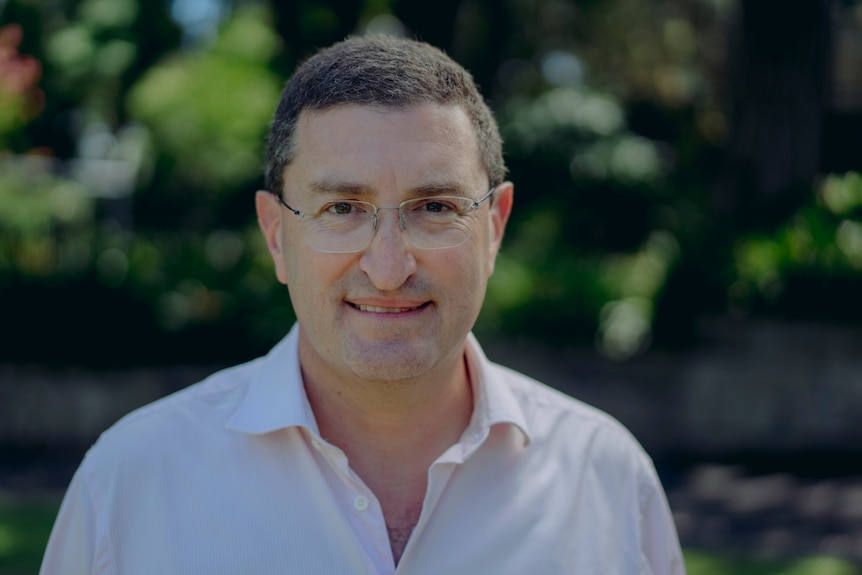
Federal Shadow Indigenous Australians Minister Julian Leeser says the Coalition does not support the treaty process. (ABC News: Liam Patrick)
“We’ve never supported treaty and that’s because it’s been our position that a nation can’t have a treaty with itself,” Mr Leeser said.
“The second thing is that the referendum result called for us to have a much more strong focus on practical measures and achieving practical outcomes for Indigenous Australians.
“And the sadness for me is that the government, after the referendum, went silent on Indigenous issues for the last two years. We do need a focus, when only four of the 19 Closing the Gap targets are on track.”
National truth-telling approach key, advocates say
Larissa Baldwin-Roberts, CEO of Common Threads, described the push for a federal treaty as a “generational fight” attracting both old and young.
Two Victorian First Nations groups join treaty negotiations register
“Regardless of where governments stand we want to show that there is huge social licence for this,” the Widjabul Wia-bal woman said.
“We’ve done a lot of polling, we understand there are people that don’t understand about what treaty is, but when we explain it to them and we can give them the yes and no arguments for treaty, more often than not people are supporting treaty and seeing that as a tangible way to move forward.”
“Australians overwhelmingly believe that there is a wrong to be righted.”
Last year, Victoria’s treaty was signed and formalised as law, becoming Australia’s first modern treaty agreement with Aboriginal people.
Earlier this week, two traditional owner groups in regional Victoria formally entered the state’s Treaty Negotiations Register, allowing talks toward individual treaties to continue.
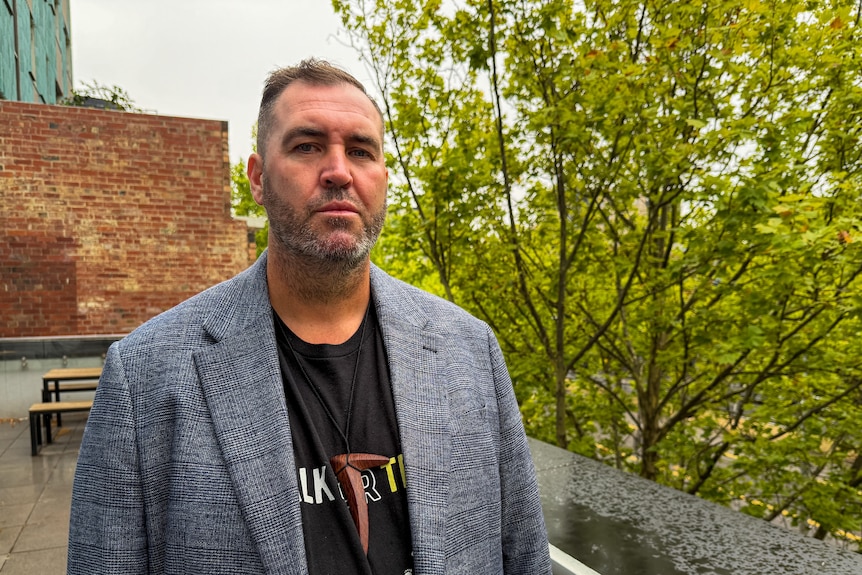
Kerrupmara Gunditjmara man Travis Lovett has played a central role in Victoria’s truth-telling process. (ABC News: James Oaten)
Travis Lovett, the former deputy chair and commissioner of the Yoorook Justice Commission, said truth-telling led by the federal government was crucial to enable healing to occur.
“We need a truth-telling process to bring our country together,” he said.
“First Nations people need healing, but it needs to be based on truth, on justice, then healing can happen all underpinned by hope.”
State oppositions pledge to repeal treaty reforms
While Victoria’s treaty process was held up by advocates as an example for the federal government to follow, its future is not guaranteed.
Opposition Leader Jess Wilson has promised to repeal the treaty if the Coalition wins power in the state’s November’ election.
“I think it’s fair to say that Australians have had their say on this matter, they voted on this matter in a referendum a number of years ago, and they voted no, and Victoria voted no as well, as I respect that,” Ms Wilson said.
She said the government would set up a separate department “purely focused” on delivering outcomes for Aboriginal Victorians in areas including education, health and incarceration.
South Australian shadow treasurer Ben Hood said if its government was elected next month, it would repeal the state’s First Nations Voice to Parliament.
“With repealing the voice means we won’t be following with treaty or truth,” he said.
The state legislated its Voice to Parliament in 2023, but treaty negotiations have stalled.