
Marcus Teague, Cameron Woodhead and Tony Way
Updated February 22, 2026 — 1:17pm,first published 11:55am
Save
You have reached your maximum number of saved items.
Remove items from your saved list to add more.
Save this article for later
Add articles to your saved list and come back to them anytime.
Got it
AAA
Key pointsMUSIC: Lorde brought her Ultrasound world tour to Rod Laver ArenaTHEATRE: Do Not Pass Go at Melbourne Theatre Company dissects office cultureMUSIC: The Melbourne Symphony Orchestra celebrate Chinese New YearTHEATRE: Red Stitch puts on the rarely performed Doll Trilogy by Ray Lawler
MUSIC
Lorde | Ultrasound World Tour ★★★★
Rod Laver Arena, Saturday, February 21
At 29 years old, Lorde is already in the history books. Her 2013 debut LP, Pure Heroine – released when she was only 16 – wasn’t just a global smash, but reset the template of pop, with its minimalist, journalistic anthems influencing a generation of stars in Billie Eilish, Charli XCX, Gracie Abrams and more. Thirteen years and three albums (Melodrama, Solar Power and now Virgin) later, Lorde – aka Ella Yelich-O’Connor – is now both a veteran and still figuring it out.
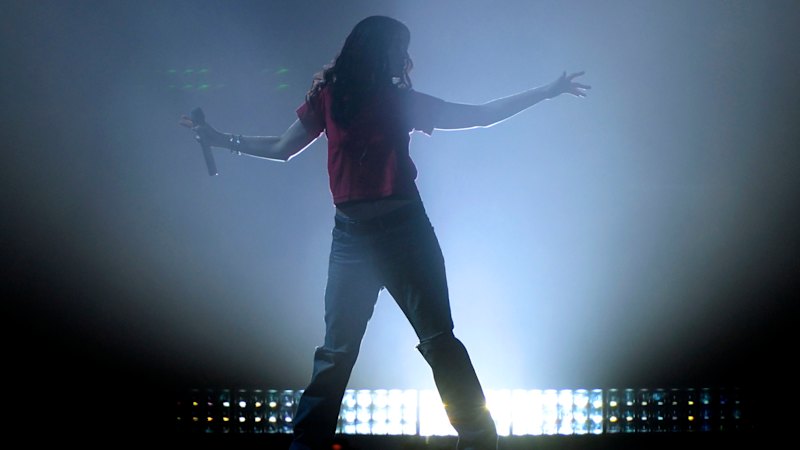
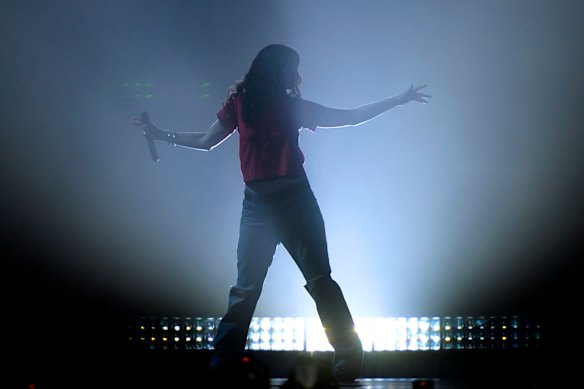 Lorde performs at Rod Laver Arena on Saturday, February 21. Martin Philbey
Virgin, is a break-up record, littered with the physicality of grief and forced metamorphosis.
That raw streak is mirrored in Saturday’s surprisingly DIY staging – discarded clothes are left where they fall, her crew walk around filming with handheld cameras, and two dancers wander between her band half-submerged in the stage. It’s all slightly ragged – like they’re setting up for an arena show, rather than delivering it – but you suspect that’s the point: Lorde is letting us in on her rebuild.
An icy laser scythes the floor, and Lorde pops up for opening track, Hammer. In baggy jeans (“I found these at my grandfather’s house”) and a red T-shirt, she mirrors the gender-fluid streak announced in the song’s lyric, “Some days I’m a woman, some days I’m a man”.
The first half booms with anthemic new tracks from Virgin, segueing with Pure Heroine classics that have the crowd in raptures. Lorde works through props – singing artfully into a fan, climbing a speaker stack, lying on a treadmill – while disrobing to underwear and the taped-down breasts look of her Man of the Year single (and adopted by many in the crowd tonight). “It’s great to be back in one of my favourite cities,” she says. “I feel like I met half the show at Hope St Radio last night,” a nod to Collingwood’s bougie wine bar hangout.
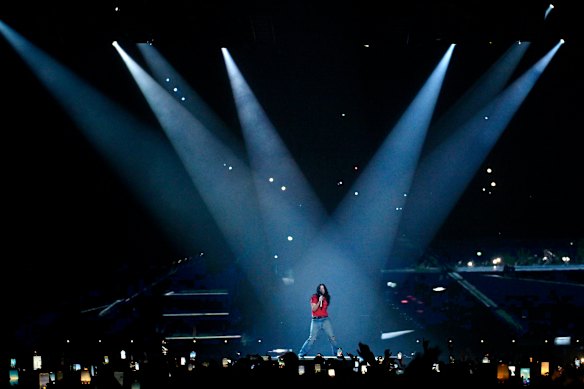 Lorde’s strength is being so willing to work her feelings out in public.Martin Philbey
The set sags during tracks from 2021’s tepid Solar Power, then roars back to life on mass singalong Liability and a home stretch that culminates in a rave for What Was That and Green Light. Pushing through the crowd during tearjerker David, Lorde climbs onto a small stage at the mixing desk and brings it home with a euphoric Ribs from the centre of the stadium.
Lorde’s strength is being so willing to work her feelings out in public. If she remains so articulate about it, who knows – her best work might still just be ahead of her.
Reviewed by Marcus Teague
THEATRE
Do Not Pass Go ★★★★
Melbourne Theatre Company, Lawler Studio, until March 28
Playwright Jean Tong has enviable range as an artist. The queer electro-pop musical, Romeo is Not the Only Fruit, was a camp comedic romp, yet the follow-up, Hungry Ghosts, (MTC, 2018) had a searching tone, moving from choric elegy on the disappearance of Flight MH370 to defiant political theatre decrying corruption in Malaysia.
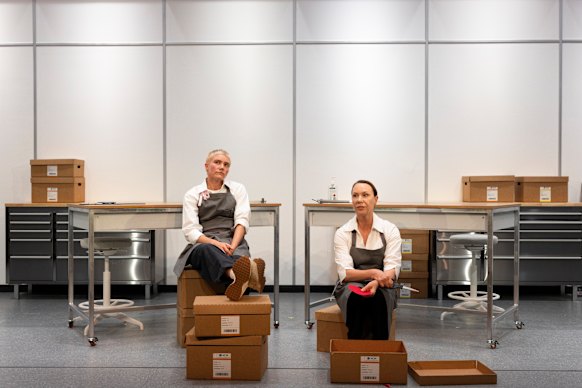 Ella Prince and Belinda McClory play colleagues in the switched-on office comedy, Do Not Pass Go.Pia Johnson
Their next move was always going to be difficult to predict, and the switched-on office comedy, Do Not Pass Go, ripples with offbeat humour, while tackling complex contemporary issues with a surprisingly light touch.
New recruit Flux (Ella Prince) and long-serving workhorse Penny (Belinda McClory) are unlikely colleagues at what appears to be a party supplies distributor. Like most comedy duos, their dynamic relies on exaggerated contrast.
Penny is a closed book – a guarded, slightly barbed old hand, radically competent, a rule-follower, and a stickler for routine. Flux is a disruptor – a trans character, free spirit, and extroverted agent of chaos.
Flux’s first day on the job starts with login issues – the computer system is absurdly unforgiving – and Penny is at first unsettled by a colleague who doesn’t seem to fit the mould.
Related Article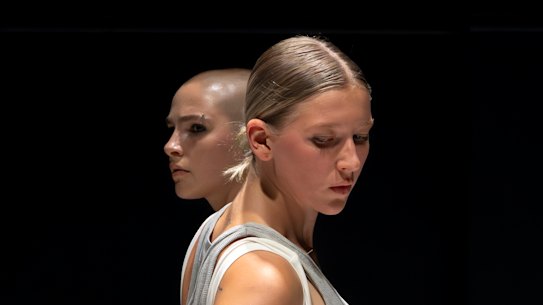
As Flux mounts tiny acts of rebellion against the banality of their job – eating Cheezels off the floor, vacuuming stray ribbons with wild delight, chucking a sickie (sorry, taking a mental health day) to go fishing – Penny’s frostiness begins to melt, and she stages a rebellion of her own.
Rapid-fire office shenanigans abound; Prince and McClory develop an oddball comic rapport in scenes that flicker with incongruity and agile (or awkward) workplace banter.
Social questions emerge from the characters’ personal experiences. Will Flux choose to have gender-affirming surgery? Does Penny have undiagnosed ADHD? The greater acting achievement comes when comedic shtick yields to a deeper, more affectionate relationship between this odd couple.
Related Article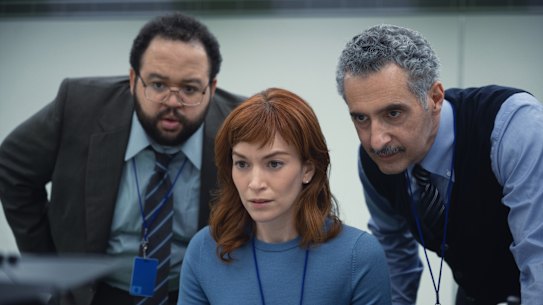
A fragile, tender, strangely profound bond is formed between two figures who wouldn’t have met anywhere but a mutual workplace. The pair forge a small alliance of common humanity in the face of systems which militate (to a black comic degree) against it.
At the same time, Tong has an original mind and a taste for bold and undogmatic social critique. The play offers thought-provoking takes on the surge of neurodivergence, and on sexuality and gender identity in a lesbian and transmasc context, probing how capitalism, as well as intellectual and social fashions, might influence medical diagnoses, identarian politics, and the choices we make based on them.
Director Katy Maudlin gives these ideas full play, ensuring they’re wrapped in a comic box with plenty of quirky appeal and laugh-out-loud moments.
Reviewed by Cameron Woodhead
MUSIC
Chinese New Year | 中国新年音乐会 ★★★★
Melbourne Symphony Orchestra,
Hamer Hall, Saturday, February 21
Energy, boldness and resilience, some of the qualities associated with the Year of the Horse, were well reflected in this year’s Chinese New Year celebration by the Melbourne Symphony Orchestra.
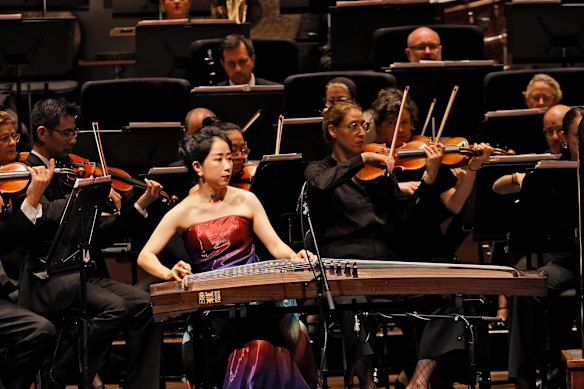 Mindy Meng Wang performs with the Melbourne Symphony Orchestra on Saturday, February 21. Tower Liu
Wang Xilin’s rollicking Torch Festival from his Yunnan Tone Poem struck a joyous, festive note that was neatly contrasted by Chen Gang and He Zhanhao’s classic concerto The Butterfly Lovers. Originally conceived for violin and orchestra, this performance featured Melbourne-based guzheng (Chinese zither) exponent Mindy Meng Wang as an evocative musical storyteller. This rebalancing of Chinese and Western elements enhanced the musical tale of star-crossed lovers.
American-born Zlatomir Fung gave a subtle and deeply lyrical account of Saint-Saëns′ Cello Concerto No.1, bringing abundant colour and character to this well-known score.
Technically assured and expressively articulate, Fung found added reserves of passion for the tumultuous finale. Considering the size of Hamer Hall, these could have been even more boldly deployed.
Given that the MSO has been regularly performing Beethoven’s Symphony No.7 over the past five years, any fears that the players would set themselves on autopilot were soon allayed, as conductor Li Biao established an intense synergy with the orchestra that drew out some finely honed dynamics and striking contrasts.
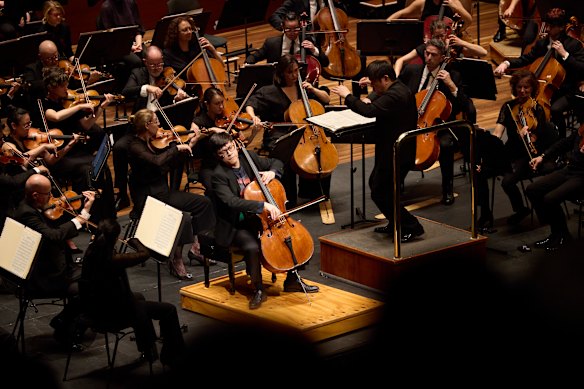 Zlatomir Fung gave a subtle and deeply lyrical account of Saint-Saëns’ Cello Concerto No.1.Laura Manariti
Orchestra and conductor clearly relished the collaboration, spinning spacious melodic arcs in the second movement and ratcheting up the rhythmic tension in the scherzo. The exhilarating finale could well have been likened to a thoroughbred straining to reach the finishing post at Flemington.
Equine analogies were not over yet. After a Gershwin-infused encore – Joyous Festival by Chinese Australian composer Wang-Hua Chu – came the famous final gallop of the William Tell overture, complete with an outrageous brass whinny interpolated just before the end. It seems as though the Year of the Horse also comes with a playful sense of humour.
Reviewed by Tony Way
THEATRE
The Doll Trilogy
Kid Stakes ★★★
Other Times ★★★
Summer of the Seventeenth Doll ★★★★
Red Stitch, until April 11
Ray Lawler’s Summer of the Seventeenth Doll is a cornerstone of Australian drama. The play gets revived with canonical regularity, though for the full picture you need to see its two prequels, Kid Stakes and Other Times, which follow the characters through Depression-era Melbourne and World War II.
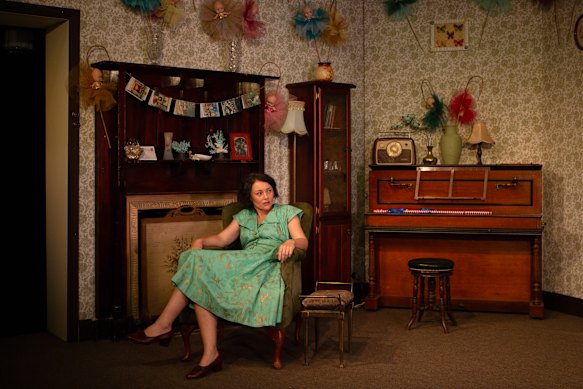 Ngaire Dawn Fair in Summer of the Seventeenth Doll.Chris Parker
The complete trilogy hasn’t been performed since 1985, so you’d need to be longer in the tooth than me to have seen all three plays on the trot. Red Stitch takes up the challenge, presenting audiences with a vanishingly rare opportunity to see them performed in one season – either in a one-day marathon or individually.
As a marathon, the depth of Lawler’s artistry is plain. The prequels are generally not accorded the same significance as the Doll itself. They’re not afterthoughts, however. The playwright laboured over them for decades, tinkering and pruning, and if it’s true that the backstory they reveal lies buried, begging to be unearthed in any performance of the Doll, there’s a clarity and sustained intensity to these period dramas that counterbalance any sense of their superfluity.
It’s fascinating to witness Olive’s mother, Emma, for instance, evolve from an overprotective single mum (and businesswoman) during the Depression to the affectionately drawn battleaxe she becomes in the Doll. Caroline Lee gives a sharp portrayal of a controlling, bitter and angry termagant fighting to survive in a world of men, before mellowing into a sour cocktail blended with wisdom.
Olive, too, gets an arc that fixes her centrality as the play’s tragic antihero. Her wish to flout convention and choose her own path – in work and in love – starts in adolescence and never wavers. Ngaire Dawn Fair gives us a defiant Olive who seeks empowerment and denies conformity with an absolute trenchancy, and the argument that Olive’s delusional, experiencing a form of arrested development, holds less water for the way the trilogy elaborates on the history of oppression she experiences.
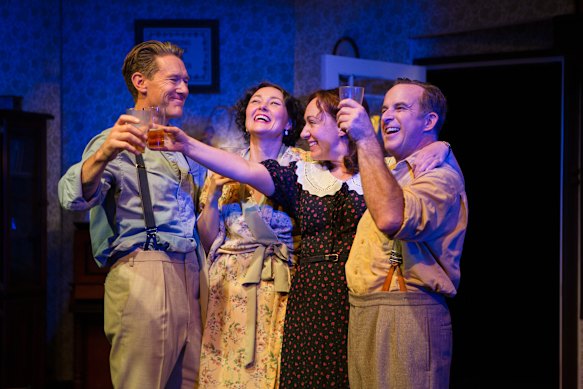 Ben Prendergast, Ngaire Dawn Fair, Emily Goddard, John Leary in Kid Stakes.Chris Parker
That history unfolds alongside Olive’s childhood friend and fellow barmaid Nancy. Played with poignant comic aplomb by Emily Goddard, Nancy is an absent figure in the Doll who assumes the same mythological significance as dead gay characters in Tennessee Williams’ plays (though Nancy is hetero and, tellingly, married).
The pair of cane cutters who descend from Queensland every summer to romance Olive and Nancy – Roo (Ben Prendergast) and Barney (John Leary) – come to life in a fully realised portrait of Aussie masculinity and mateship from that era. Balancing larrikin appeal and its toxic underside, the complete trilogy locates some of their trauma, in a way the Doll doesn’t articulate, in the terrible psychological toll of wartime service.
A more detailed picture of the bright young woman next door, Bubba, (Lucinda Smith) emerges, and suppressed aspects of Australian history – including a refugee suitor (Khisraw Jones-Shukoor) – clarify choices and opportunities made and illuminate several sliding door moments in the saga.
Related Article
The Doll does stand heads and shoulders above the other two plays in terms of dramatic achievement, but this intimately performed, meticulously costumed and designed production of the complete trilogy is directed with reverence by Ella Caldwell. It should be a red-letter event on the calendar of every committed theatregoer worth their salt.
Reviewed by Cameron Woodhead
The Booklist is a weekly newsletter for book lovers from Jason Steger. Get it delivered every Friday.
Save
You have reached your maximum number of saved items.
Remove items from your saved list to add more.
From our partners