
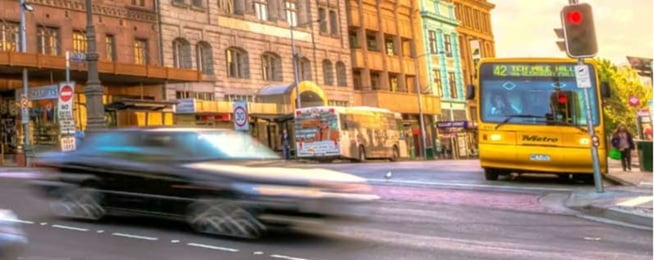
The Tasmanian Government has released a business case for a rapid bus network in Hobart, which could also provide better paths for people wanting to ride to public transport.
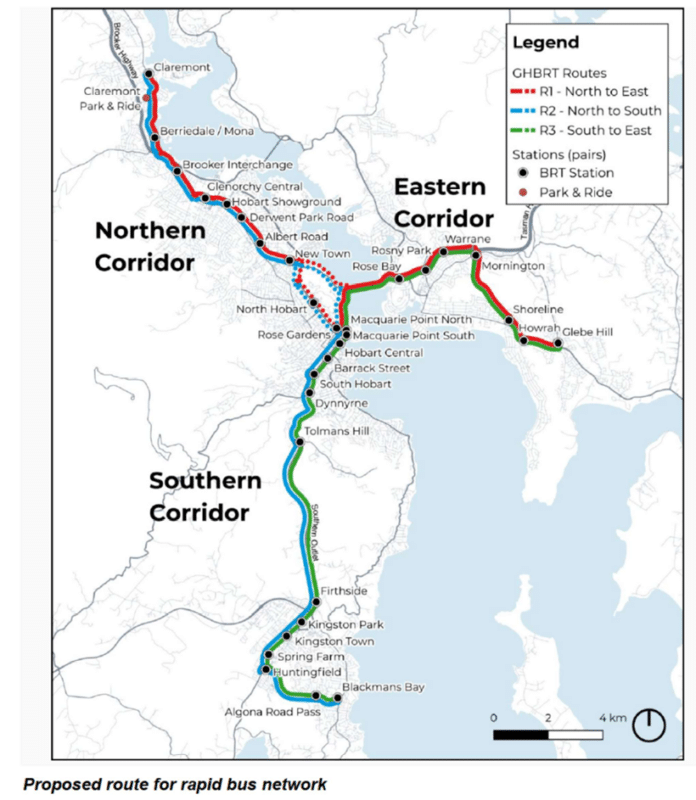
The network would have three routes following major highways to the northern suburbs, southern suburbs and eastern shore with safe cycling connections to stations.
For a small city like Hobart, expanding public transport catchments by making it easier to ride can underpin a better quality of service similar to that available in more densely populated areas.
The business case investigated several options for delivery looking at different levels of bus service and active transport connections. It settled on Option 4 which would cost $860 million to implement and include cycling paths to the 30 stations of up to 4 km in length
Other options considered building the entire Greater Hobart Cycling Plan but ultimately decided to go just with station connections. While building the plan would have been a better outcome from Bicycle Network’s perspective, bus stations will be situated in activity centres and so cycleways will be useful for a broad range of riders.
Rapid bus vs rail
The northern transport corridor would be the first route to be activated, however, there is still opposition from people who would prefer rail.
Labor Transport spokesperson Jen Butler is one such opponent, “A one-size-fits-all approach ignores the very different needs of Hobart’s transport corridors, particularly in the northern suburbs. The Minister needs to seriously consider passenger rail on the current gauge for the Northern corridor.”
Bicycle Network is agnostic about the mode of public transport to be activated but wants to see the ability to take bicycles on board and to lock bicycles in secure parking areas.
Integrating active and public transport
Cities which have high numbers of people riding often boast good integration with public transport.
The ferry between Bellerive and Hobart has allowed bicycles on board and will soon have a secure bike parking area for people wanting to leave bikes for long periods, providing an example of what rapid buses and their stations could like.
Rapid bus networks in other cities have used vehicles which can carry bicycles, whether that’s exterior or interior racking, and we expect a local service to do the same. While most people will be happy to lock their bike at secure station parking, others will want to take their bike with them for the journey between a station and their destination.
Next steps
The strategic business case is just the first step in the process to attract federal government funding to the project, with a detailed business case for the northern corridor the next project.
The government is aiming to deliver a northern suburbs route by 2032, a southern route by 2034 and the eastern shore in 2036, well after the 2029 deadline for construction of a Macquarie Point stadium.
Like our articles?
Become a Member and help fund our advocacy work.
Or become our friend and subscribe to receive our fortnightly newsletter.